
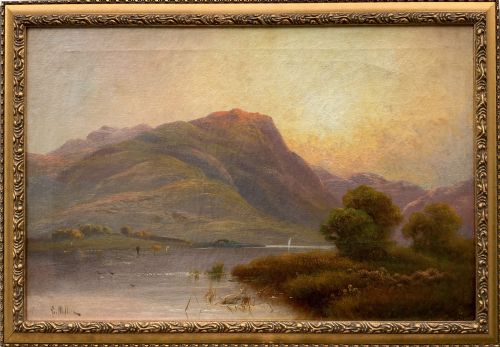
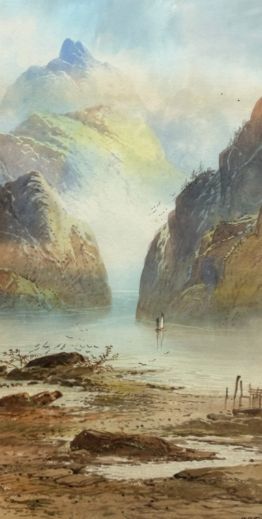


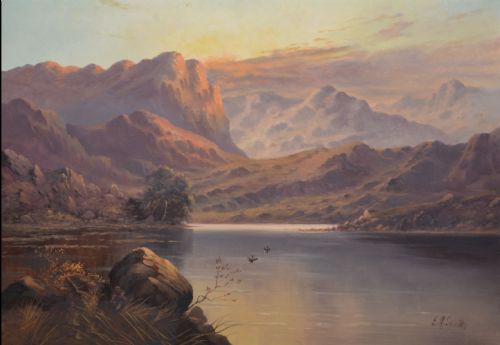
Framed Loch Landscape Picture
A framed loch landscape picture brings the vast, atmospheric expanses of Scottish waters and mountains directly into your interior.
Framed Loch Landscape Picture
A framed loch landscape picture captures the distinct geography and changing weather of Scottish lakes and highlands, moving from quiet morning mists over the water to dramatic moonlit mountain scenes.
The selections available here range from nineteenth-century Victorian watercolours and oils depicting Highland cattle by the water to mid-twentieth-century watercolours capturing specific locations like Loch Earn and Loch Tay.
These works frequently arrive set within period wood and gilt wood frames, preserving the historical presentation typical of traditional British wall art.
How they were made
Painters utilised oil paint on canvas or gouache and watercolour on paper to capture the luminosity of northern skies and the depth of deep bodies of water.
The finished works were mounted behind glass for works on paper or secured directly in heavy wood and gilt wood frames to protect the painted surface.
The selections span the nineteenth century, Victorian era, and mid-twentieth century, utilising oil, watercolour, gouache, canvas, and gilt wood frames.
What varies in quality
The strength of the composition and the artist's ability to handle atmospheric light and changing weather distinguish the finer works from more formulaic topographical views.
The condition of the original media, whether vibrant oil pigments or delicate watercolour washes, alongside the preservation of the period framing, defines the piece's integrity.
William Henry Earp·Henry Robinson Hall·Frank Hider·James Bell Anderson·Stanley Orchart·AJ Thornton·George Cole·James Kinnear·Gustave De Breanski·E. M. Seaton
The Framed Loch Landscape Picture Glossary
- Gouache
- An opaque watercolour paint that dries to a matte finish, allowing artists to build dense highlights and rich colour depths. It was frequently used by artists for detailed landscape studies.
- Oil on canvas
- A traditional painting medium where coloured pigments are suspended in drying oils and applied to a stretched fabric support. This technique allows for rich texture and subtle blending.
- Watercolour painting
- A method where water-soluble pigments are applied to paper to create translucent washes of colour. It requires immense precision as errors are difficult to conceal.
- Gilt wood
- Wood that has been coated with a thin layer of gold leaf or metallic gilt paint. It is commonly found on traditional frames from the Victorian and Edwardian periods.
Framed Loch Landscape Picture: Frequently Asked Questions
How do I date a framed loch landscape picture?
Dating relies heavily on the style of the frame, the materials used such as canvas versus paper, and the specific attire or cattle breeds depicted in the scenery. Signatures and biographical dates of the artist also provide a reliable window of creation.
Examining the reverse of the picture often reveals old framer labels, gallery stamps, or handwritten inscriptions that help narrow down the decade of production.
Where should I hang a landscape painting?
These works suit traditional living spaces, studies, or hallways where natural light can illuminate the brushwork and depth of the water scenes. Avoid placing them in areas subject to direct sunlight or high humidity to protect the paper and canvas.
Ensuring the picture is hung at eye level allows the viewer to fully appreciate the perspective and atmospheric details of the Highland setting.
What is the Highland School of painting?
The Highland School refers to nineteenth-century and early twentieth-century artists who focused specifically on the rugged terrain, lochs, and cattle of the Scottish Highlands. Their works celebrate the romantic wilderness and changing weather patterns of the region.
These paintings often incorporate dramatic lighting effects, such as morning mist or moonlight reflecting off the water.
How do I care for antique watercolours?
Antique watercolours on paper require protection from direct sunlight to prevent the pigments and paper from fading over time. Maintaining a stable indoor climate helps avoid moisture damage and foxing spots.
Framing them with acid-free mounts and conservation glass further shields the delicate paper and pigments from environmental deterioration.