
Antique Hepplewhite Carvers
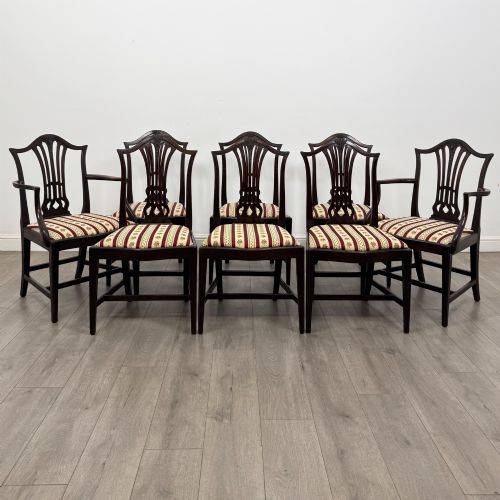
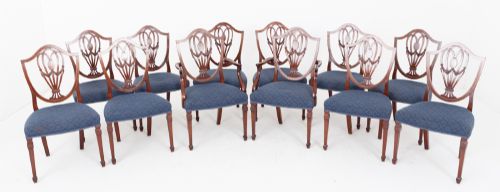
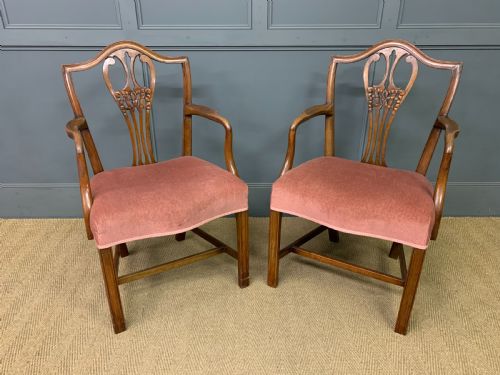
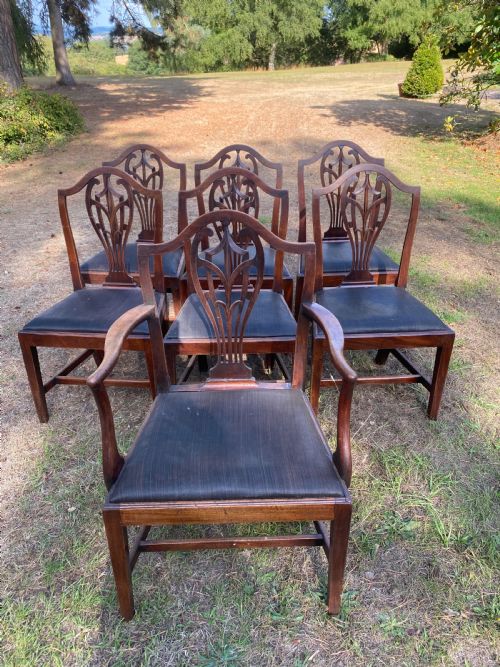
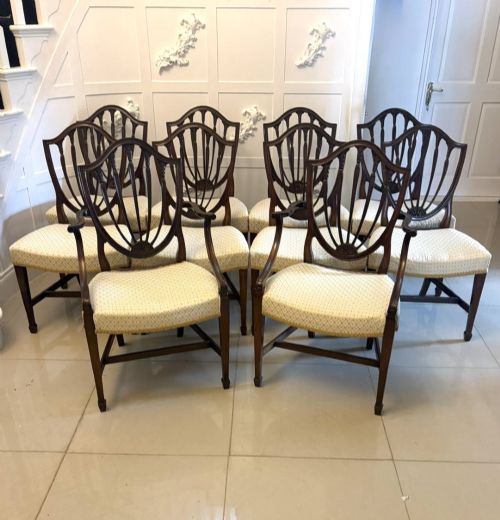
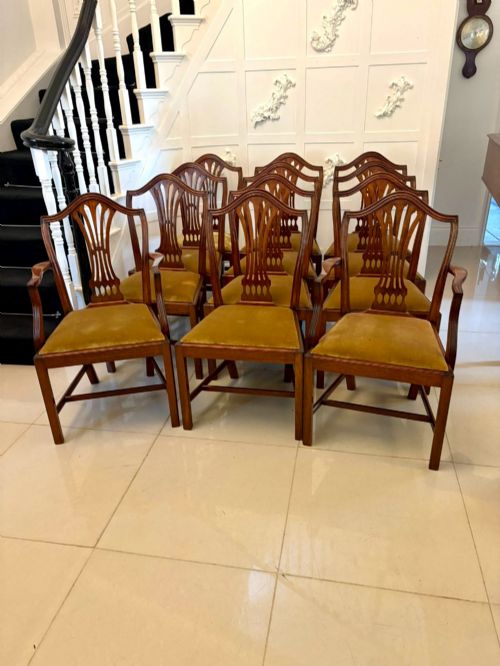
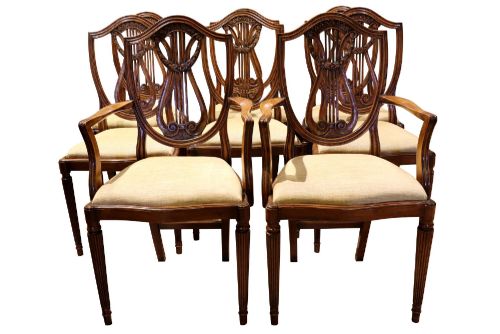
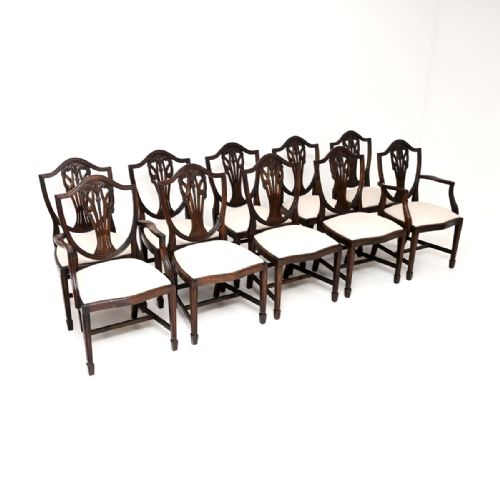
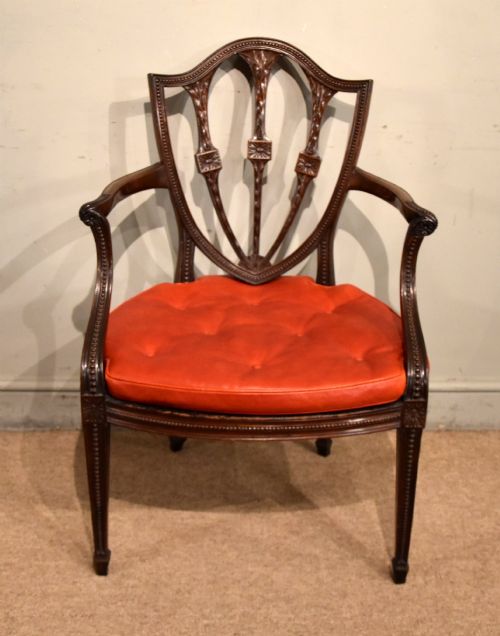
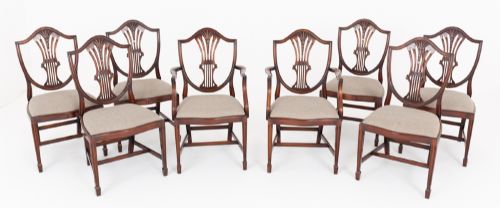
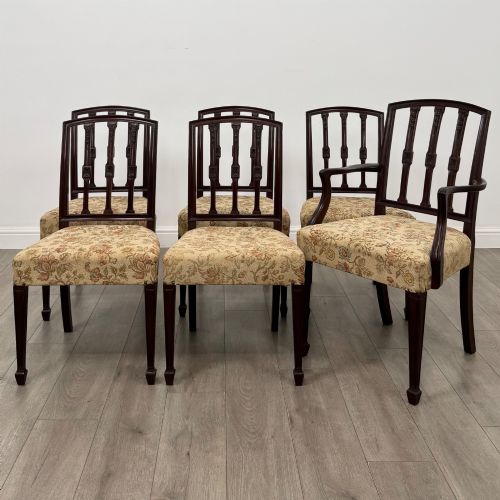
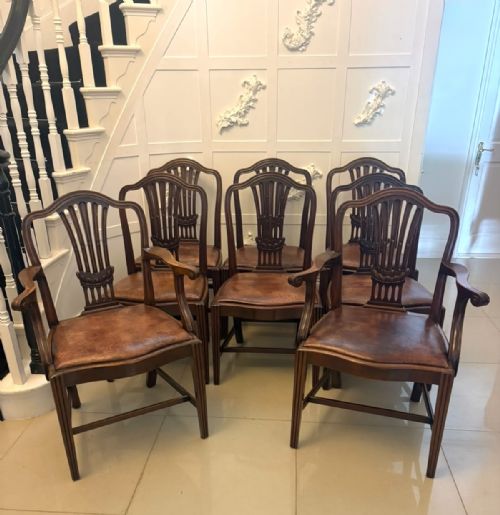
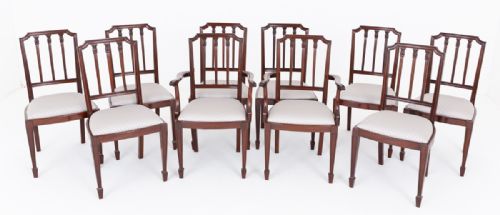
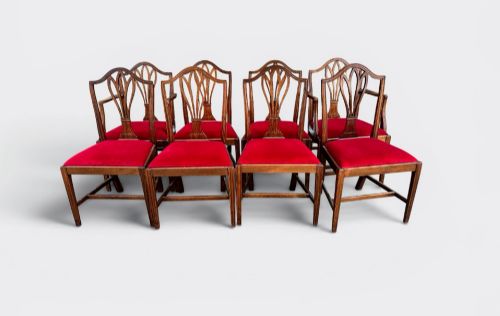
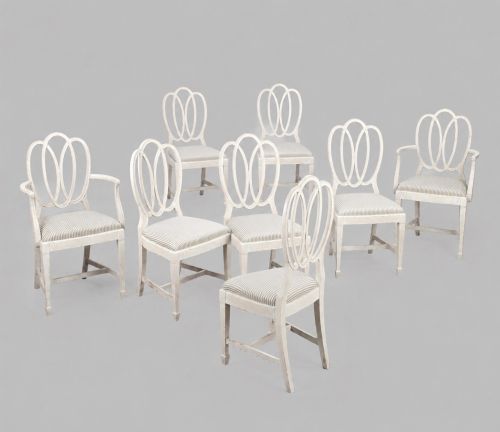
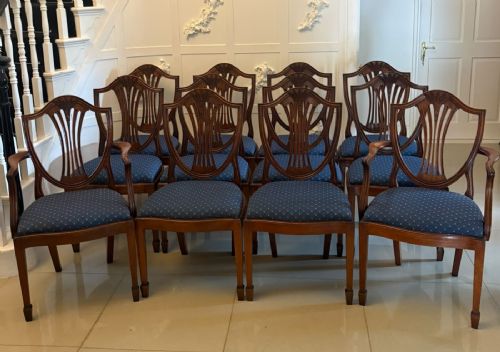
These antique hepplewhite carvers bring structural elegance and carved shield backs to the dining table, offering open arms for comfort.
Antique Hepplewhite Carvers
Antique hepplewhite carvers are dining armchairs distinguished by their characteristic shield-shaped backs and upholstered seats, designed to sit at the heads of a dining table. When searching this phrase, a buyer encounters armchairs spanning the original eighteenth-century Georgian period through to later revival movements.
Makers and manufacturers across the Georgian, Victorian, Edwardian, and later twentieth-century eras reinterpreted the classic shield back form in mahogany, maple, and painted finishes. These seating choices reflect enduring shifts in taste from strict period originals toward decorative revival suites.
How they were made
Makers built these carvers primarily using solid mahogany, selected for its strength and rich grain, alongside occasional use of maple and satinwood for contrasting details. Woodworkers shaped the signature shield backs and curved arms using hand tools, frequently incorporating piercing, carving, and subtle reeding into the timber frames.
Upholstery formed an integral part of the construction, with drop-in or fixed pad seats covered in leather, fabric, or velvet. Traditional stuffing and webbing secured the seat pads within the mahogany rails, while brass nails sometimes fastened the edges of the leather or textile upholstery.
Listings feature mahogany as the primary timber, complemented by fabric, leather, and velvet upholstery across Georgian, Victorian, and Edwardian periods.
What varies in quality
The distinction between ordinary and exceptional examples rests upon the crispness of the wood carving on the shield back and the elegance of the open arms. Superior carvers exhibit finely detailed splats, well-proportioned curves, and solid timber joints that withstand daily use at the dining table.
Originality of surface finish and the retention of period leather or appropriate upholstery materials elevate the standing of a piece. Later revivals vary from robustly constructed Edwardian interpretations to mass-produced twentieth-century adaptations, where the depth of hand-carving and timber selection dictate the overall standard.
Maple and Co·Cowtan and Sons
The Antique Hepplewhite Carvers Glossary
- Carver
- An armchair designed with open sides to accommodate formal dress, traditionally placed at the head and foot of a dining table. These chairs match the single dining chairs in a set while offering supportive armrests.
- Shield Back
- A chair back shaped in the outline of a heraldic shield, often featuring pierced splats and carved vertical bars. This silhouette defines the classic Hepplewhite style.
- Hepplewhite Revival
- A design movement spanning the Victorian, Edwardian, and early twentieth-century periods that recreated eighteenth-century forms. These pieces emulate the lighter proportions and graceful geometry of the original Georgian era.
- George III
- The stylistic and historical period from 1760 to 1820 encompassing the height of classic mahogany furniture design. Pieces from this era represent the original period benchmarks for the style.
- Satinwood
- A pale, hard timber with a natural sheen used for inlay and decorative elements in fine cabinetry. It provides a striking contrast against darker woods like mahogany.
Antique Hepplewhite Carvers: Frequently Asked Questions
What is a carver chair?
A carver chair is an armchair built to match a set of dining chairs, traditionally positioned at either end of a dining table. The open arms provide additional comfort for the host.
In older dining sets, two carvers typically accompanied six or eight single chairs to complete the arrangement.
How do I date a Hepplewhite style chair?
Dating relies on examining the timber species, construction methods, and secondary woods used in the frame. Eighteenth-century originals display hand-cut joinery and period patination.
Revival pieces from the Victorian, Edwardian, and 1920s eras reveal machine tooling, standardised screws, and nineteenth- or twentieth-century upholstery foundations.
Are these chairs comfortable for daily dining?
These armchairs were designed for formal dining and offer supportive upright seating through their padded seats and curved armrests. The open arms allow diners to sit close to the table.
Modern comfort depends on the condition of the internal webbing and padding within the upholstered seat pad.
What is the difference between Georgian and revival chairs?
Georgian chairs were made during the eighteenth century by period cabinetmakers working within the prevailing neoclassical tastes. They utilise period construction techniques and aged timbers.
Revival chairs were produced during the nineteenth and twentieth centuries to imitate those earlier eighteenth-century designs, often utilising mahogany with heavier framing or different secondary woods.