
Antique Hearth Bucket
An antique hearth bucket is a fireside necessity that brings metal and wood into the living room with proper utility.
What an antique hearth bucket is
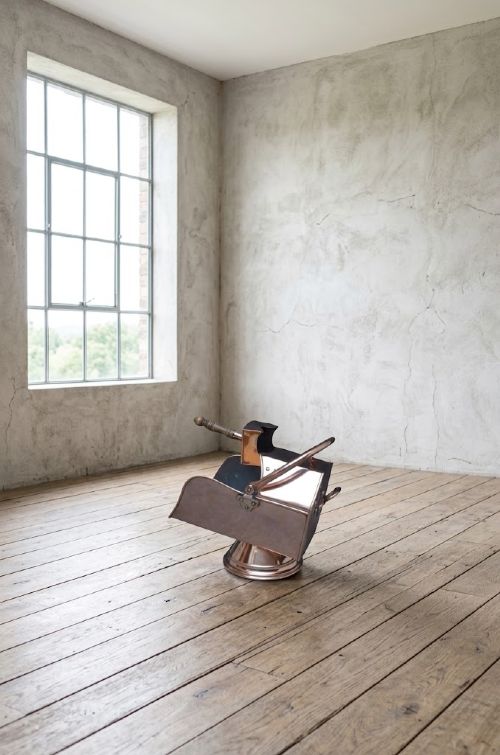
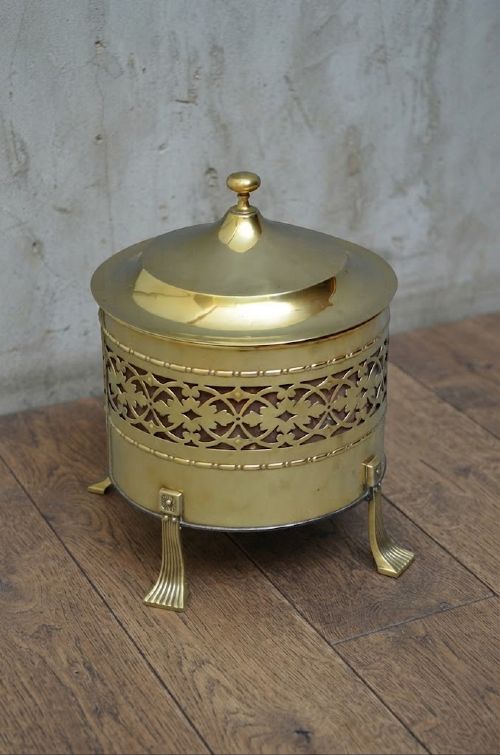
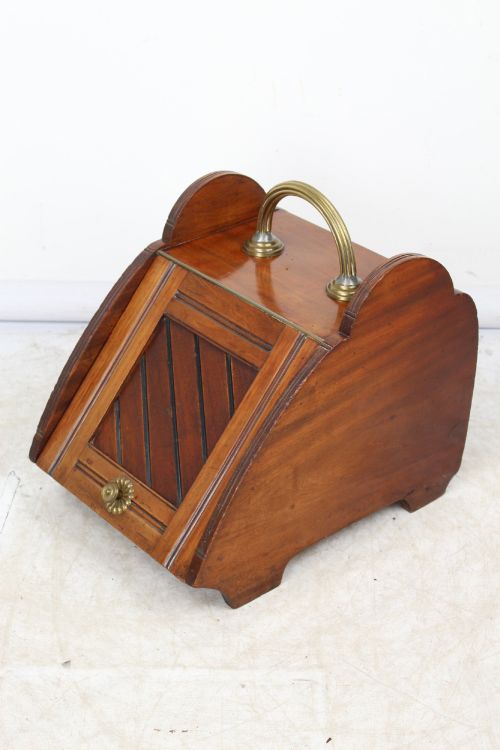
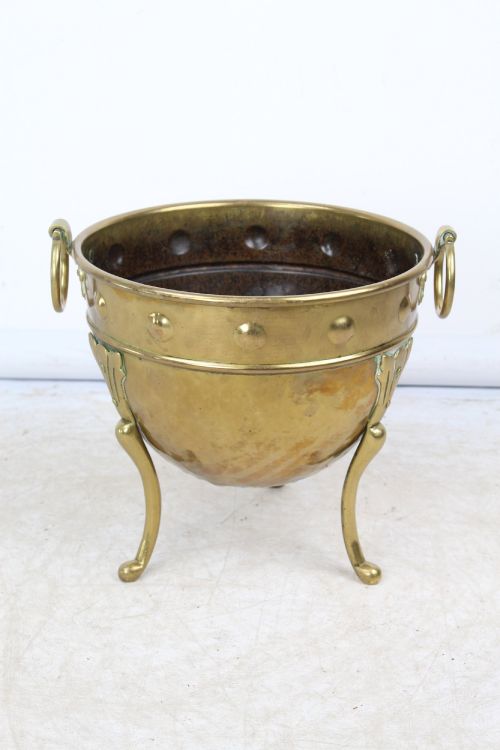
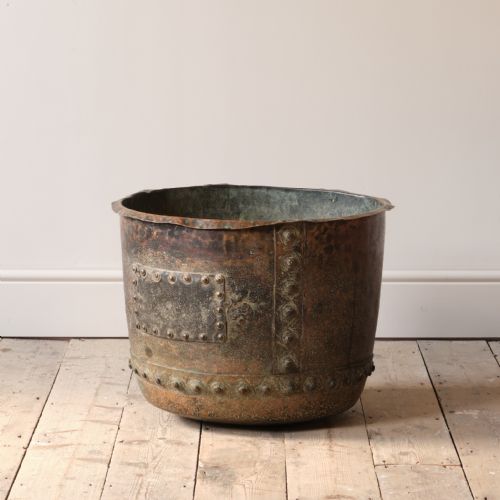
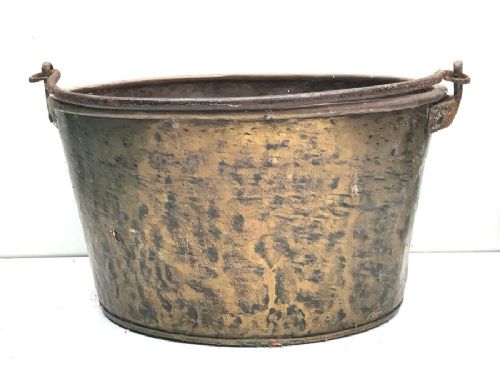
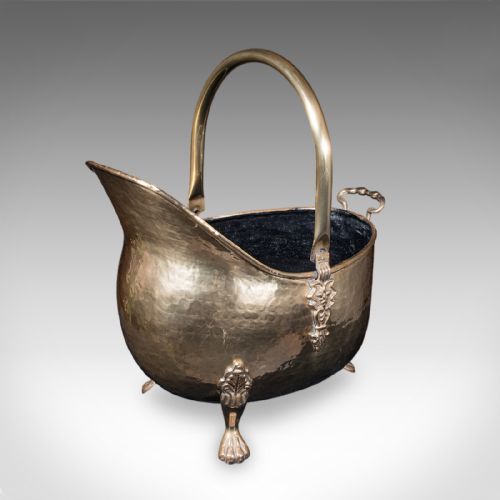
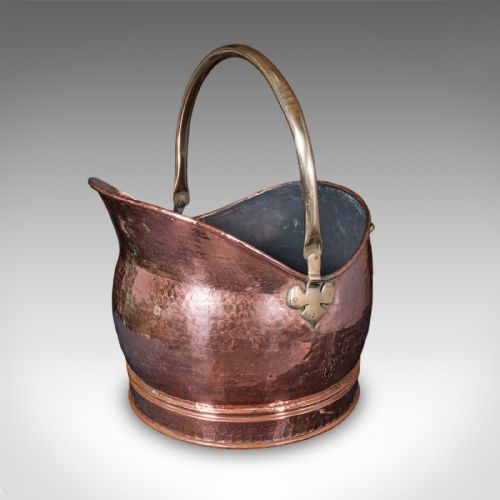
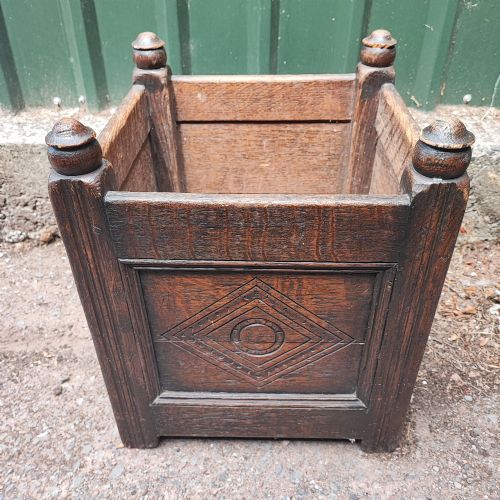
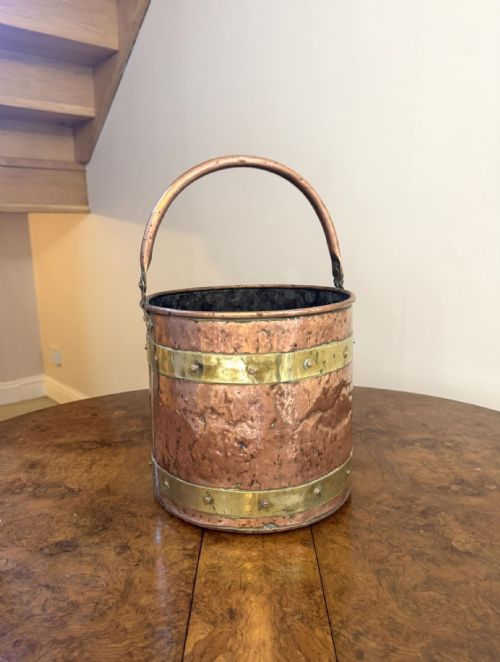
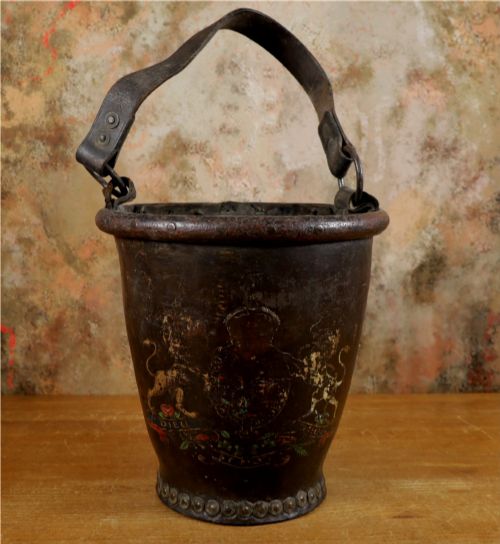
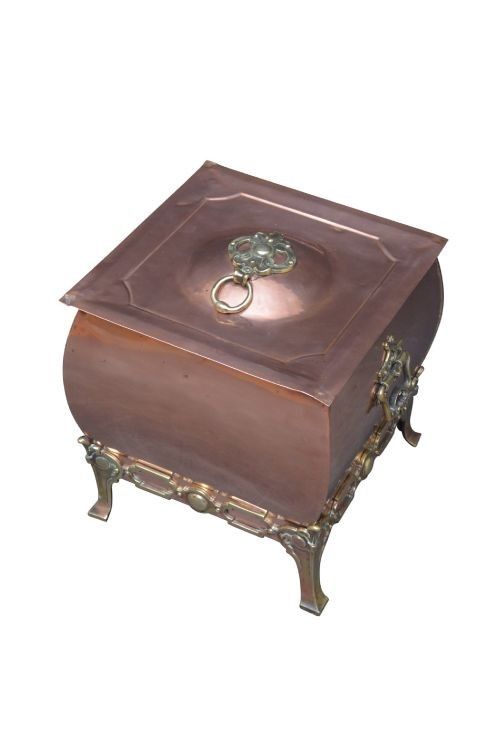
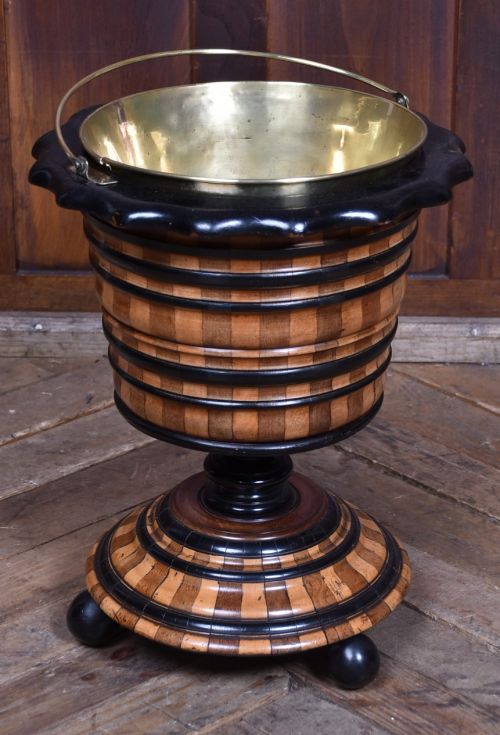
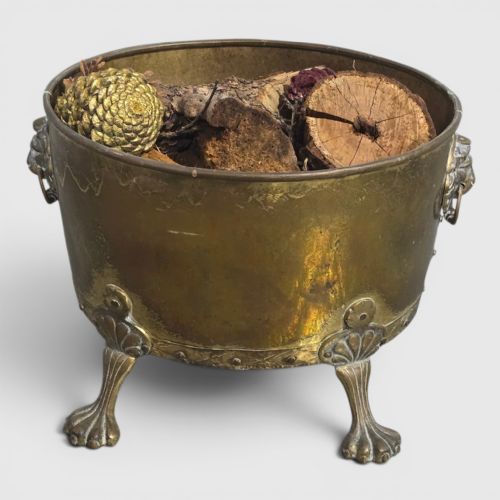
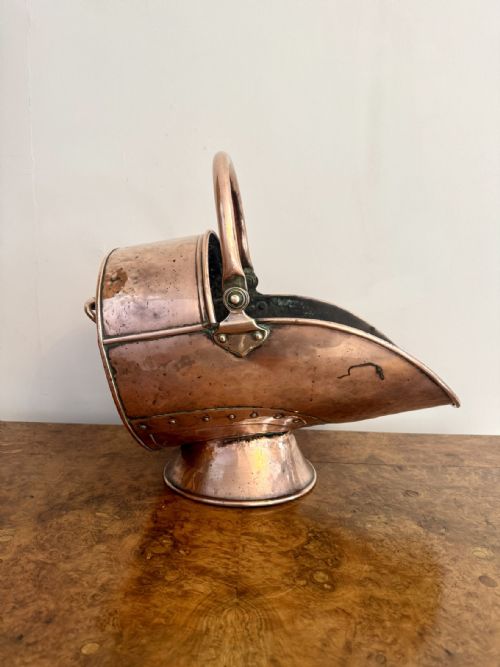
When you search for an antique hearth bucket, you are looking at fireside accessories designed to hold fuel near the grate. The pieces listed on this page span the Georgian and Victorian periods, taking forms such as coal scuttles, peat buckets, and tea stoves. You will most frequently meet Victorian brass and copper coal scuttles alongside earlier wooden examples.
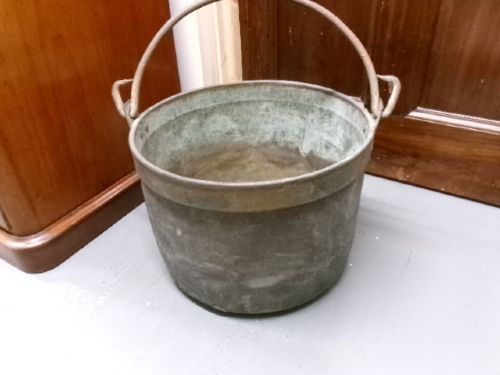
The selection ranges from riveted copper vessels to elliptical mahogany buckets bound in brass. These objects served the practical purpose of carrying coal or peat to the fire while sitting openly beside the hearth.
How they were made
Makers constructed these vessels using metals like brass and copper, often forming helmet shapes and coal scuttles through hand-beating and riveting techniques. Wooden examples utilise timbers such as mahogany, walnut, oak, and ebonised wood.
Many wooden peat buckets feature characteristic brass binding that secures the staves together around the elliptical body. Copper and brass versions frequently include matching shovels and durable handles for daily use by the hearth.
Retail Price Guide 2026
Typical UK retail prices for hearth bucket, calculated from the Sellingantiques database of over a million retail prices indexed since 2003. This retail price guide relies exclusively on Sellingantiques data; no external sources or auction records are used, so the figures do not describe the wider market.
Some peat buckets doubled as tea stoves, meaning a gentle warmth kept the brew ready while the turf burned low.
What varies in quality
The distinction between a standard piece and a finer one lies in the selection of materials and the integrity of the construction. Superior examples display carefully selected walnut or mahogany with crisp brass bindings and well-fitted liners.
Simpler coal scuttles rely on basic sheet metal construction, whereas higher quality pieces incorporate robust riveted joints and original accessories like shovels that match the primary metalwork.
The Antique Hearth Bucket Glossary
- Coal scuttle
- A bucket or container specifically designed for holding coal near a fireplace. These often feature a sloped opening or a helmet shape for easy pouring.
- Peat bucket
- A deep container traditionally used for storing and carrying dry peat turf for fuel. They frequently appear in woods like mahogany and walnut.
- Brass bound
- A method of construction where metal bands encircle a wooden vessel to provide structural strength and decoration. This technique is common in wooden buckets.
- Helmet coal scuttle
- A fireside bucket shaped with a flared rim resembling a classical helmet, designed to direct fuel cleanly onto the fire.
Frequently Asked Questions
What is an antique hearth bucket?
An antique hearth bucket is a functional container used beside the fireplace to store and transport fuel such as coal or peat.
These pieces combine utilitarian metal or wood construction with decorative presence for the nineteenth-century and eighteenth-century interior.
How were hearth buckets used?
They sat directly by the fireplace to hold the fuel supply required to keep the fire burning throughout the day.
Servants used them to carry fresh coal from the cellar or storeroom to the hearth in the main rooms of the house.
Are brass and copper common?
Brass and copper are frequently used materials for these fireside accessories across both Georgian and Victorian eras.
Metal buckets often feature riveted construction and integrated handles designed to withstand the heavy weight of coal.
What woods appear in buckets?
Makers utilised hard timbers like mahogany, walnut, oak, and ebonised wood to build wooden peat buckets and tea stoves.
These wooden bodies typically incorporate brass bands to hold the staves firmly in place.