


Antique Headboard and Footboard
An antique headboard and footboard frame the sleeping space with period character, combining timber and metal craftsmanship from the nineteenth and early twentieth centuries.
Antique Headboard and Footboard
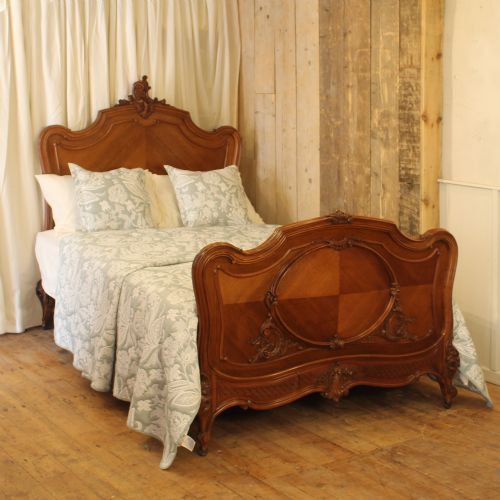
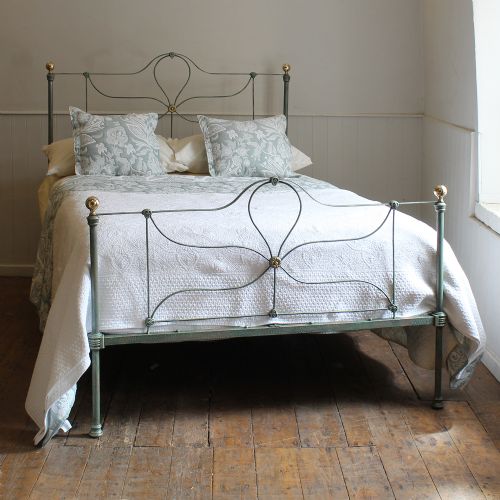
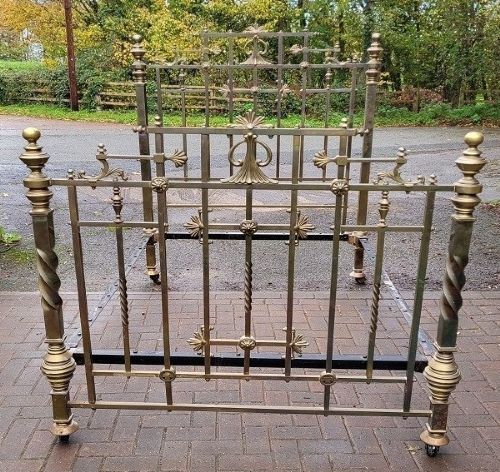
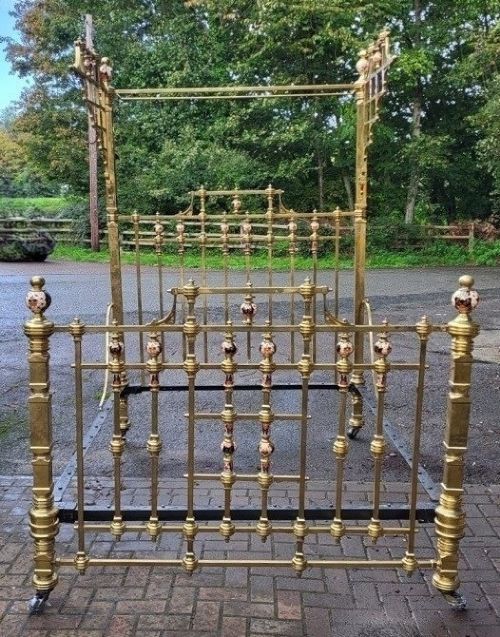
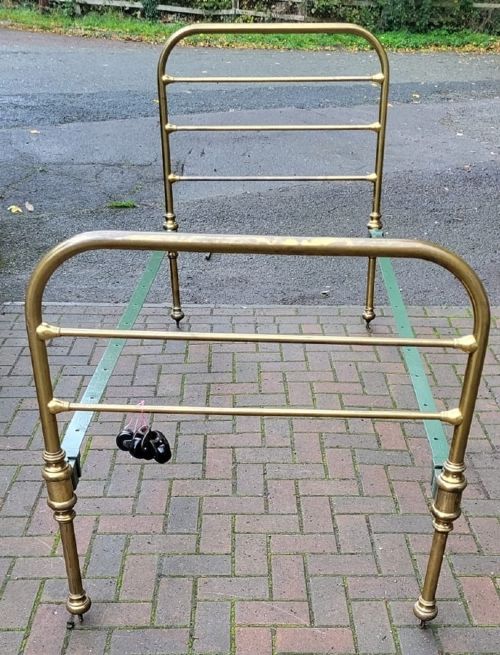
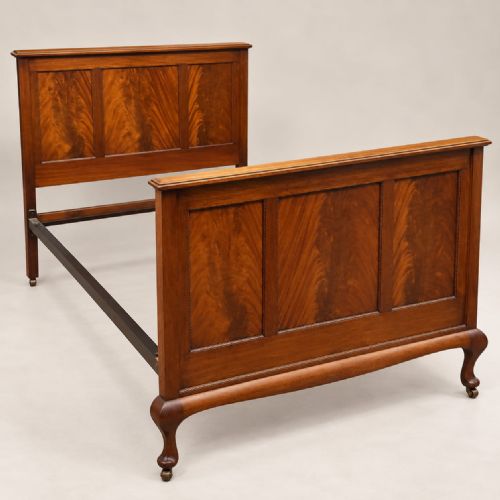
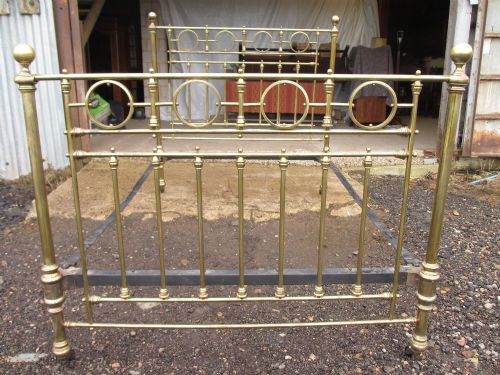
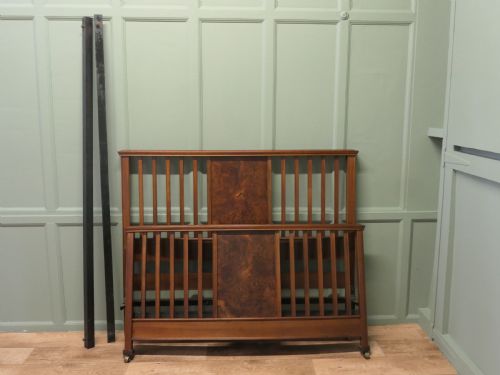
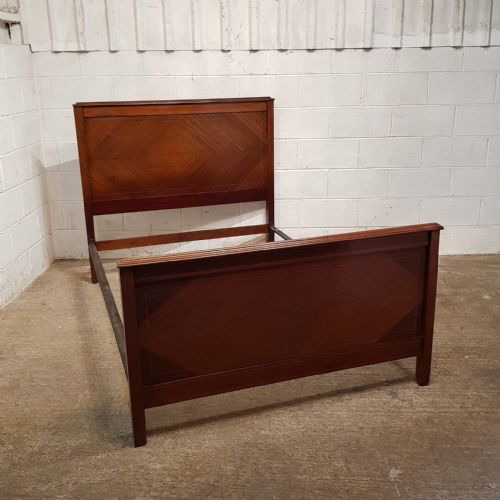
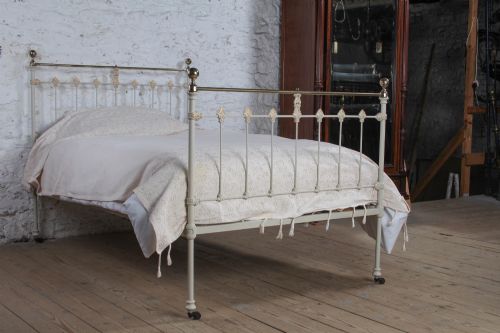
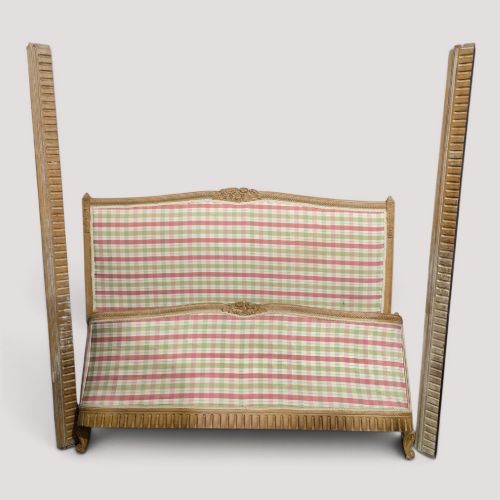
An antique headboard and footboard appear in lists primarily as complete bedsteads, double beds, and single bed frames spanning the Victorian, Edwardian, and Art Deco periods. Buyers encounter substantial brass and iron frames alongside rich timber designs in walnut, mahogany, and maple.
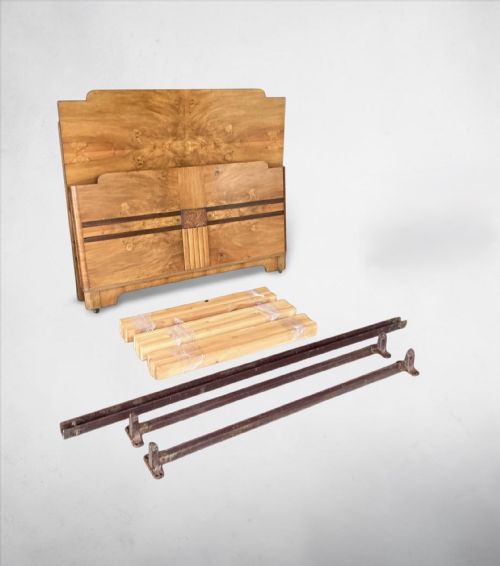
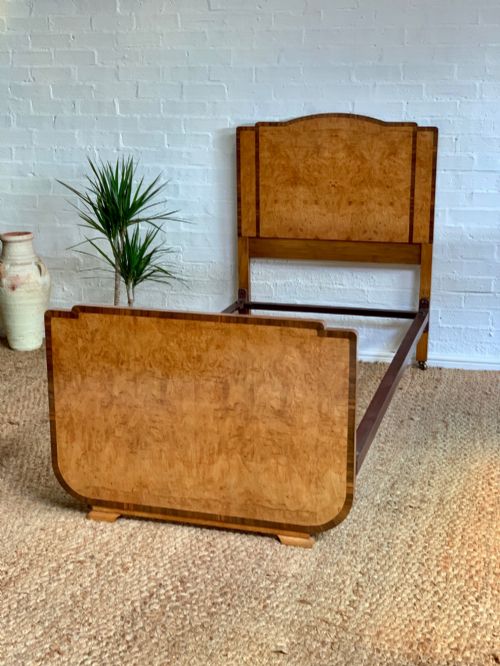
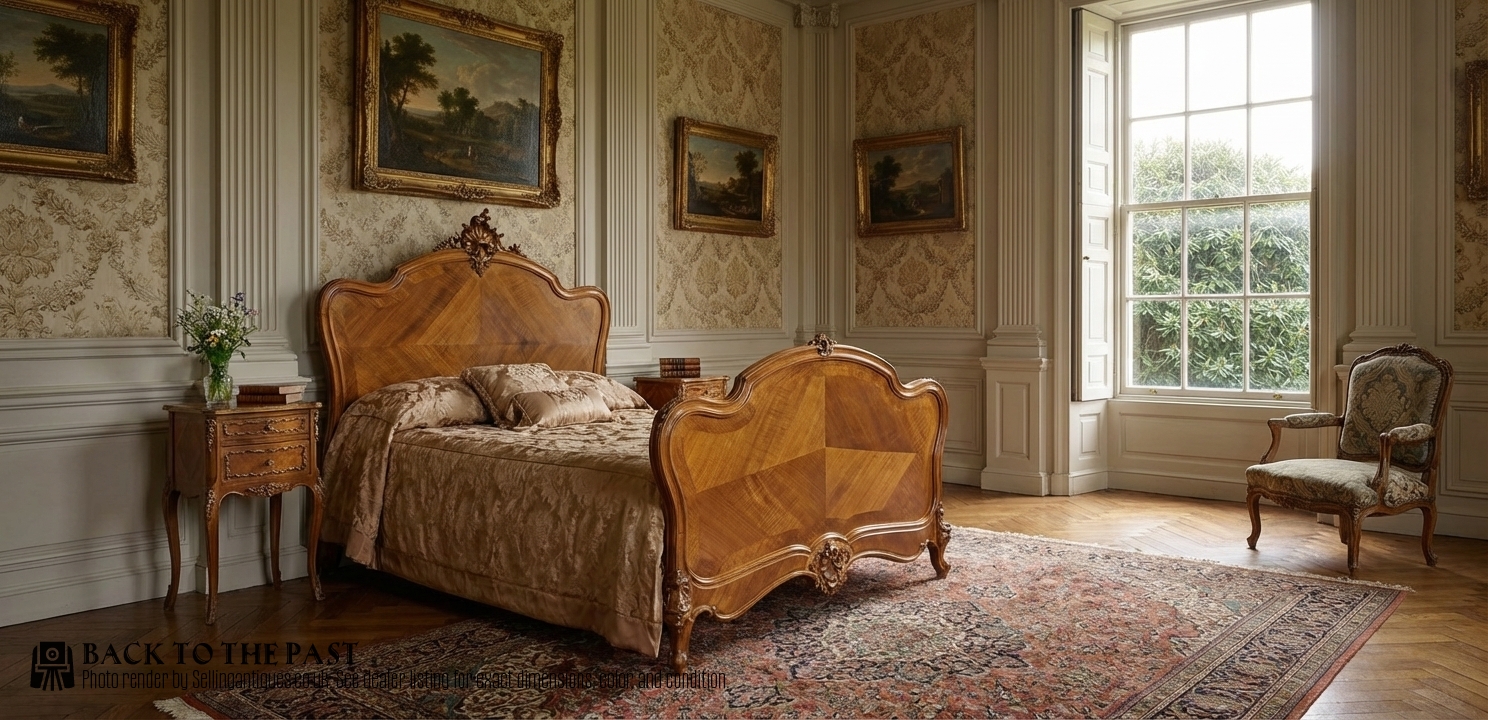
The selection ranges from ornate Victorian brass and iron combinations to streamlined Art Deco burr walnut and blonde bird's-eye maple structures. French regional styles such as Louis XV and French Provincial also feature prominently among the timber options.
Most entries function as complete bed frames incorporating matching head and foot panels, offering historical presence for modern bedrooms through standard double, king, and single proportions.
Materials and construction
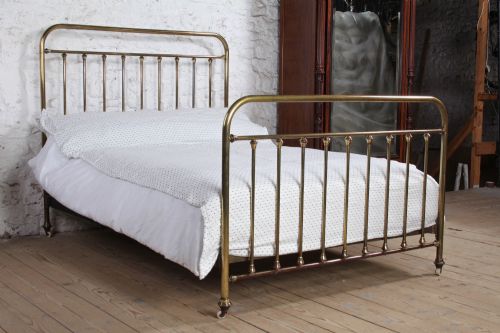
Makers utilised heavy-gauge brass and cast or wrought iron, often combining the metals to provide structural rigidity alongside decorative polish. Brass components frequently feature cast joints and mounted details fixed to robust iron slot-in frames.
Timber frames rely on dense hardwoods including walnut, burr walnut, mahogany, and oak, frequently shaped with curved profiles or intricate carved decoration. Selected examples incorporate satinwood and maple veneers arranged to highlight natural grain patterns.
Several heavy iron frames come complete with original rolling castors, ready to glide across the floor with surprising Victorian agility.
Distinctions in craftsmanship
Quality separates standard production frames from exhibition pieces through the depth of metal casting, the intricacy of brass detailing, and the selection of figured timber veneers. Superior examples display crisp chasing on metalwork and exceptional matching of burr walnut figures.
Construction methods also define the tier, seen in the solidity of iron slot-in joints, the presence of original castors, and the precision of French carved woodwork. Better pieces retain their original factory components and structural integrity without replacement supports.
Waring and Gillow·Winfield·Maple and Co·RW Winfield
The Antique Headboard and Footboard Glossary
- Bedstead
- A framework of a bed upon which the mattress rests. This term encompasses both the head and foot sections linked by side rails.
- Half Tester
- A type of bed where a canopy projects from the wall or headboard over the upper portion of the bed. It provides decorative prominence without full tester posts.
- Burr Walnut
- Timber taken from a walnut tree growth where the grain has grown in a deformed swirl. It is sliced into decorative veneers for high-end furniture.
- Slot-in Frame
- A joint system where bed rails hook or slot directly into the headboard and footboard posts. This allows straightforward assembly without permanent fixings.
Antique Headboard and Footboard: Frequently Asked Questions
Will an antique bedstead fit modern mattresses?
Many historical frames adhere to traditional sizing conventions that differ slightly from contemporary standard dimensions. Careful measurement of the interior space between side rails ensures proper mattress accommodation.
Adapting slats or introducing modern supportive bases allows older iron and wood frames to hold standard contemporary mattresses securely.
How do I assemble a metal bedstead?
Metal frames typically rely on iron slot-in joints that require no screws or specialised tools. The side rails simply drop into slotted brackets on the headboard and footboard.
Tapping the joints gently with a rubber mallet settles the tapered wedges firmly into place for a stable structure.
How do I care for polished brass?
Polished brass surfaces benefit from regular dusting with a soft dry cloth to prevent airborne grit accumulation. Avoiding harsh chemical cleaners preserves the historical surface sheen.
Applying a microcrystalline wax periodically protects the metal from oxidation without stripping away age-related patination.