



Antique Hat Box
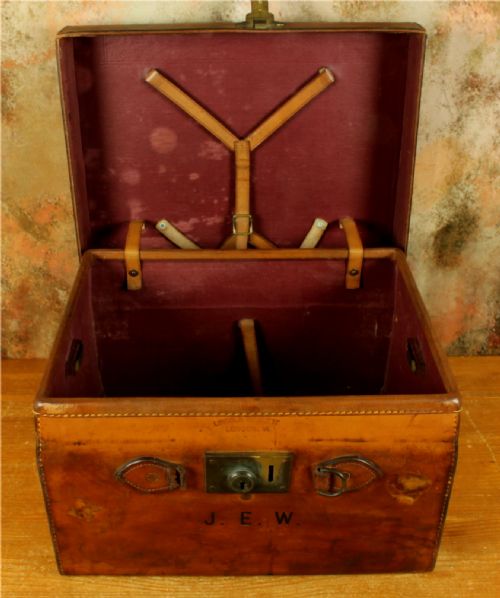
When you search for an antique hat box, you are looking at robust leather, painted toleware and fitted interiors designed to protect formal headwear.
Antique Hat Box
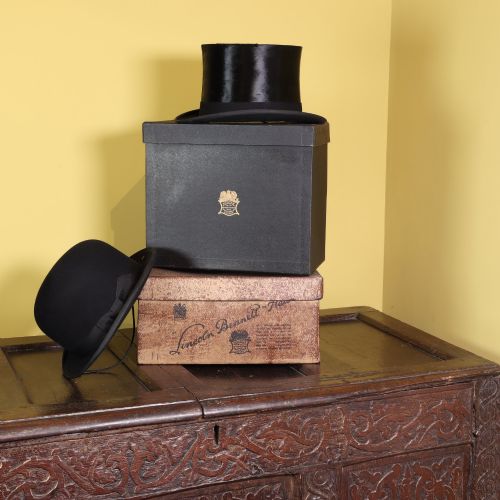
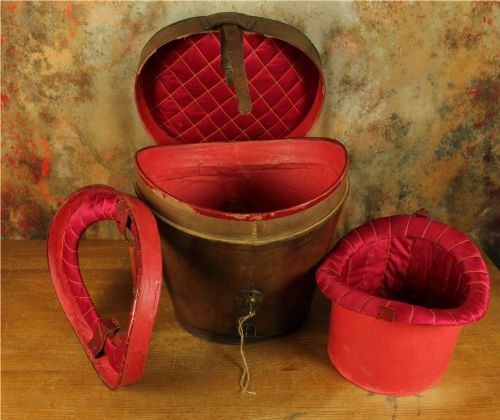
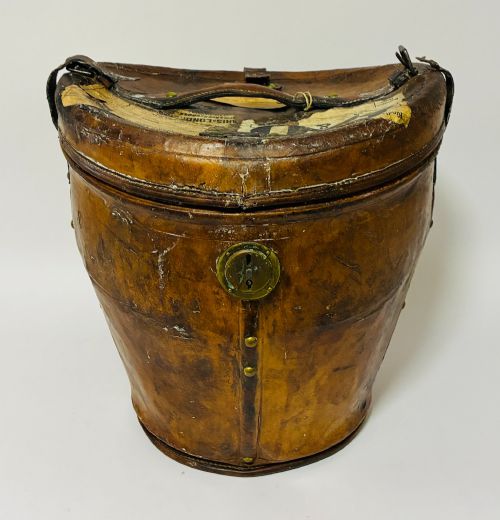
An antique hat box encompasses cylindrical leather cases, toleware tins and canvas trunks built to store tall silk hats, bowlers and bicorns during travel or at home. You will frequently encounter heavy leather specimens from the Victorian and Edwardian periods, often fitted with internal wooden blocks or velvet linings to secure the crown.
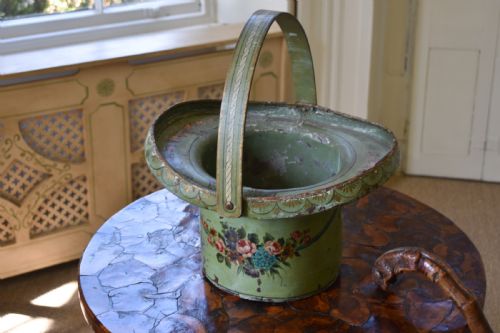
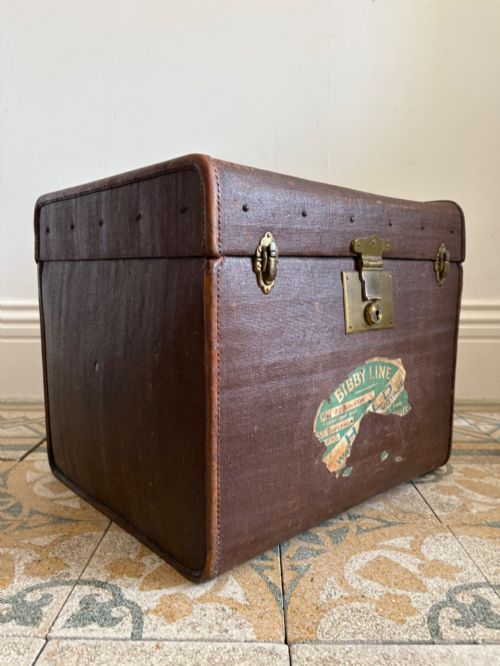
Beyond standard leather luggage, the selection includes painted tin military hat boxes, canvas travel trunks, and occasional smaller silver or pressed horn novelty boxes shaped like hats. These containers reflect the strict etiquette of formal dress across the nineteenth and early twentieth centuries, when proper headwear required dedicated protection.
The objects span Georgian painted leather, Victorian military transit cases, and early twentieth-century French trunks by makers such as Goyard. Each form serves the specific dimensions of top hats or military caps, ranging from single hat cylinders to large multi-hat transit cases.
How they were made
Makers constructed the primary luggage pieces from thick harness leather stitched over rigid cores, often reinforced with brass hardware, buckle straps and sturdy carrying handles. Toleware examples utilise japanned sheet metal painted or lacquered to withstand moisture during military campaigns.
Internal elements frequently feature shaped wooden blocks, padded silk linings, and leather partitions designed to hold specific hats firmly in place. Canvas and leather combination trunks employ wooden framing and metal stud work to endure the rigours of personal carriage travel.
Several examples show the bumps of genuine global transit through handwritten destination tags and faded hotel labels.
What varies in quality
Quality rests in the integrity of the structural leather, the retention of original brass fittings, and the survival of fitted internal linings. Superior examples retain maker stamps on the leather or hardware, alongside well-preserved travel labels that document their history.
The standard of stitching, the thickness of the hide, and the condition of interior velvet or silk partitions clearly separate utilitarian storage from higher-grade bespoke luggage. Multi-hat transit cases with complex internal divisions and functional locking mechanisms represent the finer end of the maker's art.
Lincoln Bennett of London·Hawkes & Co·Goyard·Cuthbertson of London
The Antique Hat Box Glossary
- Toleware
- Japanned or painted metalware, typically tin or sheet iron, used for durable military hat boxes. This technique provided weather resistance for officers on campaign.
- Transit Case
- A heavy-duty multi-hat container designed for long-distance travel. These larger boxes accommodated several top hats or ceremonial caps simultaneously.
- Bicorn
- A historical folding hat with two corners, often associated with military uniforms and naval dress. Specialised cases were shaped precisely to hold this silhouette.
- Japanning
- A type of European varnish finish that imitated East Asian lacquer work. It protected metal and leather surfaces on military and travel gear from damp conditions.
- Top Hat
- A tall, crowned, cylindrical men's hat of the nineteenth and early twentieth centuries. They required dedicated cylindrical boxes to prevent the delicate silk plush from crushing.
Antique Hat Box: Frequently Asked Questions
What fits inside an antique hat box?
These containers were originally built for nineteenth-century formal headwear such as silk top hats, bowlers, and military bicorns. Many single and multi-hat cases retain internal wooden blocks or shaped partitions designed exclusively for these tall silhouettes.
Today, collectors utilise them for contemporary display, storing accessories, or organising living spaces while retaining historical character. The rigid cylindrical shapes adapt well to holding umbrellas, rolls of fabric, or dried botanicals.
How do I identify a military hat box?
Military examples are typically constructed from japanned toleware tin or heavy black leather, often bearing regimental stamps, brass owner plaques, or specific department markings. They frequently accompanied officers on active service or ceremonial duties.
Civilian travel luggage generally relies on brown harness leather, canvas, or wood with maker signatures from notable West End outfitters. Toleware versions provided superior moisture resistance in the field.
Can I travel with these leather cases?
While historic leather and brass hardware remain robust, antique hat boxes serve primarily as decorative storage or interior display pieces rather than modern airline luggage. The aged leather and internal silk linings are sensitive to heavy handling and modern transit conditions.
Treating the leather with appropriate conservation balms helps maintain flexibility, but regular domestic use preserves their structural integrity best.
How do I clean historical leather luggage?
Maintenance requires gentle dusting with a soft, dry cloth to remove surface particles without disturbing the original finish or old travel labels. Avoid harsh chemical cleaners or excess water on aged hides.
Specialist leather conservation waxes applied sparingly can nourish dry hide, but many collectors prefer to leave authenticated patina and travel stamps completely untouched.