



Japanned Metal Tin
These japanned metal tin pieces bring painted lacquer decoration and utilitarian strength to domestic and professional spaces alike.

Japanned Metal Tin
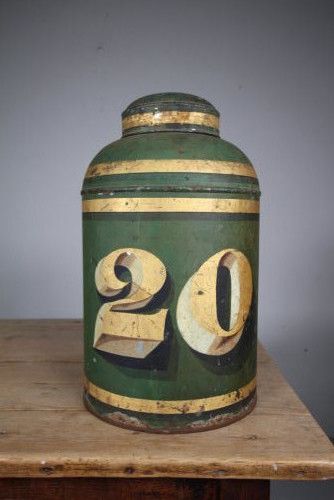
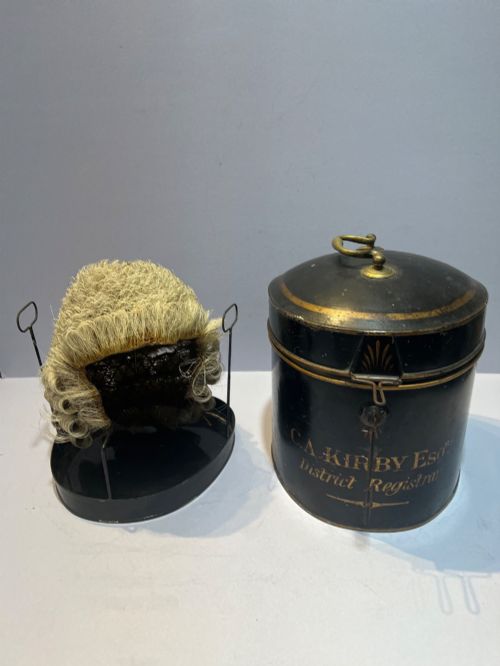
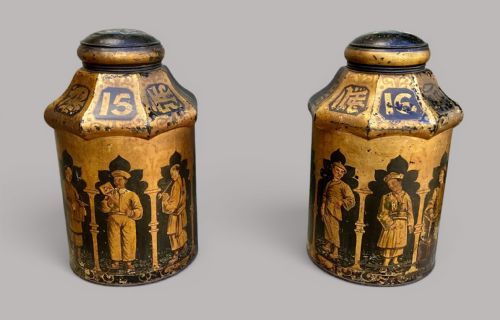
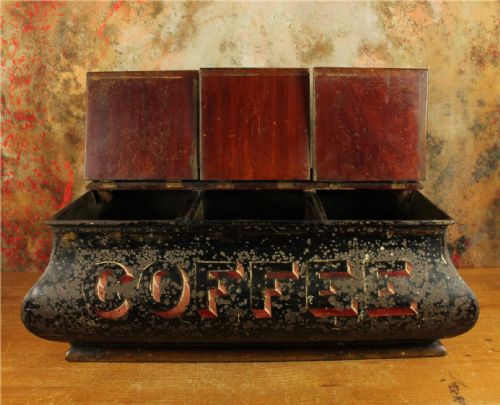
A japanned metal tin is a coated iron or tinplate container finished in imitation of Asian lacquerwork, appearing frequently in forms such as tea canisters, serving trays, storage boxes, and legal document tins. These objects span periods from the Georgian era through the Victorian period and into the early twentieth century, reflecting both polite domestic display and utilitarian office storage.
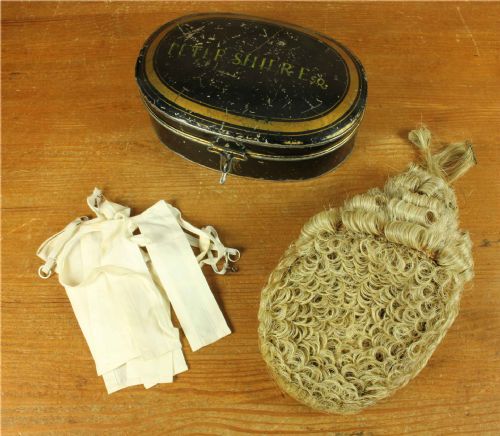
The selection here encompasses domestic kitchenwares and social accessories alongside professional gear. Tea canisters, chestnut urns, spice boxes, and toleware trays sit alongside barristers' wig cases and military hat boxes, showing how widespread this durable black or painted finish was across nineteenth-century life.
How they were made
Makers formed these containers from sheet iron or tinplate, shaping them into robust vessels for dry goods, documents, or personal kit. The metal surface received multiple coats of black or coloured varnish, baked hard in imitation of Japanese lacquer.
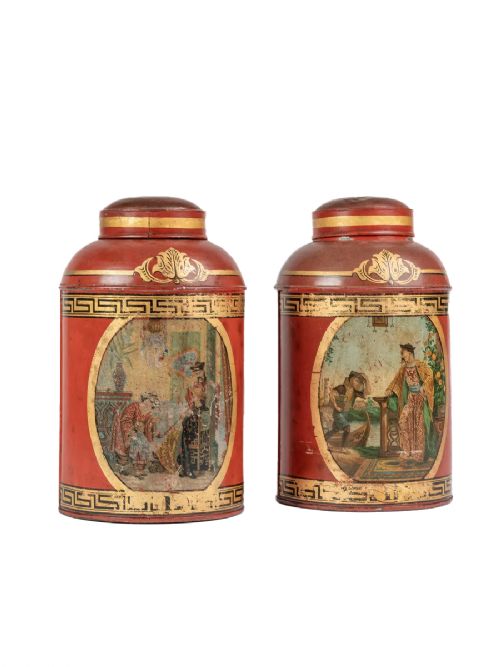
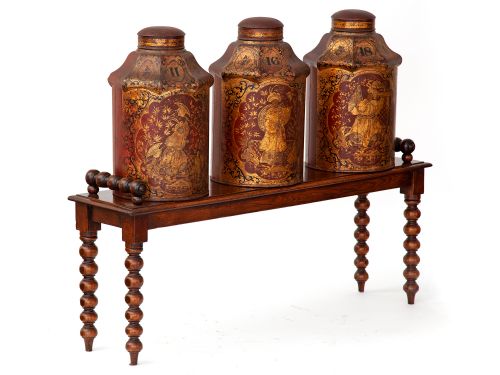
Artisans applied surface decoration using oil paint and gold leaf, often producing intricate Chinoiserie motifs, floral scenes, or hand-painted narrative subjects. Brass fittings and handles appeared on select boxes and urns to complement the dark, lustrous ground.
The object forms span tea canisters, serving trays, legal collectables, storage boxes, log boxes, spice boxes, chestnut urns, wine-coolers, hot water cans, and military hat boxes.
What varies in quality
Quality rests in the finesse of the hand-painted decoration and the crispness of the gilt work against the japanned ground. Pieces with detailed Chinoiserie scenes or attributed hand-painted artwork stand apart from plain utility boxes.
The structural integrity of the sheet iron and the preservation of the original painted surface dictate the standing of an item. Pontypool and similar regional centres produced wares where the depth of the varnish and the skill of the brushwork show notable refinement.
Eade And Son·Ravenscroft Law·Peter Shier·H Meeson
The Japanned Metal Tin Glossary
- Japanning
- A European imitation of East Asian lacquer work, created by applying layers of varnish and baking the metal surface. This process produced a hard, dark, and glossy finish resistant to wear.
- Toleware
- Painted and lacquered metalware, typically made from tinned sheet iron in Britain and Europe. The term covers domestic vessels such as trays, canisters, and coal scuttles.
- Chinoiserie
- A European artistic style reflecting Chinese motifs and decorative patterns. It appears frequently in the gold and coloured painting on japanned tea canisters and trays.
- Tinplate
- Sheet iron coated with a thin layer of tin to prevent rust. It served as the primary base material for small boxes, canisters, and legal document cases.
- Pontypool
- A Welsh town known for an early and celebrated style of japanned metalware. Wares from this origin often display distinctive high-gloss finishes and refined painted decoration.
Japanned Metal Tin: Frequently Asked Questions
What are japanned metal tin objects?
These are iron or tinplate containers coated in a dark, glossy varnish that imitates Asian lacquer. Artisans often decorated them with hand-painted floral motifs, gold leaf, or Chinoiserie scenes.
They served many practical roles in the past, from storing tea leaves and spices to holding legal wigs and documents.
How were these tins used historically?
Households utilised tea canisters, spice boxes, and chestnut urns to keep dry provisions fresh and to grace dining and drawing rooms. Toleware trays managed serving duties in formal settings.
Professionals such as solicitors and barristers relied on document tins and wig cases to transport and protect their official gear.
How do I care for antique japanned tin?
Keep these pieces away from direct sunlight and damp environments to protect the fragile painted surface and underlying varnish. Dust them gently with a dry, soft cloth.
Avoid liquid cleaners, polishes, or abrasive materials, as these can easily damage the delicate gold leaf and hand-painted details.
How can I tell the period of a piece?
Georgian and Regency examples often display refined Chinoiserie painting and lighter forms like urns and delicate trays. Victorian pieces frequently include heavier storage boxes, legal tins, and military hat cases.
Construction details, such as hand-cut iron sheets and the style of brass handles, help distinguish earlier workshop pieces from later nineteenth-century items.