


Toleware Tin Box
These painted toleware tin box pieces offer practical storage with hand-finished character, bringing robust utility and vibrant colour to any interior.
Toleware Tin Box
A toleware tin box combines sheet metal construction with decorative painted surfaces, taking forms such as storage boxes, hat boxes, spice boxes, and document tins. These items serve everyday storage needs while displaying distinct decorative finishes developed across the nineteenth century and into the early twentieth century.
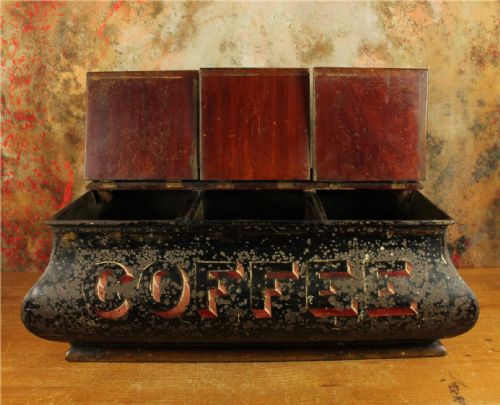
The selection ranges from utilitarian legal documents sets and military hat boxes to domestic items like coffee shop triple compartment boxes, tea canisters, and log boxes. Folk art barge wear and painted waste paper bins also appear, showing how painted tin found a place in both commercial and domestic settings.
Nineteenth-century examples dominate the available styles, supplemented by Georgian pieces and early twentieth-century legal sets. Buyers frequently encounter Victorian military hat boxes and folk art decorated containers, each demonstrating the durable nature of sheet iron and tinplate.
Construction and decoration
Makers formed these objects from sheet iron or tinplate, often incorporating brass rims for added structural reinforcement and visual contrast. The metal sheets were shaped into containers ranging from cylindrical hat boxes to rectangular document tins and spice boxes.
Decoration relied on applied paint layers, sometimes enhanced with gold leaf detailing or specific lacquer finishes. Folk art pieces and coffee shop containers received hand-painted motifs, while utilitarian items utilised durable painted surfaces to protect the underlying iron from rust.
One persistent canine managed to immortalise himself on a coal box, staring out from a nineteenth-century painting that outlasted the coal it served.
Assessing quality in painted metal
Quality rests in the preservation of the original hand-painted surface and the crispness of any decorative details such as gold leaf or specific folk art motifs. Pieces that retain their primary painted decoration without heavy flaking or unsympathetic overpainting command greater attention.
Construction details also separate standard utilitarian containers from finer items, seen in the neatness of soldered joints and the inclusion of brass rims or fitted interior trays. The presence of complete sets, such as multiple solicitor document tins or matched lacquered boxes, indicates higher original status.
The Toleware Tin Box Glossary
- Toleware
- Painted or lacquered metalware, typically tinplate or sheet iron, finished with decorative pigments. This process transformed utilitarian metal into colourful household objects.
- Tinplate
- Iron or steel sheets coated with tin to prevent rust. It served as the primary lightweight metal base for shaping boxes and canisters.
- Folk Art
- Decorative items produced within a traditional cultural framework, often by self-taught makers. In these listings, it describes hand-painted barge wear and domestic boxes.
- Solicitor Document Tin
- A metal storage container designed for legal papers. These often appear in matched sets bearing identifying names or numbers.
Toleware Tin Box: Frequently Asked Questions
What is toleware?
Toleware refers to metal objects, usually tinplate or sheet iron, that have been painted or lacquered for decorative use. The term derives from the French phrase for painted sheet metal.
These items range from functional storage tins to highly decorated domestic accessories produced throughout the eighteenth, nineteenth, and early twentieth centuries.
How were these boxes used originally?
These containers served practical storage functions in homes, offices, and shops. Examples include holding documents, spices, tobacco, coffee, and hats.
Military officers utilised sturdy hat boxes for travel, while grocery shops and legal practices relied on specialised tins to organise daily goods and paperwork.
How do I date a painted tin box?
Dating relies on construction methods, fastener types, and the style of the painted decoration. Georgian and nineteenth-century pieces often show hand-forged elements and specific pigment palettes.
Later Victorian and early twentieth-century examples, such as solicitor document sets, feature more standardised industrial sheet metal fabrication.
Are these boxes waterproof?
While metal construction offers resistance to moisture, original painted boxes often have aged seals and historical wear. They suit dry interior storage rather than damp environments.
Using them for modern household organisation keeps them functional while preserving their historic painted surfaces.