


French Travel Trunk
These French travel trunk pieces are robust luggage carriers from past decades, offering practical storage and distinct historical character for modern interiors.
French Travel Trunk
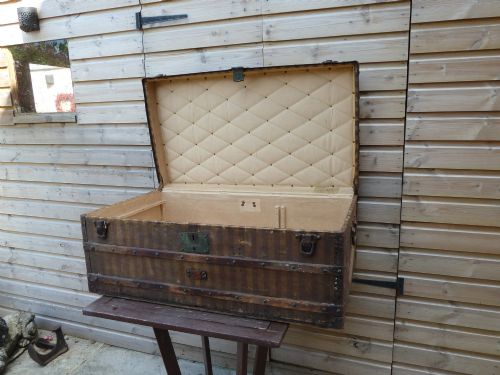
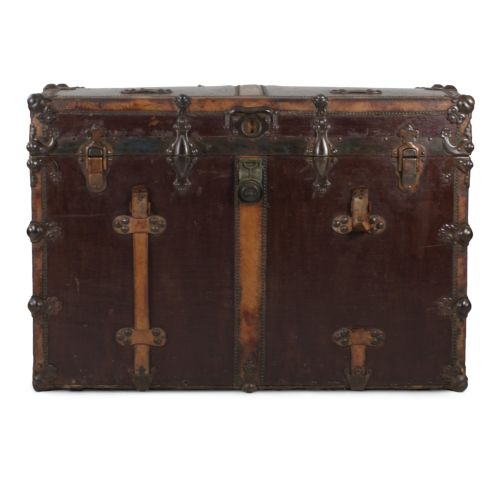
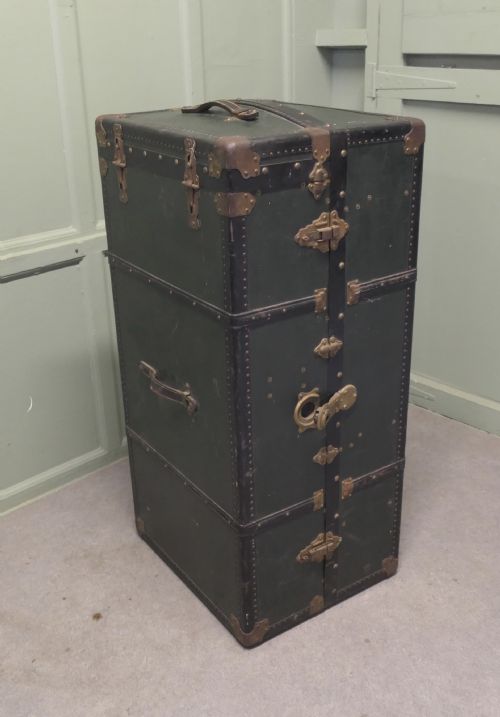
A French travel trunk serves as a luggage carrier or storage chest originating from periods spanning the nineteenth century through the nineteen-thirties. Buyers encounter various forms on this page, including steamer trunks, cabin wardrobes, hat trunks, and suitcases.
The selection encompasses pieces from the Victorian, Edwardian, Belle Epoque, and Art Deco eras, alongside early twentieth-century designs. Makers such as Louis Vuitton, Goyard, Aux Etats Unis, Au Touriste Paris, and Lion Brand appear across the inventory.
Many items function today as coffee tables or lamp tables within domestic settings, retaining their original utility while adapting to interior decoration. The physical forms range from large dome-top chests to compact fitted wardrobe trunks.
Materials and Construction
Constructed primarily from wood as a foundational structure, these trunks utilise leather, canvas, and fabric cladding to protect the exterior surfaces. Metal bindings, brass hardware, and zinc components reinforce the corners, edges, and fastening mechanisms.
Exterior finishes feature stenciled monograms, stamped markings, and specialised coatings suited for international travel during the nineteenth and early twentieth centuries. Interior compartments often include fitted shelving and hanging spaces for garments.
Some trunks lived multiple lives as ocean-crossing luggage before retiring quietly to the corner of a nineteenth-century salon.
Evaluating Quality and Condition
Quality separates pieces through the integrity of original maker stamps, signatures, and stenciled monograms from renowned Parisian workshops. The sophistication of interior fittings, such as specialised wardrobe compartments and hat spaces, distinguishes finer examples.
The preservation of original exterior materials like leather, canvas, and brass hardware influences the overall standard of the piece. Fully restored items demonstrate meticulous attention to structural components compared to unrestored or altered examples.
Louis Vuitton·Goyard·Aux Etats Unis·Au Touriste Paris·Lion Brand
The French Travel Trunk Glossary
- Steamer trunk
- A low-profile travel trunk designed to fit beneath a steamship berth. These pieces often feature reinforced corners and flat tops for stacking.
- Malle penderie
- A French wardrobe trunk equipped with internal hanging rails and drawers for garments. This design allowed travellers to transport clothing without folding.
- Hat trunk
- A specialised circular or square luggage piece intended to protect millinery during transit. These items are typically smaller in scale than standard travel chests.
- Portmanteau
- A large travelling bag or suitcase that opens into two equal compartments. The term applies to structured luggage used in the nineteenth and early twentieth centuries.
French Travel Trunk: Frequently Asked Questions
How were French travel trunks used originally?
Travellers utilised these trunks for transporting clothing and personal belongings across trains, ships, and automobiles during extended journeys. The sturdier designs protected contents from rough handling and changing weather conditions.
Inside, specialised compartments kept garments, hats, and accessories organised throughout transit. Many trunks doubled as portable wardrobes that remained functional upon arrival at hotels.
How can I use a travel trunk at home?
Owners frequently position these trunks in living rooms and bedrooms to serve as coffee tables, lamp tables, or blanket storage chests. Their flat tops and sturdy wooden frames accommodate lamps, books, and decorative objects.
Placing a trunk at the foot of a bed provides concealed storage for extra linens and seasonal clothing. The historical aesthetic adds texture to both traditional and modern interior schemes.
How do I identify different periods of trunks?
Nineteenth-century examples often feature leather cladding and simpler internal layouts without specialised wardrobe fittings. Early twentieth-century pieces incorporate canvas exteriors, stenciled monograms, and advanced brass hardware.
Art Deco and nineteen-thirties designs display streamlined forms and maker signatures associated with luxury luggage houses. Examining the materials, hardware styles, and maker stamps helps determine the manufacturing era.
What is the difference between restoration and unrestored state?
Unrestored trunks retain their original weathered patina, showing decades of travel wear across the canvas, leather, and metal components. These pieces appeal to collectors who value untouched historical authenticity.
Fully restored trunks have undergone professional cleaning and repair to stabilize the wood, hardware, and linings. This process revives the original appearance while maintaining the structural integrity of the piece.