



Antique Harvest Oil Painting
An antique harvest oil painting captures the agrarian rhythms of past centuries through oil on canvas and wood.
Antique Harvest Oil Painting
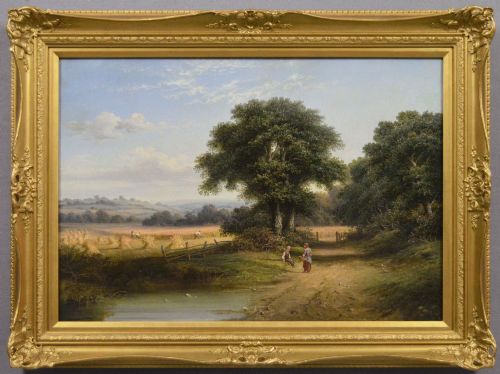
When you examine an antique harvest oil painting, you encounter pastoral scenes of haymaking, cornfields, and agricultural labour across the nineteenth and early twentieth centuries. These artworks depict rural workers, horses, and wagons engaged in seasonal gathering across British and European landscapes.
The pieces on this page span several distinct decades, featuring canvases from the 1860s through to the 1940s. Victorian and Edwardian portrayals dominate the selection, often rendered in realistic or impressionistic styles that document rural life before mechanisation.
Materials and Technique
The foundational medium for these works is oil paint applied to stretched canvas, occasionally supported by wood panels or board. Artists built up their compositions using traditional pigments, creating texture in the depiction of wheat sheaves, hayricks, and cloudscapes.
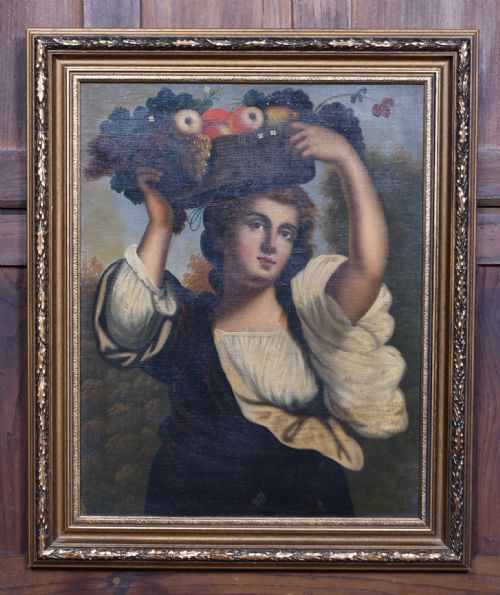
Many of these paintings retain their original frames constructed from gesso and wood, frequently finished with gold leaf or giltwood. The application of oil paint allowed makers to capture varied light conditions, from the bright sun of midday fields to the amber glow of sunset.
Several canvases manage to capture the exact moment a duck inspects a harvester's sandwich.
Distinctions in Quality
The calibre of an antique harvest oil painting rests upon the artist's command of light, shadow, and atmospheric depth within the landscape. Superior examples demonstrate confident brushwork in the rendering of human figures, animals, and agricultural equipment rather than stiff or formulaic composition.
The preservation of the pigment layer and the integrity of the canvas support contribute significantly to the standing of a piece. Furthermore, the craftsmanship of the accompanying giltwood frame and the presence of a clear signature or attribution elevate the historical interest of the work.
Walter Heath Williams·Henry John Boddington·William Grant Murray·James William Booth·Henry H Parker·Herbert Royle·Arthur Walker Redgate·Joseph Paulman·Henry John Kinnaird·Frederick William Jackson·George Cole·William Greaves·William Savage Cooper·Joseph Thors·Alfred Augustus Glendening Snr·William Kay Blacklock·John Clayton Adams·Arthur Heinrich Wilhelm Fitger·Frants Henningsen·Carsten Henrichsen·Erik Henningsen·Hamilton Jay·Bertha Rhodes·Charles H Passey
The Antique Harvest Oil Painting Glossary
- Oil on Canvas
- A traditional painting medium where coloured pigments are suspended in a drying oil and applied to a woven fabric support stretched across a wooden frame.
- Giltwood
- Wood that has been coated with a thin layer of gold leaf or gold paint, frequently utilised for ornate antique picture frames.
- Gesso
- A white paint mixture consisting of a binder mixed with chalk, gypsum, or pigment, prepared as a base for gilding and framing.
- Pastoral Landscape
- A genre of artwork depicting rural scenery, rustic scenes, and agricultural life with an idealized or peaceful tone.
- Impressionism
- An artistic style characterised by relatively small, thin, yet visible brush strokes and an emphasis on accurate depiction of light.
Antique Harvest Oil Painting: Frequently Asked Questions
What periods do these paintings represent?
The works on this page originate predominantly from the nineteenth and early twentieth centuries, spanning from the 1860s through the Edwardian era and into the 1940s. These dates reflect the height of rural naturalism and impressionist painting traditions.
Victorian and Edwardian artists recorded the changing countryside, providing a visual archive of agricultural methods that relied heavily on human and animal labour before industrial farming took hold.
How were these artworks framed originally?
Makers housed these canvases in wooden frames finished with gesso and gold leaf or giltwood. These ornate surrounds were designed to complement the warm tones of the pastoral scenes within.
Many surviving pieces retain their period frames, which provide helpful contextual clues regarding the date and origin of the artwork through their moulding and decorative motifs.
How can I identify a regional British scene?
Artists frequently inscribed specific locations into titles or onto the reverse of the canvas, referencing counties such as Nottinghamshire, Yorkshire, and Sussex. Recognising landmarks like the Vale of Evesham or the river Kennet helps pinpoint the exact geography.
The inclusion of particular agricultural practices, such as hop-picking or haymaking, further ties a composition to the specific rural economy of a British region.
How should I care for an oil painting?
Keep the canvas away from direct sunlight and dramatic fluctuations in humidity and temperature to prevent the oil paint and gesso from cracking. Dust the surface and the frame gently with a soft, dry brush without applying pressure.
Avoid using water or chemical cleaners on the paint surface or the giltwood frame, consulting a professional conservator if the canvas requires deeper cleaning or stabilisation.