


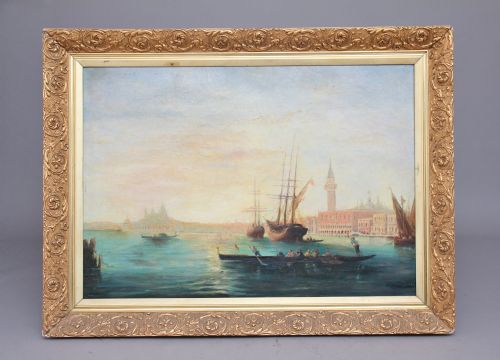
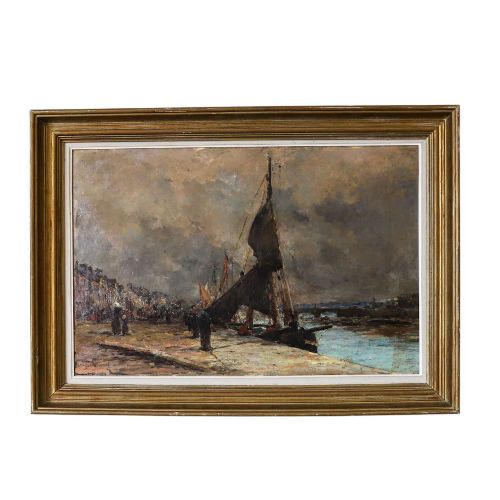
Antique Harbour Seascape Painting
When searching for an antique harbour seascape painting, collectors find nineteenth and early twentieth-century depictions of coastal trade, fishing fleets and tidal ports.
Antique Harbour Seascape Painting
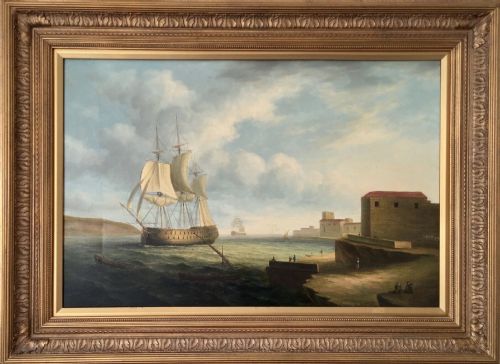
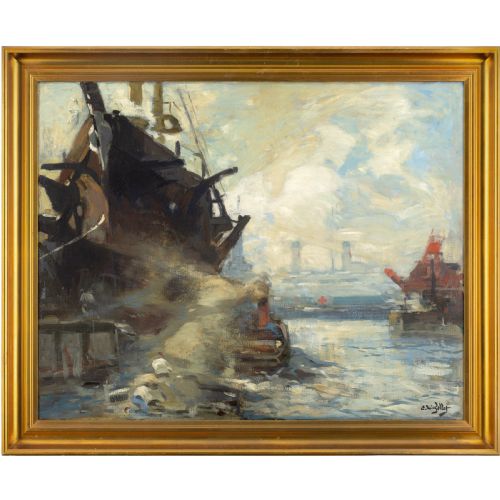
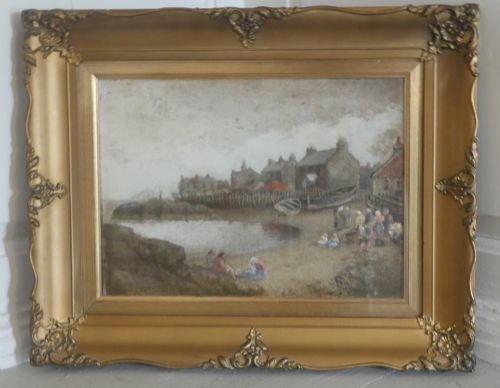
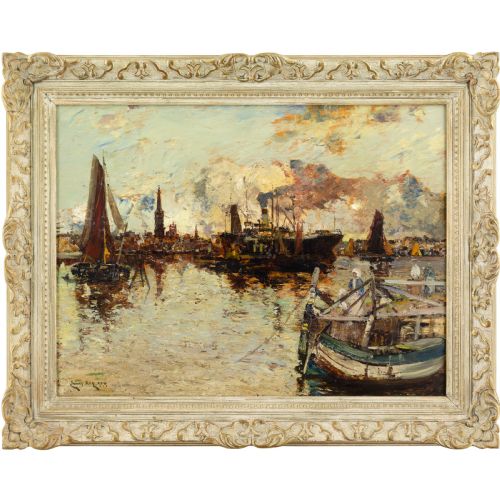
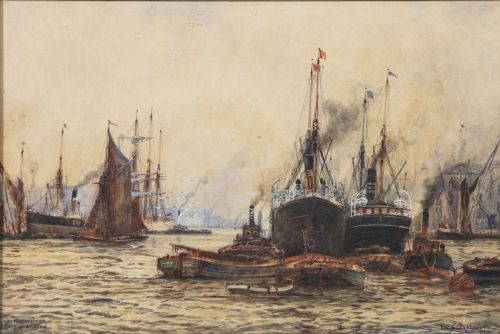
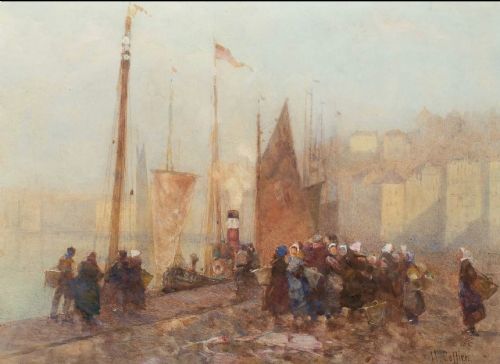
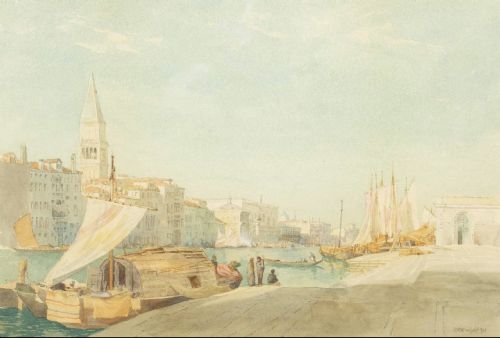
An antique harbour seascape painting captures the bustling maritime life of coastal ports, estuaries and fishing villages across Britain and continental Europe. These works range from tightly detailed nineteenth-century canvas records of sailing ships to looser impressionistic watercolours of local Cornish and Yorkshire quaysides.
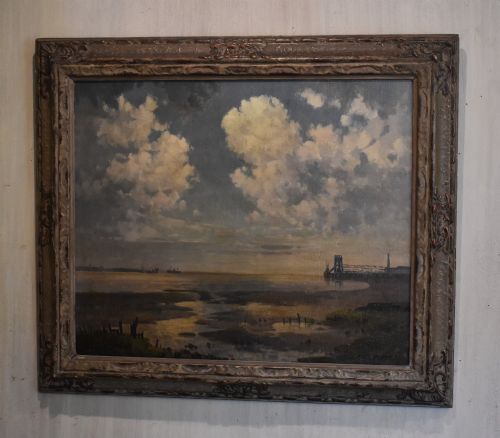
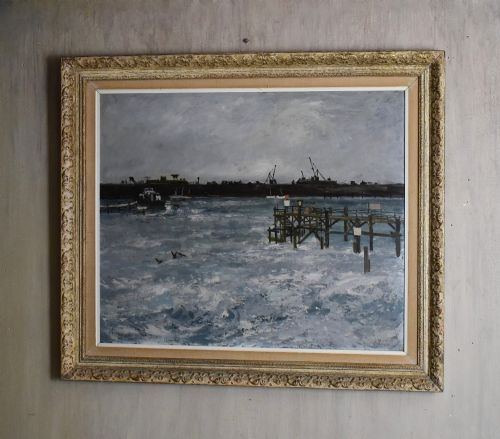
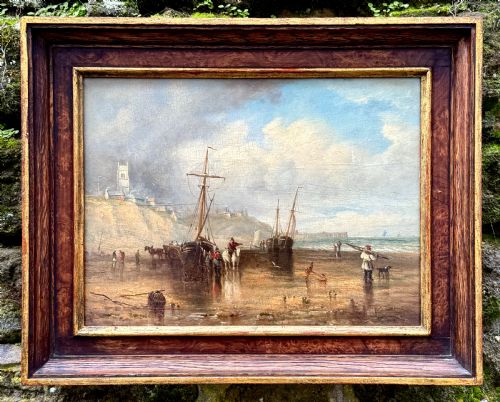
The subjects span quiet tidal inlets at low tide, busy commercial docks like London or Antwerp, and dramatic depictions of fishing vessels returning through choppy waters. Dating principally from the Victorian era through the early decades of the twentieth century, these pieces reflect a period when maritime trade and fishing dominated coastal communities.
Materials and technique
Artists relied primarily on oil paint applied to stretched canvas or wooden panel, or transparent watercolour washes worked on heavy paper. Oil mediums allowed for rich textures in rendering choppy seas and towering ship masts, whilst watercolour facilitated rapid en-plein-air studies of fleeting light and atmospheric coastal haze.
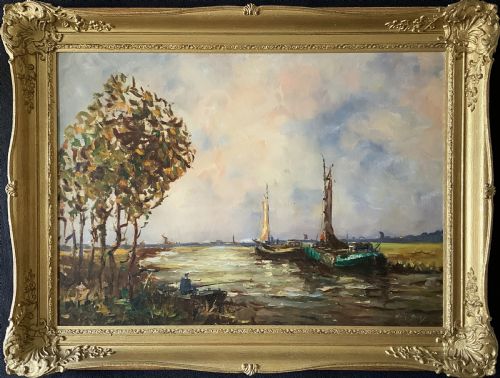
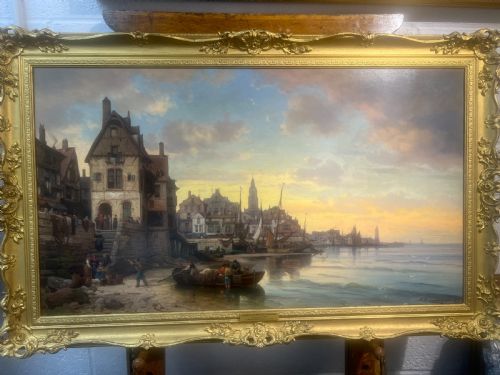
Many surviving examples retain their original gilt wood frames, which often complement the maritime subject matter with moulded plaster ornamentation. The application of pigment varied from precise architectural delineations of harbour walls to broad, expressive brushstrokes associated with British and continental impressionism.
Listings feature works executed in oil on canvas, watercolour on paper, and oil on wood panel across the nineteenth and twentieth centuries.
What separates the best examples
Quality rests upon the artist's command of light, atmosphere and maritime perspective rather than mere scale. Superior works successfully capture the movement of water and the specific atmospheric conditions of a given coastal region, avoiding stiff or formulaic renditions of shipping vessels.
The handling of maritime architecture, rigging and human figures demonstrates the painter's observational skill. Stronger compositions balance the bulk of harbour quays or ships against open stretches of sea and sky.
Thomas Bush Hardy·Frank William Scargough·James Kay·William Lee Hankey·Paul Delvaux
The Antique Harbour Seascape Painting Glossary
- Seascape
- A work of art depicting the sea, coastal views or maritime activity. These pieces focus heavily on water, tides and coastal weather rather than land topography.
- Panel
- A rigid support for oil painting, commonly made of wood. Painters utilised panels for smaller studies and detailed harbour scenes.
- Gilt wood
- Wood coated with a thin layer of gold leaf or metallic paint. Original frames in this finish frequently accompany period oil paintings.
- Impressionism
- An art style characterised by relatively small, thin yet visible brush strokes and an accurate depiction of changing light. In maritime works, this technique translates to sparkling water and shifting coastal mists.
Antique Harbour Seascape Painting: Frequently Asked Questions
How do I date a harbour painting?
Dating relies upon stylistic cues, clothing worn by figures on the quayside, and the types of vessels depicted in the harbour. Steamships, traditional fishing luggers and masted sailing ships each point to specific decades within the nineteenth and twentieth centuries.
Signatures, framing materials and artist biographical dates recorded on the reverse or in gallery records further narrow the period of creation.
Where were these coastal scenes painted?
Artists worked across major trading ports and small fishing harbours throughout Britain and Europe. Popular locations include Cornish fishing villages like St Ives and Looe, Yorkshire ports such as Whitby and Scarborough, as well as continental destinations in France, Italy and the Netherlands.
Painters often travelled to established artists' colonies along the coast to capture local maritime industries and changing tidal conditions firsthand.
Are watercolours as durable as oils?
Waterworks on paper require protection behind glass to prevent atmospheric damage and fading from direct sunlight. When properly glazed and framed away from damp environments, antique watercolours remain remarkably stable over generations.
Oil paintings on canvas or panel possess greater inherent resilience against light exposure, though both mediums benefit from stable indoor humidity and temperature.
How should I frame an antique marine painting?
Preserving or sourcing a period-appropriate gilt wood frame enhances the historical context of a nineteenth or early twentieth-century canvas. Traditional mouldings complement the tonal qualities of maritime oil paintings and watercolours alike.
When framing works on paper, conservation-grade mounts prevent direct contact between the fragile antique paper and the protective glass.