


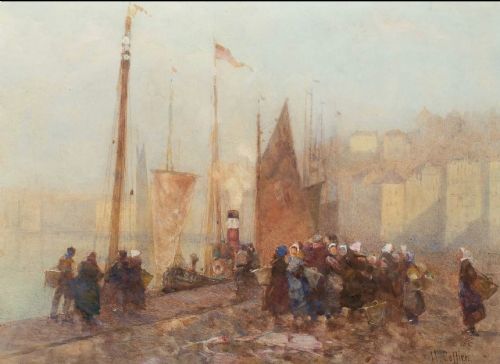
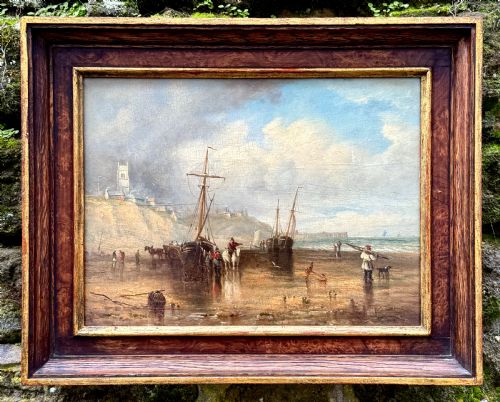
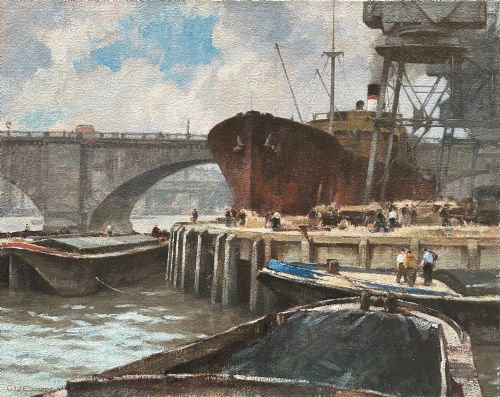
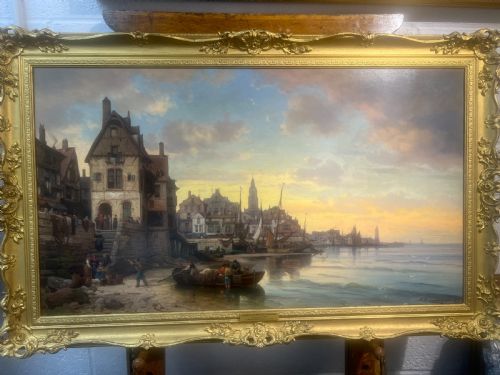
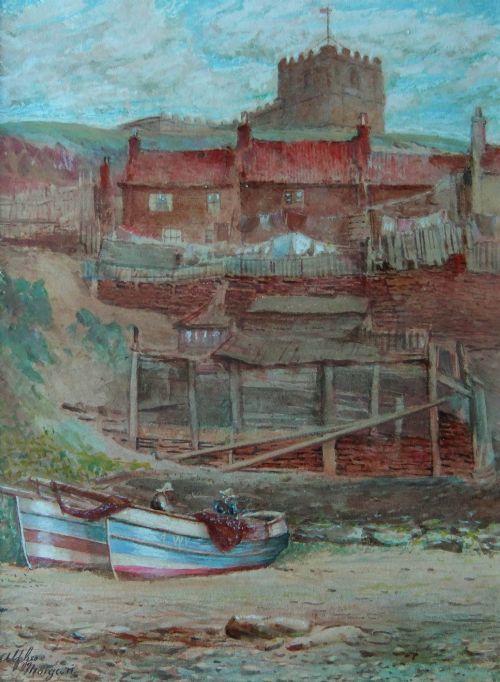
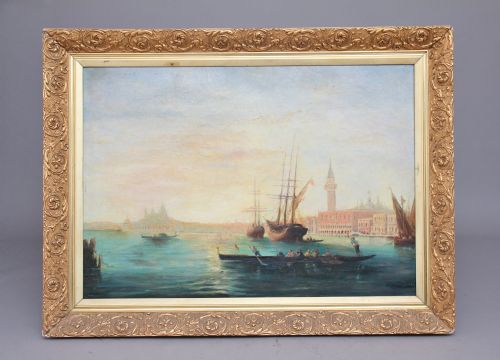
Antique Harbour Scene Art
These pieces of antique harbour scene art capture maritime life in oil and watercolour across British and European coasts.
Antique Harbour Scene Art
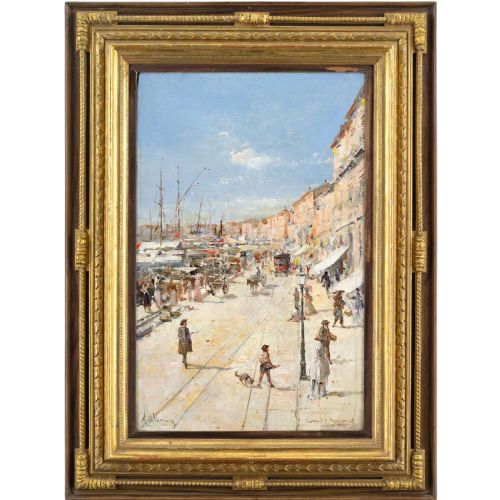
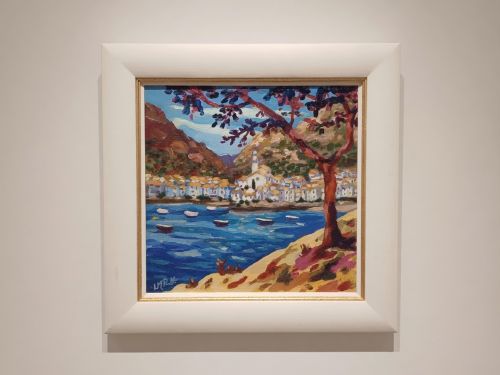
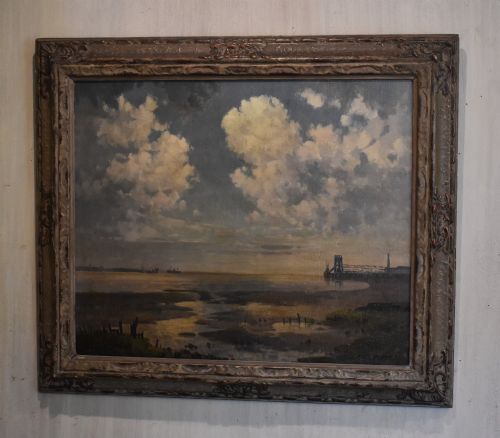
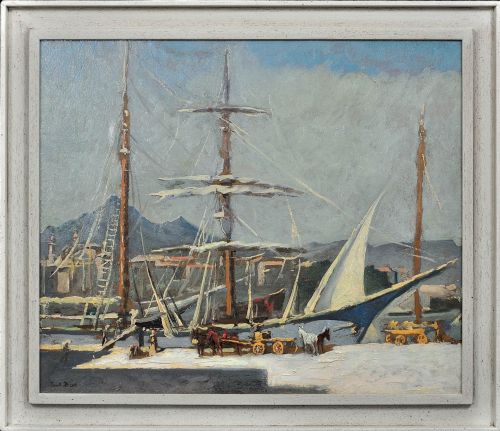
When searching for antique harbour scene art, buyers encounter maritime views rendered primarily during the nineteenth and early twentieth centuries. These works record bustling fishing ports, coastal shipping, and quiet tidal havens across Britain and continental Europe.
Materials and technique
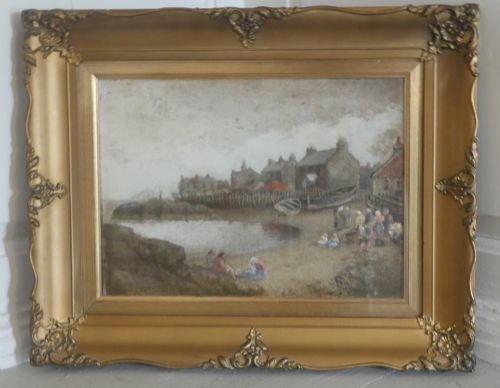
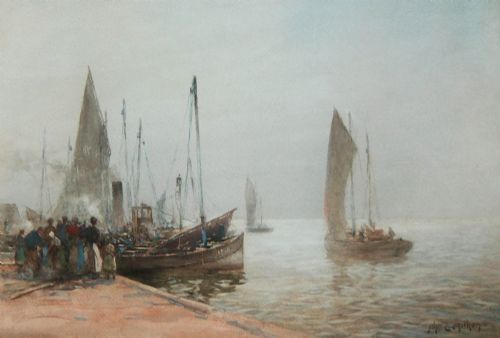
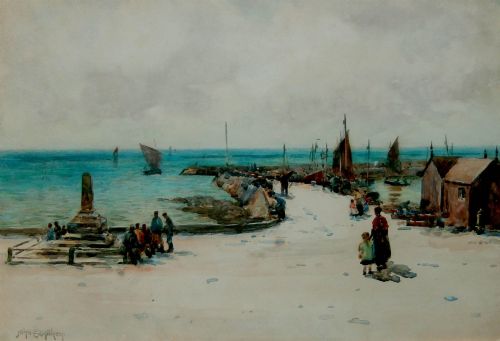
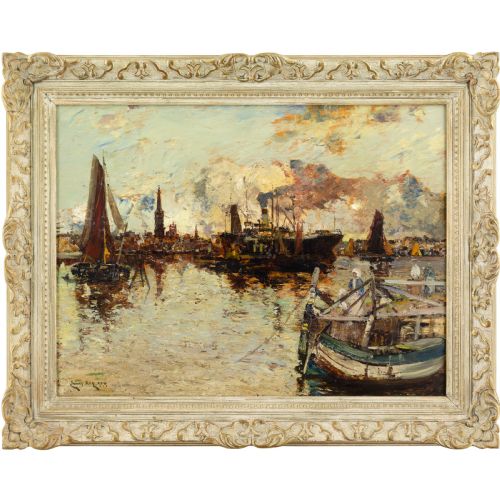
Artists captured coastal light and movement using oil paint or watercolour applied to canvas, paper, or wood panels. Oil on canvas allowed for textured handling of choppy seas and atmospheric skies, while watercolour enabled fluid depictions of coastal atmosphere.
Many surviving works are housed behind glass or within gilt wood frames that complement the maritime subject matter. Support materials range from traditional canvas stretched over wooden frames to paper mounted for watercolour execution.
Listings feature works executed in oil paint, watercolour, and woodblock print across canvas, paper, and wood.
Assessing the works
Quality rests in the artist's command of light, maritime topography, and atmospheric conditions upon the water. Skilled brushwork or watercolour handling conveys the movement of sail boats, tides, and historic port architecture with conviction.
Condition of the medium and the integrity of the frame contribute to overall merit. Works that retain their original pigment vibrancy and historical framing demonstrate greater fidelity to their period of origin.
Edward Mills·James E Aitken·John E Aitken·William Banks Fortescue·James Kay·Augusto Alberici·Hector Caffieri·Thomas Creswick·Charles Euphraisie Kuasseg·Alfred G Morgan·Frank Kelsey·George F Pennington·Paul Delvaux·William Edward Webb·Richard Harry Carter·William Lee Hankey·George Turland Goosey·Fred Lawson·James Kyd·Arthur Tucker·Adrian Van Porten·Claude Lorrain·William Tuck·T S Wallis·Pauwels
The Antique Harbour Scene Art Glossary
- Watercolour
- A painting method where fine pigment is suspended in water-based solution on paper. This medium produces translucent washes suited to coastal skies and marine light.
- Oil on Canvas
- Pigment mixed with drying oil applied to a woven fabric stretched across a wooden frame. This method permits rich surface texture and deep colour layering.
- Gilt Wood
- Timber framing finished with a thin layer of gold leaf or metallic gilding. These frames often accompany nineteenth-century oil paintings and watercolours.
- Maritime Art
- Depictions of the sea, ships, and coastal environments. This genre encompasses both busy commercial harbours and quiet fishing villages.
- Impressionism
- An art style focused on accurate depiction of light and its shifting qualities. Artists working in this manner prioritized spontaneous brushstrokes over precise academic finish.
Antique Harbour Scene Art: Frequently Asked Questions
What periods do these paintings cover?
The available artworks span from the eighteenth century through to the mid-twentieth century, with a strong concentration from the Victorian and Edwardian eras. Pieces from nineteen-ten to nineteen-thirty frequently reflect impressionist and post-impressionist influences.
Earlier works from the eighteen-hundreds provide topographical records of historic British and European ports before major industrial expansion altered their skylines.
Where were these harbour scenes painted?
Locations range across British fishing ports in Yorkshire, Cornwall, and Scotland, alongside European destinations including Venice, Ostend, and the French Riviera. Artists frequently travelled to active maritime centres to record local shipping and daily dockside labour.
These settings provide documentary evidence of historic coastal architecture, from Scottish harbours to Mediterranean lagoons.
How should I display framed maritime art?
These works require placement away from direct sunlight to protect watercolours on paper and oil pigments from fading. Maintaining stable indoor humidity prevents canvas slackening and wood frame warping.
Original gilt wood frames benefit from gentle dusting with a dry cloth without chemical polishes.
Are watercolours and oils framed differently?
Watercolours are typically mounted behind glass within a paper mat to prevent the pigment from touching the glazing. Oil paintings on canvas or panel are generally framed directly in heavy timber mouldings without glass protection.
Both presentation methods align with the historical conventions of their respective mediums.