
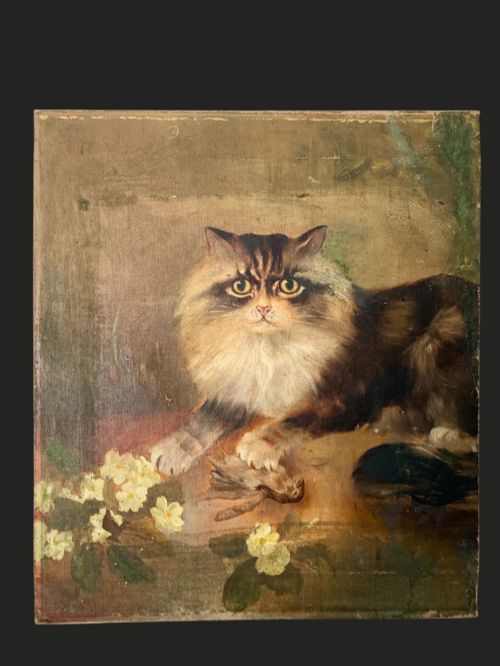
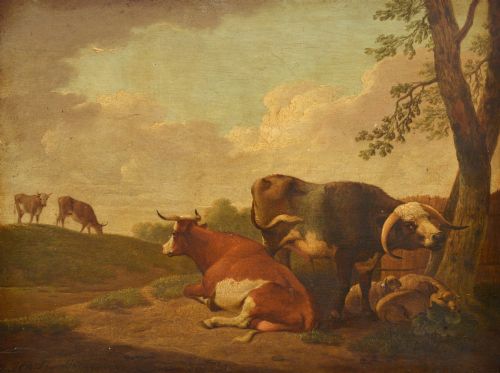

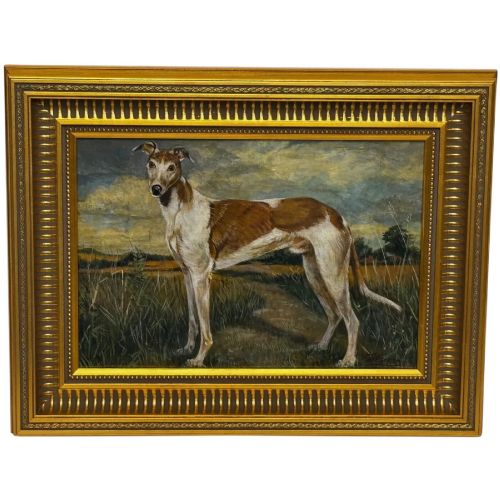
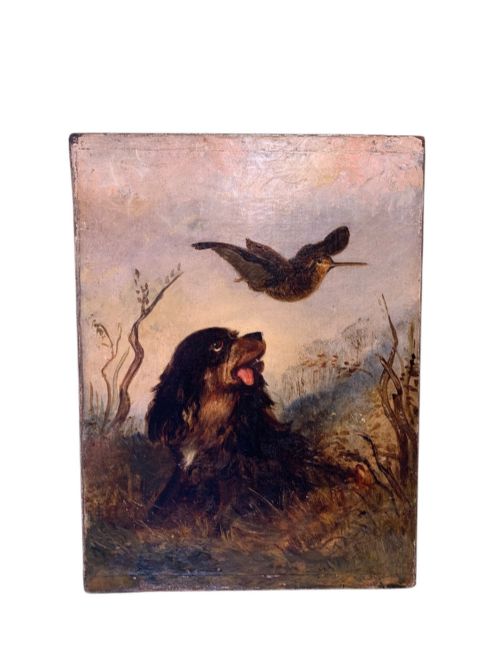
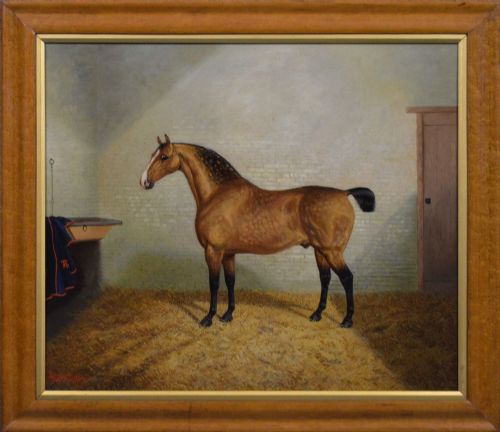
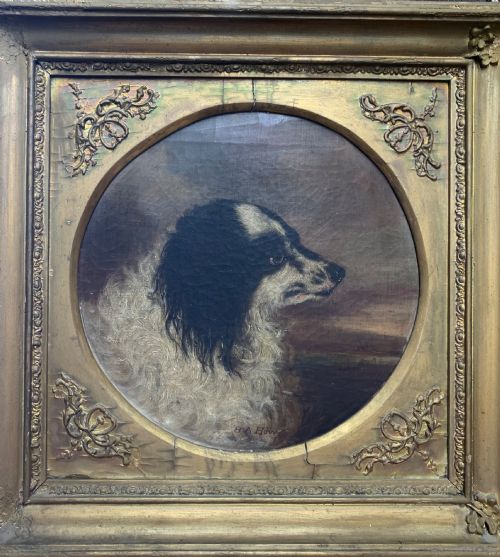
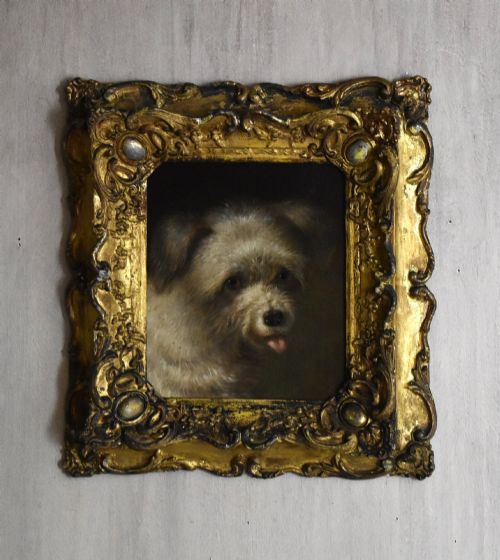
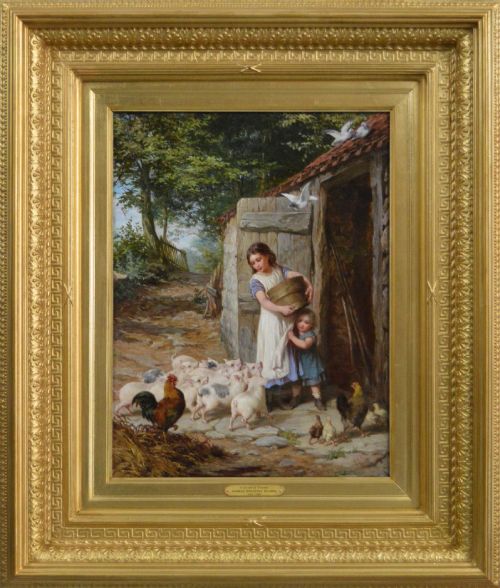
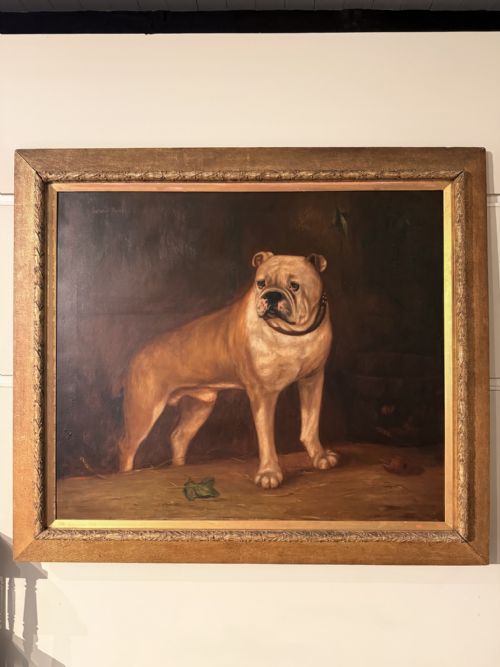
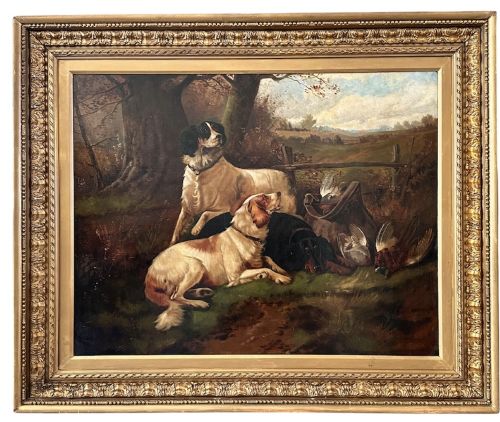
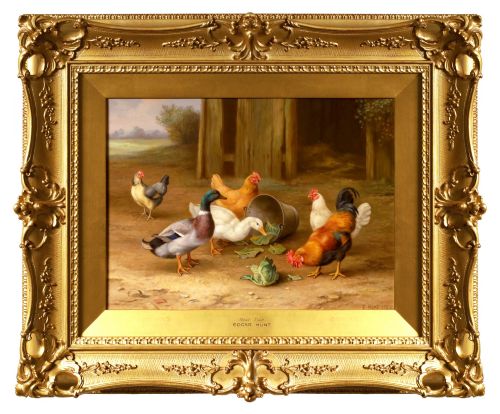
Canvas Animal Oil Painting
When you search for a canvas animal oil painting, you find centuries of fine art portraying dogs, livestock, and wildlife rendered in oil paint.
Canvas Animal Oil Painting
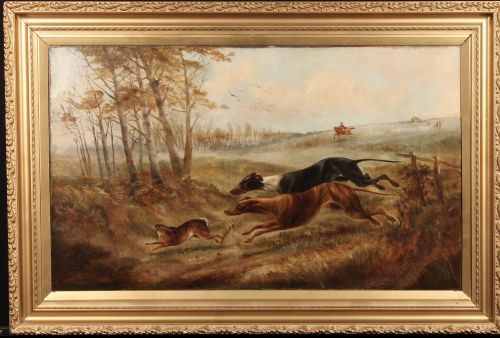
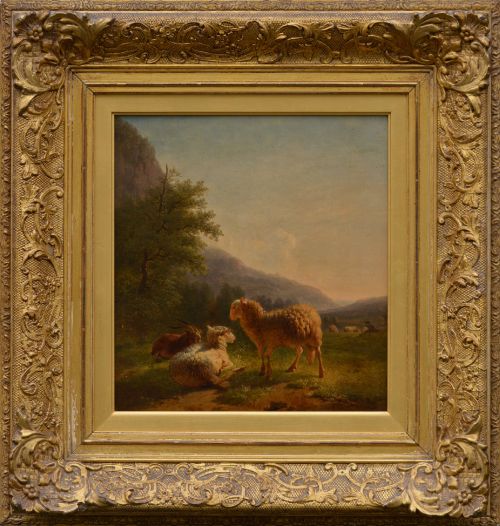
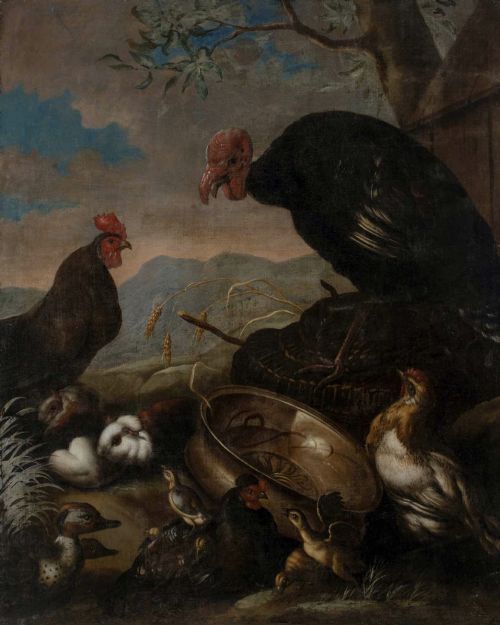
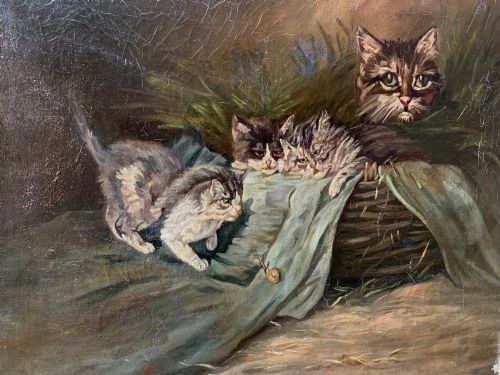
A canvas animal oil painting captures domestic beasts, farm livestock, and sporting animals across the seventeenth, eighteenth, nineteenth, and early twentieth centuries. These works range from naive folk art portraits of single dogs and cats to grand Victorian sporting scenes and pastoral landscapes populated by cattle and sheep.
You are most likely to meet nineteenth-century and Victorian examples on this page, reflecting the era's deep fascination with equestrian subjects, agricultural prize animals, and domestic pets. French, British, and Belgian schools feature prominently among the makers, showing everything from quiet farmyard corners to dramatic hunting dogs.
The format typically presents the creature as the central focus within a rural landscape, a stable interior, or against a dark background that emphasises the subject's form. Framed often in giltwood, these oils carry the distinct aesthetic of period salons and country houses.
How They Were Made
These works rely on oil paint applied to woven canvas stretched over wooden frames, allowing artists to build rich layers of colour, texture, and deep shadow. The interplay of oil pigments enables subtle blending for animal coats, feathered wings, and the play of light across pastoral landscapes.
Makers frequently housed their finished canvases in heavy wooden frames, often finished with gilt or detailed giltwood ornamentation to complement the richness of the painted surface. The stretcher frames and canvas weaves themselves bear the physical hallmarks of centuries-old workshop practices.
Listings span the seventeenth, eighteenth, nineteenth, and early twentieth centuries, utilising oil on canvas alongside carved wood and giltwood frames.
What Varies in Quality
The standard of execution in animal portraiture rests on the artist's command of anatomy, musculature, and the living expression of the creature. Master painters capture the exact texture of fur, the alertness of a hound's ear, or the heavy stillness of cattle with convincing weight and proportion.
Compositional ambition also elevates certain pieces above standard decorative works, distinguishing a simple portrait from a complex narrative scene involving landscape, architecture, and multiple figures. The preservation of the original canvas and the integrity of the accompanying giltwood frame further influence the standing of any given piece.
George Armfield·Eugène Verboeckhoven·Angelo Maria Crivelli·Hendrik Willem Schweickhardt·Albert Clark·Martin Theodore Ward·George Augustus Holmes·John Sargent Noble·Edgar Hunt·Robert Watson·Sir Edwin Henry Landseer·Henry Barraud·Fred Fitzpatrick·William Watson Jnr·Alfred Arthur Brunel de Neuville·Henry Schouten·Claude Cardon·Frans Snyders·John Emms·LM Webb·Margaret Maitland Howard·Henry Robinson Hall·William Henry Mander
The Canvas Animal Oil Painting Glossary
- Oil on Canvas
- A painting technique where pigmented oil is applied directly to a woven fabric support. This combination provides durability and allows for luminous colour blending.
- Giltwood
- Wood that has been treated with a thin layer of gold leaf or gilt finish. Frames utilising this material were designed to enhance the visual impact of period artworks.
- Sporting Art
- A genre of painting dedicated to hunting, shooting, racing, and prized animals. These works record the pivotal animals and rural pursuits of past centuries.
- Naive School
- An artistic style characterised by a childlike simplicity in perspective and proportion. Pieces from this tradition offer direct, unpretentious portrayals of animals and rural life.
- Baroque
- An elaborate artistic style spanning the seventeenth century, known for dramatic lighting and deep contrasts. Paintings from this period often depict animals in intense, dynamic compositions.
Canvas Animal Oil Painting: Frequently Asked Questions
What is a canvas animal oil painting?
It is a traditional artwork created by applying oil pigments onto a stretched fabric surface to depict creatures ranging from pets to livestock.
These pieces document historical attitudes toward domestic animals, agriculture, and sports through detailed visual portraiture.
How were these paintings displayed?
Period artworks were customarily housed in substantial wooden frames, frequently finished in gilt to suit formal domestic interiors.
They hung in country houses, stables, and drawing rooms to celebrate prized livestock, hunting companions, or favourite pets.
How do I identify a Victorian animal painting?
Victorian examples often display a strong focus on realism, sentimentality, or sporting subjects like horses and hounds.
Examining the canvas preparation, stretcher construction, and framing style helps confirm the nineteenth-century origins of the piece.
Who painted these historical animal portraits?
Works were produced by academic painters, specialised sporting artists, and regional naive practitioners across Europe.
Many signed their canvases or left stylistic signatures that connect their output to specific national schools and periods.