



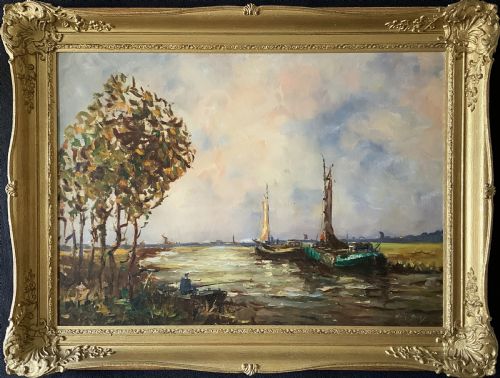
Antique Harbour Landscape
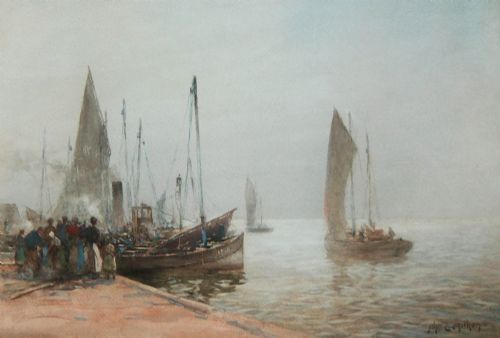
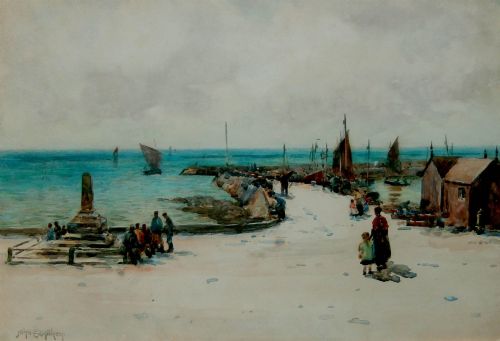
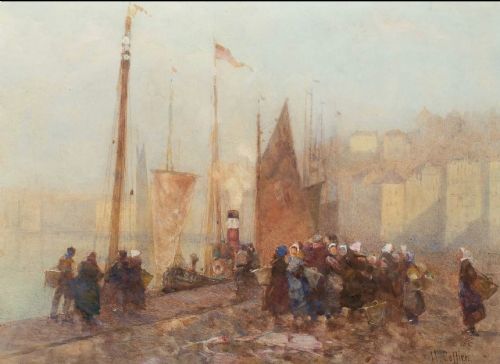
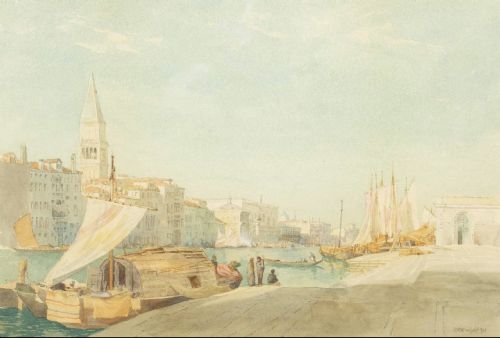
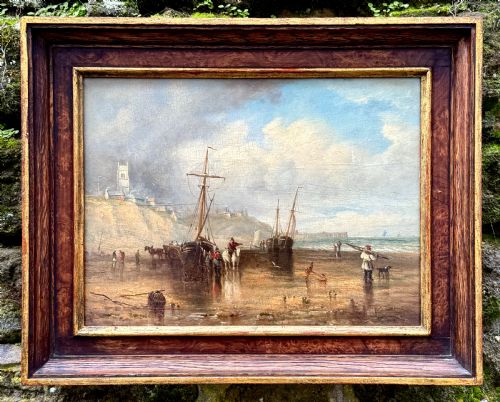
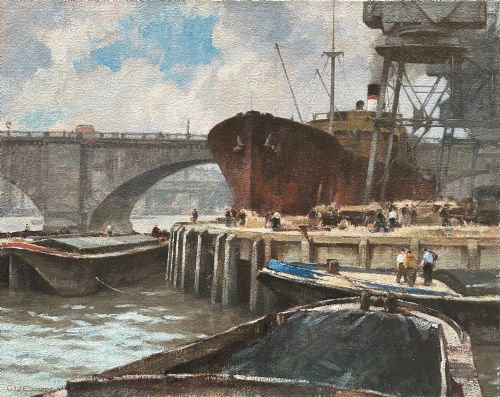
When you search for an antique harbour landscape, you seek coastal views capturing maritime trade and fishing communities through Victorian and early twentieth-century brushwork.
Antique Harbour Landscape
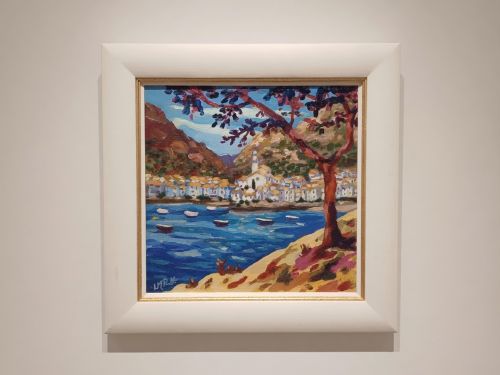
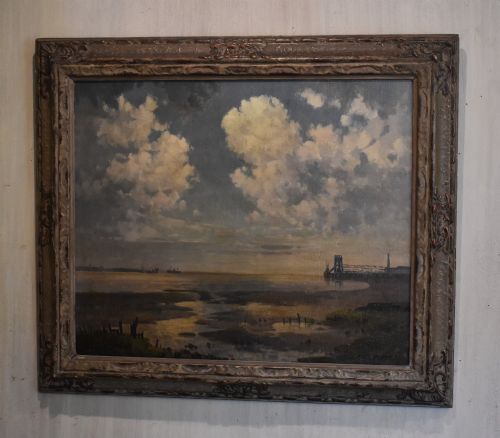
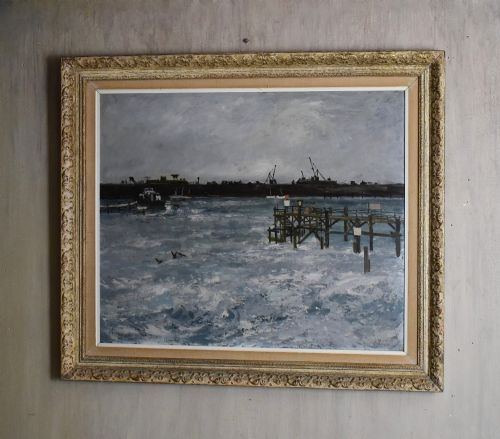
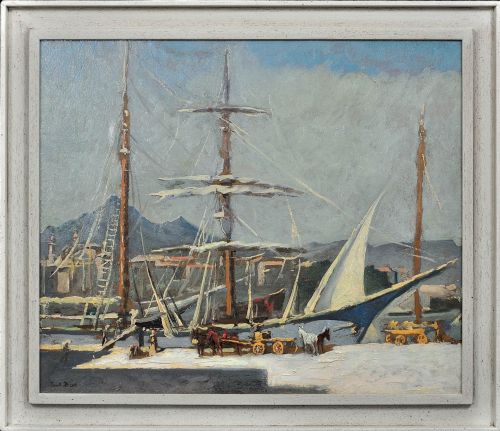
The antique harbour landscape selection spans the nineteenth and early twentieth centuries, encompassing Victorian, Edwardian, and post-impressionist movements. These works record coastal scenes, fishing ports, and tidal rivers from British, French, Dutch, and Italian locations.
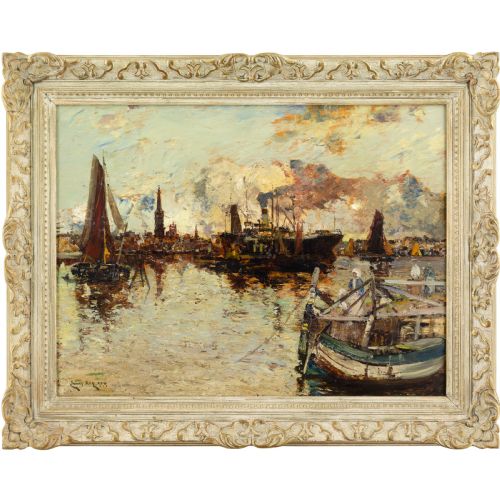
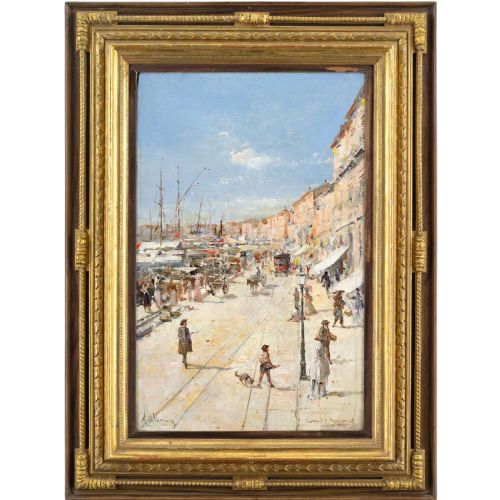
Most entries on this page take the form of original oil paintings on canvas or delicate watercolours on paper, often framed in gilt wood. Subjects range from busy Yorkshire fishing docks to sunlit Venetian lagoons and calm European estuaries.
Makers and painters of the period captured daily maritime life, featuring sailing vessels, moored boats, and architectural backdrops such as abbeys, castles, and quaysides.
How they were made
Artists deployed oil paint upon prepared canvas or wooden panels, building rich textures and impasto surfaces, or applied transparent watercolours across paper supports. Pigments were combined with traditional binders to capture shifting light over water and stone.
Many surviving works retain their original gilt wood frames, protecting the canvas or paper behind glass where applicable. These traditional framing techniques complement the maritime subject matter and historical period of the art.
The inventory records British Impressionism, Victorian, and Edwardian styles alongside continental marine painting traditions.
What varies in quality
Quality rests upon the artist's ability to render atmospheric light, spatial depth, and the convincing movement of water within the harbour setting. Superior examples display confident brushwork and precise topographical observation rather than formulaic repetition.
Condition of the medium, whether oil paint or watercolour, dictates the enduring visual strength of the piece. Works that retain their original pigments without excessive fading or crude restoration stand at the upper end of the range.
James E. Aitken·John E. Aitken·William Banks Fortescue·James Kay·Augusto Alberici·Hector Caffieri·Richard Henry Wright·Thomas Creswick·Willem Bos·Charles Euphraisie Kuasseg·Alfred G. Morgan·Thomas Hodgson Liddell·Frank Kelsey·F A Roylance·George F Pennington·Charles William Wyllie·William Edward Webb·Edward Matthew Elliott·Jean-Baptiste Olive·James Fry·William Lee Hankey·George Turland Goosey·Fred Lawson·Arthur Tucker·Adrian Van Porten
The Antique Harbour Landscape Glossary
- Watercolour
- A painting method in which the paints are made of pigments suspended in a water-based solution. These works are typically executed on paper.
- Impasto
- A technique where paint is laid on an area of the surface in very thick layers, usually thick enough that the brush or painting-knife strokes are visible.
- Gilt wood
- Wood that has been treated with a thin layer of gold leaf or gilt powder. Frames utilising this finish frequently accompany period oil paintings.
- Seascape
- A work of art that depicts the sea, representing a variation of landscape art. These pieces focus centrally on maritime views and coastal infrastructure.
Antique Harbour Landscape: Frequently Asked Questions
What subjects appear in these paintings?
These works typically depict busy fishing ports, tidal rivers, coastal towns, and moored sailing vessels. Scenes range from British coastal locations like Whitby and St Ives to continental European waterways in Venice, France, and Holland.
Artists focused on daily maritime activities, capturing low tides, evening departures, and architectural landmarks adjacent to the water.
How do I distinguish watercolours from oils?
Watercolour paintings use transparent pigments on paper and are usually displayed behind protective glass. They offer delicate washes of light and colour characteristic of works on paper.
Oil paintings utilise heavier paint applied to canvas, wooden panels, or board, creating textured surfaces that do not require glass protection.
How should I frame and display them?
Many works retain their period gilt wood frames, which complement the historical nature of the maritime subject matter. Watercolours require framing behind glass to prevent atmospheric damage to the paper.
Display these paintings away from direct sunlight and excessive humidity to preserve the integrity of the canvas, paper, and pigments.