
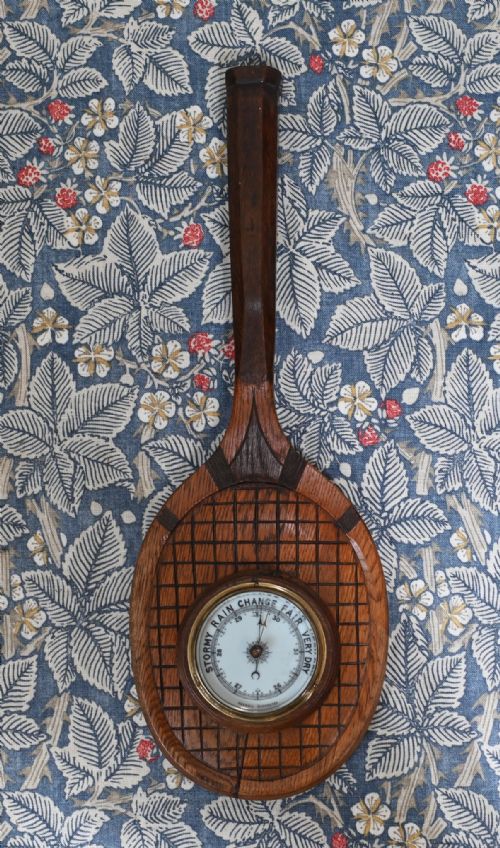


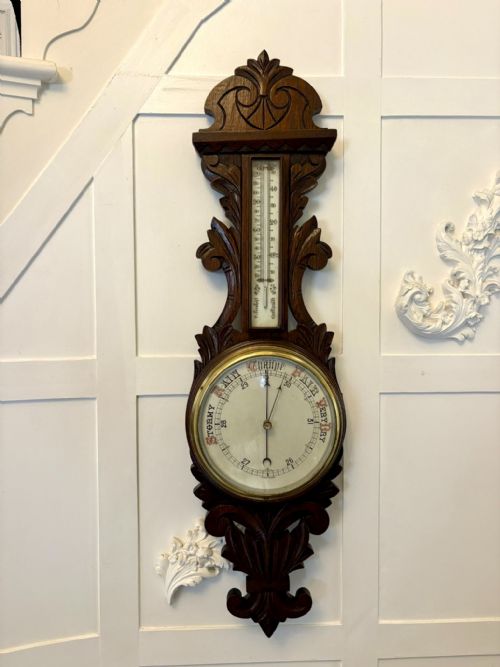


Antique Hanging Barometer
These antique hanging barometer examples bring mechanical precision and traditional timber to a wall, offering atmospheric observation through centuries-old craft.
Antique Hanging Barometer
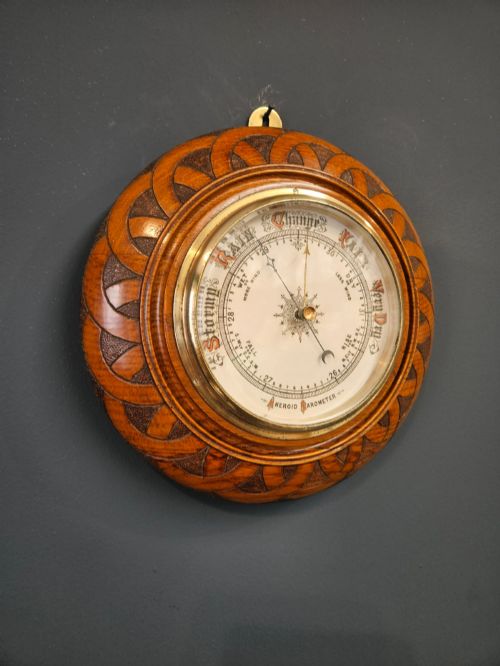
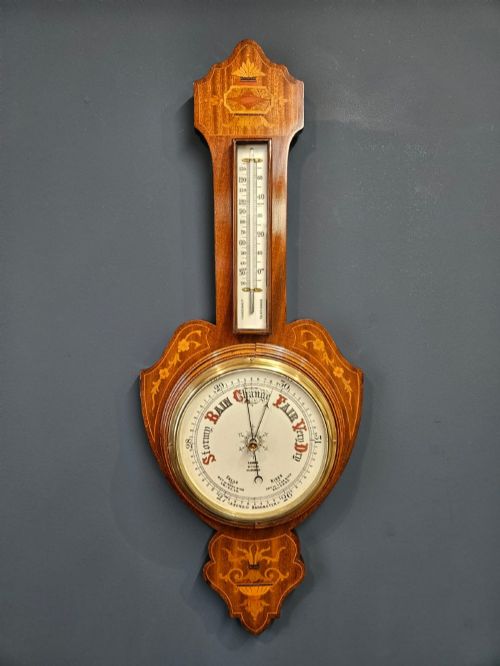
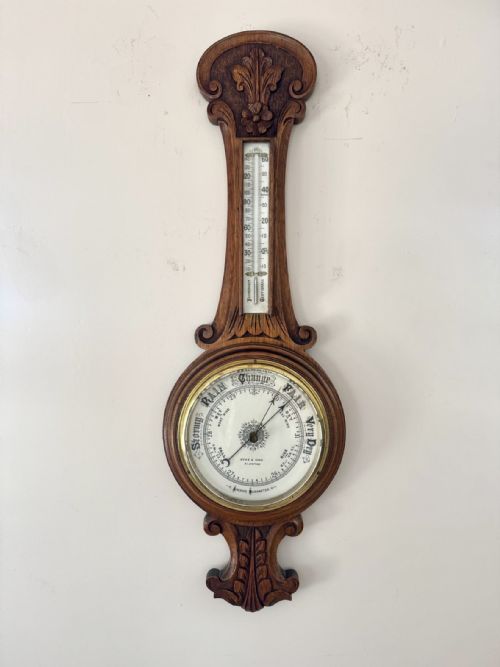
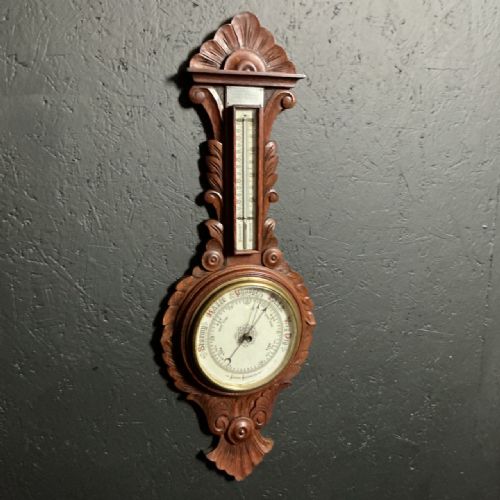
Most pieces met on this page are housed in oak or mahogany, stretching from nineteenth-century vernacular carvings to inlaid Edwardian specimens and Black Forest walnut creations. These instruments served both domestic utility and decorative display in period interiors, remaining functional focal points for a hallway or study.
Materials and construction
Cabinetmakers utilised dense hardwoods such as mahogany, oak, walnut, and rosewood to house the delicate glass tubes and metal dials, often applying intricate boxwood inlay, mother-of-pearl, or deep relief carving. The timber cases were turned, shaped, and polished to protect the internal mechanics while displaying rich natural grain patterns.
Internal mechanisms relied on mercury columns in stick barometers or sealed metal aneroid chambers in banjo formats, paired with silvered metal indicator dials and glass face covers. Makers combined brass fittings, carved bone vernier scales, and precision pointers to translate atmospheric shifts into readable visual data.
Listings span the Georgian, Victorian, and Edwardian periods, utilising oak, mahogany, walnut, and rosewood across banjo and stick barometer forms.
Distinctions in quality
Quality rests in the crispness of the timber carving, the refinement of the cabinetmaker's joinery, and the legibility of the engraved silvered metal dial. Finer examples exhibit balanced proportions, harmonious wood selection, and detailed decorative stringing or inlay rather than plain mass-produced housing.
Hyde & Sons Sleaford·JB Bergna Newcastle·Maple & Co·Aitchison for Zambrene Weatherproof Clothing·Negretti & Zambra·James Pitkin London·J Groce York·S. P. Cohen Glasgow·Pinchetti & Co London·Tarone Gally & Co·George Dollond of London
The Antique Hanging Barometer Glossary
- Banjo barometer
- A household barometer shaped with a rounded dial top and an elongated trunk below that typically houses a thermometer or humidity gauge. This form became particularly popular during the Victorian and Edwardian periods.
- Stick barometer
- A tall, narrow barometer that displays atmospheric pressure through a vertical mercury-filled glass tube backed by a calibrated scale. These instruments offer a direct view of the mercury level without mechanical amplification.
- Aneroid barometer
- An instrument that measures pressure using a flexible-walled sealed metal capsule that expands or contracts with atmospheric changes. This design eliminated the need for liquid mercury and allowed for more compact or varied case shapes.
- Silvered metal
- A brass or copper dial plate treated to achieve a silvery finish, then engraved with numerals and weather descriptions. Fine examples feature delicate geometric or floral engraving across the surface.
- Black Forest
- A regional style of woodwork originating in Germany characterised by deeply carved natural motifs, foliage, and animals. These frames utilise rich walnut to create highly sculptural wall pieces.
Antique Hanging Barometer: Frequently Asked Questions
How do I set up an antique barometer?
Hanging barometers require secure wall placement away from direct heat sources and drafts to ensure accurate pressure readings. The indicator needle is typically adjusted using the central glass knob to align with the current mercury or aneroid measurement.
Allow the instrument time to adjust to the ambient room pressure after mounting. Minor calibrations can then be made by comparing the reading with local meteorological reports.
Are mercury barometers safe to hang at home?
Stick barometers containing mercury are stable when securely mounted on a wall and left undisturbed. The glass tube is enclosed within the timber case, preventing accidental contact during daily use.
Transporting or relocating these instruments requires careful handling to secure the mercury column and prevent glass breakage. Many collectors follow traditional procedures or consult specialists when moving stick barometers.
How do I tell an aneroid barometer from a stick barometer?
Stick barometers feature a tall, narrow wooden trunk displaying a long vertical glass tube filled with mercury. They rely on the physical height of the liquid column to indicate atmospheric pressure.
Aneroid barometers use a circular or banjo-shaped dial face where a mechanical pointer rotates around numbers and weather words. They operate via an internal sealed metal vacuum box rather than visible liquid columns.
What rooms suit a hanging barometer best?
Hanging barometers traditionally occupied hallways, studies, or libraries where residents checked the weather before heading outdoors. Their decorative timber cases complement panelled walls, book-lined shelves, and period furniture.
Avoid placing them in damp environments like kitchens or bathrooms, as excessive moisture can tarnish the brass fittings and damage the wooden veneers over time.
How do I date an Edwardian barometer?
Edwardian barometers often feature lighter mahogany timbers, subtle boxwood stringing, and restrained neoclassical inlay patterns. The dial typography and decorative carving styles reflect the transition from ornate Victorian designs into early twentieth-century tastes.
Signatures from makers or retailers inscribed on the metal dials or paper labels inside the case provide further chronological markers. Comparing the wood finish and mechanical setup with documented period pieces helps confirm the decade of manufacture.