


Antique Hallway Mirror Stand
An antique hallway mirror stand combines storage and reflection, anchoring an entrance with timber, brass, and glass.
Antique Hallway Mirror Stand
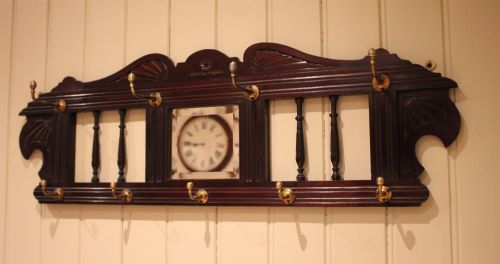
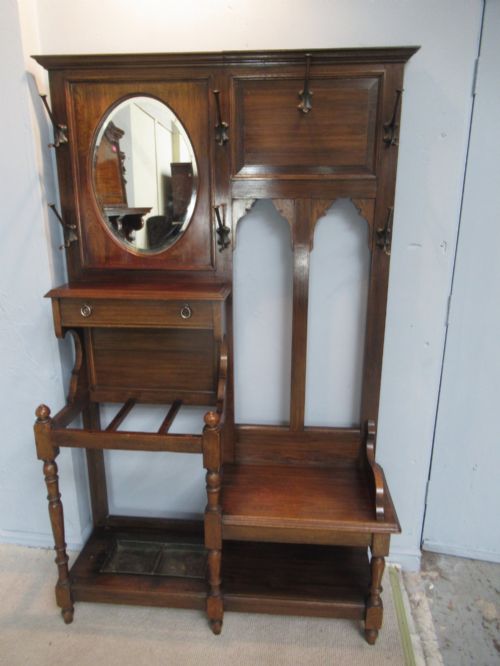
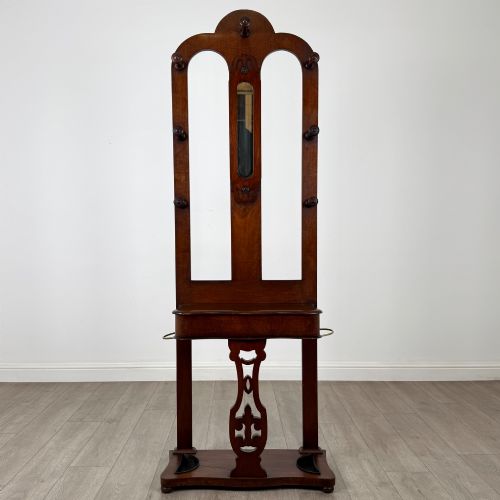
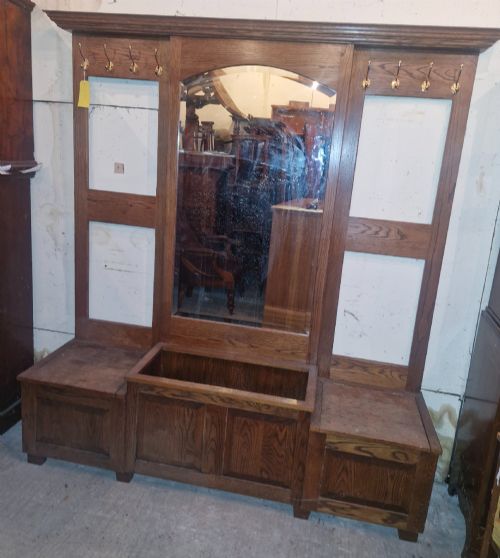
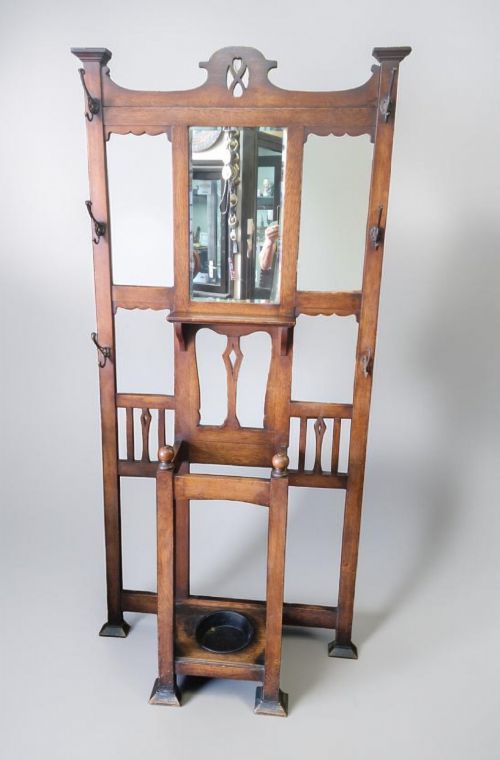
An antique hallway mirror stand is a practical piece of entrance furniture designed to hold coats, hats, and umbrellas while providing a looking glass before stepping out. The selection on this page centres primarily on Victorian and Edwardian examples, spanning the late nineteenth century into the early decades of the twentieth.
The form developed to serve the functional demands of grand townhouses and modest homes alike, sorting outdoor garments in the hallway. Choosing an appropriate version depends upon available wall space and floor depth, as the dimensions range from narrow upright frames to expansive carved monuments.
Materials and construction methods
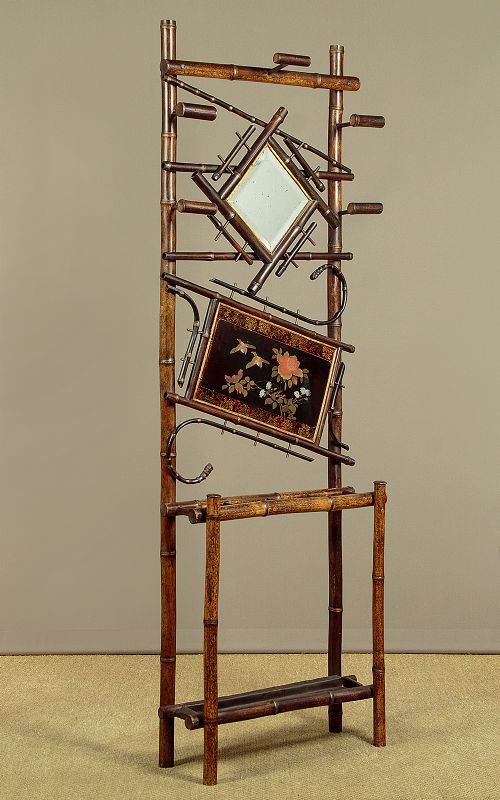
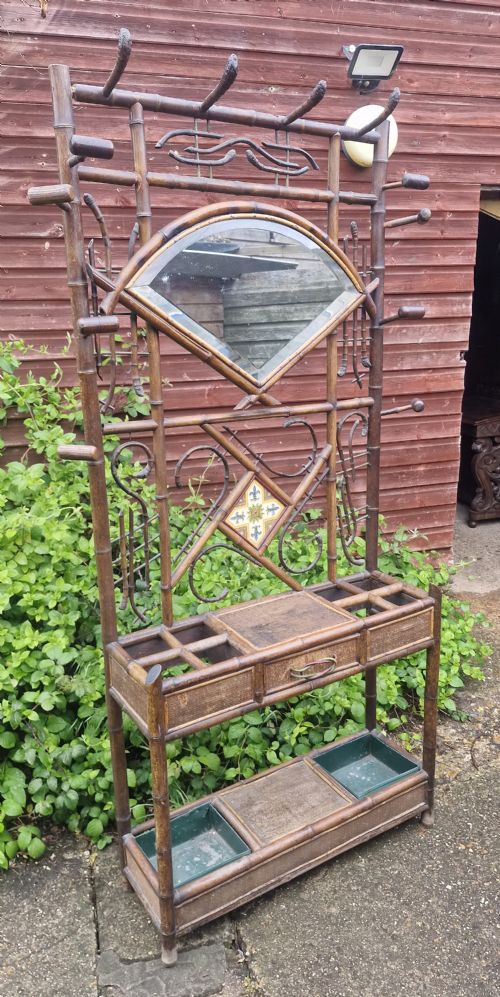
Makers relied heavily on solid hardwoods like oak and mahogany, alongside exotic materials such as bamboo for lighter aesthetic movement pieces, building frames to endure daily domestic use. Panels are frequently carved, fielded, or moulded, while smaller items utilise bentwood or turned structural members.
Functional hardware forms an integral part of the construction, featuring brass, cast iron, and metal coat hooks screwed directly into timber backs or friezes. Integrated storage often includes zinc or copper drip pans placed beneath umbrella compartments to catch rainwater from sticks and canes.
Reflecting plates are typically heavy bevelled glass secured within rebated wooden frames or held by decorative brass clips. Marble slabs frequently top the central console sections or glove drawers, providing a durable, wipe-clean surface for keys and calling cards.
The listings feature oak and mahogany constructions spanning the Victorian, Edwardian, and Arts and Crafts periods.
Judging quality and craftsmanship
Quality rests upon the architectural ambition of the timber framework and the crispness of any hand-carved ornamentation. Finer examples display deeply moulded cornices, panelled backs, and well-proportioned mirror plates rather than applied composition ornaments.
The choice of primary timber and secondary wood dictates the grade of the piece, with dense, well-figured mahogany or quarter-sawn golden oak marking superior workshop production. Robust internal joinery ensures the standing frame supports heavy winter overcoats without racking or loosening at the joints.
Gillows·Fischel
The Antique Hallway Mirror Stand Glossary
- Bevelled glass
- A mirror plate with an angled edge ground down to a narrower width around the perimeter. This catches light and adds depth to the reflection.
- Drip pan
- A small metal tray, often made of brass or zinc, positioned at the base of a hall stand to catch water from wet umbrellas and walking sticks.
- Hall tree
- An alternative term for a floor-standing hall stand. It typically incorporates multiple upright posts and branches for hanging garments.
- Etagere
- A piece of furniture consisting of a set of open shelves for displaying small objects. Some hallway forms combine this shelving structure with a central mirror.
- Biedermeier
- A Central European style from the nineteenth century characterised by utilitarian comfort and clean lines. It prioritises honest wood grain over excessive ornamentation.
Antique Hallway Mirror Stand: Frequently Asked Questions
Where should I place a hall stand?
Position your hall stand in an entrance hall or boot room against a sturdy wall where it can be secured safely if necessary. Ensure there is adequate clearance around the piece for hanging coats and accessing umbrella compartments.
Keep the stand away from direct heat sources such as radiators to prevent the timber from drying out and cracking. Good natural or artificial light nearby helps you utilise the mirror effectively before leaving the house.
How do I care for the mirror plate?
Clean the glass using a soft cloth and a mild glass cleaner, spraying the cloth rather than the mirror directly. This stops liquid seeping behind the silvered backing or into the wooden frame rebate.
Inspect the fixings periodically to ensure the mirror plate remains securely seated within its wooden frame. Avoid abrasive cleaners that might scratch the surface or damage surrounding polished wood.
Can these stands support heavy winter coats?
Most floor-standing units are engineered to bear the weight of heavy coats, hats, and scarves through robust timber framing and sturdy brass hooks. Distribute garments evenly across the hooks to maintain overall balance and prevent undue strain on one side.
Wall-mounted hat and coat racks require secure fastening to wall studs or masonry rather than just plasterboard. Check that mounting screws and wall plugs are rated for the combined weight of the rack and wet garments.
How do I identify an Aesthetic Movement stand?
Aesthetic Movement pieces often incorporate slender bamboo or ebonised frames influenced by Japanese design principles. They frequently date to the late nineteenth century and prioritise artistic charm over heavy Victorian solemnity.
Look for asymmetric arrangements, lacquered panels, and simpler linear forms rather than deep classical carvings. These pieces provide a lighter visual footprint in smaller modern hallways.