

Antique Hall Tree Stand
An antique hall tree stand greets visitors at the door with practical storage for coats, hats, and umbrellas.
Antique Hall Tree Stand
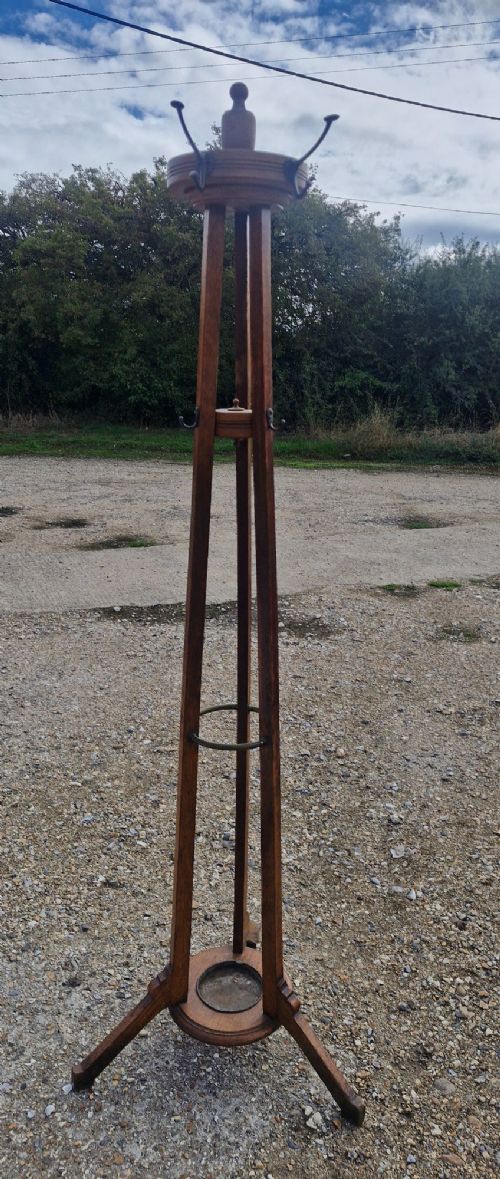
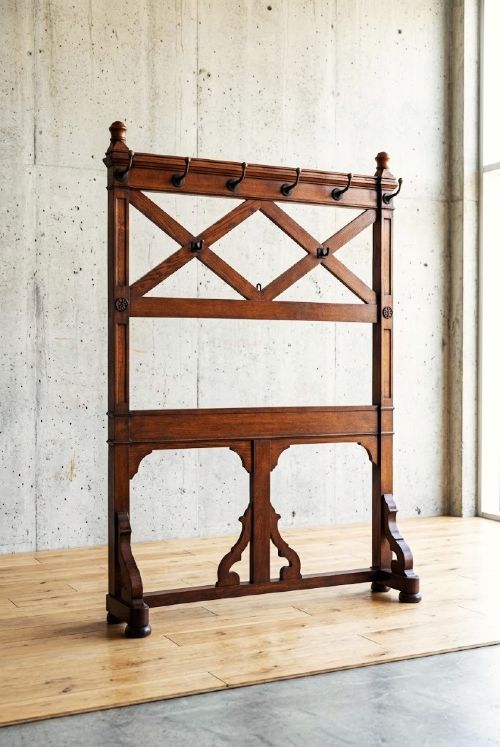
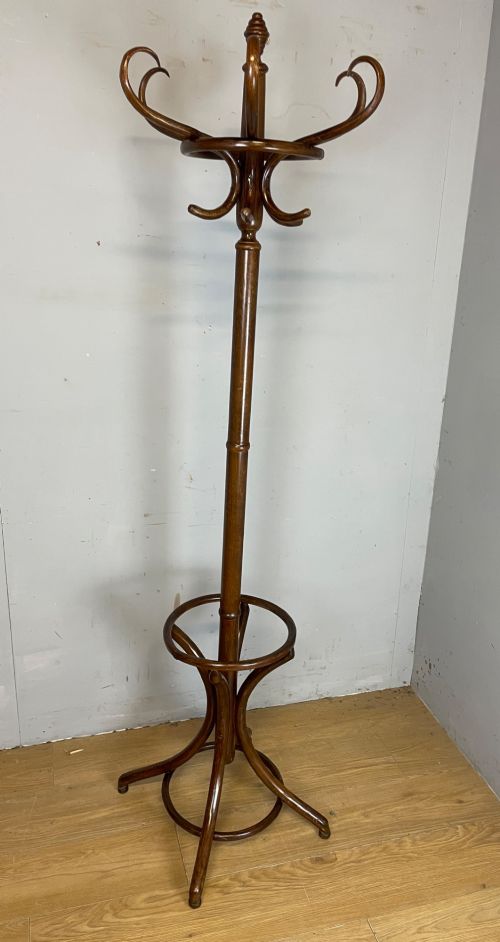
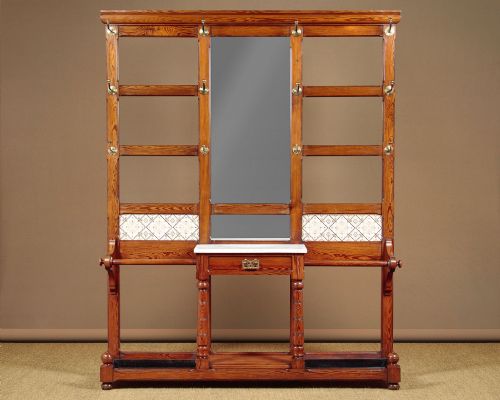
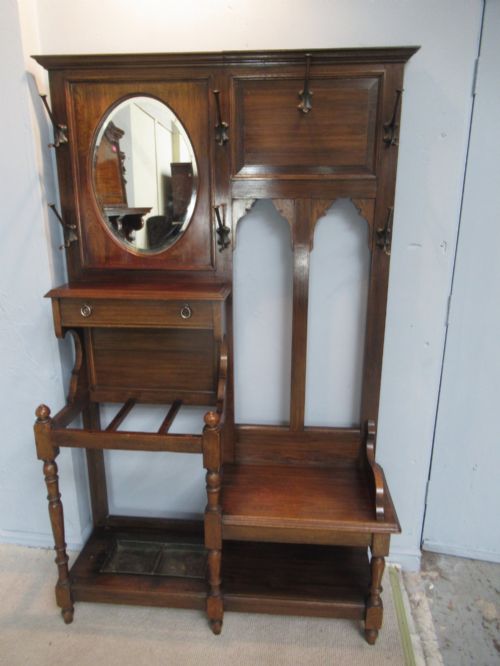
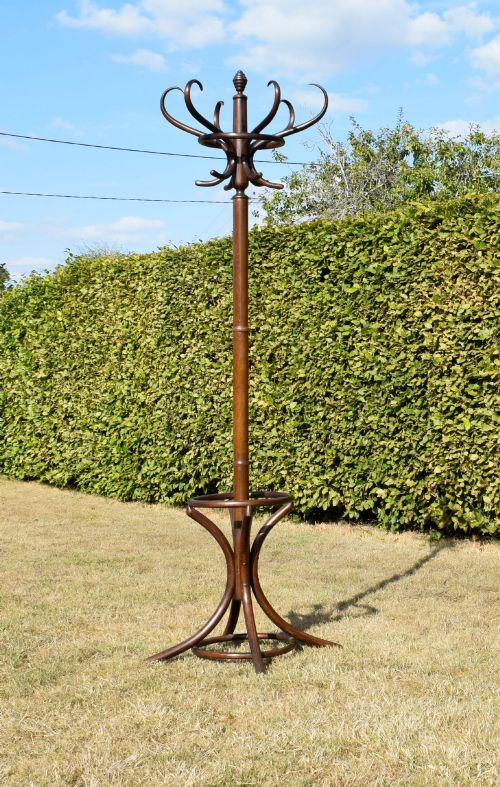
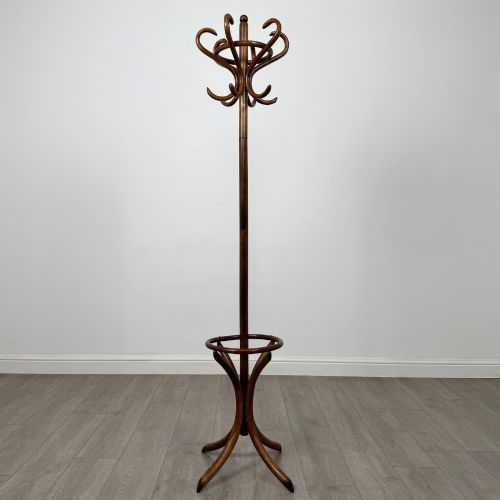
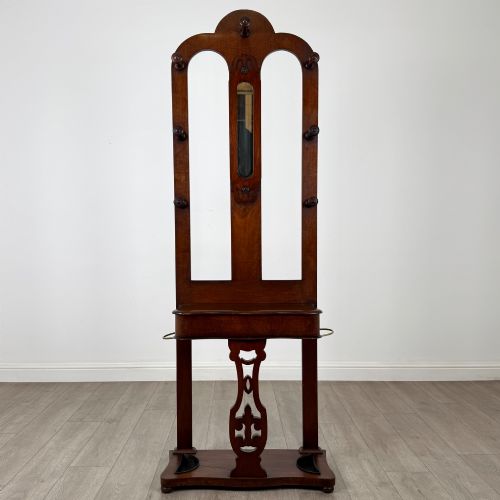
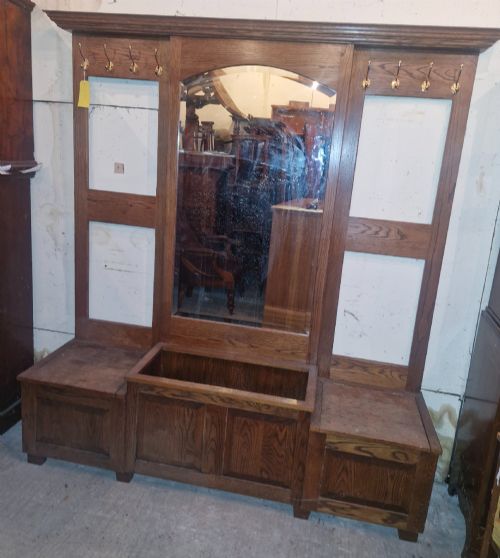
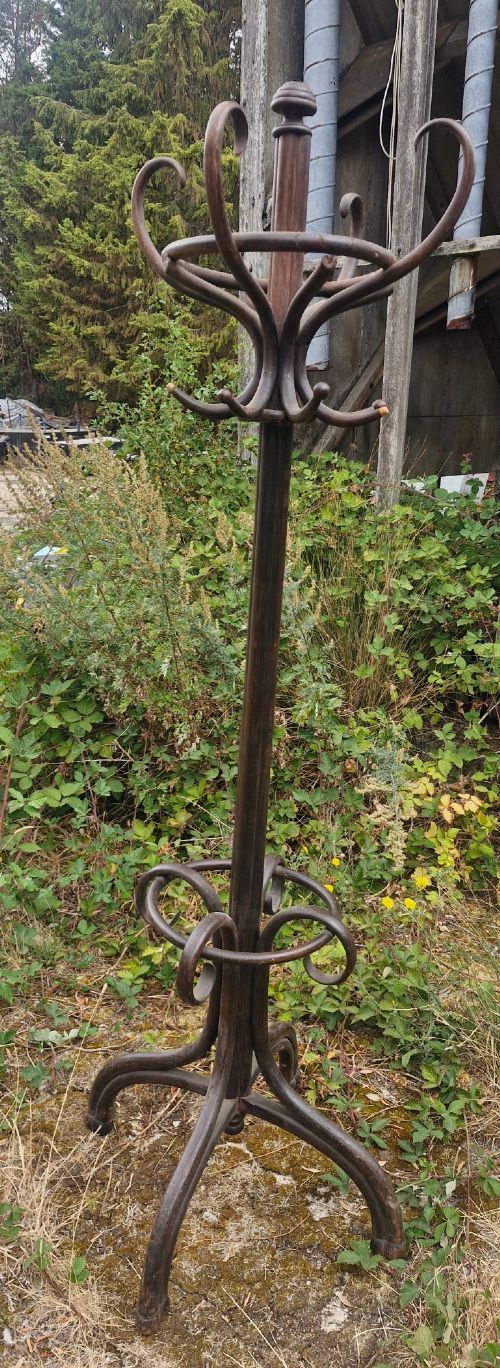
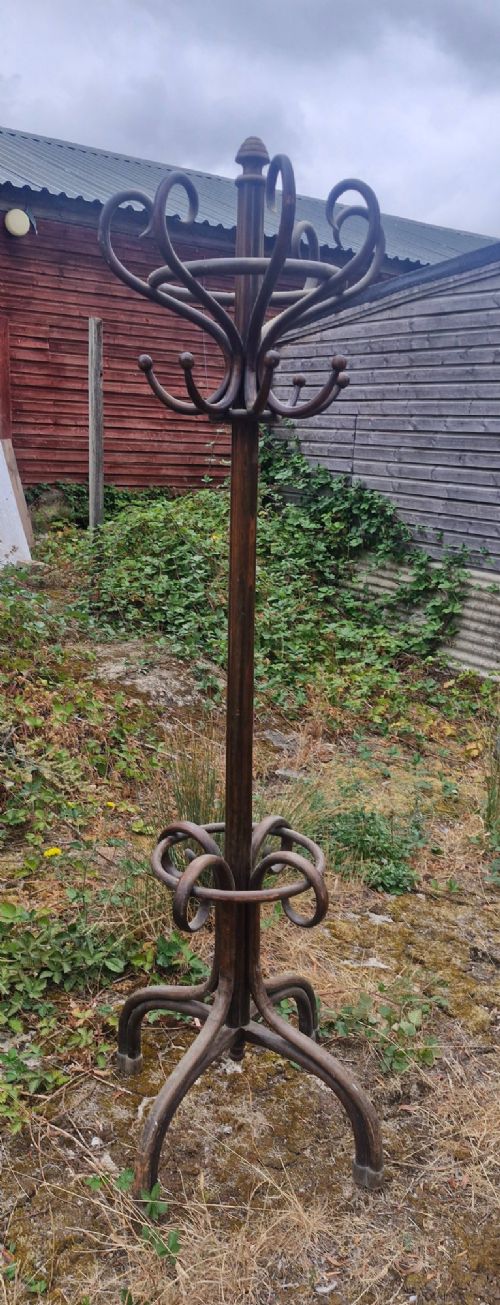
An antique hall tree stand combines functional furniture for garments and accessories with the architectural presence of an entryway anchor. Buyers encounter forms ranging from imposing Victorian and Edwardian timber hall seats with integrated umbrella holders to lighter, curving bentwood designs.
The material palette spans solid oak, mahogany, pine, and beech, alongside cast iron and brass for structural hardware and drip trays. Pieces emerge from periods including the nineteenth century, Victorian era, Edwardian years, and early twentieth century.
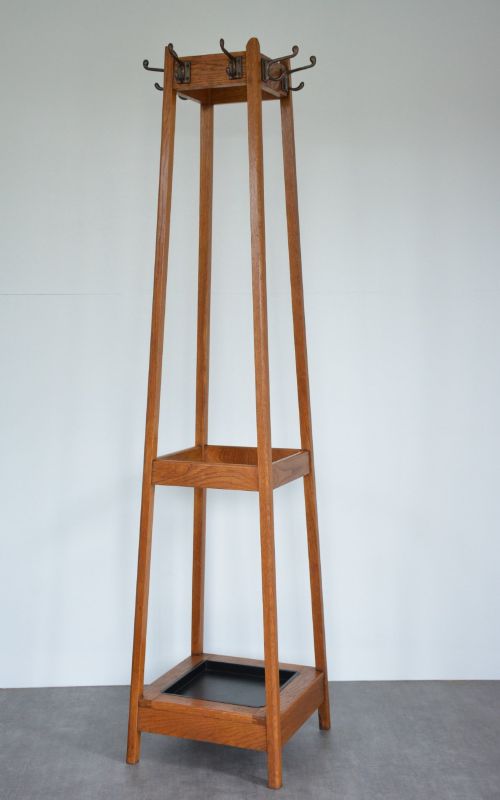
Designs reflect movements such as Arts and Crafts, Aesthetic Movement, Art Nouveau, and Gothic Revival. Utility drives the form, incorporating hooks, mirrors, glove boxes, and boot racks into a single hallway station.
How they were made
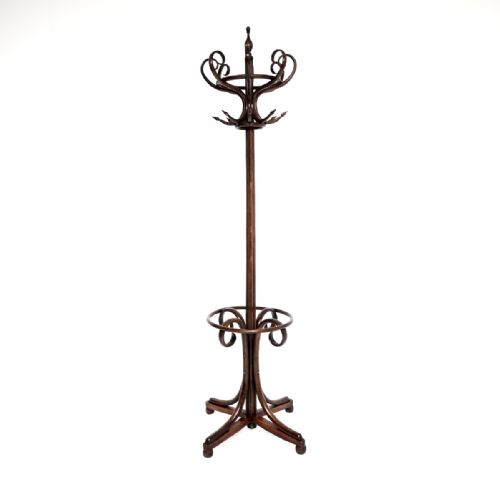
Construction relies heavily on solid hardwoods like oak and mahogany, joined with traditional cabinetmaking techniques to withstand heavy daily use. Steam-bending technology shapes beech into the fluid, curving lines characteristic of bentwood hat stands.
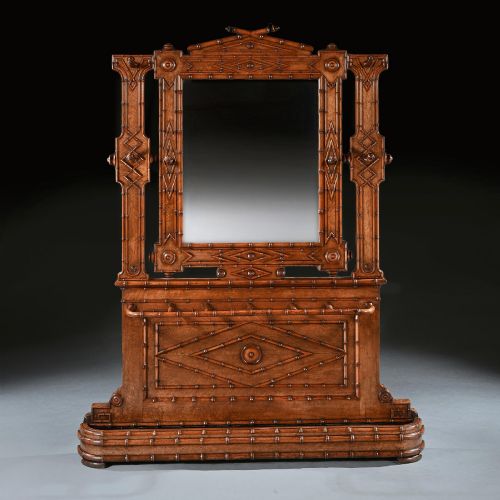
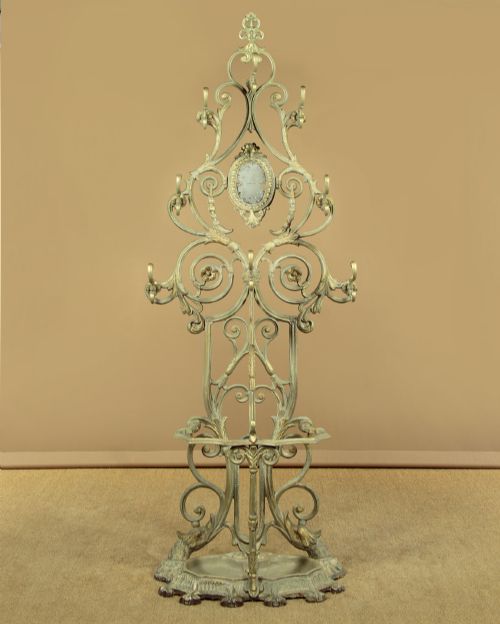
Cast iron provides rigid support and intricate detailing, particularly in umbrella stands and faux bamboo hall pieces. Brass hardware, mirror plates, and metal drip trays complement the timber frames and protect the base from moisture.
Listings feature oak, mahogany, beech, cast iron, and brass across Victorian, Edwardian, Arts and Crafts, and Art Nouveau styles.
What varies in quality
Quality rests in the integrity of the timber framing and the preservation of original hooks, mirrors, and drip trays. Pieces featuring dense golden oak, pollard oak, or figured mahogany demonstrate superior material selection.
Construction robustness distinguishes everyday utility items from finer decorative pieces, particularly in the stability of heavy multi-functional hall seat stands. The crispness of carved woodwork and the fidelity of bentwood steam-forming mark the standard of execution.
Thonet
The Antique Hall Tree Stand Glossary
- Bentwood
- Wood shaped by applying steam to soften the grain before bending it into rounded forms. This technique creates lightweight yet strong frames for coat and hat stands.
- Drip tray
- A metal or ceramic basin positioned at the base of a stand to catch water from wet umbrellas and walking sticks. It protects wooden floors from moisture damage.
- Hall seat
- An integrated bench built into the lower portion of a hall stand, often featuring a hinged lid for hidden storage. It provides a convenient place to sit while removing footwear.
- Faux bamboo
- A decorative finish carved or painted onto wood or cast iron to mimic natural bamboo stalks. This style gained popularity during the late nineteenth century influenced by Japanese design aesthetics.
Antique Hall Tree Stand: Frequently Asked Questions
Where should an antique hall tree stand go?
These stands suit entrance halls, boot rooms, and wide corridors where outerwear and accessories accumulate. They provide immediate drop zones for hats, coats, and walking sticks upon entering the home.
Ensure adequate wall clearance and floor space, especially for larger hall seat combinations and umbrella holders. Positioning them near the main entrance preserves their original function as transitional hallway furniture.
How do I maintain the timber and metal?
Regular dusting with a dry cloth keeps wooden surfaces clean, while periodic application of appropriate wax preserves the finish. Avoid placing damp items directly onto unlined wooden surfaces to prevent water staining.
Inspect metal drip trays and cast iron components for moisture accumulation and dry them thoroughly after wet weather. Gentle cleaning of brass hooks and mirror frames maintains their original appearance without harming the patina.
How do I tell Victorian from Edwardian stands?
Victorian examples tend to feature darker, heavier timbers, rich carvings, and substantial proportions, often incorporating mirrors and tiled panels. They reflect a more formal, ornate aesthetic suited to enclosed entrance spaces.
Edwardian pieces generally present a lighter appearance, utilising golden oak, cleaner lines, and simpler silhouettes influenced by the Arts and Crafts movement. Bentwood designs from this era emphasise functional curves over heavy decorative carving.
What is the difference between a hall stand and a coat stand?
A hall stand typically forms a substantial architectural piece incorporating mirrors, umbrella wells, coat hooks, and sometimes a bench seat. It acts as a central fixture designed to anchor an entire hallway layout.
A coat stand, or hat stand, focuses vertically on garment storage with radiating top pegs and a stable base, often taking the form of a freestanding tree or bentwood column. These take up less floor space and offer portable convenience.