
Freestanding Wooden Coat Rack
A freestanding wooden coat rack organises hallway clutter with utilitarian charm, offering sturdy timber uprights and multiple hanging tiers for everyday outerwear.
Freestanding Wooden Coat Rack
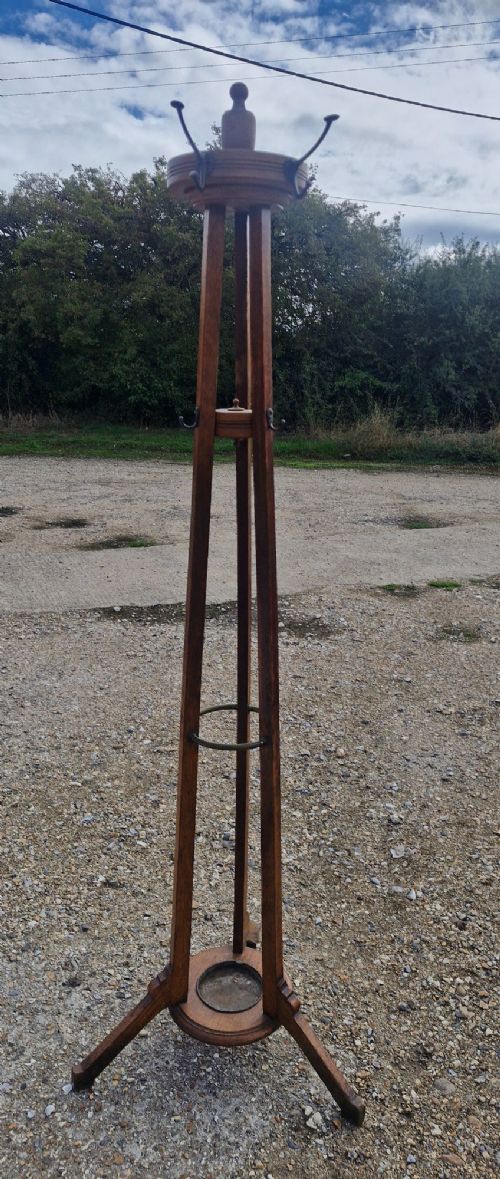
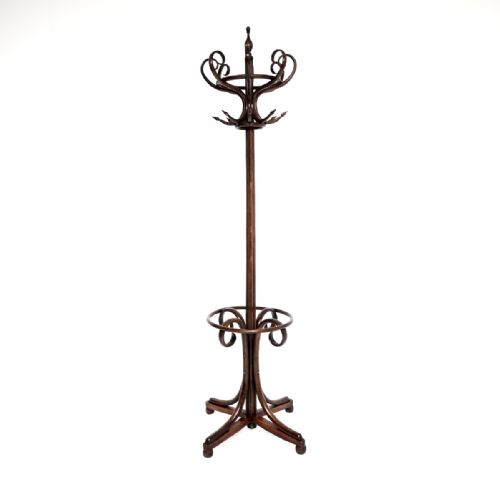
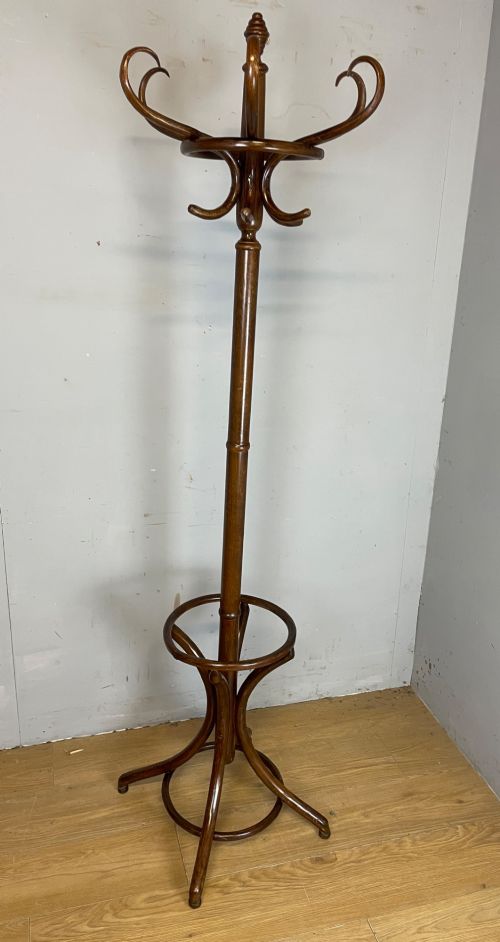
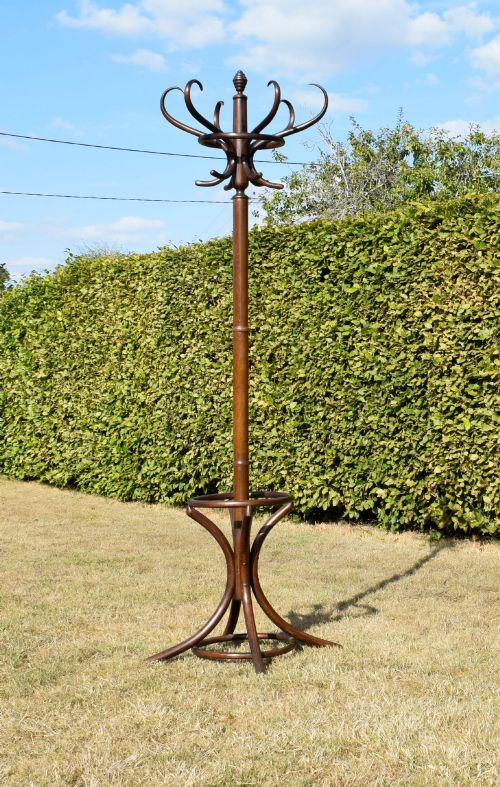
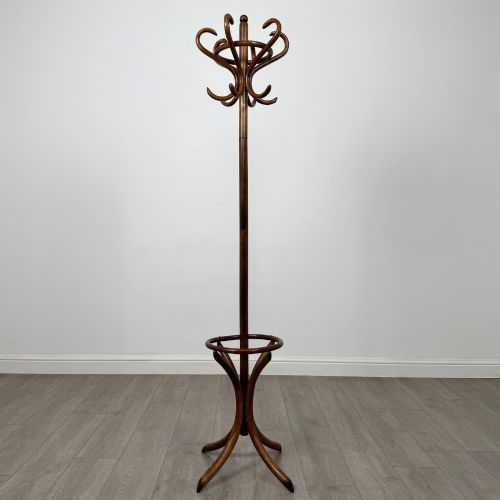
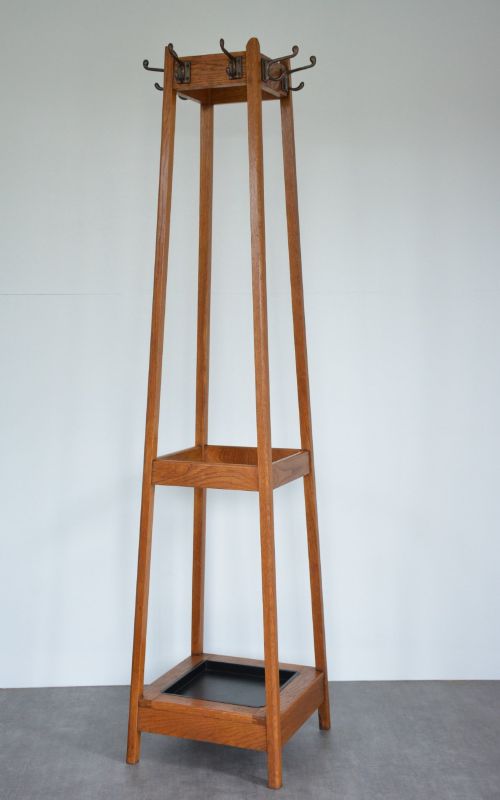
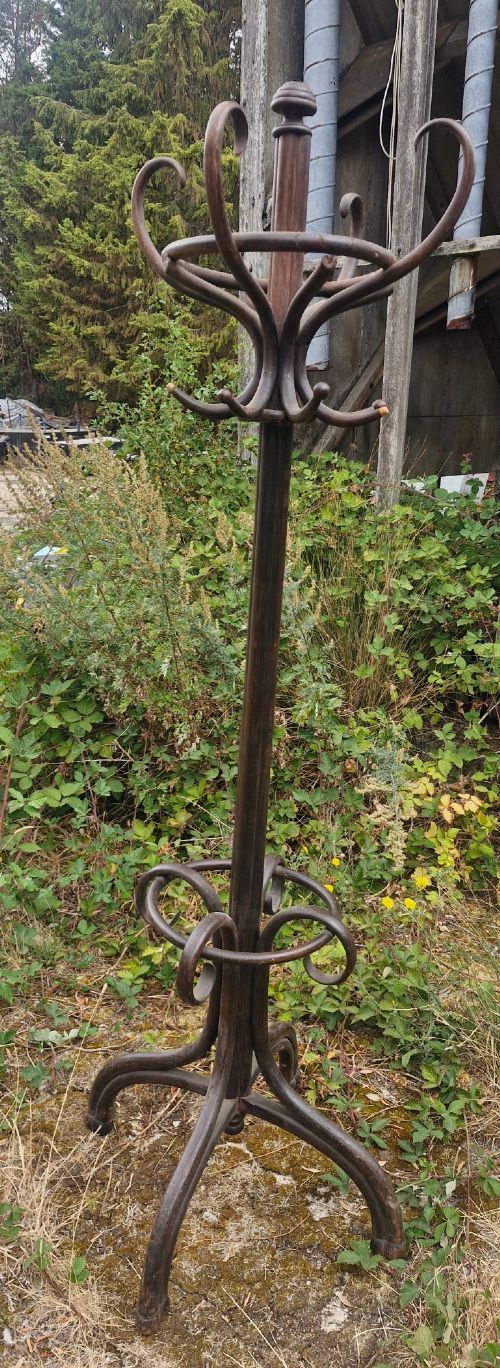
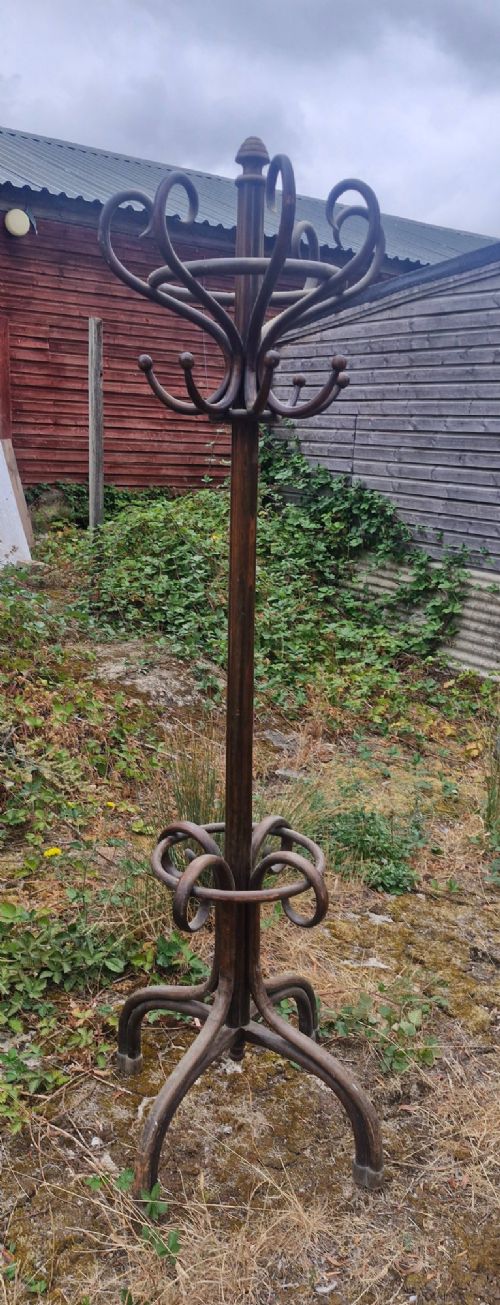
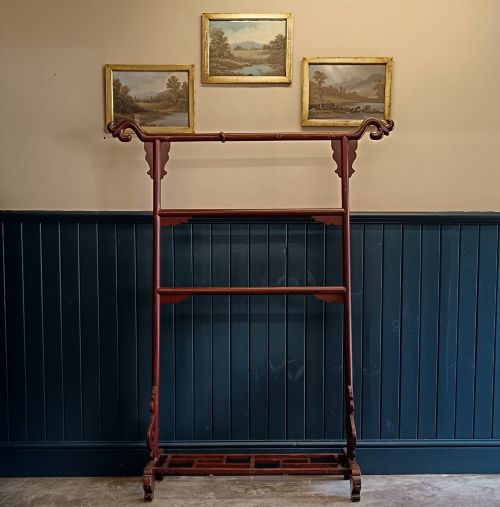
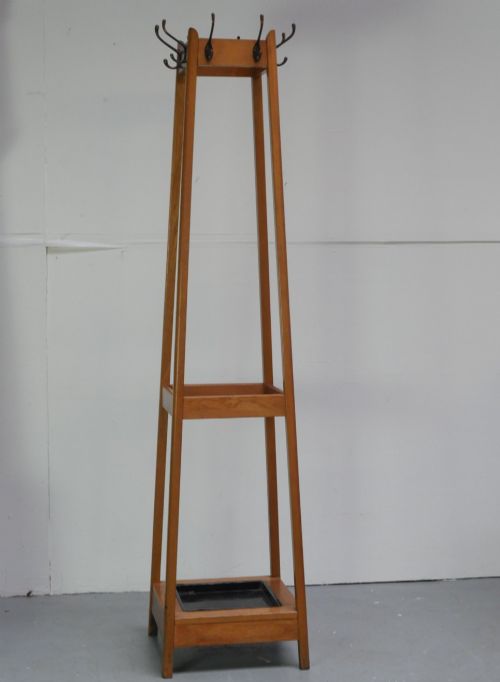
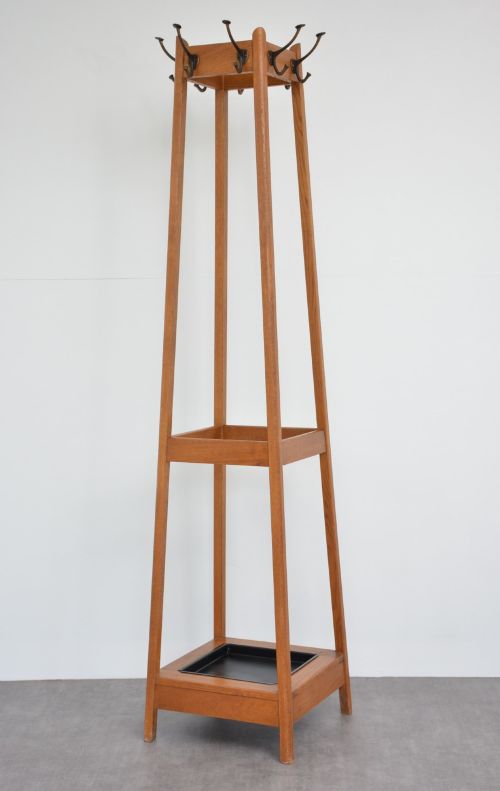
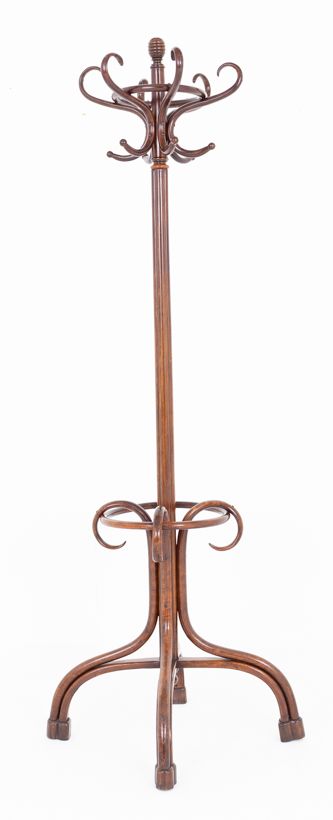
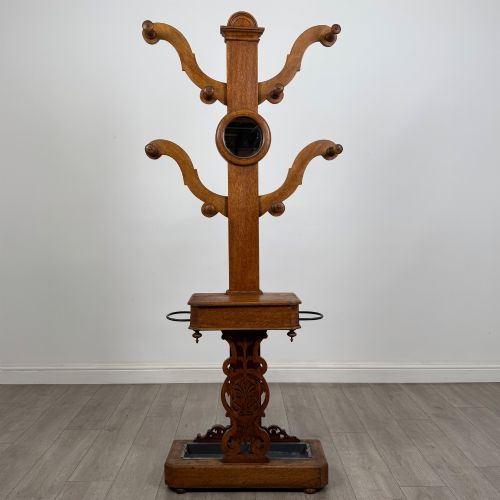
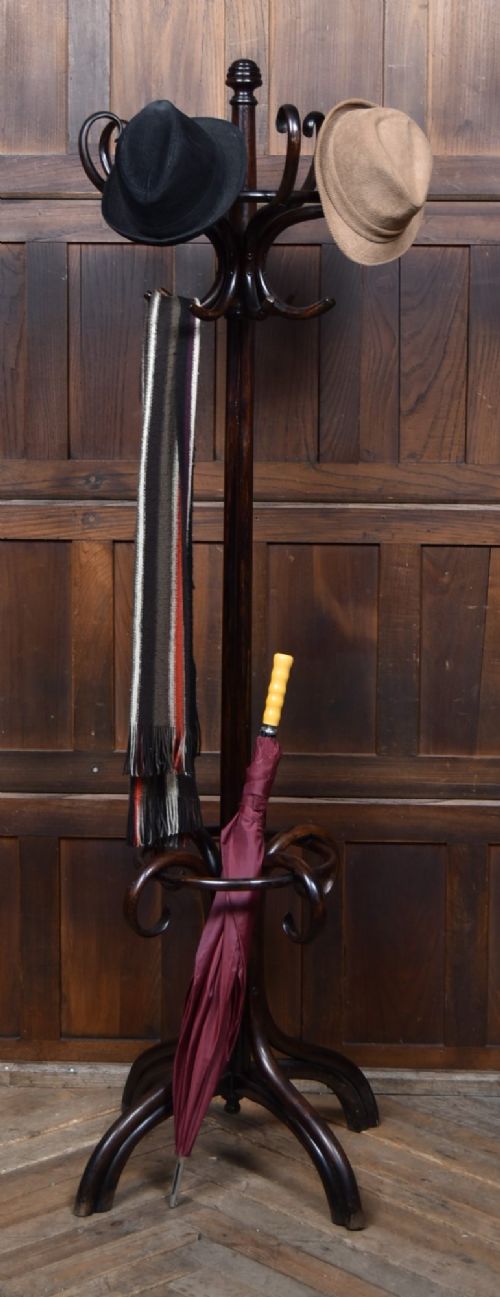
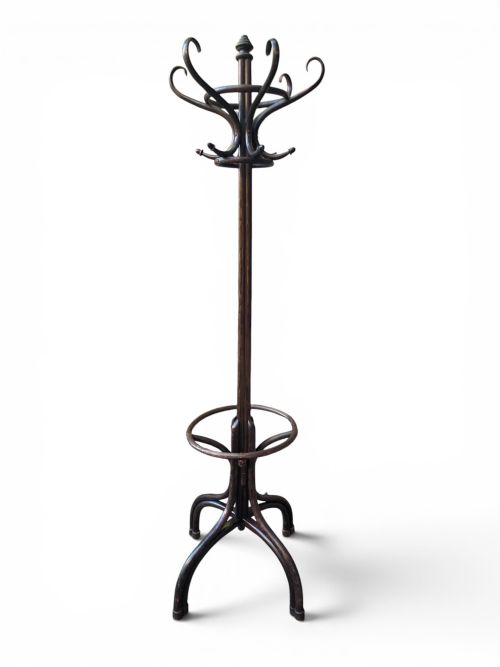
A freestanding wooden coat rack encompasses diverse hallway furniture, appearing most frequently as steam-bent beech bentwood designs or sturdy oak hall stands from the Victorian and Edwardian eras. These pieces range from simple multi-tiered hat and coat trees to elaborate designs incorporating umbrella holders, drip trays, and revolving top sections.
Makers produced these functional items across the nineteenth and twentieth centuries, with early twentieth-century examples heavily influenced by Arts and Crafts principles or Austrian bentwood techniques. Buyers will encounter both slender bedroom clothes racks and substantial entrance hall pieces built from mahogany, walnut, pine, and beechwood.
Evaluating construction and integrity
Quality rests in the stability of the central upright and the secure fastening of the upper hanging tiers, which endure significant downward pressure from heavy winter garments. Superior pieces demonstrate uniform steaming in bentwood curves without splintering, alongside robust foundational bases that prevent tipping.
The choice of primary timber and original hardware, such as cast brass hooks or intact metal drip trays, elevates a piece from a basic utility item to a refined example of period hallway furniture.
Some Edwardian stands feature revolving heads designed so morning commuters could grab their hats without waking the household.
Thonet·Jas Shoolbred·GW Evans·Astrola
The Freestanding Wooden Coat Rack Glossary
- Bentwood
- Timber shaped through exposure to steam, allowing manufacturers to create continuous curved forms without traditional joinery. This technique produced lightweight yet resilient frames popular in the nineteenth and twentieth centuries.
- Hall tree
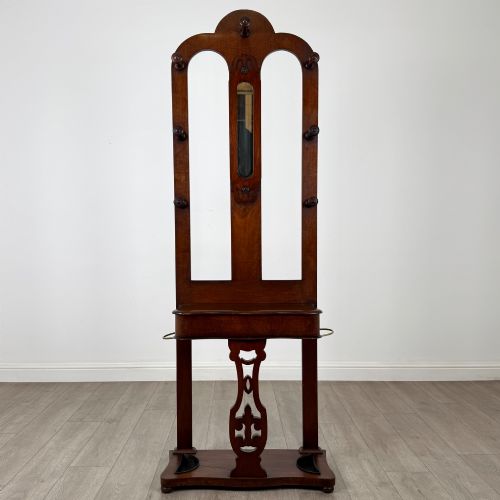
- An alternative term for a multi-functional hall stand combining coat hooks, hat racks, and often a mirror or bench seating. These tall vertical units dominated grand entranceways.
- Drip tray
- A metal base insert situated beneath umbrella holders to collect rainwater from wet walking sticks and brollies. They protect wooden flooring from moisture damage.
- Revolving top
- A rotating upper tier on a coat stand that allows users to access garments from multiple angles without moving the entire heavy structure.
Freestanding Wooden Coat Rack: Frequently Asked Questions
How do I choose the right coat rack for a small hallway?
Select a slim vertical bentwood design or a corner-fitting piece that occupies minimal floor space while offering multiple hanging tiers. These slender profiles provide high-capacity storage without overcrowding narrow entryways.
Ensure the base diameter remains modest and stable so the rack does not obstruct foot traffic or compromise safety when loaded with heavy winter coats.
Are these coat racks sturdy enough for heavy winter coats?
Period pieces constructed from solid oak, mahogany, or thick steam-bent beech easily support heavy garments, provided the foundational base remains tight and level. Many designs distribute weight evenly across multiple upper prongs to prevent tipping.
Check that all hanging pegs and central joints are firmly secured before loading the stand with dense woollen overcoats and wet umbrellas.
How do I care for antique wooden hall stands?
Maintain the timber finish by applying a natural beeswax polish periodically to nourish the grain and protect against dry indoor air. Avoid placing the rack directly next to heat sources that might cause wood to warp or split.
Promptly dry any moisture that drips from umbrellas into the metal tray to prevent rust transference onto the surrounding wooden base.
What is the difference between a coat stand and a hall stand?
A coat stand focuses primarily on vertical uprights with branches or hooks dedicated solely to hats, coats, and umbrellas. They generally feature a smaller footprint designed purely for garment hanging.
A hall stand often incorporates additional architectural elements such as a central mirror, panelled backing, glove boxes, or integrated bench seating, forming a substantial entrance statement.