


Brass Hook Coat Tree
A brass hook coat tree is a practical hallway furnishing that combines sturdy metal hanging points with substantial wooden framing to hold daily garments.
Brass Hook Coat Tree
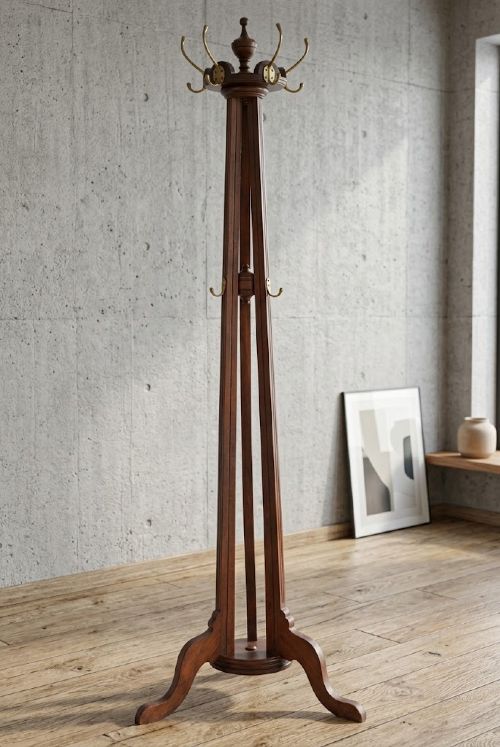
When you search for a brass hook coat tree, you encounter sturdy hallway furnishings designed to hold outerwear, hats and umbrellas in domestic entrances. These pieces primarily manifest as floor-standing hall stands and wall-mounted coat racks dating from the nineteenth and early twentieth centuries.
The most common forms on this page include upright wooden coat stands and wall racks equipped with robust metal hanging fixtures. They emerge from periods spanning the Victorian era through the Edwardian period and the Arts and Crafts movement.
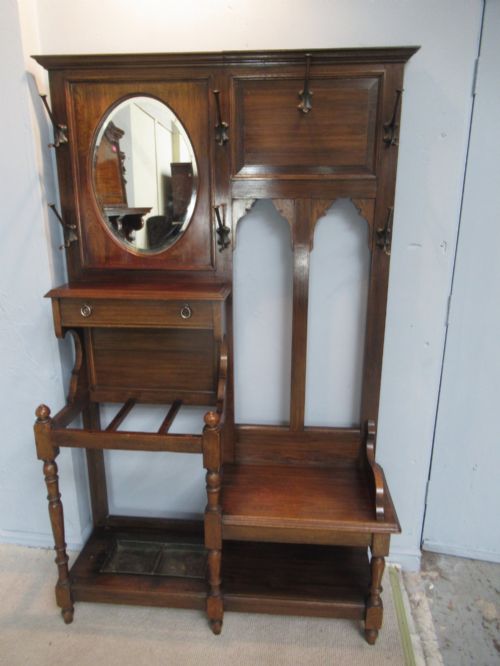
Makers utilised resilient timbers such as oak, walnut and mahogany to build the vertical structures and backboards that support the heavy metal hardware. Many examples integrate practical accessories like drip pans or mirrors into their overarching hall furniture design.
Construction and materials
Craftsmen built these items using solid hardwoods including oak, walnut and mahogany, shaping the timber into sturdy upright columns, wall boards and moulded frames. These durable woods provided the necessary structural integrity to support heavy winter garments and repeated daily use.
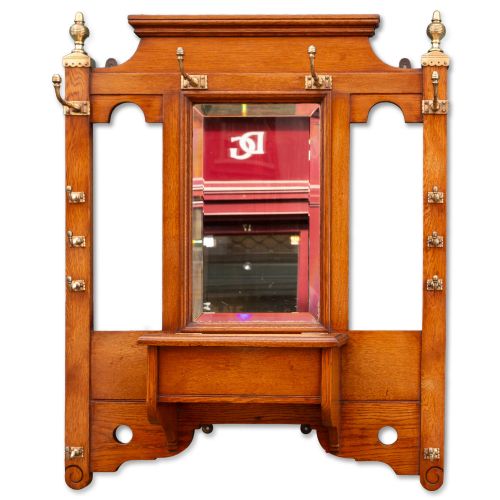
Makers secured cast and polished brass hooks directly into the wooden frames using sturdy metal fixings to ensure the hanging points remained secure under load. Additional decorative elements such as ceramic inserts, glass details and marble sections appeared on specific hall stand designs.
Early hallway stands occasionally incorporated hidden drip pans to catch rainwater from walking sticks, protecting delicate wooden floors from eager wet umbrellas.
Assessing quality and craftsmanship
The distinction between standard utility items and finer examples rests upon the selection of timber and the complexity of the woodwork. Solid golden oak or figured walnut construction alongside substantial brass hardware separates superior pieces from basic utility variants.
Design sophistication also marks the upper tier of these items, particularly where movement aesthetics like Arts and Crafts or Gothic Revival influence the joinery and silhouette. Details such as integrated marble surfaces and heavy cast hardware elevate the execution of the hall furniture.
Jas. Shoolbred
The Brass Hook Coat Tree Glossary
- Hall Stand
- A substantial piece of entrance furniture combining coat hooks, umbrella storage, and often a mirror or small shelf. These items served as the primary reception furniture in traditional hallway spaces.
- Arts and Crafts
- A design movement prioritising visible handcraftsmanship, solid timbers, and simple utility over excessive factory ornamentation. Pieces from this style emphasise honest construction and natural materials.
- Victorian Gothic Revival
- An architectural and decorative style drawing inspiration from medieval forms, featuring pointed arches, heavy mouldings, and robust structural elements. This aesthetic produced particularly dramatic hallway furnishings.
- Wall Mounted Coat Rack
- A horizontal timber board fitted with multiple metal hooks designed to hang garments against a wall. These fixtures saved valuable floor space in narrower entrance corridors.
Brass Hook Coat Tree: Frequently Asked Questions
What is a brass hook coat tree?
A brass hook coat tree is a sturdy hallway furnishing designed to hold coats, hats, and everyday garments using metal hanging points affixed to wooden frames. These pieces take the form of both floor-standing stands and wall-mounted racks.
They originate from the nineteenth and early twentieth centuries, providing practical entryway storage through solid timber construction and metal hardware.
How do I use a hall stand at home?
These furnishings belong in entrance halls and boot rooms where household members and guests arrive and shed outer layers. They offer immediate hanging space for jackets, hats, and scarves upon entry.
Floor-standing versions often accommodate umbrellas and walking sticks in dedicated bases, while wall-mounted racks keep floor areas clear in compact hallways.
How do I date a Victorian coat stand?
Dating involves examining the timber species, joinery methods, and stylistic cues present in the woodwork and metal hardware. Victorian pieces often display rich mahogany or walnut construction alongside deep mouldings and traditional hand-cut joinery.
Later Edwardian or Arts and Crafts examples shift toward golden oak and simpler, rectilinear forms that reflect changing domestic tastes of the early twentieth century.