


Antique Haberdashery Storage
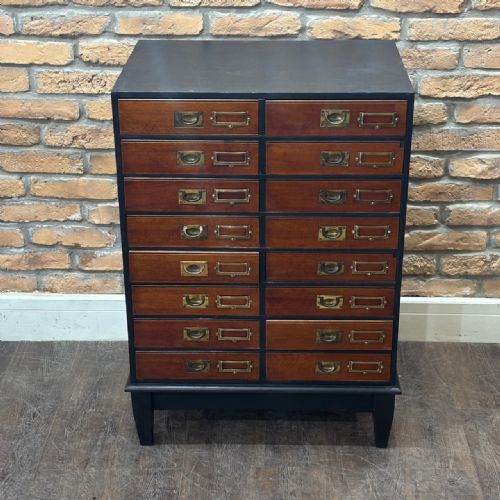
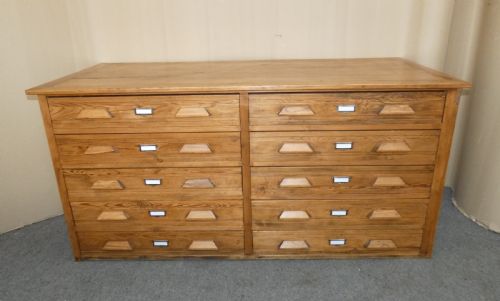
Antique haberdashery storage covers multi-drawer cabinets, banks of drawers and shop fittings built for commerce and trade.
Antique Haberdashery Storage
When you search for antique haberdashery storage, you encounter multi-drawer units built for trade, commerce and domestic organisation.
The pieces on this page span the nineteenth century, the Victorian period and the early decades of the twentieth century, including industrial items and shop fittings.
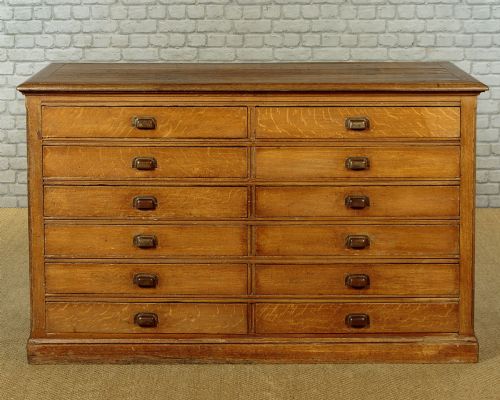
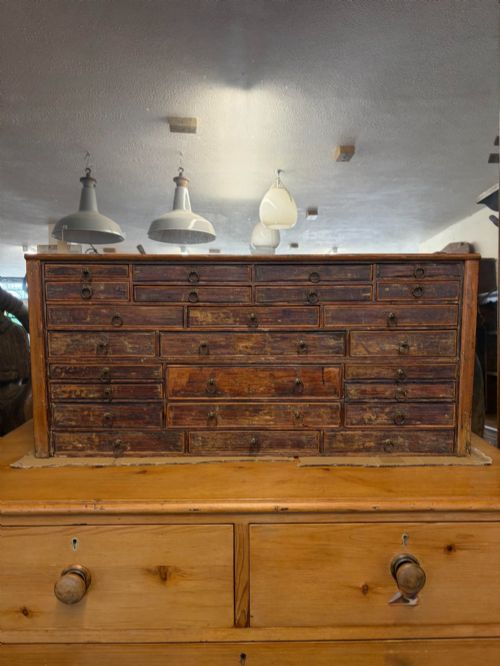
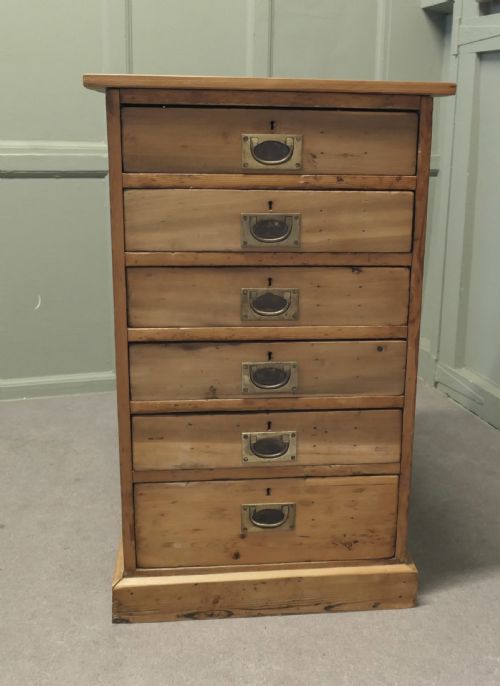
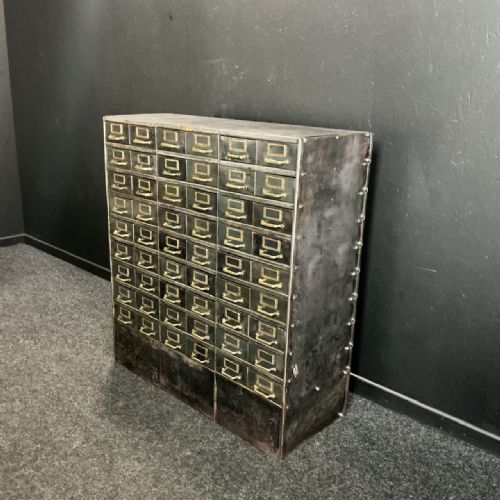
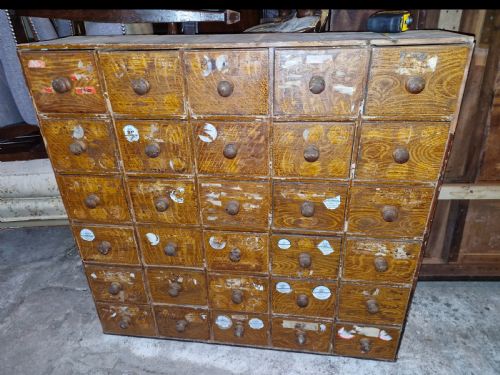
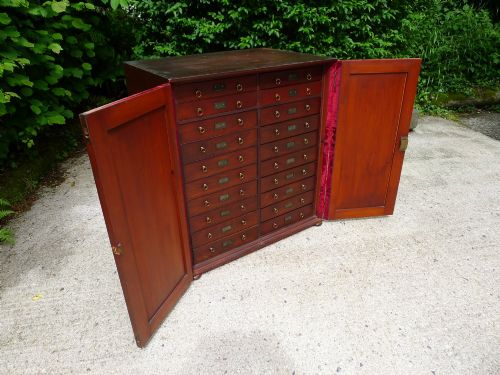
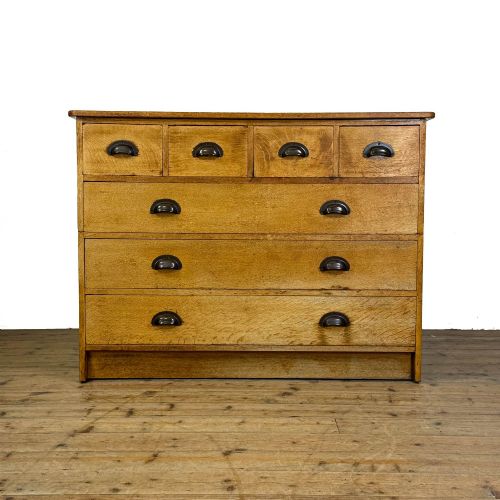
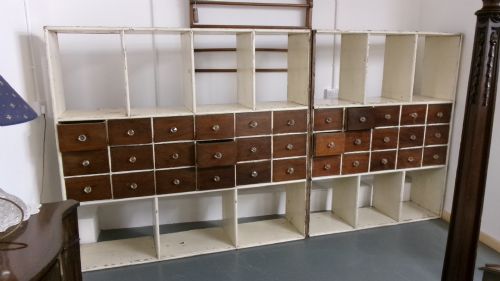
Banks of drawers, filing cabinets, chemist fittings and haberdashery cabinets form the core of the selection, constructed in pine, mahogany, oak and fruitwood.
Materials and Construction
Carpenters utilised dense hardwoods like mahogany and walnut alongside durable softwoods such as pine to build heavy frames capable of holding numerous small drawers.
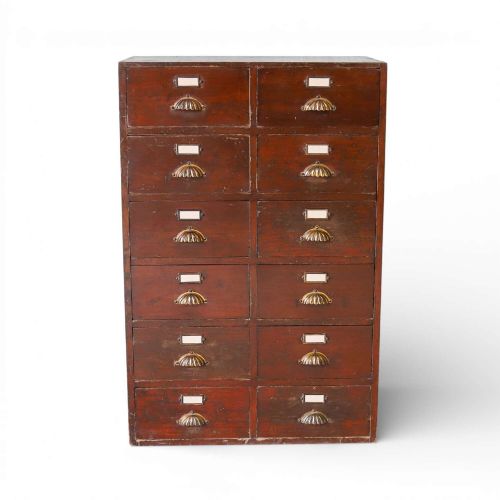
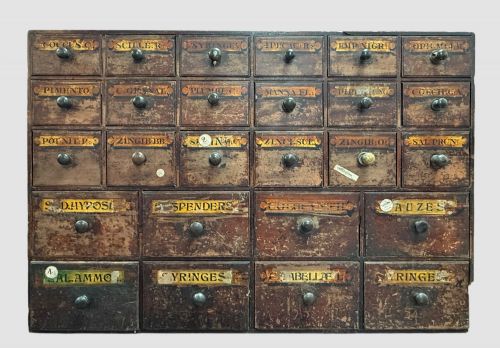
Iron and brass hardware, including original shell pulls and label holders, were fitted to drawers for daily commercial use.
Surfaces were finished with polish, stain or layered paint, while specialised joinery ensured that multi-drawer banks and filing systems operated smoothly under regular loads.
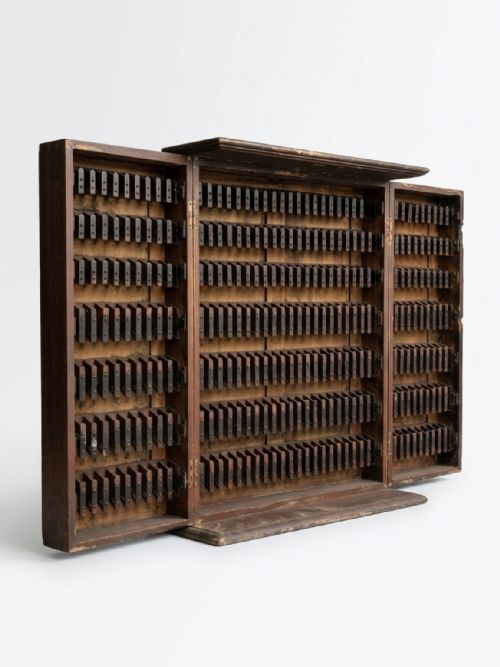
Railway tickets once lived inside a slim nineteenth-century cupboard waiting for passengers.
Assessing the Pieces
Quality rests upon the integrity of the timber, the retention of original hardware such as brass label holders, and the complexity of the drawer configuration.
Units featuring bespoke trade origins or specialised internal fittings stand apart from standard utility storage through superior cabinet-making and surviving finish.
Luxmore's of Ilfracombe
The Antique Haberdashery Storage Glossary
- Bank of drawers
- A large cabinet containing numerous small drawers arranged in rows and columns. These units were originally used in shops, offices and workshops for sorting stock or documents.
- Shop fitting
- Fixtures and furniture built specifically for commercial retail spaces. They often feature robust construction and multiple compartments for merchandise display.
- Haberdashery cabinet
- A specialised storage unit designed for small sewing goods, threads and textiles. They typically feature shallow drawers with glass fronts or small pulls.
- Shell pull
- A convex, half-round metal handle shaped like a scallop shell. They frequently incorporate integrated label holders for categorising drawer contents.
- Deal
- A British term for pine or fir timber used historically in cabinet making. It provided a sturdy yet workable material for large commercial fittings.
Antique Haberdashery Storage: Frequently Asked Questions
What was haberdashery storage used for?
These cabinets stored small sewing items, ribbons, buttons and threads in retail shops and draperies.
They allowed merchants to keep vast inventories organised and accessible behind the counter.
How do I date a multi-drawer cabinet?
Dating relies on timber selection, construction methods, and the style of hardware like brass pulls.
Victorian and early twentieth-century pieces display distinct joinery and wood choices that separate them from later reproductions.
Are these cabinets suitable for modern homes?
The numerous shallow drawers provide practical organisation for stationery, jewellery, or craft supplies.
Their substantial timber construction allows them to function as sideboards or workspace organizers.
What is the difference between shop fittings and domestic furniture?
Shop fittings were built for heavy commercial use with specialised drawer counts and robust utility frames.
Domestic chests generally feature fewer, deeper drawers designed for clothing rather than small merchandise.