





Mahogany Sewing Stand
A mahogany sewing stand brings compact elegance and clever storage to a room, offering the warmth of figured timber alongside practical compartments for needlework.
Mahogany Sewing Stand
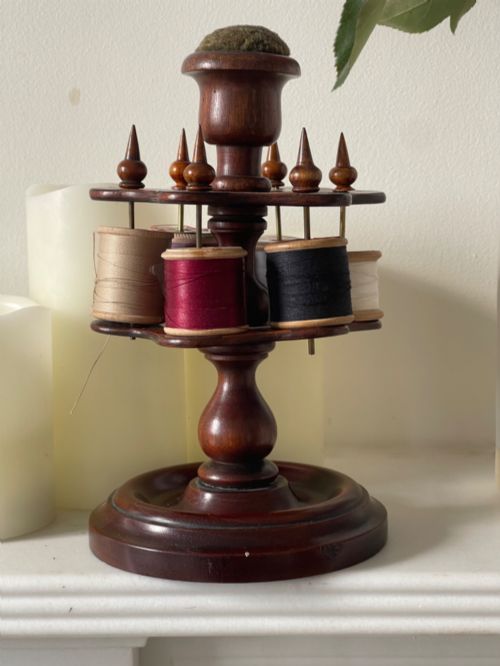
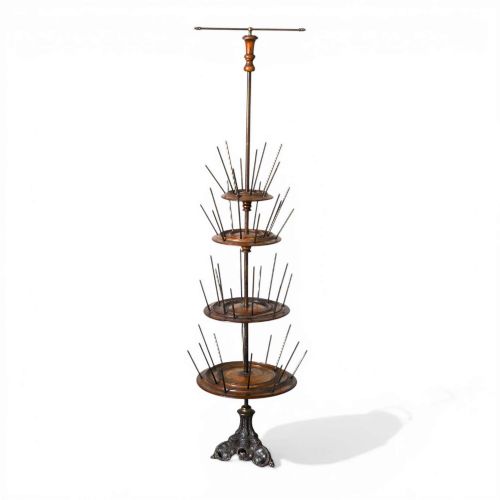
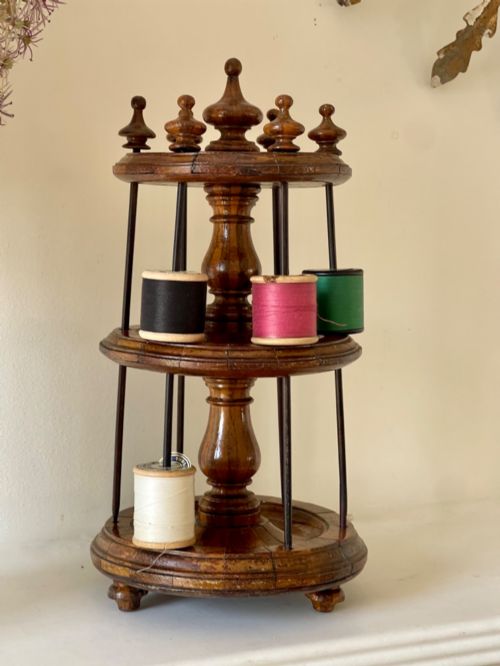
A mahogany sewing stand encompasses worktables, workboxes on stands, and multi-tiered cotton reel holders dating from the eighteenth century through the Edwardian era. These pieces combine tabletop surfaces with fitted internal compartments, silk catch bags, or display tiers designed for sewing accessories.
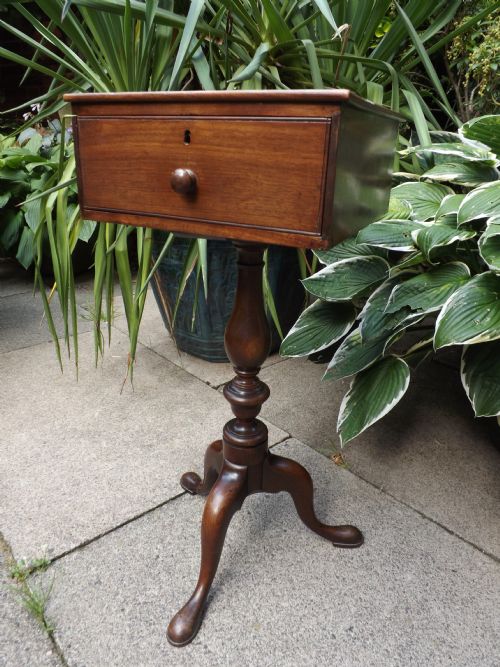
The most common examples on this page date from the Regency and Victorian periods, reflecting a time when needlework was a daily pursuit. They appear in forms ranging from tripod-base tables to folding work tables and shop display stands.
Makers utilised rich timbers including flame mahogany, pairing them with turned wood, brass accents, and fabric elements to create functional items for the home or retail display.
How they were made
Cabinetmakers constructed these stands primarily using solid mahogany and flame mahogany veneers over secondary timbers, often incorporating turned wood supports and tripod bases. Brass hardware, such as castors, handles, and hinges, provided both structural reinforcement and decorative contrast.
Interior compartments required precise joinery to organise cotton reels, pins, and sewing tools within compact drawers or drop-in trays. Silk and other fabrics lined the hanging work bags or pin cushions, integrated directly into the wooden framework.
Mahogany Sewing Stand Retail Price Guide 2026
Typical asking prices for mahogany sewing stand among the pieces listed under this phrase on Sellingantiques today, from the lower quarter to the upper quarter. They describe what is for sale here now, not the wider market.
Some nineteenth-century cotton reel stands doubled as shop fittings, meaning your sewing tidy might have spent its youth working behind a Victorian counter.
What varies in quality
Quality in a mahogany sewing stand rests upon the choice of timber and the crispness of its turning. Finer pieces display striking flame mahogany grain patterns on the top and drawer fronts, alongside neatly executed thumb-moulded edges and robust tripod legs.
The sophistication of the interior fitments further distinguishes standard examples from superior ones. Well-preserved silk work bags, ingenious compartment layouts, and original brass fittings indicate a higher standard of original craftsmanship.
The Mahogany Sewing Stand Glossary
- Flame mahogany
- A veneer figure characterised by flame-like ripples in the wood grain, prized for its dramatic visual appeal on cabinet furniture.
- Worktable
- A small table equipped with drawers or a fabric bag underneath for holding needlework, sewing supplies, and small personal items.
- Tripod base
- A supporting structure featuring three legs radiating from a central pillar, commonly found on eighteenth and nineteenth-century occasional and sewing tables.
- Cotton reel stand
- A tiered wooden rack designed to hold spools of thread for domestic sewing or retail display in a shop setting.
- Regency
- A British design period spanning the early nineteenth century, known for classical proportions, elegant curves, and restrained ornamentation.
Mahogany Sewing Stand: Frequently Asked Questions
What is a mahogany sewing stand used for?
These stands served as dedicated pieces of furniture for holding sewing equipment, threads, pins, and unfinished needlework projects within the home. The top surface often doubled as a lamp table or occasional stand while the interior kept small tools organised.
Today, they function well as bedside tables, lamp stands, or decorative accents in a living room, providing hidden storage for small contemporary items.
How do I identify a Regency sewing table?
Regency examples typically date from the early nineteenth century and feature classical architectural influences, such as reeded pillar supports, brass paw feet, and saber legs. The timber is often rich mahogany with neat cockbeaded drawer edges.
Look for fitted interiors with lidded compartments and original silk work bags suspended beneath the main carcase, distinguishing them from later Victorian iterations.
Are all these stands made of solid mahogany?
While the structural frames and turned elements are generally solid timber, many tabletops and drawer fronts utilise mahogany veneers over secondary woods like pine or oak. This technique allowed cabinetmakers to display striking grain patterns such as flame mahogany without warping.
Different periods employed varying thicknesses of veneer and internal framing methods, which helps determine the approximate age of the piece.
Can I use an antique sewing stand in a modern room?
Their compact footprints and warm timber tones make these stands adaptable to contemporary interiors as bedside tables or side stands. The internal compartments provide useful concealment for modern clutter like keys, chargers, or stationery.
Placing them away from direct heat sources and strong sunlight protects the nineteenth-century polish and any original fabric elements from fading or drying out.