



Antique Graduated Copper Set
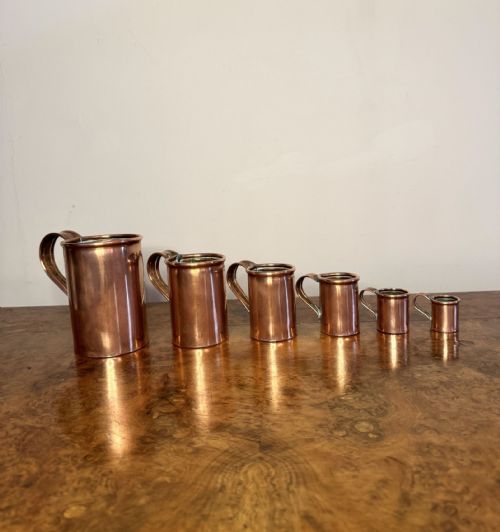
These antique graduated copper set pieces are substantial kitchenalia and tavern measures designed to nest or stack in orderly descending sizes.
Antique Graduated Copper Set
When you search for an antique graduated copper set, you encounter nested groups of cookware, measuring vessels, and tavern measures built to fit neatly inside one another. These pieces originate primarily from the Victorian and Georgian periods, alongside nineteenth-century French and Anglo-Indian workshops.
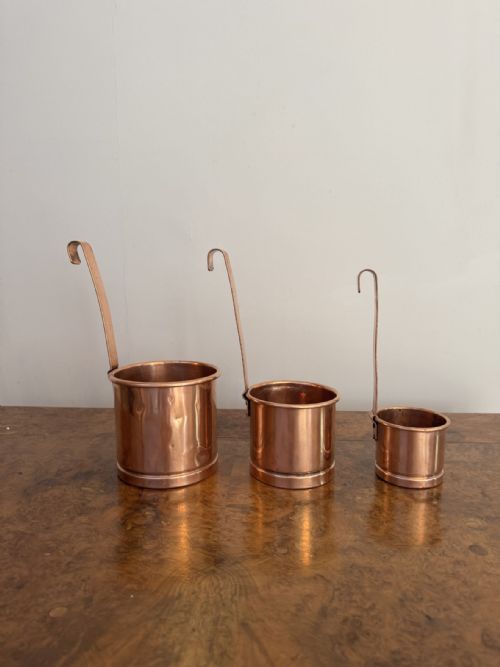
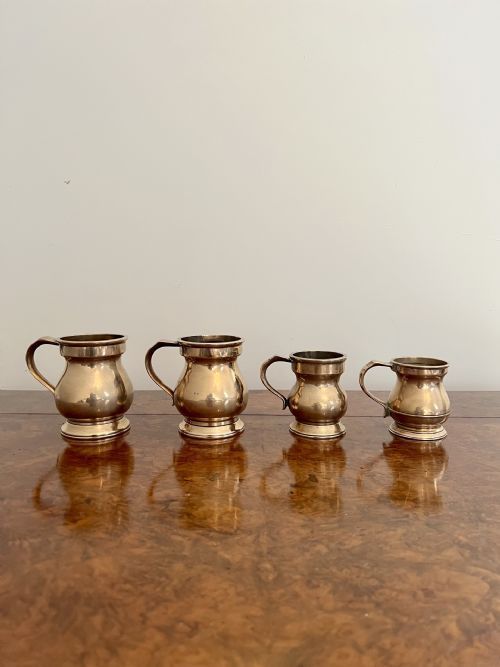
The most common formations on this page comprise sets of three, four, or five pans, jug measures, and bell-shaped tankards. They combine heavy metal bodies with contrasting fittings like brass handles or iron mounts, reflecting practical kitchen use and tavern service across Britain and Europe.
How they were made
Makers constructed these vessels predominantly from sheet copper, shaping the metal by hand-beaming or spinning before joining seams with dovetailing or brazing. Brass and cast iron appear frequently as contrasting materials for handles, rims, and stability bases, while lead solder secures joints and interior seals.
Vessels feature various forms of finishing, from plain polished surfaces to riveted iron handles secured with heavy pins. French country and British tavern pieces display rugged utilitarian construction, whereas domestic pans often show smoother hammering marks from workshop shaping.
Antique Graduated Copper Set Retail Price Guide 2026
Typical asking prices for graduated copper set among the pieces listed under this phrase on Sellingantiques today, from the lower quarter to the upper quarter. They describe what is for sale here now, not the wider market.
Listings show items spanning the Georgian and Victorian eras, incorporating copper, brass, iron, and occasional wooden elements.
What varies in quality
Quality rests upon the completeness of the original nesting sequence and the integrity of the surviving metal. Sets that retain every single vessel from the largest base to the smallest top piece command greater interest than assembled groups where sizes do not match proportionally.
The weight of the copper and the crispness of the forming work also dictate standard. Heavy gauge metal with robust brass handles and clean dovetail seams represents superior workshop output compared to thinner utility vessels.
The Antique Graduated Copper Set Glossary
- Graduated
- Arranged in regular steps of size from largest to smallest. This system allowed tavern keepers and cooks to store multiple measures within a minimal footprint.
- Tavern Measure
- A standardised vessel used in public houses for pouring and serving liquids. These often take a bell shape with sturdy base rings.
- Kitchenalia
- Utilitarian kitchen equipment and culinary utensils collected for decorative display. It bridges domestic history and antique metalwork.
- Dovetail seam
- An interlocking joint fastening sheet metal edges together. This method provided structural strength before modern welding techniques emerged.
Antique Graduated Copper Set: Frequently Asked Questions
What were these copper sets used for?
These sets served multiple roles in domestic kitchens and commercial taverns for cooking food and measuring liquids.
Larger pans handled daily culinary tasks over open hearths or stoves, while smaller jugs and bell-shaped tankards measured ale, spirits, and ingredients accurately.
How do I date a copper set?
Dating relies upon stylistic markers, handle construction, and the specific shape of the vessels.
Georgian and Victorian pieces exhibit distinct rim profiles and handle attachments, with earlier examples often showing hand-beaten seams rather than later mechanical manufacturing marks.
How should I clean antique copper?
Maintaining antique copper involves removing dust with a soft cloth and preserving the natural oxidation accumulated over centuries.
Many collectors prefer leaving the dark patination untouched, though mild non-abrasive cleaners can restore brightness if the metal appears dull.
Are all the pieces in a set original?
Sets sometimes comprise assembled vessels gathered together over time rather than a single workshop output.
Examining the uniformity of the copper thickness, wear patterns, and handle styles helps determine whether the vessels grew up together as a matched family.