


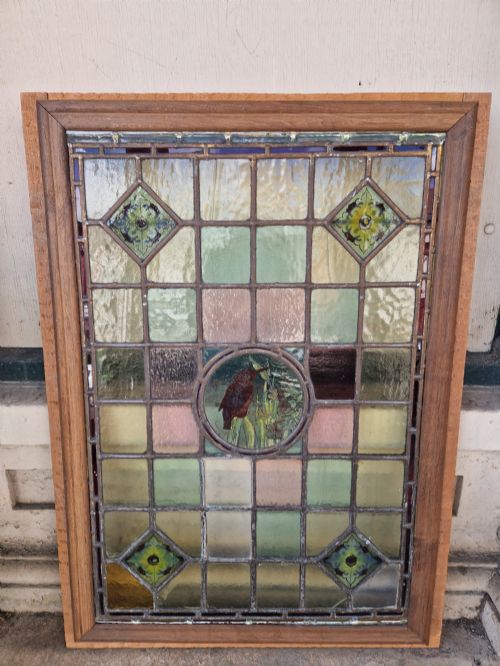


Antique Glass Suncatcher
These antique glass suncatcher pieces bring colour and historic light into a room, catching the eye with leaded and painted designs.
Antique Glass Suncatcher
When you search for an antique glass suncatcher, you are looking at architectural salvage, stained glass panels, and windows spanning the Victorian, Edwardian, and early twentieth-century periods. These items range from simple leaded glass panels to detailed windows featuring hand-painted scenes.
The most common forms on this page include leaded glass windows and stained glass panels framed in wood or pine, often displaying natural motifs or figurative subjects. The eras represented stretch from the late nineteenth century through to the nineteen-twenties, incorporating styles such as Gothic Revival, Arts and Crafts, and Art Nouveau.
Each piece functions as a decorative window or hanging panel that transforms natural daylight into coloured illumination. The variety of designs reflects the decorative tastes of periods including the Victorian and Edwardian eras, with many pieces retaining their original lead cames and wooden surrounds.
How they were made
These windows and panels rely on coloured and clear glass held together by lead channels known as cames, soldered at the joints to form secure geometric or pictorial compositions. Many examples incorporate enamel paint applied directly to the glass surface, fired to bond the pigment permanently before assembly.
Specialised glass components such as amber bullseyes appear in select windows, adding texture and varied light refraction alongside flat stained glass sheets. The structural integrity of these panels depends on the rigidity of the lead framework and, where applicable, wooden frames made of pine or other timber.
Antique Glass Suncatcher Retail Price Guide 2026
Typical asking prices for glass suncatcher among the pieces listed under this phrase on Sellingantiques today, from the lower quarter to the upper quarter. They describe what is for sale here now, not the wider market.
Several windows feature painted birds perched on branches, bringing permanent wildlife indoors regardless of the weather outside.
What varies in quality
The standard of these panels is defined by the ambition of the imagery and the skill required to execute hand-painted details such as knights in armour, religious figures, birds, and countryside scenes. Finer examples display subtle shading and precise brushwork that remain crisp when backlit by daylight.
Materials and construction methods also differentiate the range, particularly the complexity of the leaded matrix and the inclusion of decorative glass elements like bullseyes. The harmony between the painted design and the surrounding leaded glass structure determines the overall visual impact of the piece.
The Antique Glass Suncatcher Glossary
- Came
- A grooved strip of lead used to hold pieces of stained glass together in a window or panel. These strips are soldered at the intersections to create the structural grid.
- Bullseye
- A small, round piece of glass with a central bump, formed at the end of a glassblower's punty rod. These are often incorporated into leaded windows to add texture and catch the light.
- Architectural salvage
- Building elements and fixtures rescued from older structures before demolition or alteration. Stained glass panels and windows are frequently sourced in this manner.
- Leaded glass
- Glass panes held together by a network of lead cames rather than traditional wooden glazing bars. This technique allows for intricate patterns and pictorial designs.
Antique Glass Suncatcher: Frequently Asked Questions
How do I hang an antique glass suncatcher?
These panels are generally heavy due to the lead and glass construction, requiring secure fixings anchored into the window frame or wall studs rather than simple suction hooks.
Hanging chains or wire should be attached securely to the structural wooden frame or load-bearing points of the leaded panel to ensure safety.
Were these windows originally meant for interiors?
Many stained glass panels and windows functioned as exterior glazing in homes, churches, and public buildings of the Victorian and Edwardian periods.
Others served as internal transoms or decorative screens designed to partition rooms while allowing light to pass between spaces.
How can I tell a Victorian window from a later one?
Victorian and Gothic Revival panels often feature heavier religious or formal motifs, while pieces from nineteen-ten to nineteen-twenty lean towards naturalistic bird and branch designs or softer countryside scenes.
Stylistic cues such as the flowing lines of Art Nouveau or the simpler geometries of Arts and Crafts help date the manufacture of the glass.
Can these windows be cleaned safely?
Dust and grime can be removed using a soft cloth and mild, non-abrasive soap solution applied gently to the glass surface.
Care must be taken around painted areas and lead cames to avoid disturbing fragile pigments or nineteenth-century solder joints.