

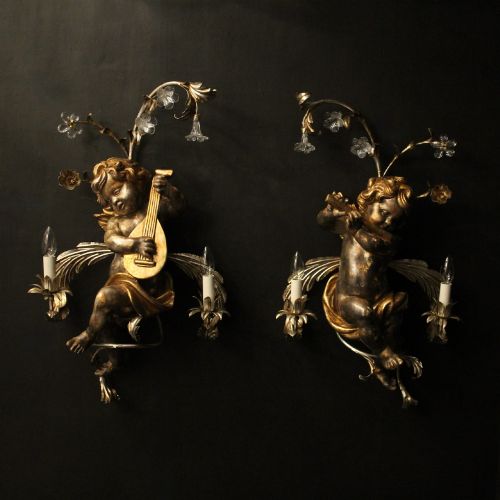

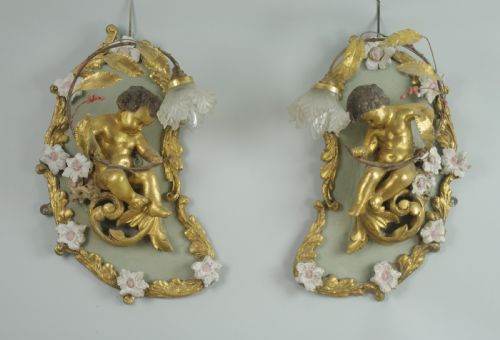
Antique Glass Sconces
Antique glass sconces bring direct candlelight and electric illumination to period walls through cut crystal, frosted panels and gilded frames.
Antique Glass Sconces
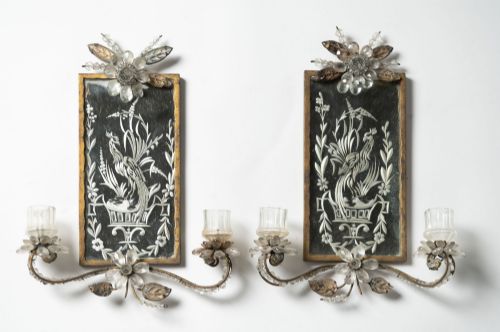
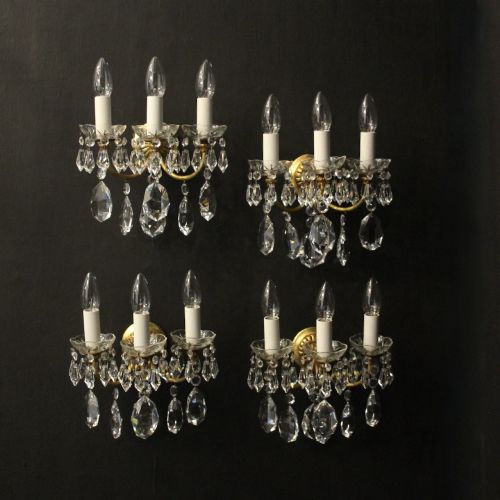
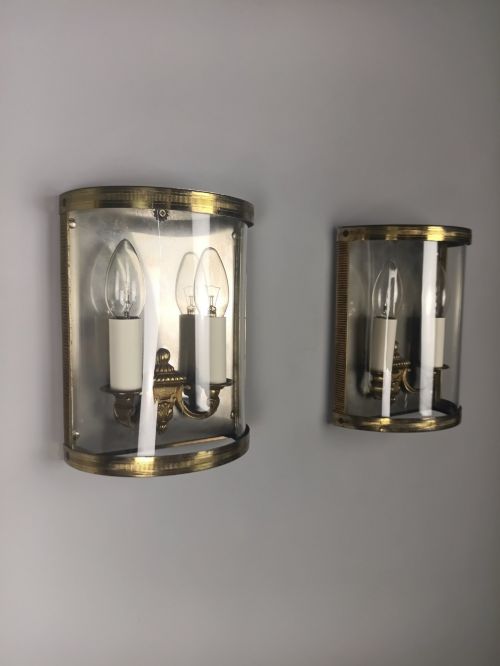
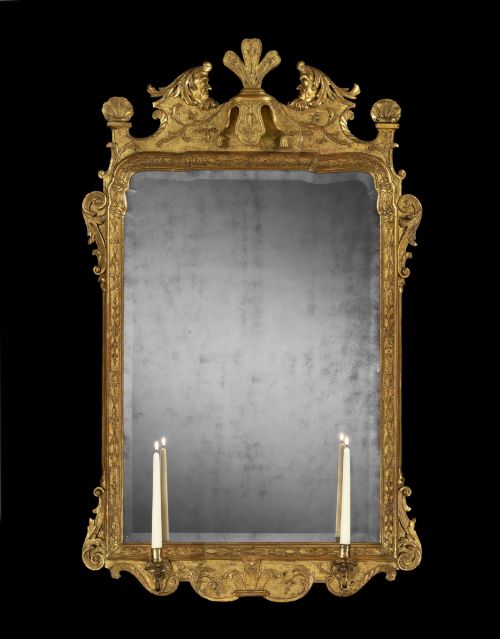
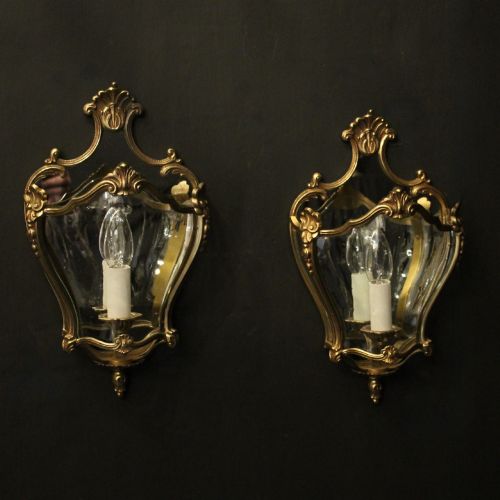
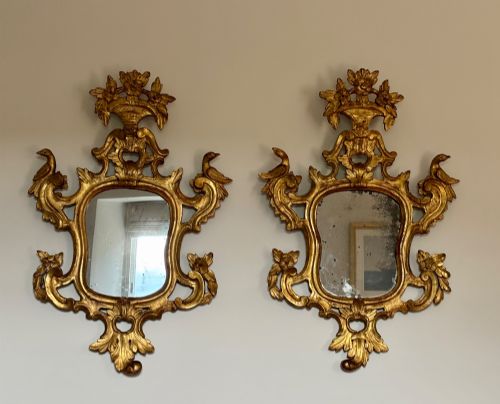
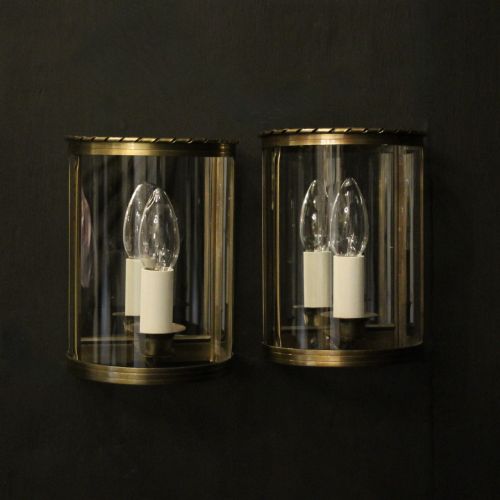
When you search for antique glass sconces, you encounter wall-mounted light fittings spanning the eighteenth century through to the Art Deco period. These fixtures range from Venetian giltwood and Murano glass pairings to French gilded bronze half lanterns and twentieth-century chrome designs.
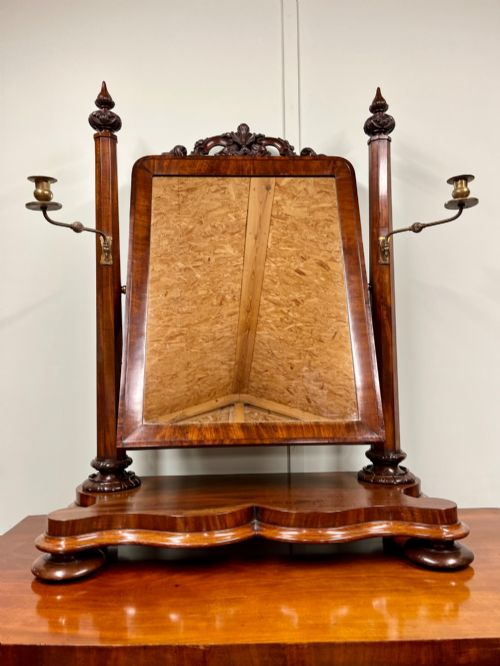
The selections available lean heavily toward pairs and sets featuring cut crystal, brass, and ormolu mounts. Alongside dedicated wall lights, the wider category encompasses related mirror backs and hurricane lamps designed to reflect interior illumination.
How they were made
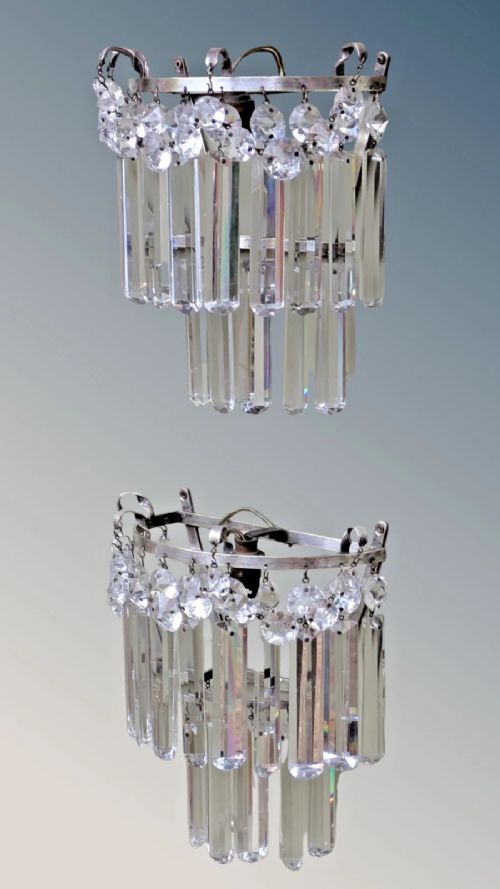
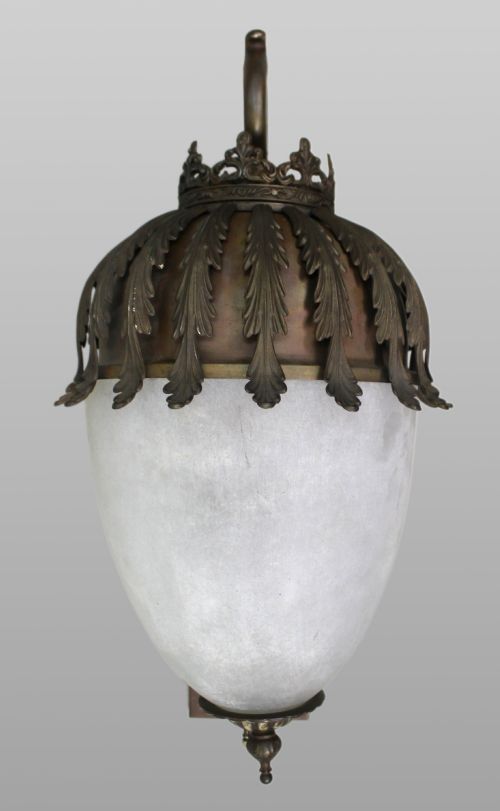
Construction relies on combinations of cast brass, ormolu, and gilded bronze supporting blown, cut, or frosted glass elements. Makers integrated metal armatures with reflective glass plates, bevelled mirrors, and crystal drops to maximise light diffusion.
Mounts and frames demonstrate period metalworking techniques, utilising chased ormolu, tôleware, and carved giltwood. Glass components involve traditional techniques seen in Venetian Murano production, Bohemian etching, and prismatic cutting.
Several pieces originated in grand hospitality venues, including brass wall lanterns salvaged directly from the Savoy Hotel in London.
What varies in quality
Quality rests upon the crispness of the metal casting in the ormolu and bronze mounts, alongside the purity and depth of the cut crystal or Murano glass elements. Superior examples display finer chasing on brass details and intact original gilding.
The integration of structural components also defines the grade of a piece, separating standard commercial production from bespoke or hotel-contract work. Preservation of original fittings and mirror plates contributes substantially to the integrity of the object.
Benjamin Goodison·F. & C. Osler·Maison Baguès
The Antique Glass Sconces Glossary
- Ormolu
- Gilded bronze produced by applying a mercury and gold amalgam to a bronze base, commonly found on French Neo-Classical wall lights.
- Murano glass
- Blown glass originating from the Venetian island of Murano, frequently utilised in Italian wall sconces and decorative branch fixtures.
- Giltwood
- Timber carved and coated with a thin layer of gold leaf or gesso, seen on eighteenth-century and Regency mirror frames.
- Tôleware
- Lacquered or enamelled sheet metal utilised for painted half lanterns and decorative shades during the early twentieth century.
- Bevelled glass
- Glass with an edge ground and polished to an acute angle, catching light on mirror plates and sconce panels.
Antique Glass Sconces: Frequently Asked Questions
How do I clean antique glass sconces?
Remove delicate glass drops and crystal components carefully before washing them in lukewarm water with mild soap. Dust metal frames with a dry brush, avoiding harsh chemical polishes on giltwood and ormolu.
Dry all glass thoroughly with a lint-free cloth before reassembly. Take care not to let moisture seep into antique mirror backs or original wired elements.
Are these wall lights wired for modern electricity?
Many surviving fixtures have undergone conversion for electricity during the twentieth century, whilst others retain dual-purpose candle and electric configurations. Examine individual listings for details regarding current wiring standards.
Qualified electricians should inspect older internal wiring before installation. Conversion components often integrate smoothly into existing brass and crystal armatures.
Can I install them in a bathroom?
Most historic wall lights lack modern ingress protection ratings required for high-moisture environments. Placing them in hallways, living rooms, or dining spaces preserves their materials.
Consult an electrician regarding bathroom placement regulations and potential enclosure modifications. Dry interior spaces prevent corrosion on gilded bronze and tôleware surfaces.
How do I date an antique sconce?
Dating relies on stylistic markers such as Neo-Classical torch motifs, Art Deco geometric chrome lines, or eighteenth-century Rococo cartouche forms. Fasteners, screw types, and the condition of the glass provide further chronological indicators.
Compare the metal alloys, casting methods, and gilding techniques against documented period examples. Original mirror plates with foxing also help confirm nineteenth-century or earlier origins.