
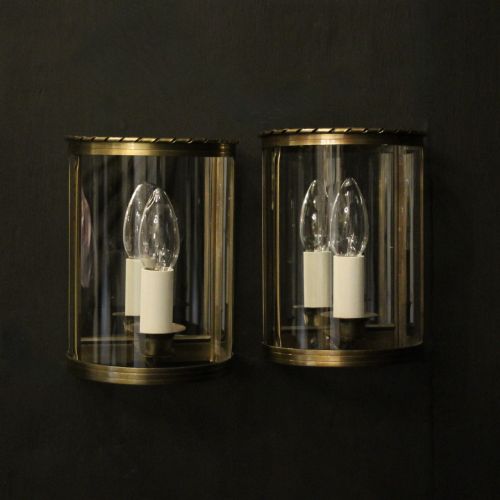


Two Light Glass Sconce
These two light glass sconce selections bring period illumination to a room, offering glittering reflection and handsome metalwork from the late nineteenth and early twentieth centuries.
Two Light Glass Sconce
A two light glass sconce typically takes the form of a pair or set designed for wall mounting, spanning styles from Victorian carriage lamps to French chateau and Italian regency designs. Buyers examining these options find robust wall lights and wall sconces produced across periods including the eighteen seventies, nineteen hundreds, nineteen twenties, and nineteen thirties.
The configurations appearing here range from convex half lanterns and sparkling wall chandeliers to bronze and crystal assemblies and regency style sets. Most pieces originate from French, Italian, and English workshops, utilising glass and metal construction to cast ambient wall illumination.
Materials and construction methods
Makers built these wall fixtures using structural metals such as brass, gilt brass, bronze, and iron to form the backplates, arms, and frames. These metallic elements support decorative components shaped from clear glass, crystal, cut glass, bevelled glass, and toleware.
Assembly techniques combined metal casting and soldering with hand-cut glass and crystal elements, occasionally incorporating fabric details. The integration of brass or bronze with reflective glass surfaces maximised the spread of candlelight or early electric illumination.
Materials documented across the inventory include brass, gilt brass, bronze, iron, glass, crystal, cut glass, bevelled glass, and fabric.
Assessing quality and craftsmanship
Quality separates fixtures by the crispness of the metal casting in the brass or bronze frames and the depth of hand-cutting in the crystal and glass components. Superior examples display harmonious proportions between the metal armature and the glass elements, with refined finishing on all visible surfaces.
The integration of original bevelled or cut glass panels indicates higher tier production, whereas simpler assemblies rely on plain pressed glass. Heavier gauge metalwork and sophisticated period styling, such as French rococo or Italian regency details, distinguish the finer pieces in this category.
The Two Light Glass Sconce Glossary
- Sconce
- A wall-mounted lighting fixture designed to hold candles or electric lamps. These pieces project illumination outward from a vertical surface.
- Crystal
- High-clarity glass containing metallic oxides that increase refractive index and sparkle. It is cut and polished for use in decorative chandeliers and wall lights.
- Toleware
- Painted or enamelled tinplate metalware used historically for decorative household items and lantern frames. It provides a durable painted surface often found on French lighting.
- Bevelled glass
- Glass panes featuring an angled edge ground and polished around the perimeter. This treatment catches light and adds decorative dimension to lantern and sconce panels.
Two Light Glass Sconce: Frequently Asked Questions
How do I install a two light glass sconce?
These fixtures require secure mounting to wall studs or proper wall anchors to support the weight of the metal and glass components. Professional electrical installation is recommended for vintage wall lights to ensure safe integration with modern wiring.
Positioning height depends on room proportions and ceiling clearance, typically placing the fixtures at eye level to optimize both illumination and visual balance.
What periods do these wall lights represent?
The selection encompasses pieces from the Victorian era around eighteen seventy, alongside early twentieth century items from nineteen hundred, nineteen twenty, and nineteen thirty. Styles span French chateau, Italian regency, and regency revival designs.
Dating relies on stylistic markers, construction methods, and materials such as gilt brass, toleware, and cut crystal.
Are these sconces wired for electricity?
Many vintage wall lights have been adapted for electrical use over their lifespan, while others retain elements of their original conversion. Buyers should inspect the internal wiring status of each individual piece upon arrival.
Qualified electricians can easily update old wiring to meet current safety standards while preserving the exterior antique hardware.
How should I clean antique glass and brass?
Clean glass and crystal components gently using a soft cloth and mild glass cleaner, avoiding abrasive materials that might scratch the surface. Brass and bronze metalwork benefits from dusting with a dry cloth to preserve the natural patina developed over decades.
Harsh chemical polishes should be avoided on aged metal finishes to maintain their historical appearance.