


Antique Glass Liquor Set
An antique glass liquor set brings together matched decanters and serving vessels designed to hold spirits with elegance.
Antique Glass Liquor Set
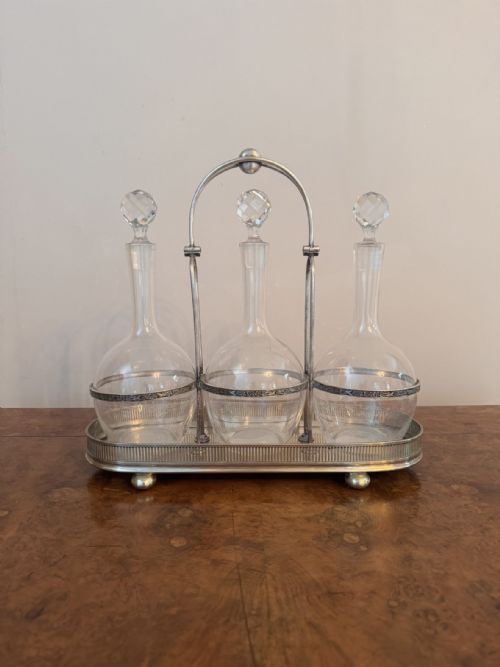
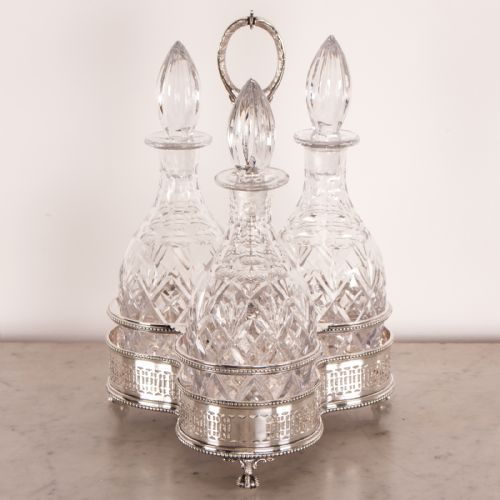
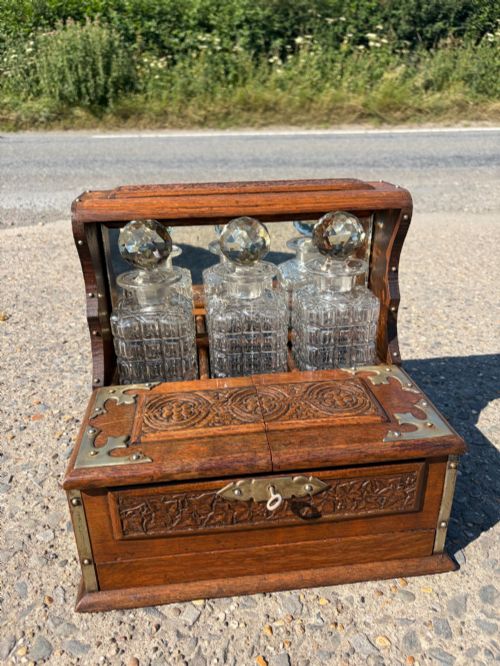
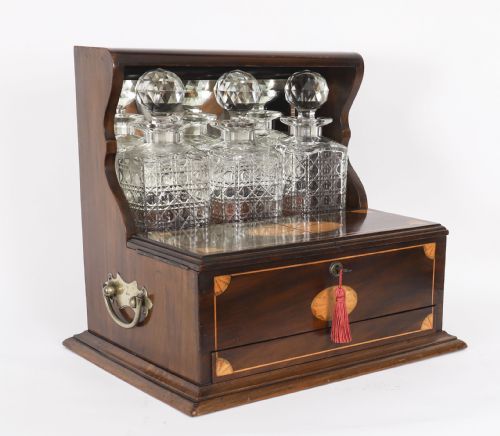
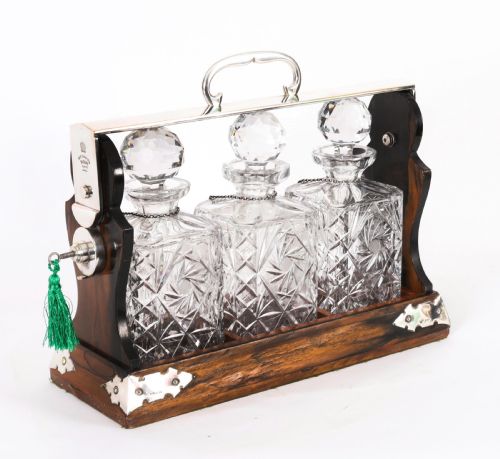
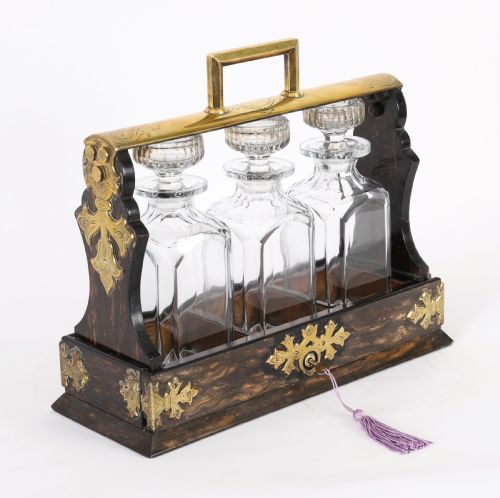
When you search for an antique glass liquor set, you encounter everything from portable tantalus boxes and locking decanter stands to fitted bottle frames and complete barware services. These pieces span the Victorian, Edwardian, and Art Deco periods, drawing on Georgian traditions of spirit storage.
The most frequent variations on this page include three-bottle oak or coromandel tantalus units fitted with cut crystal decanters, alongside Art Deco glass sets paired with matching drinking glasses. French cave a liqueur boxes and English silver-plated stands also appear regularly across the nineteenth and early twentieth centuries.
Materials and Construction
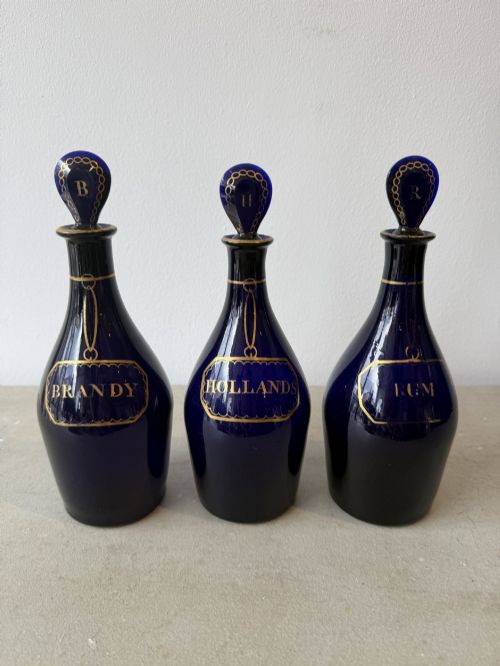
Makers shaped heavy glass and crystal through cutting, moulding, and optical blowing, often combining clear, ruby, cranberry, or Bristol blue glass with enamelling and engraved lettering. Metalwork played a structural role, utilising silver plate, Old Sheffield plate, brass, or ormolu for frames, handles, and locking mechanisms.
Cabinetmakers housed these vessels in durable timbers such as oak, mahogany, walnut, and coromandel, frequently incorporating marquetry stringing, brass mounts, or integrated games compendiums. Silver hallmarks and plated frames anchor the glass securely within portable boxes and stationary display stands.
Craftsmanship and Proportion
Quality rests in the weight and clarity of the crystal bottles, the precision of hand-cut facets, and the integrity of the matching stoppers. Superior examples feature robust locking mechanisms and finely fitted wooden cabinetry with uncompromised joinery.
The distinction between standard production and exceptional work lies in the integration of materials, such as heavy ormolu mounts, well-executed enamel decoration, and intact original silver-plated or brass hardware that operates smoothly.
Walker & Hall·Betjemann·Baccarat·James Powell·Elkington·Val Saint Lambert
The Antique Glass Liquor Set Glossary
- Tantalus
- A locking drink cabinet that secures decanters within a metal bar to prevent unauthorized access while displaying the bottles.
- Cave a liqueur
- A French fitted box, often lined with velvet or silk, housing glass decanters and matching small glasses.
- Cut crystal
- Glass shaped with sharp facets via wheel-cutting, producing brilliant light refraction across the surface of the decanter.
- Old Sheffield plate
- A composite material made by fusing a thin layer of silver onto a copper base, typical of earlier serving stands.
Antique Glass Liquor Set: Frequently Asked Questions
What is a tantalus?
A tantalus is a locking wooden or metal frame designed to hold spirit decanters securely in place. The locking mechanism prevents anyone from pouring a drink without the key.
These devices appeared frequently in Victorian and Edwardian smoking rooms and sideboards. They combined security with the visual appeal of cut crystal.
How do I date a set?
Dating relies on combining the style of the wooden cabinet or stand with the manufacturing techniques of the glass bottles. Materials like coromandel and brass mounts point toward the Victorian era.
Later sets from the 1930s adopt geometric Art Deco lines and enamel patterns. Hallmarks on silver-plated components provide precise chronological markers.
Were these sets used for daily dining?
These sets served primarily for formal entertaining, after-dinner drinks, and hosting guests in drawing rooms or studies. Portable versions allowed hosts to lock away expensive spirits between social occasions.
Many examples incorporated compartments for cards and games alongside the bottles, functioning as complete social hubs.
What is a cave a liqueur?
A cave a liqueur is a French decorative box built to house several small decanters and matching glasses. These boxes often feature exotic veneers and ornate ormolu mounts.
They sat upon parlour tables ready for serving liqueurs to visitors. The interior compartments kept delicate glassware separated and safe during transport.