


Clear Glass Liqueur Set
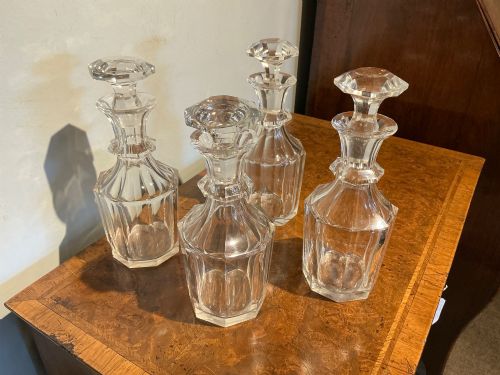
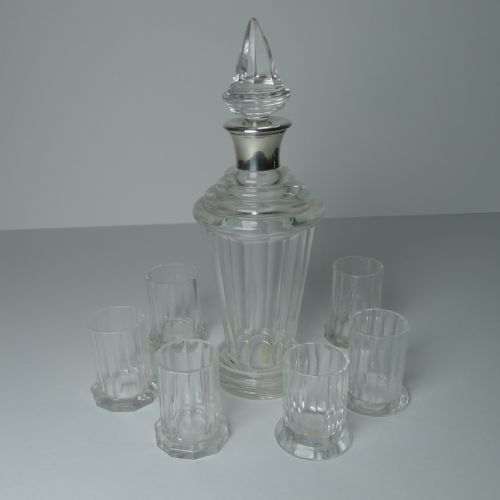
A clear glass liqueur set brings sparkle to a sideboard, offering matched decanters and glasses for after-dinner drams.
Clear Glass Liqueur Set
A clear glass liqueur set comprises matching decanters and glasses designed for serving spirits after a meal, often gathered on a tray or housed in a specialised cabinet. Buyers seeking a clear glass liqueur set will encounter pieces ranging from Victorian arrangements to geometric 1930s designs.
The selections span distinct historical eras, including the 19th century, Edwardian period, and the 1930s Art Deco movement. Forms include decanter sets with matching glasses, cordial glasses, and elaborate tantalus units.
Originating from diverse European workshops, these sets showcase the evolution of entertaining from formal Victorian dining to stylized 20th-century cocktail culture. The most common configurations on this page pair a central decanter with a matching set of small cups or shot glasses.
Materials and methods
Makers shaped these sets using lead crystal and clear glass, frequently enhancing the surfaces through deep cutting or delicate etching. Some vessels integrate contrasting black glass or incorporate silver-plated trays and mounts.
Decoration often involved surface enamel work, particularly during the Art Deco era, adding colourful geometric patterns or figural motifs to the transparent bodies. Hand-blown and moulded techniques dominated production, ensuring each service possessed a distinct weight and clarity.
Distinctions in quality
Quality rests in the crispness of the glass cutting and the integrity of the matching components, where an intact complement of original glasses elevates a service significantly. The weight and acoustic resonance of the crystal reveal the purity of the material.
Artistic execution distinguishes standard production from notable works, particularly in the precision of enamel decoration or the complexity of Edwardian and Victorian forms. The inclusion of original silver-plated trays or fitted wooden housing, such as Black Forest frames, adds architectural substance to the grouping.
Val Saint Lambert·Karl Palda·Moser Glass
The Clear Glass Liqueur Set Glossary
- Decanter
- A stoppered glass vessel used for holding and serving alcoholic liquids. These containers form the centrepiece of any drinking service.
- Lead crystal
- A type of glass containing metallic oxide that increases brilliance and weight. This material allows for sharper facets when cut.
- Tantalus
- A locked wooden cabinet holding decanters with their stoppers secured in place. The design permits viewing the contents while preventing unauthorized pouring.
- Enamel
- Opaque glass paste fused to the surface of a vessel through firing. It provides colourful decoration against transparent glass.
- Cordial glass
- A small stemmed vessel specifically proportioned for strong, sweet liqueurs. They typically accompany larger decanters in a matched service.
Clear Glass Liqueur Set: Frequently Asked Questions
How are liqueur sets used?
These services are designed for serving small portions of spirits or cordials at the conclusion of a meal. The decanters hold the liquor while the matching glasses are filled for guests.
They function both as functional tableware and as decorative displays for sideboards and drinks cabinets.
What periods do these sets come from?
The pieces span from the nineteenth century through the Edwardian era up to the 1930s. Victorian examples often feature ornate cutting, while 1930s sets lean into geometric Art Deco styling.
Each era brings distinct silhouettes and decorative techniques to the glassware.
What materials are used in these sets?
Construction relies primarily on clear glass, lead crystal, and occasionally black glass. Many sets incorporate silver-plated trays or mounts to complement the glassware.
Surface decoration frequently includes enamel work and etched patterns.
How should I display a liqueur set?
A set looks best arranged on a sideboard or within a glass-fronted cabinet where light can pass through the clear material. Keeping the decanters and matching glasses together preserves the intended visual impact.
Some period sets sit upon dedicated silver-plated trays that anchor the grouping.