


Bohemian Enamel Decanter
These bohemian enamel decanter pieces bring vibrant colour and intricate hand-painted detail to a drinks tray.
Bohemian Enamel Decanter
When you search for a bohemian enamel decanter, you are looking at decorative glassware shaped by centuries of Central European craftsmanship. These vessels range from functional serving pieces to elaborate display items designed for wine, spirits, or liqueurs.
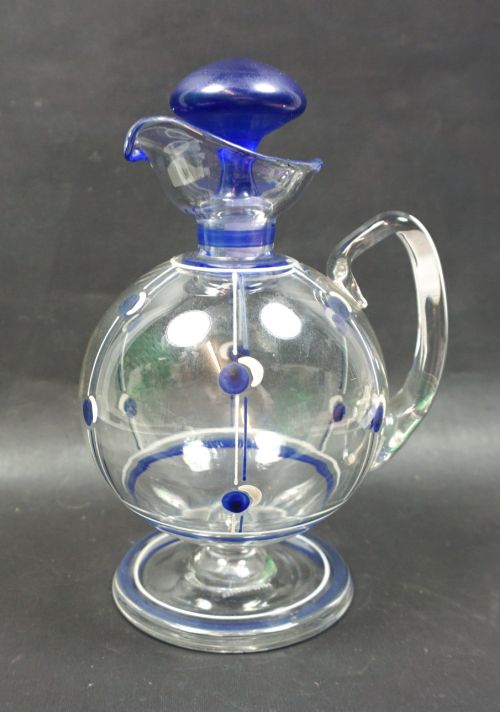
The pieces you are most likely to meet on this page span several distinct periods, including Victorian examples, late nineteenth century creations, and geometric Art Deco sets from Czechoslovakia. Many take the form of decanter sets complete with matching glasses, while others appear as standalone ewers, perfume bottles, or liqueur services.
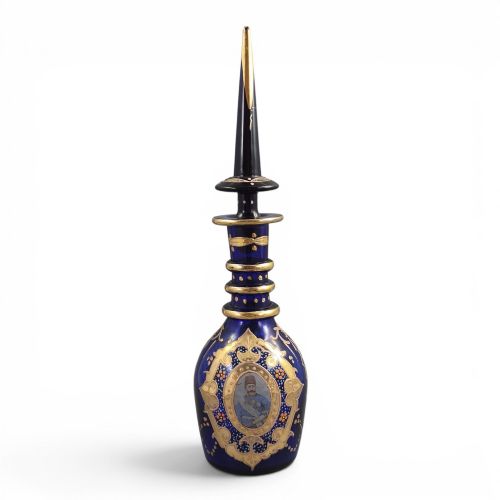
Origins vary from eighteenth-century workshops to twentieth-century factories, capturing shifts in regional taste. You will find items made for local use alongside pieces produced specifically for export markets such as Victorian Britain or the Persian Qajar sphere.
How they were made
Makers shaped these objects using lead crystal, clear glass, frosted glass, or coloured bases such as cobalt blue, cranberry red, white opaline, and green. Techniques combined glassblowing and cutting with opaque or translucent enamelling.
Painters applied coloured enamels and gold leaf directly onto the glass surface by hand, often firing the pieces to fix the pigments. This process created raised motifs and intricate patterns that contrast sharply with the smooth glass beneath.
Some decanters feature playing cards hand-painted in enamel, proving that nineteenth-century hosts took their evening gaming just as seriously as their port.
What varies in quality
The distinction between ordinary and exceptional work rests on the precision of the hand-painting and the clarity of the glass. Superior examples feature crisp enamel lines, rich application of gold leaf, and perfectly balanced geometric or figurative motifs.
Heavier lead crystal blanks and intact matching sets with all original glasses elevate a piece above standard production. The mastery of the enamelwork - whether depicting delicate garden scenes, playing cards, or bold Art Deco lines - defines the upper tier of the range.
Karl Palda·Moser·Salviati
The Bohemian Enamel Decanter Glossary
- Enamel
- A fused glassy substance applied to the surface of glass for decoration. It provides bright, opaque colour that sits slightly raised above the vessel wall.
- Lead crystal
- A type of glass containing lead oxide, which increases weight, brilliance, and clarity. It allows for deep cutting and light refraction.
- Opaline glass
- An opaque or translucent glass, often white or pastel-toned, popular for decorative bottles and decanters. It provides a solid background for enamel painting.
- Qajar Era
- A Persian historical period associated with specific export goods from Europe. Bohemian glassmakers produced specialised cobalt items to suit this market.
- Ewer
- A large jug with a wide spout and handle, used historically for water or wine at the table. Many surviving examples feature elaborate enamel and gilt decoration.
Bohemian Enamel Decanter: Frequently Asked Questions
How do I clean a bohemian enamel decanter?
Wash these pieces gently by hand using lukewarm water and mild soap, avoiding harsh scrubbing brushes or abrasive detergents that can damage the delicate enamel and gold leaf.
Dry them immediately with a soft lint-free cloth to prevent water spots from forming on the glass surface.
Were these decanters meant for daily use?
Many were produced for formal dining, social gatherings, or display in cabinets rather than rough everyday service. The presence of delicate painted details and matching glassware suggests they served a decorative role during entertaining.
When using them today, handle the stoppers and bases with care to preserve the original surface decoration.
How can I tell Art Deco pieces from Victorian ones?
Art Deco examples, particularly those from 1930s Czechoslovakia, rely on clean geometric lines, stylised patterns, and minimalist forms. They often appear as matching sets with angular stoppers.
Victorian and earlier pieces tend to feature more ornate floral motifs, heavier gilding, or scenic painting like the Mary Gregory style, reflecting the tastes of the nineteenth century.