


Antique Glass Jar Vanity Box
These pieces unite cut crystal, coloured glass and precious metal to hold powders and trinkets on the dressing table.
Antique Glass Jar Vanity Box
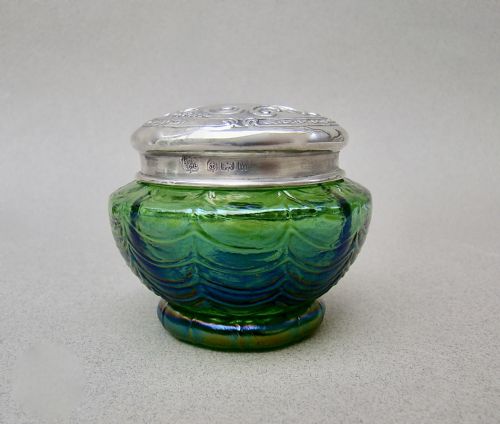
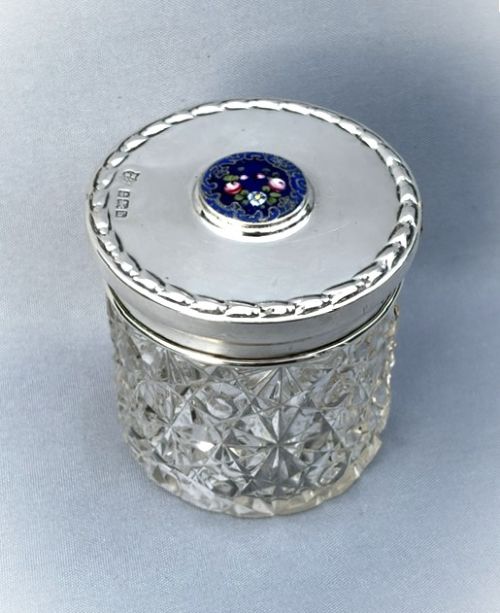
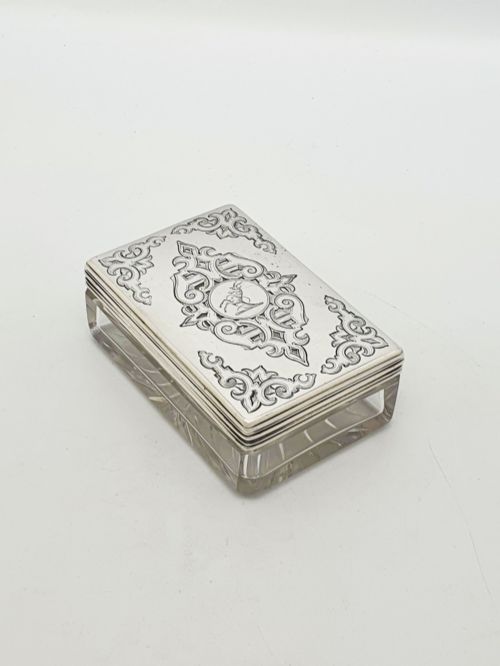
An antique glass jar vanity box brings together a heavy glass or crystal receptacle with a fitted metal lid, designed to hold powders, creams or small personal items upon a dressing table. They originate across the nineteenth and twentieth centuries, spanning periods from late Georgian and Victorian eras through to Edwardian and Art Deco designs.
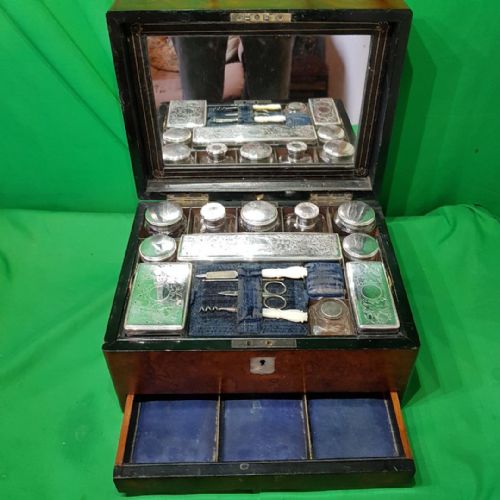
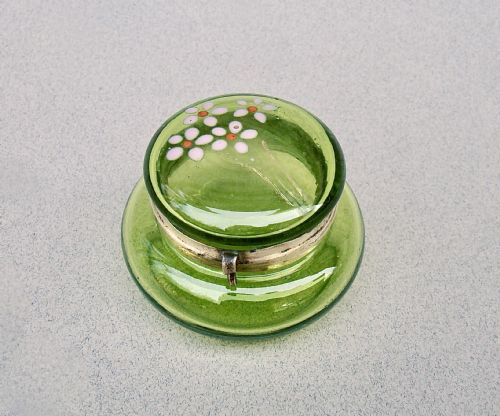
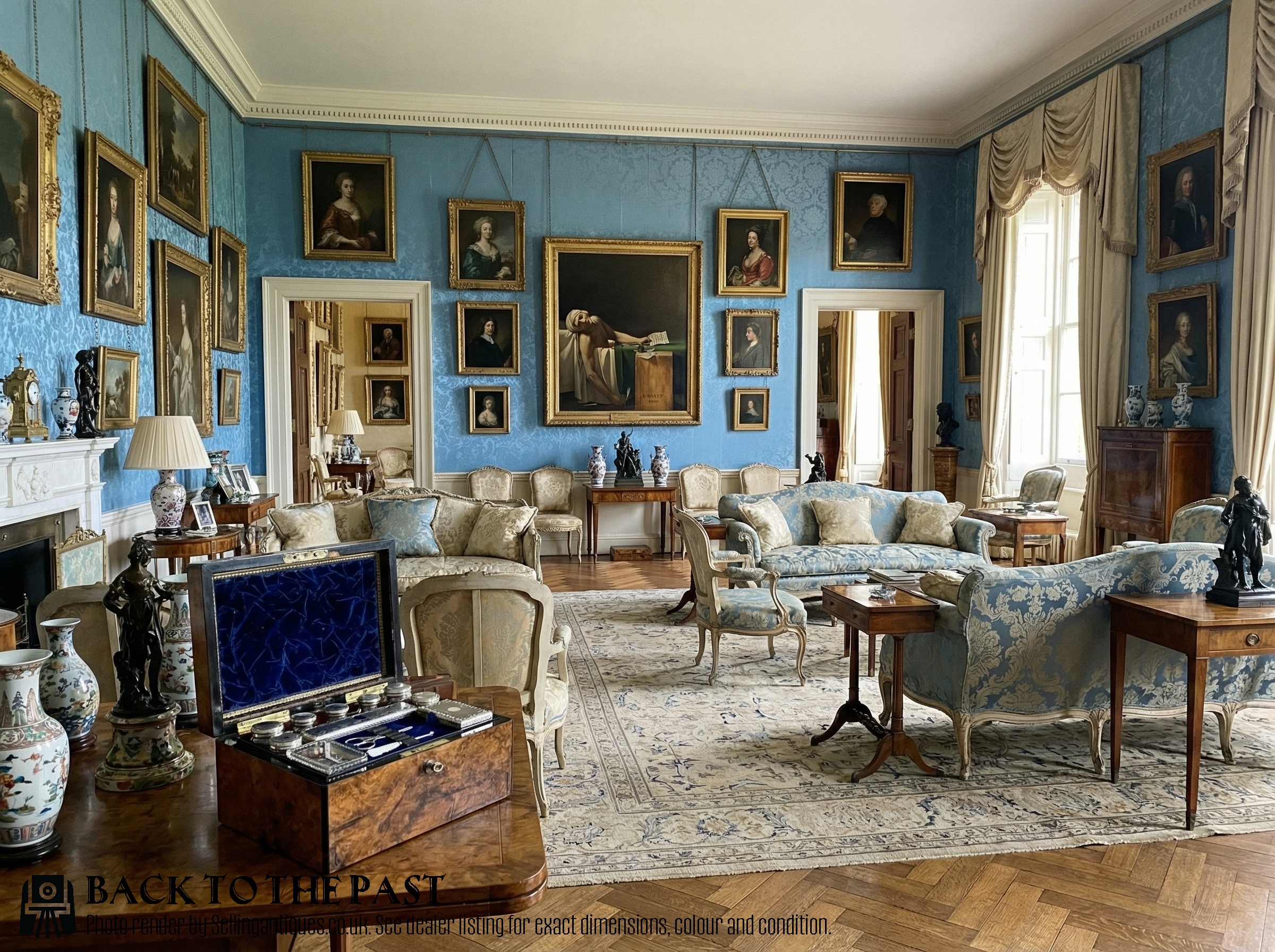
The form shifts from deep travelling cases containing fitted scent bottles to standalone lidded jars and circular powder boxes. Continental workshops in France and Germany produced distinctive coloured glass pieces with enamel decoration, whilst English makers paired cut crystal with sterling silver lids bearing hallmarks from London, Birmingham and Chester.
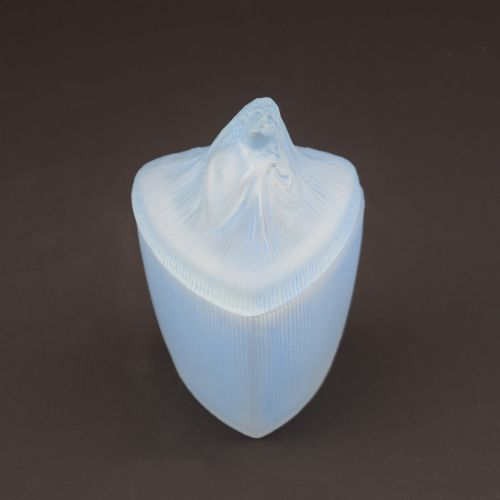
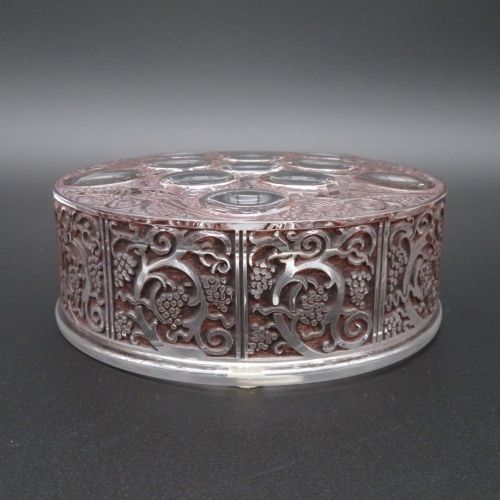
Buyers encounter versions ranging from heart-shaped trinket dishes in pressed glass to tall dressing table jars wrapped in guilloche enamel and tortoiseshell. The selection draws on French Baccarat and Clichy glass alongside works by makers such as Rene Lalique and the Goldsmiths and Silversmiths Company.
Materials and construction
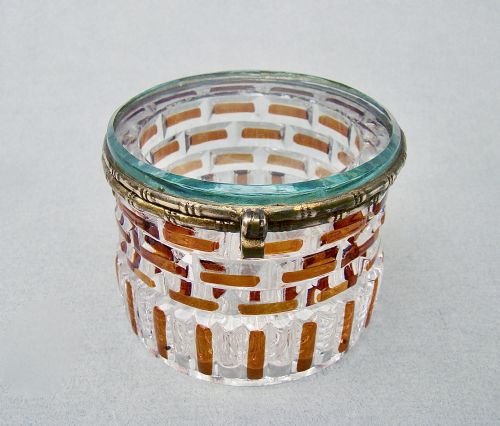
Glass bodies were formed through heavy moulding, cutting or blowing, creating thick walls with faceted patterns, flutes or smooth surfaces in clear, amber, cranberry, green, satin and Bristol blue glass. Continental factories utilised overlay techniques and layered enamel work to paint floral or geometric motifs directly onto the exterior.
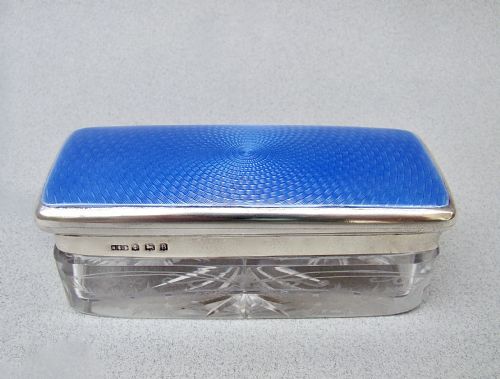
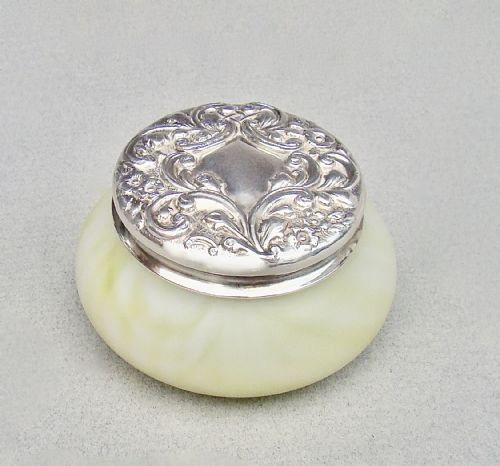
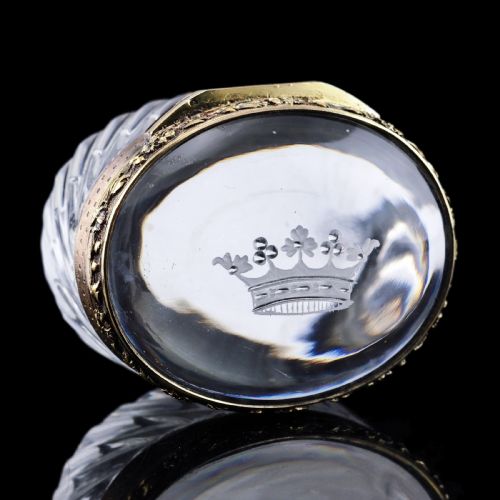
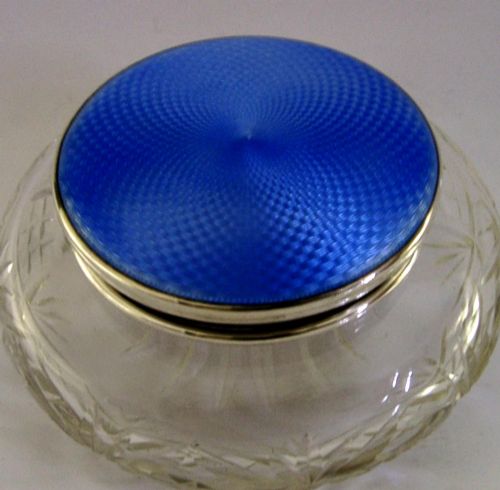
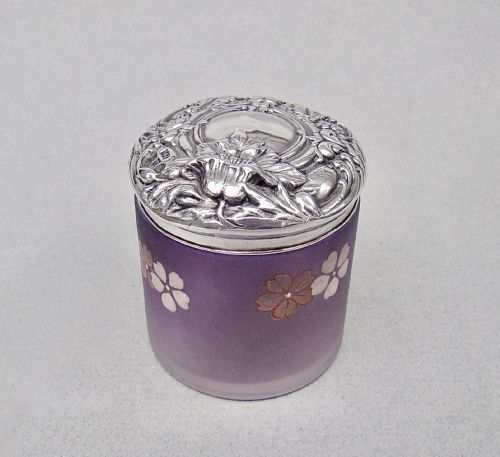
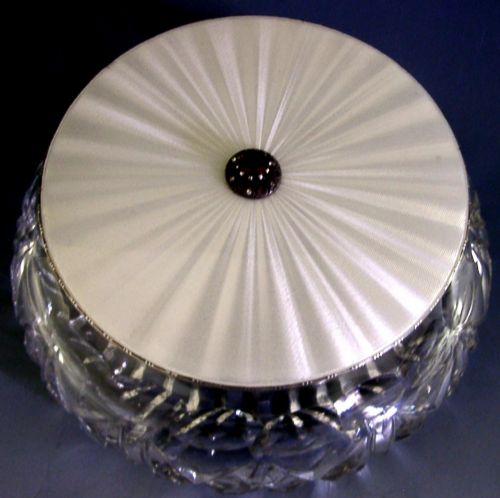
Lids and mounts were fashioned from sterling silver, silver gilt, brass or German silver, frequently shaped with hinges, collars and interior velvet linings. Silversmiths applied engine-turned guilloche enamel, tortoiseshell or inset coronets to the metal tops, securing them to the glass bases with plaster or precise rims.
Listings span Victorian, Edwardian and Art Deco periods, combining cut crystal, sterling silver, enamel and coloured glass.
Distinctions in craftsmanship
Depth and clarity of the glass cutting separate standard moulded receptacles from heavy lead crystal pieces that refract light sharply and sit with substantial weight. Sharpness in the wheel-cut facets and the absence of surface ripples indicate superior glasshouse production.
The execution of the metalwork and decorative additions defines the tier of the piece, seen in the density of the silver gauge, the smoothness of the hinge action, and the careful application of translucent enamel over engine-turned patterns without chipping or firing flaws.
A. J. Pepper & Co·Henry Clifford Davis·A. Bromet & Co·Rene Lalique·Posen of Frankfurt and Berlin
The Antique Glass Jar Vanity Box Glossary
- Guilloche enamel
- A decorative technique where translucent enamel is laid over a metal surface that has been mechanically engraved with repetitive geometric patterns. This method creates a shimmering, wave-like texture beneath the coloured glass surface.
- Sterling silver
- An alloy of silver containing 92.5 percent pure silver and 7.5 percent other metals, usually copper, to add durability. English pieces display standard assay office hallmarks indicating the town, maker and year of testing.
- Cut crystal
- Glass containing lead oxide that increases the refractive index and weight of the material. Craftsmen cut deep facets into the surface using rotating wheels to scatter light.
- Satin glass
- Glass treated with acid or vapour to produce a soft, velvety texture rather than a high gloss finish. It frequently appears in pastel shades during the late nineteenth and Edwardian periods.
- Silver gilt
- Sterling silver that has been coated with a thin layer of gold on its surface. This process provides the rich yellow appearance of gold whilst retaining a silver base structure.
Antique Glass Jar Vanity Box: Frequently Asked Questions
What is the difference between a trinket box and a vanity jar?
Trinket boxes generally feature hinged lids designed for storing small jewellery and hair pins. Vanity jars often have lift-off lids and deeper cylindrical bodies intended to hold face powder, creams or cotton wool.
Both items served identical functions on nineteenth and twentieth century dressing tables, though their shapes reflect the specific cosmetics and accessories of their decade.
How do I date an unmarked silver lid?
English silver lids carry hallmarks that include a date letter, a lion passant indicating sterling standard, and an anchor, leopard's head or three sheaves signifying the assay office.
Matching these stamped symbols against official assay records reveals the exact year and city of manufacture, even when the maker's mark is partially rubbed.
Are enamel lids prone to damage?
Guilloche and painted enamel can crack or chip if struck hard against a hard surface because the glass-like paste is fused to metal. Careful handling prevents impact to the edges where the metal meets the enamel panel.
When stored away from direct sunlight and moisture, stable enamel surfaces retain their colour and gloss over generations.
How should I clean antique glass and silver?
Glass bodies tolerate warm soapy water and soft brushes to clear dust from deep cut facets. Silver components require specialised metal polish applied gently with a cloth, avoiding contact with any enamel or tortoiseshell inserts.
Keeping moisture away from the interior lining protects old plaster adhesives that secure the silver collars to the glass necks.