








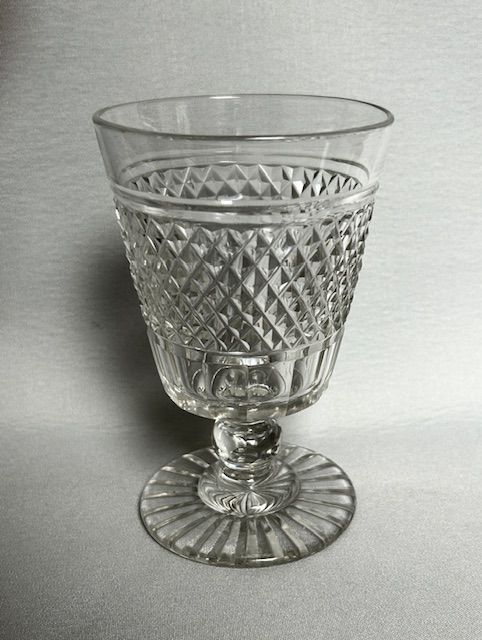

Antique Glass Goblet Chalice
These heavy drinking vessels bring historical weight to the table, and an antique glass goblet chalice offers a tangible link to Georgian toasts and Victorian gatherings.
Antique Glass Goblet Chalice
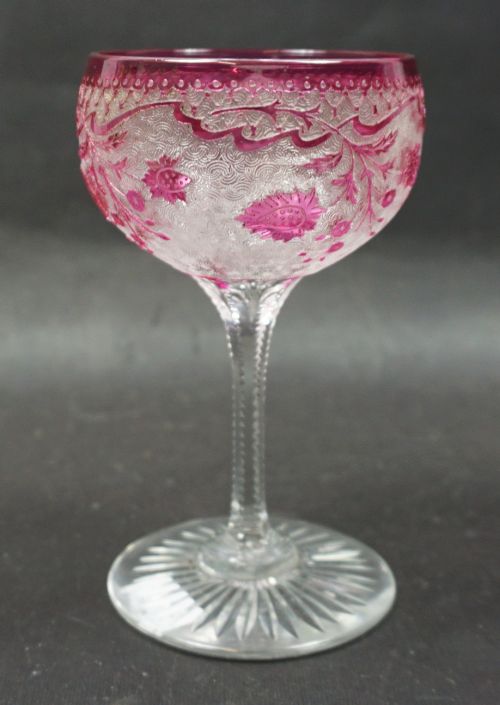
When searching for an antique glass goblet chalice, buyers encounter substantial drinking vessels spanning from the seventeenth century through the Edwardian period and the early twentieth century. The selection ranges from eighteenth-century English lead glass rummers and plain stem wine glasses to nineteenth-century Bohemian enamelled creations and continental chalices.
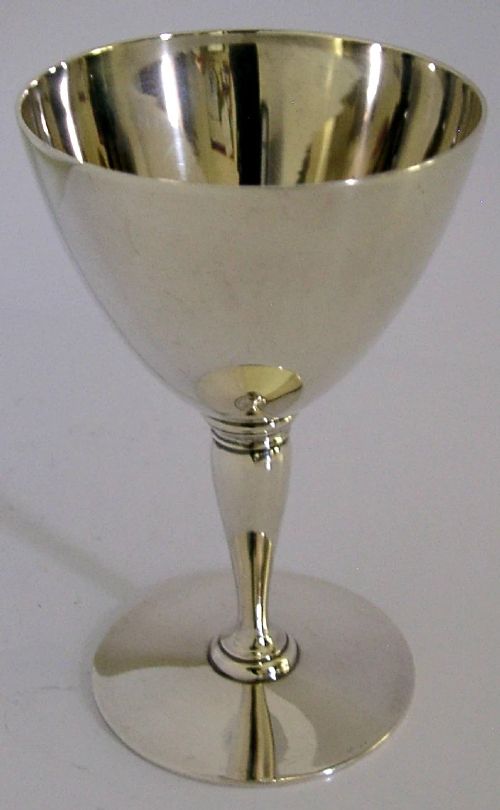
Forms vary from large ovoid bowls and hobnail cut bucket rummers to commemorative pieces and decorative centrepiece bowls. Buyers most frequently meet English lead glass and continental coloured crystal, alongside occasional silver and ceramic pairings.
How they were made
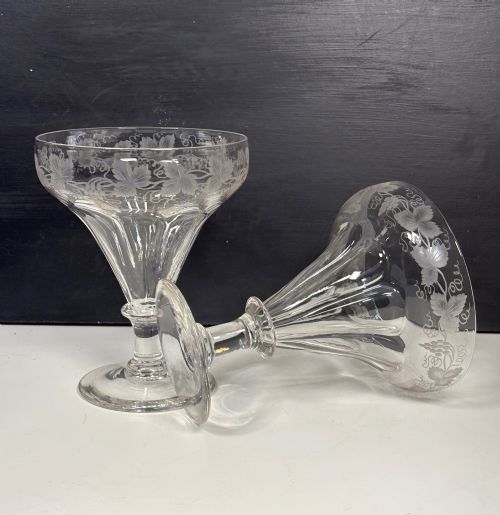
The pieces on this page rely heavily on blown glass and lead crystal, shaped by hand and often finished with intricate cutting, moulding, or wheel engraving. Makers utilised clear and coloured glass, augmenting surfaces with gold leaf, polychrome enamels, and parcel gilding.
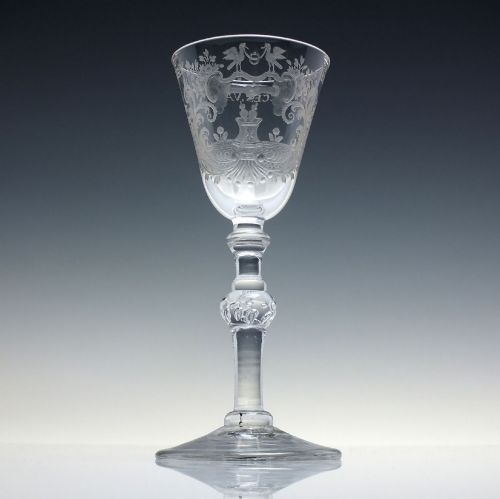
Stem construction involves distinct techniques such as balustroid forms, plain stems, and two-ply twists, while decoration spans from intaglio engraving and hobnail cutting to applied armorials and triple casing.
Antique Glass Goblet Chalice Retail Price Guide 2026
Typical asking prices for glass goblet chalice among the pieces listed under this phrase on Sellingantiques today, from the lower quarter to the upper quarter. They describe what is for sale here now, not the wider market.
Several rummers carry engraved sailing ships and initials, ready for eighteenth-century toasts to departing captains.
What varies in quality
Quality rests in the crispness of the wheel engraving, the weight and clarity of the lead glass, and the precision of the cutting or enamelling. Pieces with intact gilding, well-proportioned baluster stems, and deeply driven wheel work sit at the upper end of the range.
The skill involved in forming complex stems, such as corkscrew twists or balustroids, separates standard vessels from finer specimens. Colour saturation, particularly in cranberry, turquoise, and green glass, also dictates the visual impact of continental examples.
TIFFANY & Co·Moser Bohemian·Lobmeyer·Frits Hechert·Makeig-Jones Wedgwood·Adelbert Niemeyer
The Antique Glass Goblet Chalice Glossary
- Rummer
- A large, heavy drinking glass popular in the eighteenth and nineteenth centuries, typically featuring a capacious bowl and a short, sturdy stem.
- Balustroid
- A stem form that mimics architectural balusters, featuring swelling nodes and collars characteristic of mid-eighteenth-century English drinking vessels.
- Hobnail
- A faceted glass-cutting pattern resembling the iron heads used to stud heavy boots, creating a textured geometric surface.
- Casing
- The technique of fusing a layer of coloured glass over a clear or contrasting body before cutting through the outer layer to reveal the colour beneath.
Antique Glass Goblet Chalice: Frequently Asked Questions
How do I identify a Georgian rummer?
Georgian rummers typically display heavy lead glass construction with deep ovoid or bucket bowls, often supported by short, thick stems and polished pontil marks on the base. They were designed for heavier wines, ale, or punch.
Examine the metal of the glass for greyish tones and heft, which indicate high lead content typical of the period before mass production.
Were these chalices used for drinking?
Many large vessels served ceremonial, commemorative, or toast-master purposes rather than everyday dining. Masonic and coronation pieces recorded historical events and fraternal allegiances.
Their substantial capacities and elaborate engraving suggest display and formal toasts rather than casual use at the dinner table.
What is the difference between lead glass and crystal?
Lead glass contains a significant percentage of lead oxide, which increases the weight, refractive index, and ringing sound of the material. This composition allowed eighteenth-century makers to achieve deep wheel engraving and brilliant clarity.
Victorian and continental manufacturers expanded upon these techniques, introducing colour casing and heavy cutting that relied on the malleable nature of lead crystal.
How should I display an antique glass goblet?
Display these pieces in stable, well-lit cabinets away from direct sunlight and sources of vibration. Because many are heavy lead crystal or thin-walled eighteenth-century glass, secure shelving is essential.
Keep them distanced from high-traffic areas to prevent accidental knocks against their delicate rims and engraved bowls.