




19th Century Enamelled Glassware
These 19th century enamelled glassware pieces bring vibrant colour and intricate hand-painted detail to any room.
19th Century Enamelled Glassware
When you search for 19th century enamelled glassware, you encounter vibrant decorative objects decorated with durable vitreous enamel paint and gold leaf. The items listed here span the Victorian era, with specific pieces originating from 1860, 1880, 1890, and 1900.
The selection on this page centres on decorative vessels and tableware, including vases, wine glasses, goblets, decanters, tea sets, pitchers, jugs, and epergne centre pieces. Many examples arrive from Bohemian and German workshops, reflecting regional Victorian Historicism, Japonisme, and Folk Art styles.
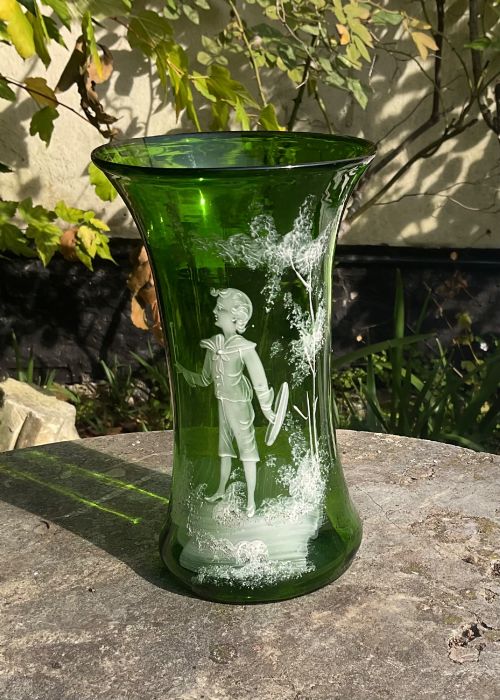
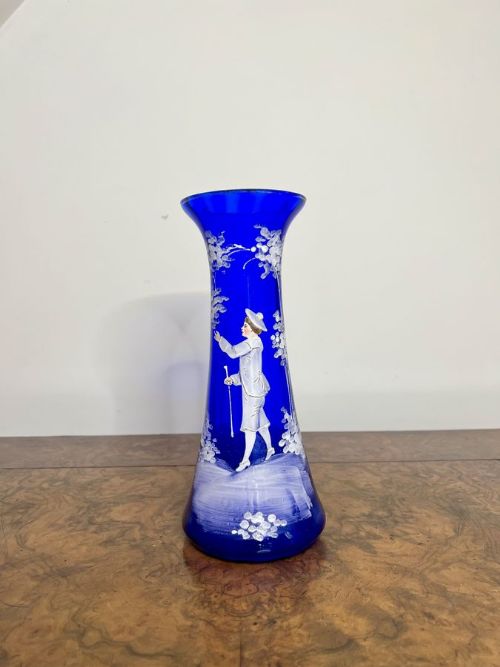
You meet distinct coloured glass bodies, such as rich green glass, blue glass, amber glass, and cranberry glass. These serve as the backdrop for painted figurative scenes, armorial crests, portraits, fish, and water plants.
Materials and production
The foundation of these objects is blown glass, shaped by hand into vessels like tall vases, decanters, and cups. Coloured glass varieties such as cranberry, amber, and green are achieved through mineral additives during the glassblowing process.
Decorating these surfaces involves enamel paint applied by hand, frequently paired with hand-gilded gold leaf detailing. Workshops then fire the pieces to fuse the vitreous enamel permanently to the glass body.
19th Century Enamelled Glassware Retail Price Guide 2026
Typical asking prices for 19th century enamelled glassware among the pieces listed under this phrase on Sellingantiques today, from the lower quarter to the upper quarter. They describe what is for sale here now, not the wider market.
Victorian glass painters spent hours capturing tiny painted fish and children in white enamel, bringing miniature worlds to life on tabletop decanters.
Assessing quality
Quality in these glass pieces rests upon the precision and complexity of the hand-painted enamel and the application of gold leaf. Pieces featuring elaborate figurative scenes, armorial bearings, or portraits demand greater skill than simpler geometric patterns.
The weight and clarity of the blown glass body, alongside the depth of colour in green, blue, cranberry, or amber examples, distinguish standard production from exceptional works by noted makers.
Lobmeyer·Moser·Mary Gregory·Harrach
The 19th Century Enamelled Glassware Glossary
- Enamel
- A decorative vitreous substance fused to the surface of glass through heat. It provides bright, opaque colour and durable ornamentation.
- Vitreous Enamel
- Glass powder melted onto a glass or metal surface at high temperatures. This creates a hard, glossy finish resistant to fading.
- Gold Leaf
- Gold beaten into extremely thin sheets and applied to the glass surface for gilding. It is often hand-painted over or combined with enamel details.
- Blown Glass
- Glass shaped by inflating molten glass on the end of a blowpipe. This technique produces hollow vessels with individual character.
- Cranberry Glass
- A type of red transparent glass created by adding gold chloride to the molten batch. It is characteristic of Victorian tableware and centrepieces.
- Epergne Centre Piece
- A multi-vase table centrepiece used for holding fruit or flowers. Victorian examples often utilise cranberry or coloured glass.
19th Century Enamelled Glassware: Frequently Asked Questions
Can I use these decanters and glasses?
Most of these items function primarily as decorative art due to their age and delicate hand-painted surfaces. Using them for display protects the historical enamel work from accidental wear.
If you choose to use wine glasses or decanters occasionally, handle them with extreme care and avoid acidic liquids.
How do I identify Bohemian pieces?
Bohemian glass often displays rich green or amber tones combined with heavy gilding and intricate portraits or historicist motifs. Regional workshops produced distinctive goblets and tea sets during the nineteenth century.
Compare the decorative style and glass colour against documented examples from this specific Central European tradition.
What is Mary Gregory glass?
Mary Gregory pieces feature distinctive white enamel silhouettes depicting children engaged in outdoor activities, often set against blue or green glass. The style became popular during the Victorian period.
Authentic examples exhibit crisp hand-painted detailing on blown glass vessels dating towards the late nineteenth century.