




Antique Glass Fruit Plate
An antique glass fruit plate brings tactile weight and layered reflection to a table, combining pressed or cut vessels with plated metal mounts.
Antique Glass Fruit Plate
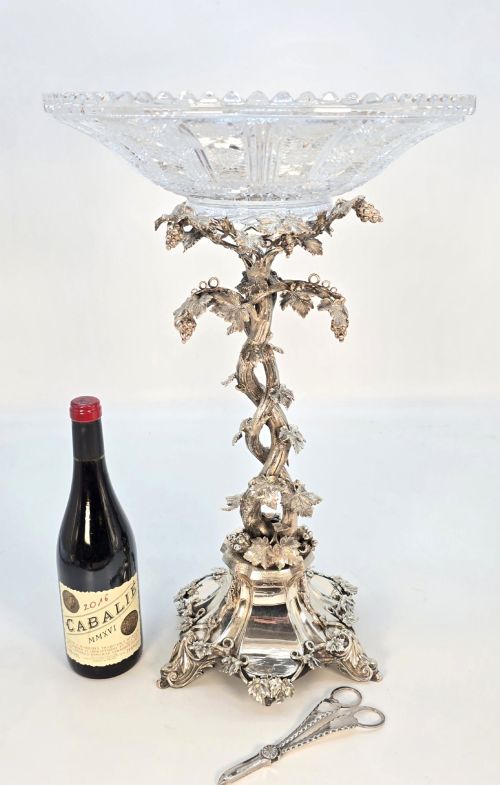
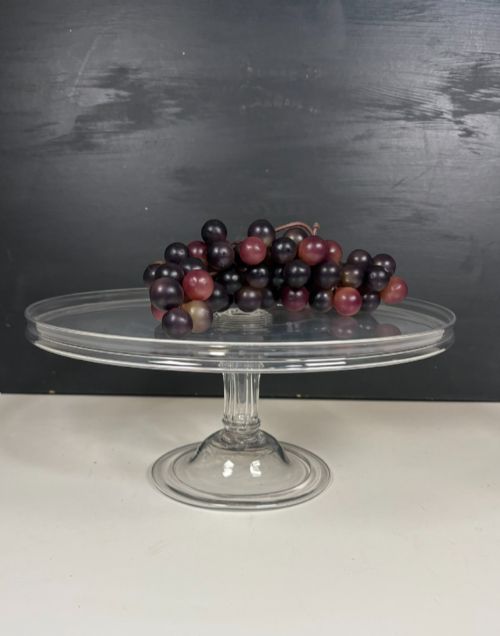
When you search for an antique glass fruit plate, you enter a field populated by table centrepieces, shallow bowls, and elevated glass tazzas spanning the Georgian, Victorian, and Edwardian eras. These pieces bridge functional diningware and decorative display, often pairing deep glass dishes with metal stands.
The most common formats on this page range from heavy lead crystal dishes resting in silver-plated wirework frames to elaborate pedestal stands and baskets produced during the nineteenth and early twentieth centuries. Makers applied varied techniques to shape glass bowls intended to hold seasonal produce at the centre of a dining table.
Examples appear in diverse materials such as green vaseline glass, opaline glass, and clear cut crystal, anchored by silver plate, old Sheffield plate, or silvered bronze. Styles stretch from restrained Georgian forms through ornate Victorian aesthetic movement pieces to flowing Art Nouveau designs.
Materials and construction methods
Makers formed the transparent and coloured components using heavy lead crystal, cut glass, opaline glass, or vaseline glass, relying on hot-forming, blowing, and intensive wheel-cutting to create faceted surfaces and decorative rims. This glass was then paired with metal mounts shaped from silver plate, old Sheffield plate, or silvered bronze.
Metalwork foundations combined cast or stamped components with soldered joints, creating secure frames, swing handles, and pedestal bases designed to support heavy glass bowls. Artisans integrated these materials by matching the contours of the glass vessel to the engineered curves of the silver-plated mounts.
Several Victorian fruit bowls appear alongside nautical themes, suggesting someone long ago insisted on eating grapes while imagining naval battles.
Distinctions in quality
Quality rests on the crispness of the glass cutting and the weight of the metal mount, where deeper facets and thicker silver plating indicate superior production standards. Pieces bearing clear maker signatures reflect higher workshop ambition.
The integration between the glass bowl and its metal stand defines structural success, as finer examples demonstrate exact balance and secure seating without excessive solder or loose joints. The clarity of the crystal and the purity of coloured opaline or vaseline glass further separate standard production from exceptional work.
Walker And Hall·Christofle Et Cie·James Dixon
The Antique Glass Fruit Plate Glossary
- Tazza
- An elevated shallow bowl or plate supported by a central foot or pedestal. These pieces function as centrepieces for serving fruit.
- Cut crystal
- Glass containing lead oxide that is hand-cut on a wheel to create sharp geometric facets. This process increases the weight and refractive brilliance of the dish.
- Silver plate
- A base metal such as copper or Britannia metal coated with a thin layer of silver through electroplating. It provides the appearance of solid silver at a lower manufacturing cost.
- Opaline glass
- An opaque or translucent pale glass developed in the nineteenth century, often tinted in delicate pastel shades. It was frequently shaped into decorative baskets and bowls.
- Vaseline glass
- Glass containing uranium dioxide that exhibits a distinct yellow-green colour and glows under ultraviolet light. It was popular in decorative table wares during the nineteenth and early twentieth centuries.
Antique Glass Fruit Plate: Frequently Asked Questions
What were these glass fruit plates used for?
These pieces served as table centrepieces designed to present fresh fruit, salads, or sweetmeats during formal dining courses. Their elevated forms and reflective surfaces added visual interest to the middle of the table.
They also functioned as decorative display objects on sideboards when not in active use during meals. The combination of coloured or cut glass with silver-plated stands suited the Victorian preference for elaborate tablescapes.
How do I care for antique glass and silver plate?
Wash the glass components gently in lukewarm water using mild detergent, avoiding sudden temperature changes that can stress old material. Dry them thoroughly with a soft cloth to prevent water spots.
Clean the metal mounts with a non-abrasive silver cloth or specialist polish, keeping abrasive substances away from both the plated surfaces and the glass edges. Regular light dusting helps preserve the finish without requiring frequent chemical cleaning.
How can I tell a Victorian piece from an Edwardian one?
Victorian examples often feature heavier ornamentation, deep hand-cutting, and motifs drawn from the aesthetic movement or nature, reflecting a taste for dense decoration. Their silver-plated mounts tend to be robust and complex in outline.
Edwardian pieces generally lean towards lighter proportions and cleaner lines, sometimes anticipating Art Nouveau or early Art Deco styles. The glass forms in later periods can display simpler geometric arrangements or softer colour palettes.
What is the difference between a tazza and a basket?
A tazza is an open, shallow dish fixed to a rigid central pedestal or foot, designed to stand stably on a table surface. Its profile is symmetrical and balanced for formal display.
A basket incorporates a movable or fixed swing handle attached to the rim, allowing it to be lifted and passed. Baskets often feature more flexible wirework mounts and organic shapes derived from woven prototypes.