



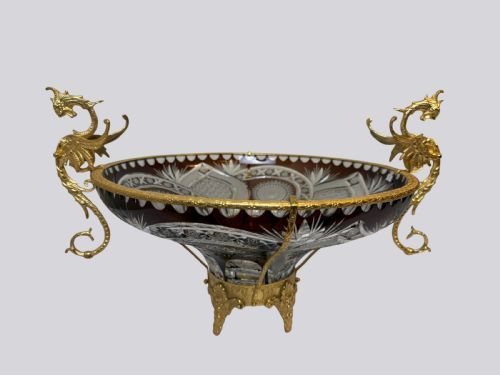


Clear Glass Fruit Dish
A clear glass fruit dish brings heavy lead crystal, sharp-cut facets and gilded mounts directly to the dining table.
Clear Glass Fruit Dish
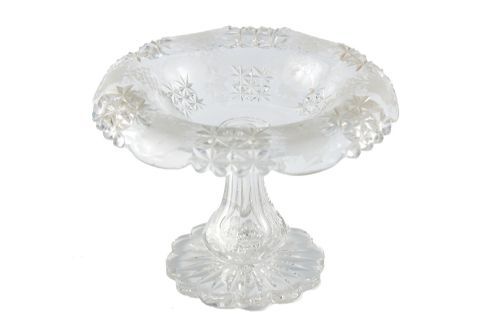
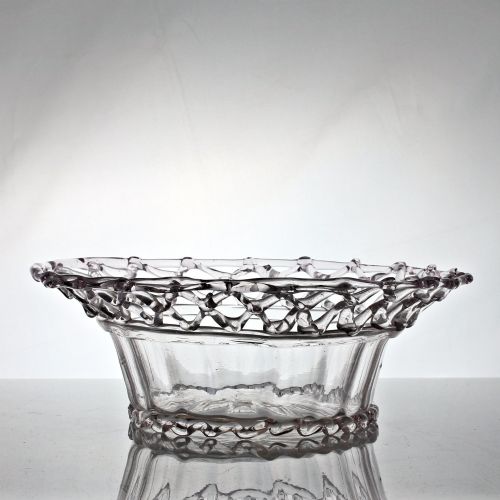
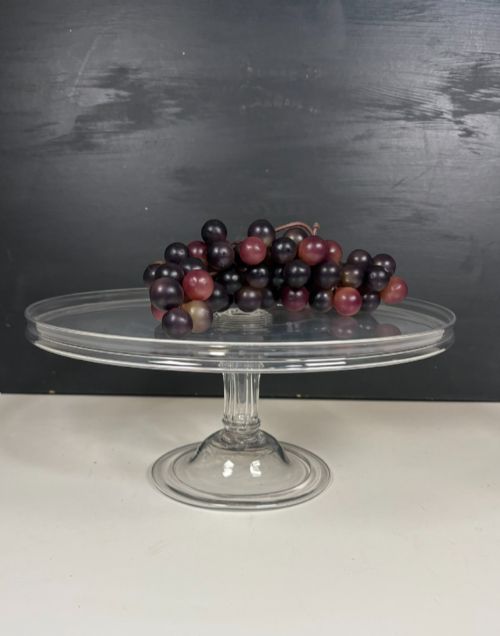
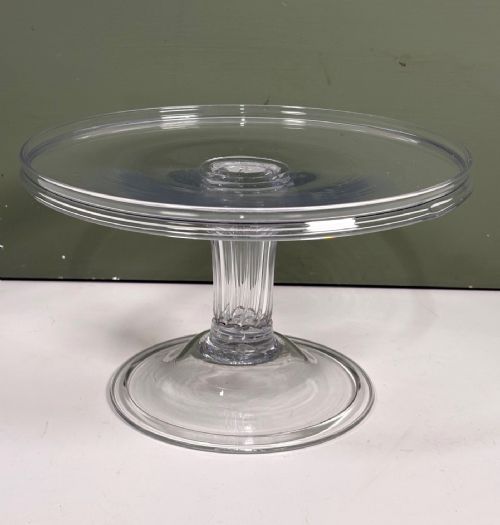
When you search for a clear glass fruit dish, you encounter decorative bowls, footed tazzas, and table centrepieces spanning from the Georgian period through the Edwardian era and into Art Deco production. The versions you are most likely to meet on this page take the form of heavy cut glass bowls or footed pedestal dishes designed to hold fruit.
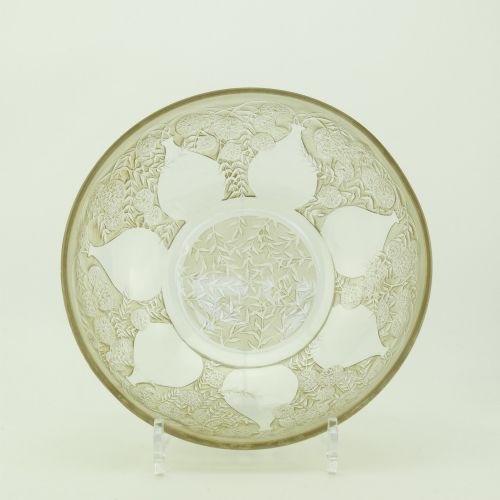
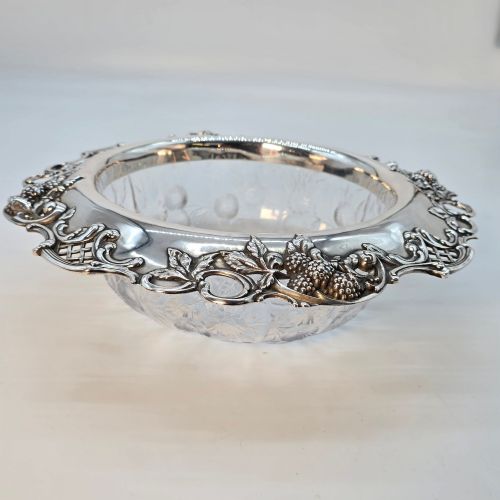
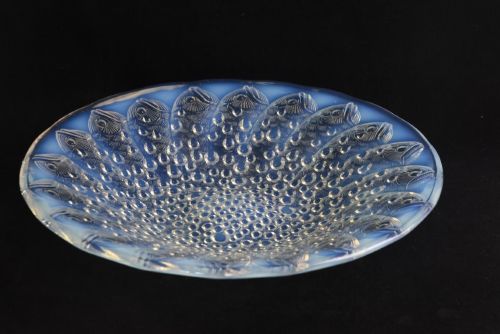
The material evidence shows these pieces rendered in lead crystal, clear glass, and opalescent glass, occasionally paired with sterling silver rims or gilt bronze frames. Styles range from simple Georgian and Victorian cut glass to French Empire, Art Nouveau, and the distinct opalescent creations of the 1920s and 1930s.
Materials and construction
Makers shaped these pieces using heavy lead crystal and clear glass, often employing deep wheel-cutting techniques to create sharp geometric facets that catch the light. Victorian and Edwardian examples frequently rely on this heavy cutting to give the glass its characteristic weight and brilliance.
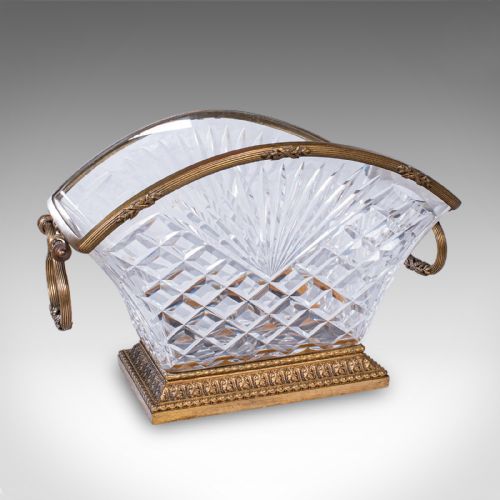
Many of the grander table centrepieces and dishes incorporate metal mounts, uniting the glass with sterling silver rims, ormolu, and gilt bronze frames. Opalescent glass variations utilise specialised cooling methods to achieve milky, translucent blue and white visual effects within the body of the bowl.
Some Edwardian tables relied entirely on heavy cut glass to hold oranges, proving that even fruit needed a bright stage.
Evaluating the standard
The standard of a bowl depends upon the crispness of the wheel-cut facets and the clarity of the metal itself. Deeper, sharper cutting and heavier lead crystal distinguish superior vessels from lighter, simpler press-moulded glass.
Integration between materials also dictates the standing of a piece, particularly where glass meets cast gilt bronze, ormolu, or sterling silver. Secure, well-finished metal mounts and hand-applied enamel decoration elevate certain Edwardian and Continental pieces above standard table wares.
Rene Lalique·Tiffany and Co·St Louis glassworks·Val St Lambert·WMF·Waterford
The Clear Glass Fruit Dish Glossary
- Tazza
- A shallow bowl or dish mounted on a stem and foot, used historically for serving fruit or small sweetmeats at the table.
- Centrepiece
- A large decorative vessel placed in the middle of a dining table, often combining glass bowls with gilt bronze or ormolu frames.
- Lead crystal
- A heavy type of glass containing metallic oxide that increases brilliance, weight, and the ease of deep cutting.
- Opalescent glass
- A translucent glass that diffuses light to display milky or pearlescent blue tones, characteristic of early twentieth-century design.
- Ormolu
- Gilt bronze ornamentation applied as rims, feet, or handles to enhance decorative glassware.
Clear Glass Fruit Dish: Frequently Asked Questions
What was a clear glass fruit dish used for?
These dishes sat at the centre of the dining table to present fresh fruit, or functioned as tazzas for sweetmeats during formal meals.
Their substantial size and elevated forms allowed them to serve as visual centrepieces as well as practical serving ware.
How do I tell a Georgian tazza from a Victorian one?
Georgian tazzas generally exhibit simpler, broader cutting and hand-blown characteristics with pontil marks on the underside. Victorian and Edwardian examples often feature denser, deeper geometric facets and heavier lead crystal composition.
Looking at the weight and the sharpness of the wheel-cut edges usually reveals the manufacturing period.
What is the difference between crystal and clear glass?
Lead crystal contains a high proportion of lead oxide, which gives the material greater weight, density, and refractive brilliance than standard clear glass. This higher density allows artisans to cut deeper, sharper facets without the glass fracturing.
Clear glass is lighter and often relies on moulding or light etching rather than deep wheel-cutting.