


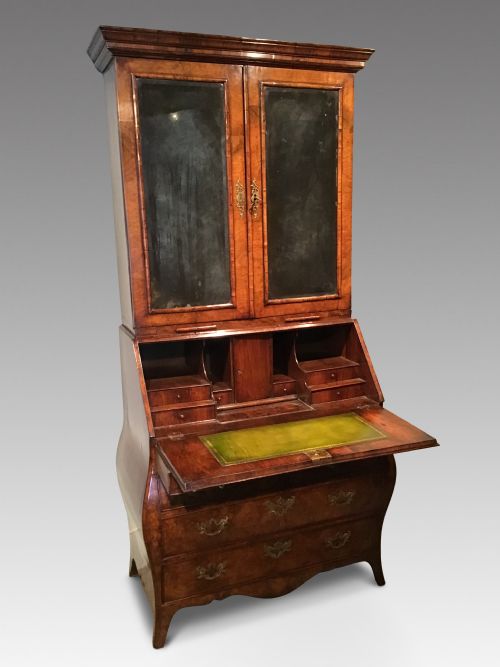


Antique Glass Front Secretary
An antique glass front secretary combines a fitted writing compartment with enclosed shelving, offering practical storage and display for the home.
Antique Glass Front Secretary
An antique glass front secretary provides a dedicated writing space alongside upper display shelving, merging two distinct pieces of furniture into one unified case. These combination pieces appear across several eras, with Georgian, Victorian and Edwardian examples forming the core of the selection.
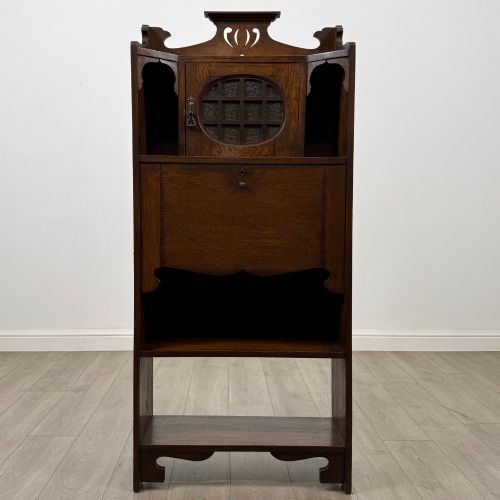
Makers and designers from various periods adapted the form, resulting in everything from restrained George III library bookcases to decorative Edwardian satinwood-inlaid variants and Arts and Crafts oak pieces. Buyers encounter various forms such as bureau bookcases, secretaire bookcases and rolltop hybrids.
Materials and construction methods
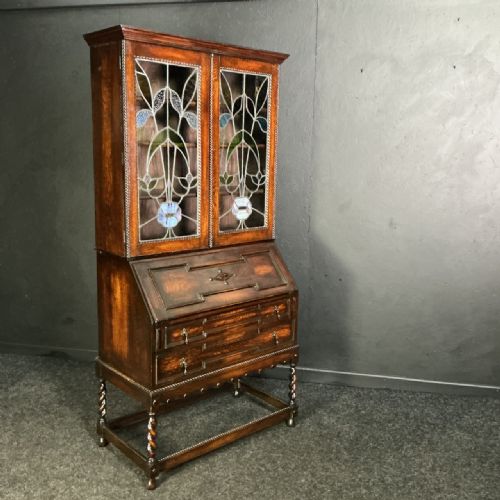
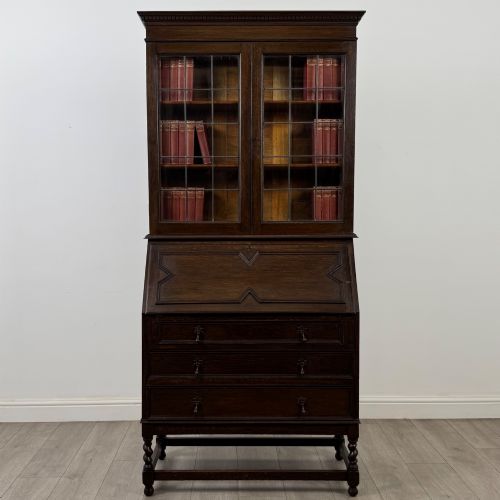
Cabinetmakers constructed these secretary bookcases using solid timbers and carefully selected veneers, relying primarily on mahogany, oak and walnut for the main carcase and shelving. Glass panels were secured within wooden frames or lead cames to protect the contents of the upper display section.
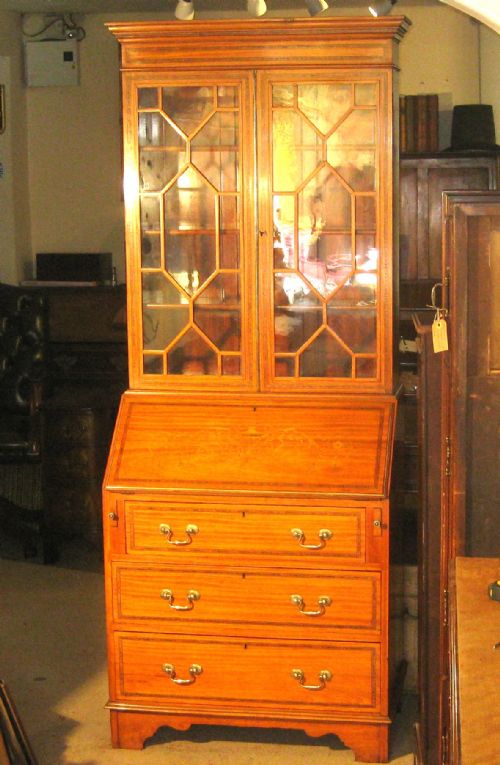
Secondary elements such as brass handles, key escutcheons and iron hardware provided functional and decorative accents to the doors and drop-front writing surfaces. Satinwood stringing and inlay added contrasting detail to mahogany and walnut surfaces on later Edwardian and Georgian pieces.
Listings feature pieces spanning from the mid-eighteenth century through the Edwardian era, constructed in mahogany, oak and walnut.
Quality variations in secretary bookcases
The choice of primary timber and veneer figure largely determines the visual impact of a secretary bookcase, with well-grained mahogany and figured walnut sitting at the upper end of cabinetmaking. Grain selection across large expanses like doors and drop-fronts demonstrates the care taken by the original maker.
Internal complexity within the writing compartment varies significantly, separating standard utility pieces from finer examples with meticulously dovetailed internal drawers and secret compartments. Glazing quality, timber thickness and the refinement of brass hardware further distinguish everyday workshop output from finer productions.
Liberty and Co
The Antique Glass Front Secretary Glossary
- Secretaire
- A piece of furniture containing a drawer or drop-front flap that pulls down to serve as a writing desk. It often conceals pigeonholes and small drawers.
- Bureau bookcase
- A combined piece comprising a lower writing bureau and an upper bookcase section with glazed doors. It serves both storage and display functions.
- Astral glazed
- A glass door divided into smaller panes by wooden glazing bars, often arranged in geometric or Gothic patterns. This technique lightens the visual weight of large bookcase doors.
- Stringing
- A narrow inlay of contrasting wood used to create decorative borders on furniture surfaces. It appears frequently on satinwood and mahogany pieces.
- Glazed
- Fitted with transparent glass panes rather than solid wooden panels. This allows the contents of the upper cabinet to be viewed.
Antique Glass Front Secretary: Frequently Asked Questions
What is an antique glass front secretary?
An antique glass front secretary is a dual-purpose piece of furniture featuring a lower writing desk and an upper bookcase enclosed by glass doors.
These pieces combine functional workspace with display shelving for books and decorative objects.
How were secretary bookcases used historically?
They served as private writing desks and secure storage spaces for correspondence, account books and valuable volumes.
The upper glass doors allowed owners to display their library collections while protecting the books from dust.
How do I identify a Georgian secretary bookcase?
Georgian examples often feature rich mahogany timbers, astragal glazed upper doors and restrained architectural proportions.
Internal fittings usually include tidy arrangements of small drawers surrounding a central cupboard within the writing section.
Where should I place a secretary in a room?
A secretary works well in a study, library or living room against a solid wall with adequate clearance for the drop-front desk.
Positioning the piece away from direct sunlight protects the timber veneers and historical glass from fading or heat damage.