




Antique Glass Flacon
An antique glass flacon is a small vessel for perfume or cologne, prized for its combination of coloured glass and precious metal mounts.
Antique Glass Flacon
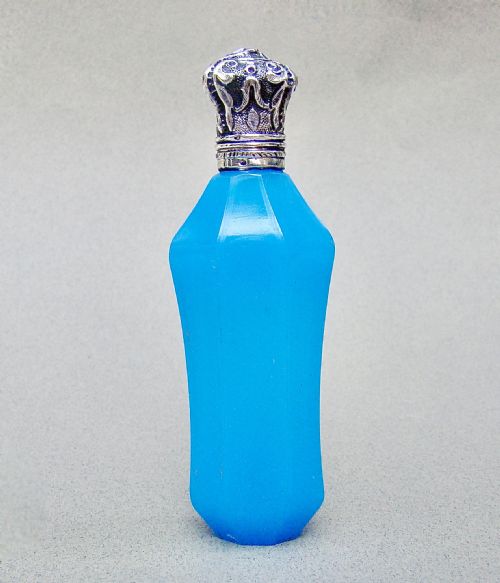
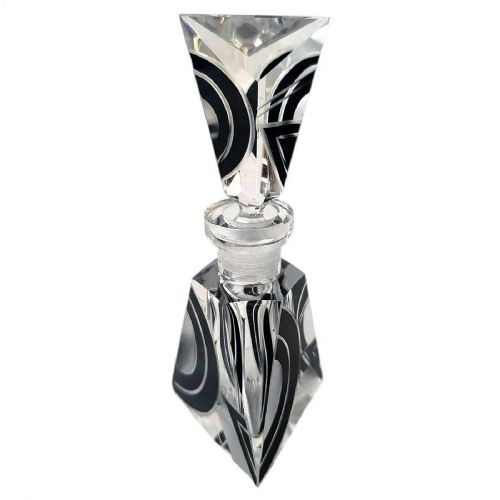
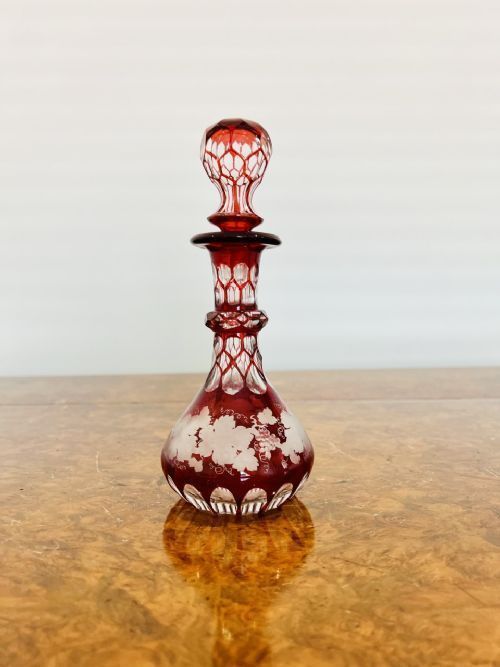
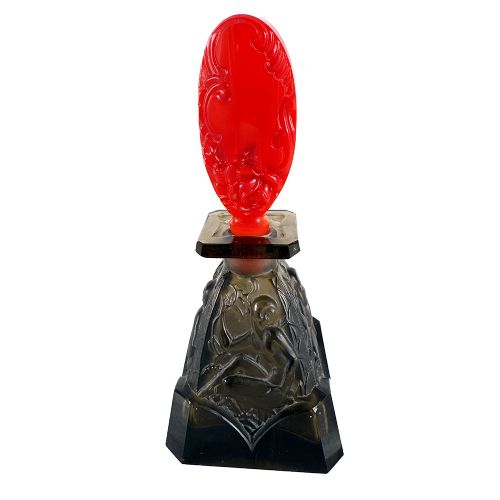
When you search for an antique glass flacon, you encounter small scent and perfume bottles designed to hold volatile fragrances safely on a dressing table or in a travelling case. The selection on this page ranges from early nineteenth-century French overlay pieces to geometric Art Deco designs from Czechoslovakia.
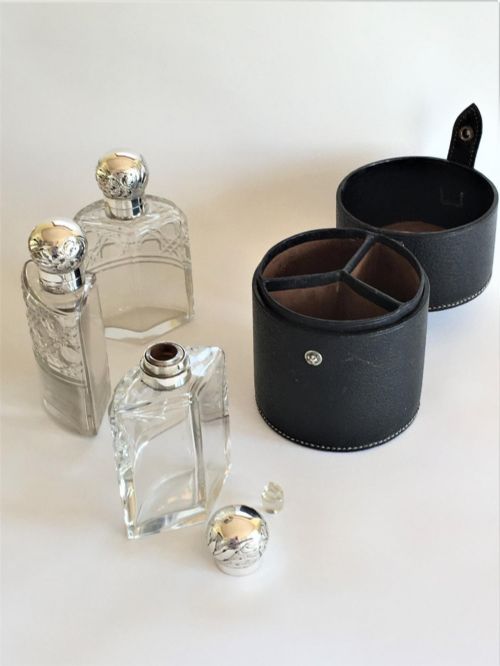
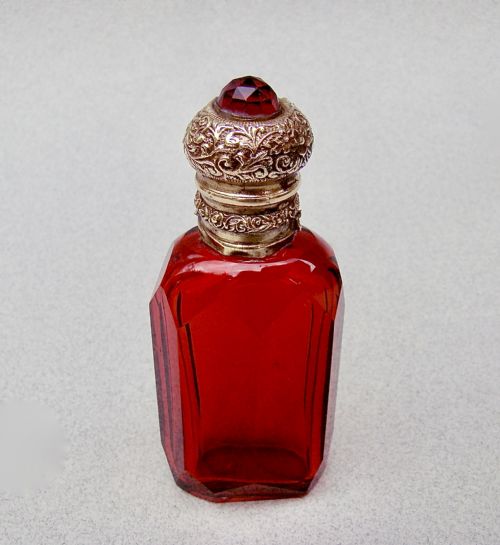
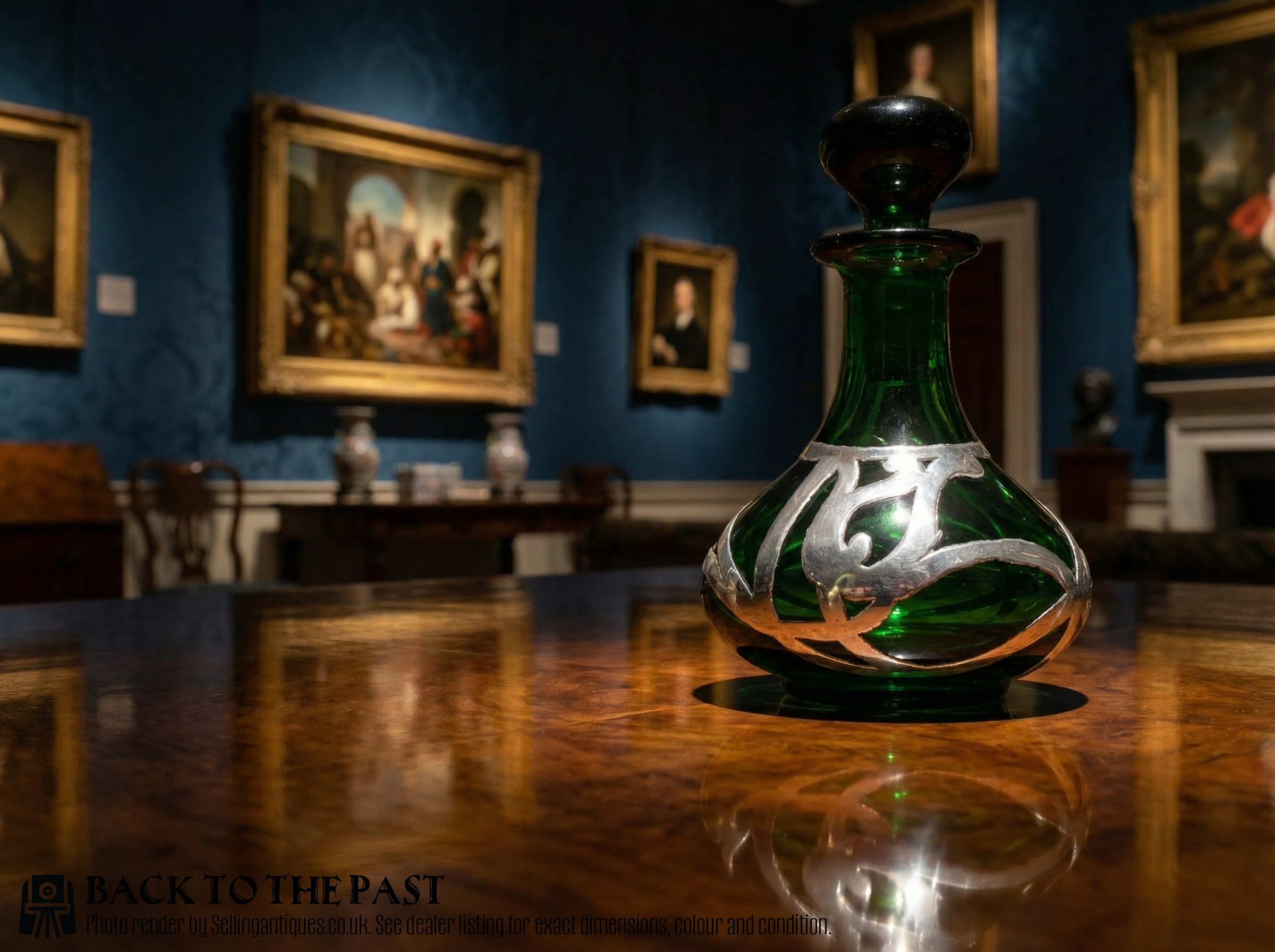
You are most likely to meet Victorian and Edwardian examples featuring cut glass bodies fitted with sterling silver collars, hinged caps, or screw tops. These vessels span various forms, from single pocket-sized cylinders to cased trios intended for journeys.
How they were made
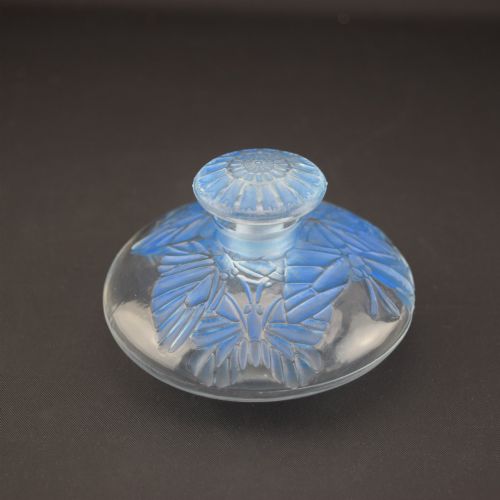
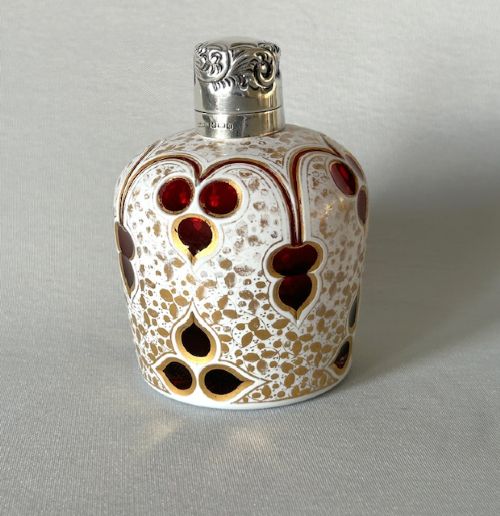
Makers shaped the bodies using traditional glassblowing techniques, often casing multiple layers of coloured glass together before cutting geometric patterns or motifs through the outer layer to expose the contrasting base colour. Opalescent, ruby, cranberry, and clear crystal glass served as the primary canvases for these techniques.
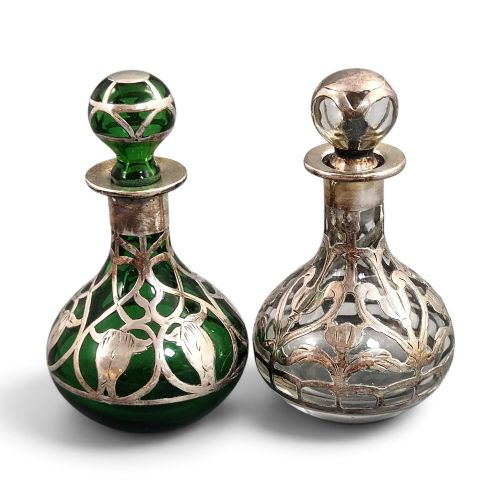
Metalworkers added structure and security by mounting the glass necks in sterling silver, ormolu, or gold leaf, occasionally applying translucent enamel or guilloche decoration over the metal surfaces. Some high-relief elements utilised pressed or moulded glass processes, particularly during the Art Nouveau and Art Deco periods.
What varies in quality
The distinction between ordinary and exceptional pieces rests upon the precision of the glass cutting and the refinement of the metal mounts. Crisp faceting that catches the light cleanly and substantial silver collars bearing clear hallmarks elevate a piece.
Rene Lalique·Karl Palda·Gorham·Mappin And Webb
The Antique Glass Flacon Glossary
- Overlay glass
- A glass vessel formed of two or more distinct layers of different colours, where the exterior layer is partially cut away to reveal the contrasting layer beneath.
- Guilloche enamel
- A decorative technique where translucent enamel is layered over mechanically engraved metal, creating repeating geometric patterns beneath the glossy surface.
- Sulphide portrait
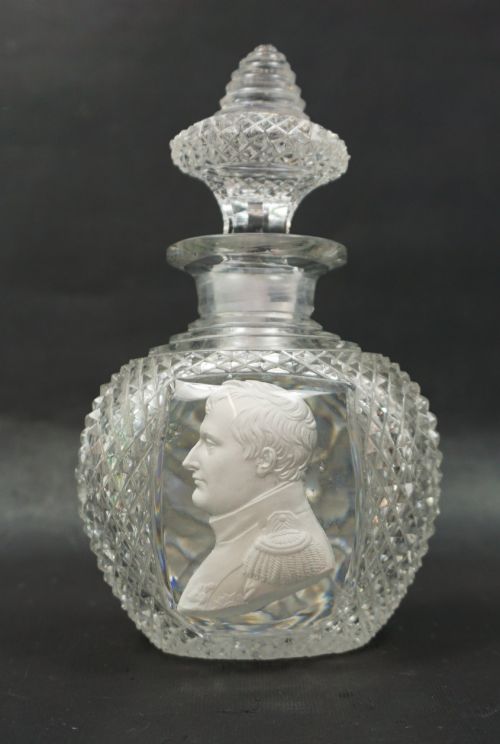
- A small ceramic cameo medallion embedded within crystal glass during manufacture, producing a silvery, three-dimensional likeness.
- Ormolu
- A finely ground high-zinc brass alloy cast and gilded to imitate solid gold, frequently used for decorative mounts on nineteenth-century French pieces.
- Opalescent glass
- A semi-translucent glass that displays a milky blue appearance in reflected light and a warm amber tone in transmitted light.
Antique Glass Flacon: Frequently Asked Questions
How do I date an antique glass flacon?
Dating relies heavily on style, manufacturing methods, and any accompanying hallmarks on the metal mounts. Victorian and Edwardian examples often feature assay office marks on silver collars that pinpoint the exact year of production.
Art Deco and 1930s pieces typically display geometric moulding or characteristic enamel work associated with that specific decade. Earlier nineteenth-century French items are judged by their heavier ormolu mounts and layered glass colouring.
What is the difference between a flacon and a scent bottle?
In practical terms, flacon and scent bottle describe the exact same vessel used to contain perfume or cologne. The word flacon simply introduces a traditional French term often applied to decorative nineteenth-century and continental glass containers.
Both terms encompass items meant for dressing tables as well as smaller versions designed for travelling cases. The distinction lies purely in terminology rather than the function or form of the object.
How were these bottles used historically?
These vessels served to hold liquid perfumes, smelling salts, or colognes for personal grooming and daily hygiene. Ladies kept them on dressing tables or carried smaller travel versions in fitted leather cases during journeys.
Secure stoppers and tightly sealed silver or metal caps prevented the volatile contents from evaporating or spilling while being transported. They functioned as both practical cosmetic tools and displays of personal wealth.
Are glass stoppers original to the bottles?
Determining originality involves checking whether the stopper fits the neck snugly and matches the glass type and colour of the base. Many antique bottles retain their original ground-glass stoppers, which were individually fitted to ensure a tight seal.
Replacement stoppers occur frequently due to the fragile nature of glass over many decades. Collectors look for consistent wear patterns across both the bottle and the stopper to confirm authenticity.