


Antique Glass Display Sideboard
An antique glass display sideboard brings architectural presence to a room, combining timber cabinetry with clear panels for treasured objects.
Antique Glass Display Sideboard
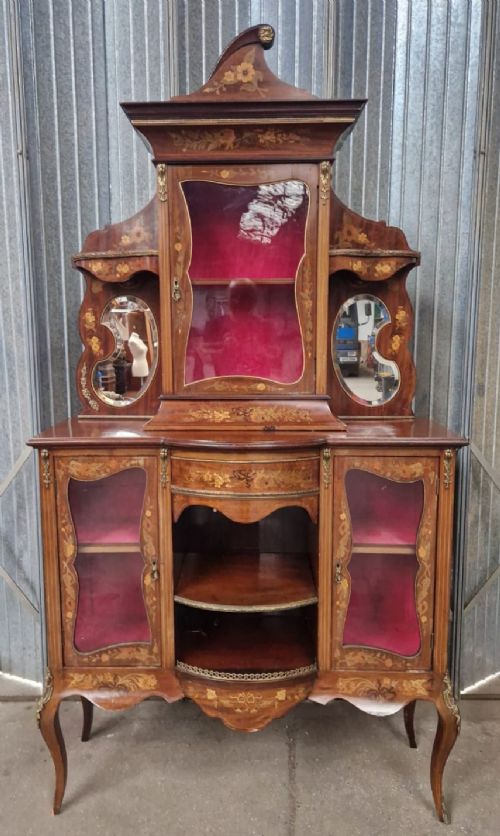
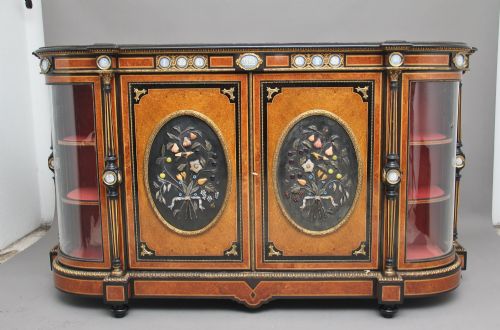
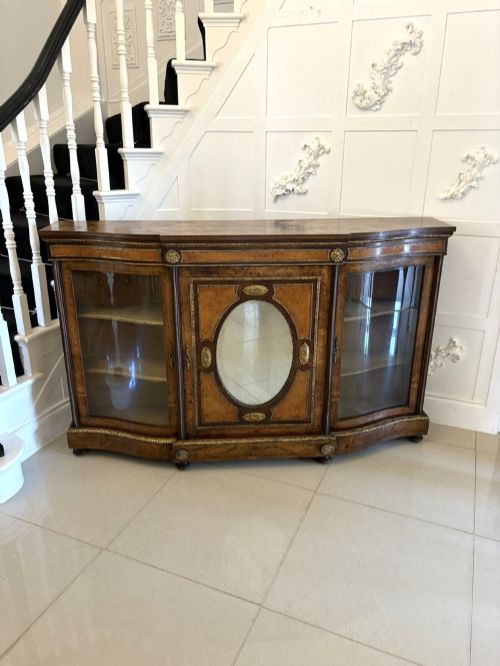
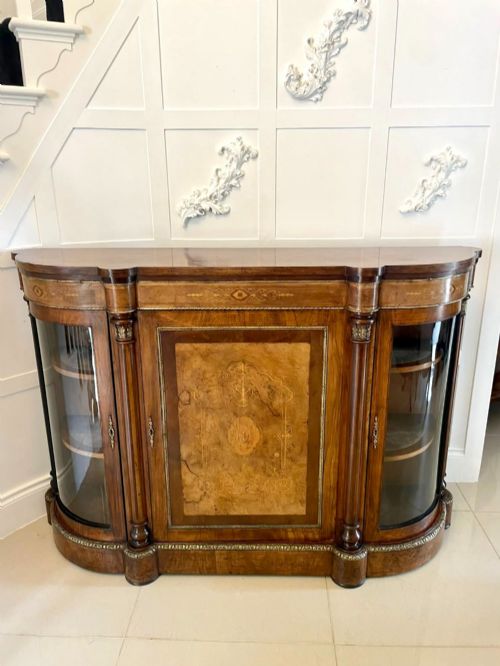
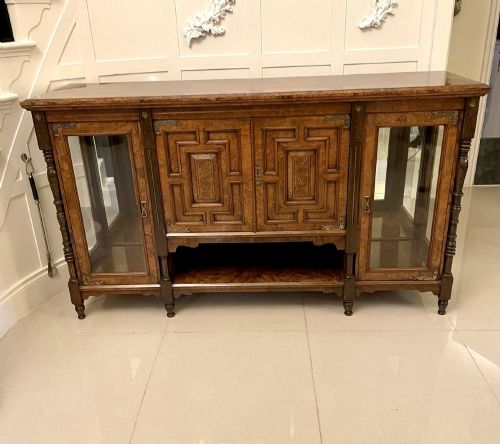
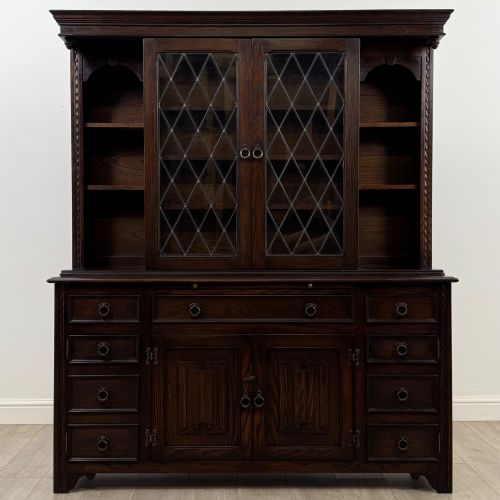
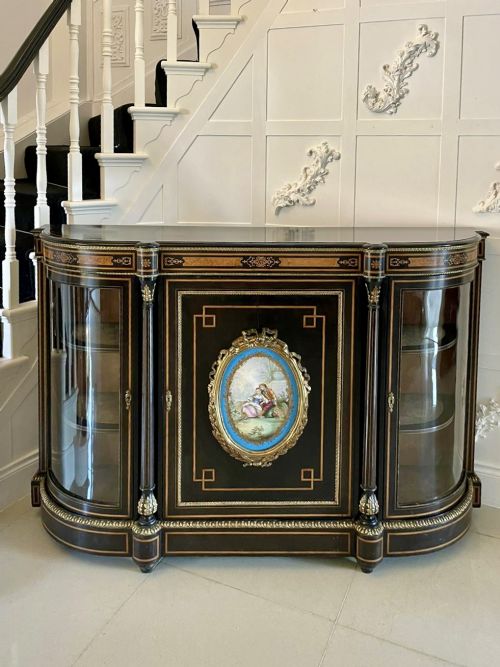
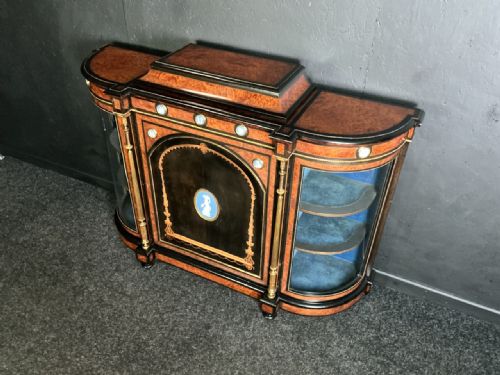
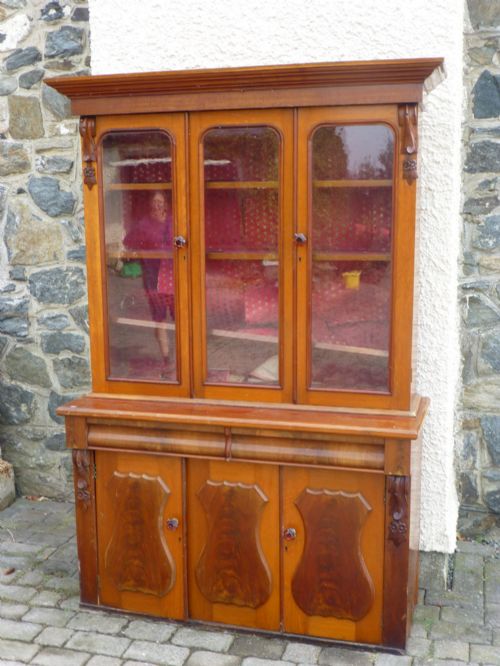
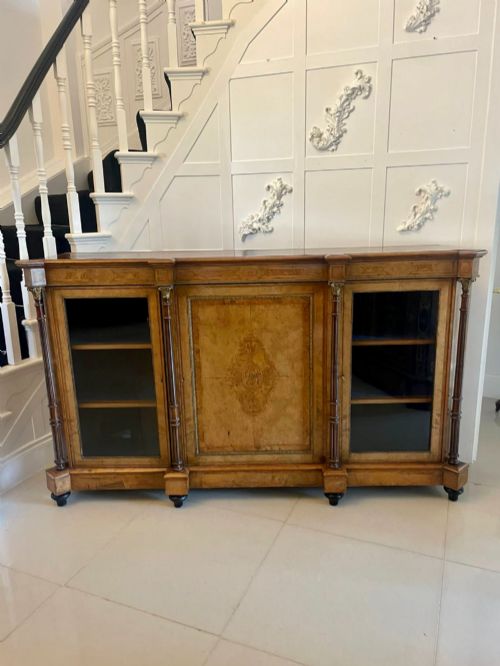
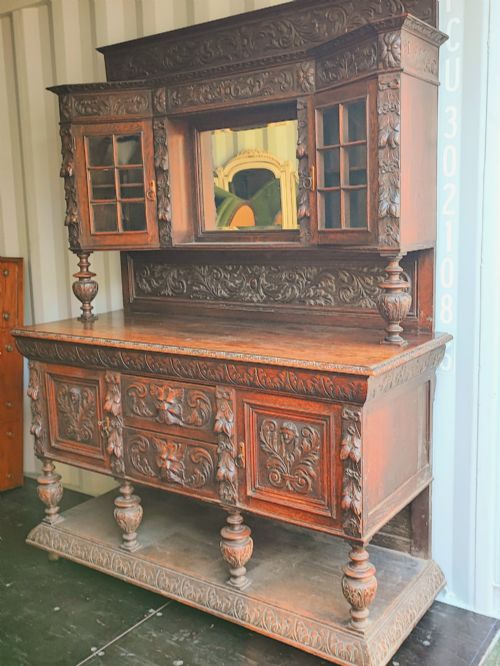
When buyers search for an antique glass display sideboard, they encounter credenzas, pier cabinets, and glazed bookcases originating from the nineteenth and early twentieth centuries. These forms bridge the gap between enclosed storage and visible presentation, often taking the shape of low credenzas with curved glass side doors or tall freestanding cabinets.
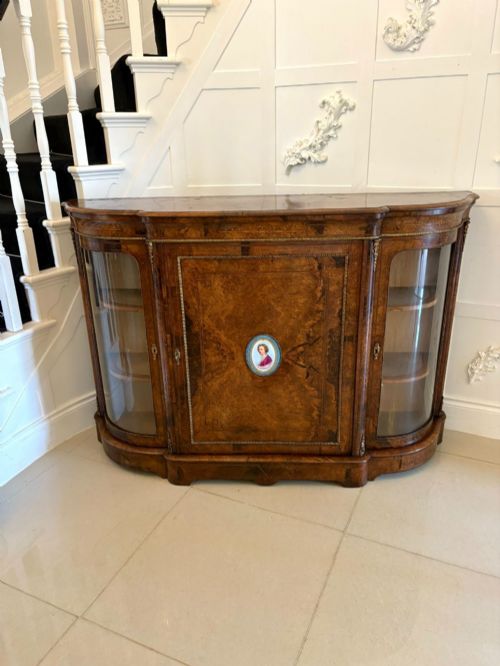
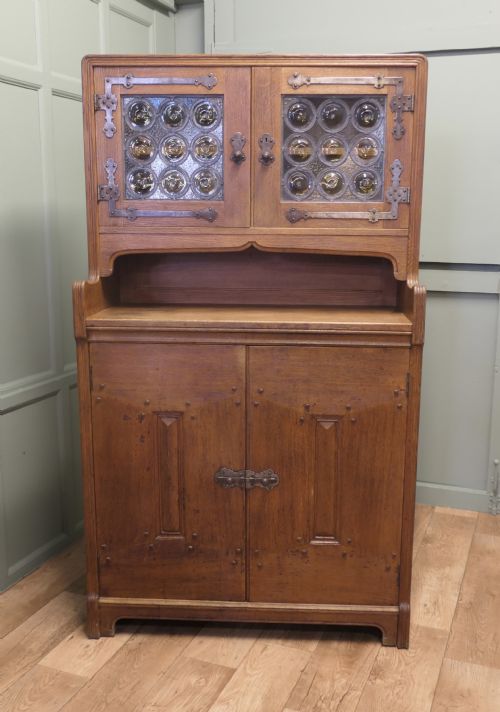
Victorian examples dominate the selection, frequently constructed as walnut credenzas with central mirrored or glazed cupboards flanked by bowed glass compartments. Edwardian variations appear in lighter mahogany and oak, leaning towards simpler glazed shelving arrangements.
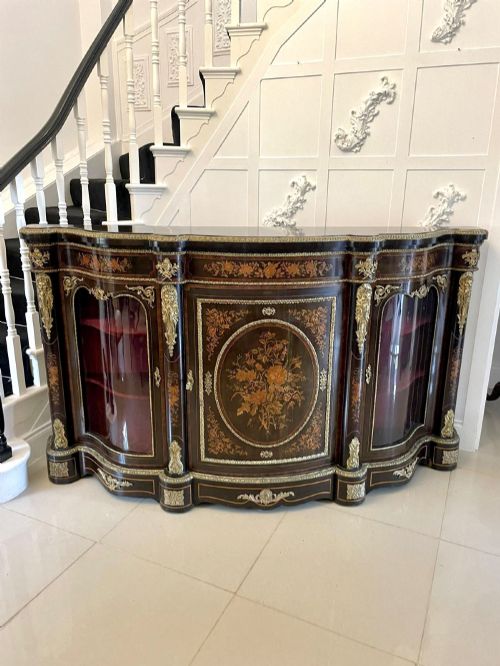
French Revival and Aesthetic Movement influences surface across the pieces, introducing serpentine shapes and architectural cornices to the traditional sideboard silhouette.
Materials and construction methods
Cabinet makers utilised burr walnut, mahogany, and oak as foundational timbers, frequently applying intricate marquetry and contrasting veneers across the exterior surfaces. Ebonised wood and amboyna provide dark accents, framing the grain patterns of the primary veneers.
Cast ormolu mounts, brass details, and marble tops punctuate the woodwork, adding weight and decorative contrast to the doors and corners. Glazing relies on early sheet glass methods, set into timber frames that enclose the display interior.
Some nineteenth-century makers hid tiny velvet-lined compartments behind curved glass corners for secret keepsakes.
Judging the quality of the work
Quality rests in the depth of the timber grain, the precision of the marquetry inlay, and the crispness of the cast ormolu mounts. Finer pieces demonstrate seamless integration between the curved glass panels and the surrounding timber framework.
Internal secondary timbers and drawer construction reveal the workshop standard, distinguishing mass-produced commercial items from exhibition-grade commissions.
Liberty & Co.·James Hicks·Maison Gagneau
The Antique Glass Display Sideboard Glossary
- Credenza
- A low cabinet originating as a side table, frequently adapted in the Victorian era with glazed side cupboards and central doors for display. These pieces sit low against a wall.
- Ormolu
- Gilded bronze mounts applied to furniture edges and corners for decorative effect. The metal adds a bright metallic contrast to dark woods.
- Marquetry
- Inlaid wood veneers arranged in pictorial or geometric patterns across cabinet doors and tops. Craftsmen cut contrasting timbers to fit flush within the surface.
- Pier cabinet
- A narrow standalone display cabinet designed to fit wall spaces between windows. They usually feature a single glazed door protecting tiered shelving.
- Boulle
- A form of marquetry utilising brass and tortoiseshell inlay set into an ebonised background. This technique appears on French-influenced Victorian revival pieces.
Antique Glass Display Sideboard: Frequently Asked Questions
How do I place an antique glass display sideboard?
Position the piece against a main living room or dining room wall where natural light catches the glass panels without creating harsh glare. Ensure adequate floor clearance for doors that swing outward or curve along the front.
Keep the cabinet away from direct heat sources and strong sunlight to protect the fragile veneers and nineteenth-century timber joints from warping over time.
What fits inside an antique glass display sideboard?
Use the internal shelving for displaying porcelain, glassware, and small decorative objects that benefit from enclosed dust-free protection. The glazed sections keep fragile items visible while preventing handling.
Heavier items belong on the lower wooden shelves or inside the solid central cupboards, leaving the glass-fronted tiers for lighter collectibles.
How do I distinguish Victorian from Edwardian cabinets?
Victorian models tend to utilise dark burr walnut, heavy ormolu mounts, and intricate marquetry with serpentine fronts. The proportions are often heavier and more ornate.
Edwardian versions shift towards lighter mahogany, satinwood, and simpler oak structures with cleaner lines and restrained ornamentation.
Are the glass panels original?
Examine the glass surface for subtle distortions, tiny bubbles, and minor thickness variations that indicate nineteenth-century production methods. Modern replacement glass appears completely flat and uniform.
Original glazing sits securely within the timber rebate, held by traditional putty or wooden beads that match the interior finish of the cabinet.