





Antique Glass Cruet
An antique glass cruet brings the proper finish to a dining table, holding condiments and oils in matching cut bottles.
Antique Glass Cruet
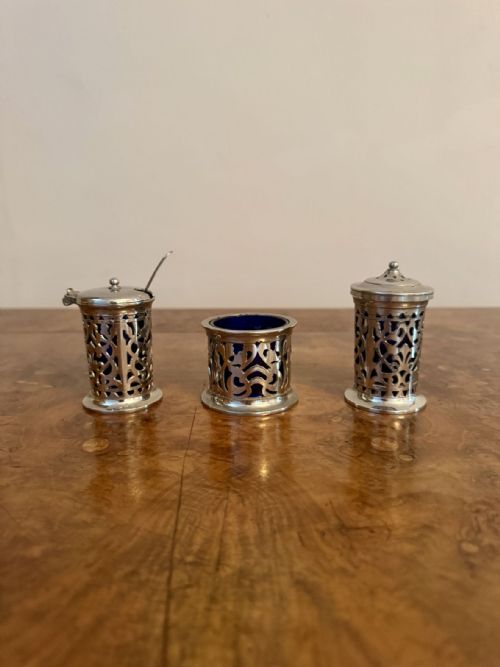
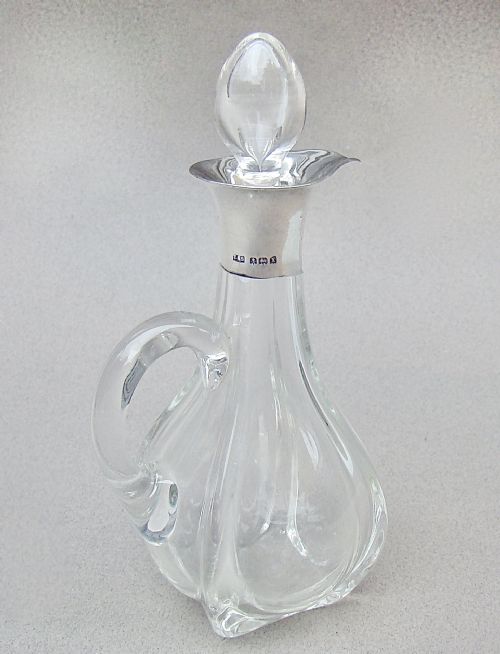
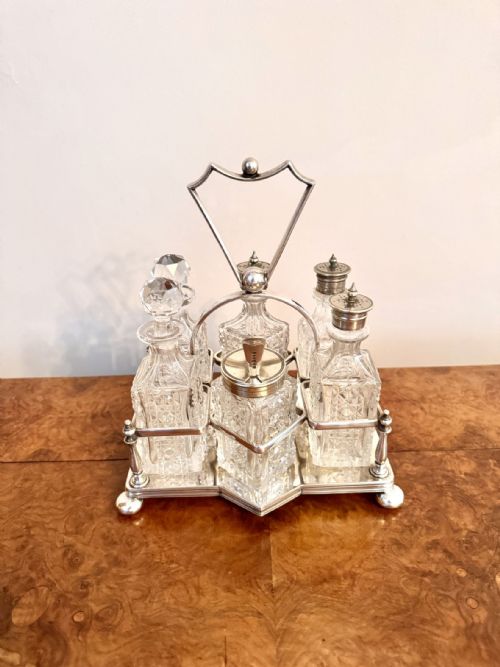
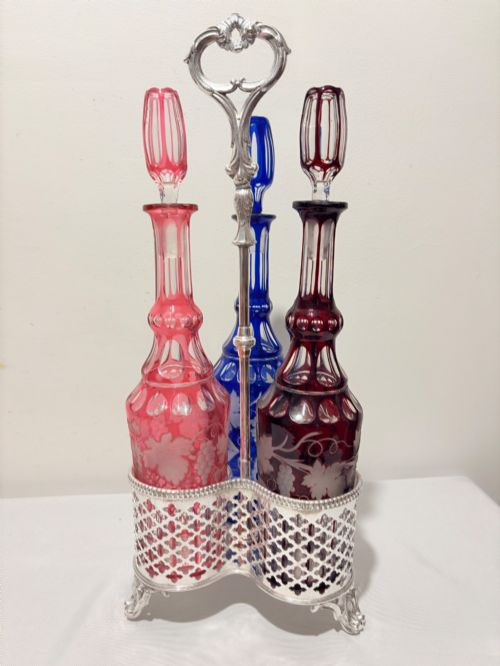
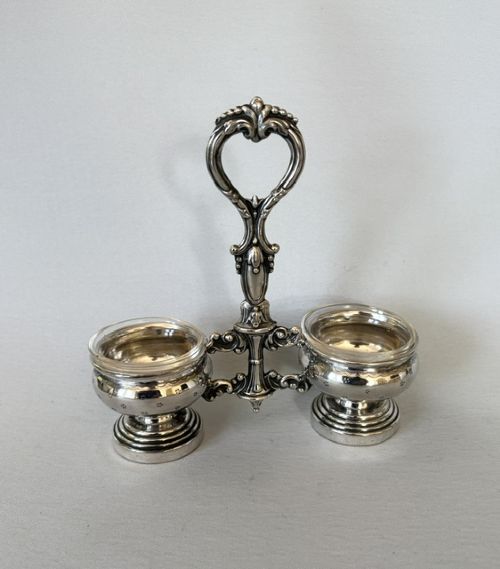
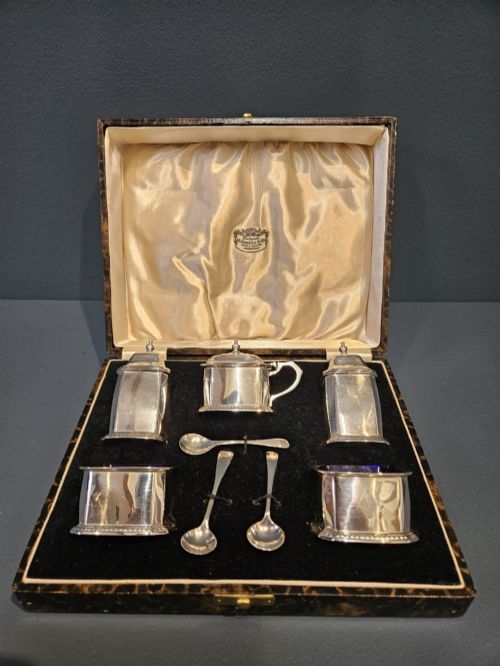
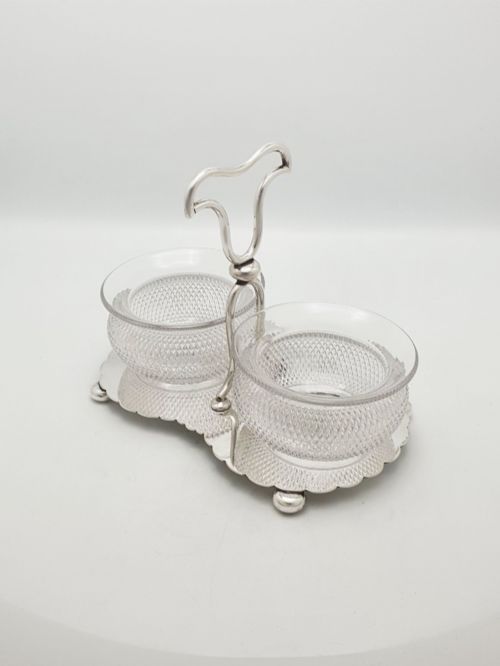
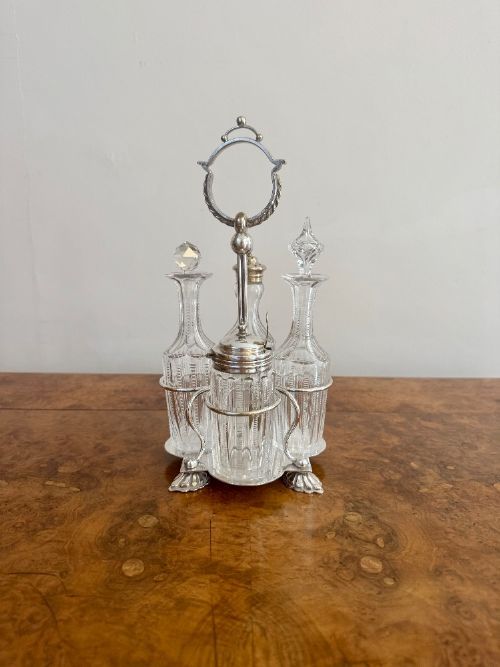
An antique glass cruet takes the form of a fitted stand holding multiple bottles for vinegar, oil, mustard, and pepper at the dining table. The most frequent versions on this page are Edwardian and Victorian silver plated frames carrying cut glass bottles.
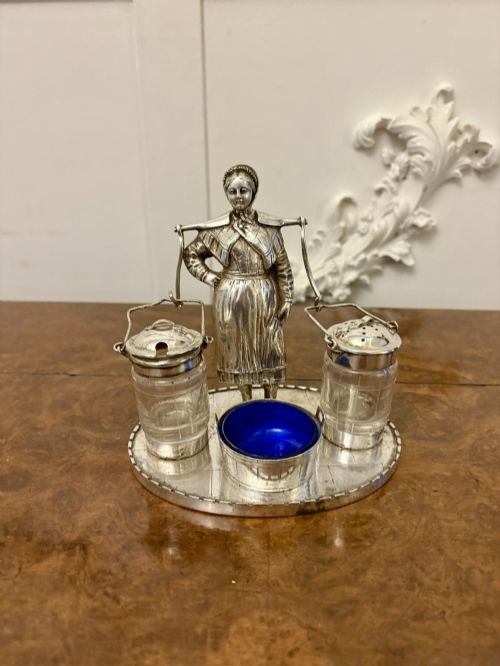
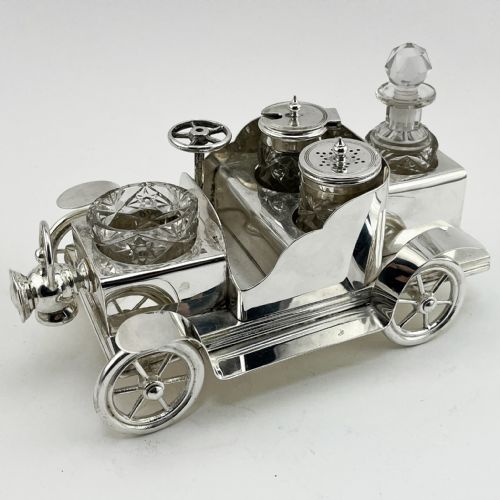
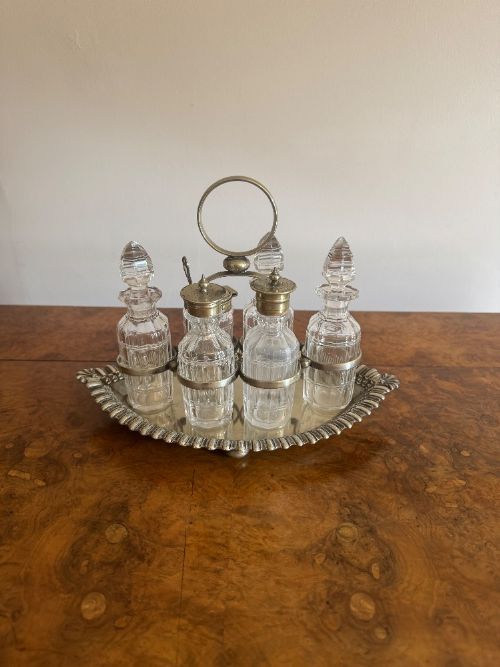
Beyond standard sets, the selection includes Georgian sterling frames, Art Deco lead crystal pieces, and novelty forms such as car and carriage cruets. Bottle counts range from simple three-piece sets up to large eight-piece arrangements on oval stands.
How they were made
Makers combined heavy lead crystal or glass with mounts of sterling silver, Old Sheffield plate, or silver plate. Glass bottles were cut by hand to create facets that catch the light, then fitted with hinged silver or plated caps and collars.
Frames incorporate carrying handles and secure rings to hold the bottles upright during service. Silver components frequently received hallmarks or maker stamps denoting the silversmith and the year of assay.
Antique Glass Cruet Retail Price Guide 2026
Typical asking prices for glass cruet among the pieces listed under this phrase on Sellingantiques today, from the lower quarter to the upper quarter. They describe what is for sale here now, not the wider market.
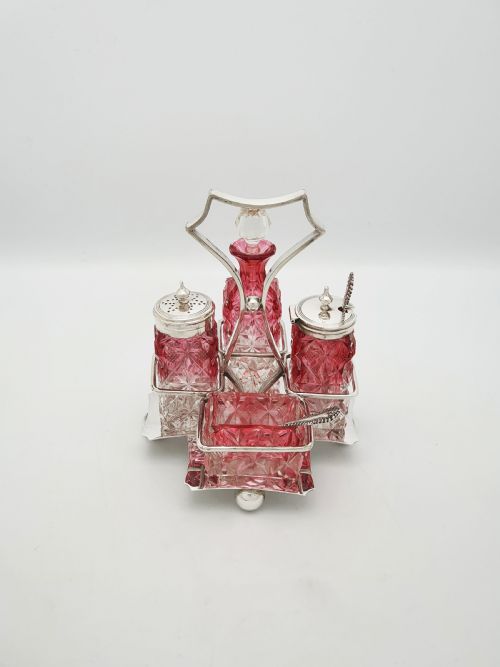
Materials range from simple silver plate and cut glass to solid sterling silver, cobalt glass, and cranberry flashed crystal.
What varies in quality
Quality rests upon the crispness of the glass cutting and the completeness of the original bottle set. Sets that retain their matching matched bottles without replacement or mismatch show greater integrity.
The weight of the metal frame and the finesse of the handle casting separate standard items from superior work. Makers who invested in heavy silver plating or solid sterling silver produced stands that endure without buckling under the weight of full bottles.
William Neale·Mappin Brothers·Walker & Hall·Charles Thomas Fox·Elkington & Co·Hester Bateman
The Antique Glass Cruet Glossary
- Cruet set
- A fitted stand holding multiple small bottles or jars for table condiments such as oil, vinegar, and mustard. These assemblies sat at the centre of the dining table for self-service.
- Old Sheffield plate
- A composite material made by fusing a thin sheet of silver to a thicker copper base before rolling. This technique was largely superseded by electroplating in the nineteenth century.
- Sterling silver
- An alloy consisting of ninety-two point five percent silver and seven point five percent other metals, usually copper. English pieces carry assay office marks to guarantee this standard.
- Cranberry glass
- A rich red transparent glass coloured with gold chloride during manufacture. It appears frequently in late Victorian and Edwardian decorative tablewares.
- Bachelor cruet
- A smaller version of a standard condiment set, designed for single diners or small households. These compact sets typically hold three or four bottles.
Antique Glass Cruet: Frequently Asked Questions
How do I clean an antique glass cruet?
Wash the glass bottles by hand in warm soapy water using a soft bottle brush to reach inside. Avoid submerging silver plated or sterling frames if they have glued components, wiping them clean with a damp cloth instead.
Dry all metal parts immediately to prevent water spots, and use a specialist silver cloth lightly on plated surfaces to maintain the shine without stripping the finish.
Are all bottles in a set original?
Not every bottle survives decades of use intact, so replacement bottles do occur in older sets. Examine the glass tint, weight, and cut patterns closely to check if all pieces match the frame.
Matching stoppers and uniform wear to the base of each bottle indicate a complete and original set.
How do I date a silver plated cruet?
Look for hallmarks on sterling pieces, which record the assay office and year letter. Silver plated stands rely on style clues, maker stamps, and construction methods to establish the decade.
Edwardian pieces often feature bright silver plate and delicate floral chasing, while Georgian frames show heavier cast mounts and simpler lines.
Can I use these sets for dining today?
These pieces function well for serving oils, vinegars, and sauces at modern dinner parties. Ensure the interior of the glass bottles is thoroughly cleaned before putting food substances inside.
Handle older frames with care when lifting them by the central ring, as heavy cut glass bottles add considerable weight.