


Antique Glass Cookie Barrel
An antique glass cookie barrel brings substantial Victorian and Edwardian presence to a sideboard, holding dry biscuits inside brilliant cut or cranberry glass.
Antique Glass Cookie Barrel
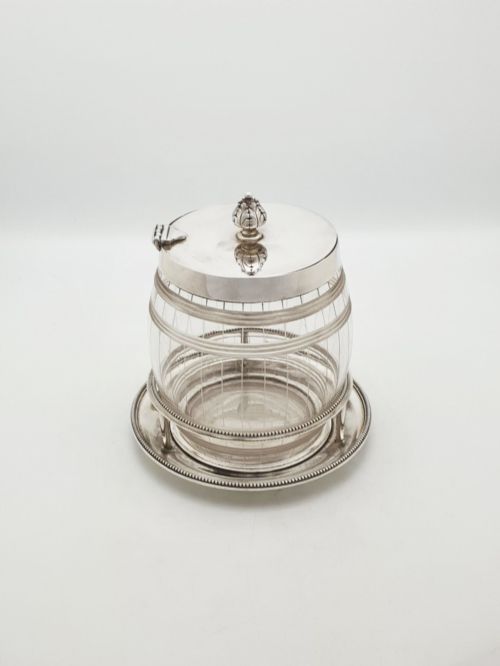
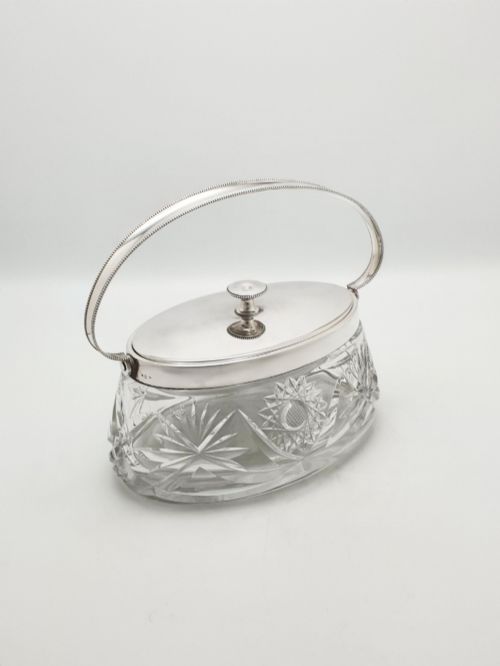
An antique glass cookie barrel typically combines a heavy glass body with metal mounts, hinges, and a swing handle for serving at table. These vessels emerge across the Georgian, Victorian, Edwardian, and George V periods, appearing as biscuit jars, boxes, and containers alongside traditional barrels.
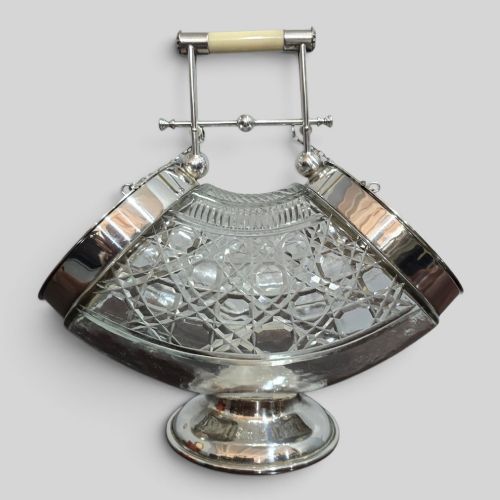
The most common form on this page pairs cut glass or cranberry glass with silver-plated mounts, often resting on an integrated stand or featuring a pierced gallery. Makers utilised clear lead crystal, faceted designs, and enamel-painted surfaces to create decorative storage for the drawing room.
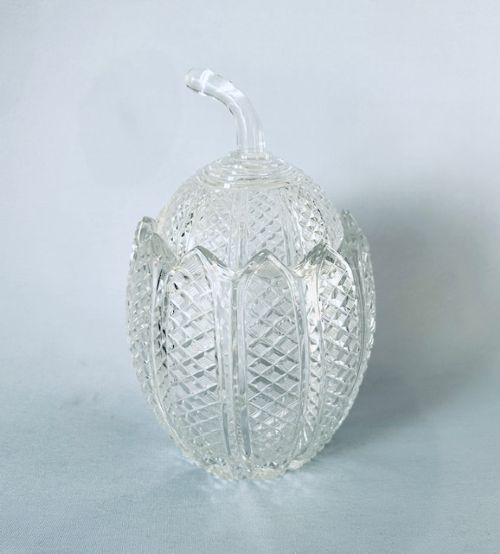
Makers also produced novelty shapes, such as melon-inspired forms and twisted three-handled vessels, alongside standard cylindrical jars. Silver-plated mountings by prominent firms provide secure lids and handles designed for daily nineteenth and early twentieth-century dining habits.
How they were made
Glass bodies were formed using lead crystal or clear glass, then heavily worked with hobnail cutting, faceting, or free-blown techniques to catch the light. Cranberry glass achieved its rich hue through gold chloride additions to the molten batch, creating deep red tones.
Metal mounts utilised silver plate over base metals, alongside sterling silver hallmarks on later examples, secured directly to the glass rims or collars. Enamel decoration was hand-painted onto the exterior surfaces of the glass before firing, introducing contrasting colour and floral motifs.
What varies in quality
Quality rests upon the depth and crispness of the glass cutting, where sharp facets and heavy lead crystal distinguish superior vessels from lighter pressed alternatives. The complexity of the metalwork also divides the range, particularly when mounts include pierced galleries, engraved heraldic finials, or complex swing handles.
The integrity of the glass liner relative to its silver-plated stand determines structural completeness, while hand-painted enamel work shows variation in artistic execution and preservation. Maker attribution adds distinction, separating standard domestic wares from marked pieces produced by recognised silversmiths.
Elkington·WMF·Walker and Hall·James Dixon and Sons
The Antique Glass Cookie Barrel Glossary
- Cranberry glass
- A rich red-pink transparent glass created by adding gold to the molten batch during manufacturing. It is frequently seen in Victorian and Edwardian tablewares.
- Hobnail cut
- A raised, sharp-pointed diamond pattern cut into the exterior surface of crystal. This technique maximises light refraction across the vessel.
- Silver plate
- A layer of pure silver fused to a base metal foundation, commonly used for the rims, covers, and swing handles of these containers. It provides the appearance of solid silver at a lower production cost.
- Finial
- The decorative knob or handle attached to the top of the lid. Examples in these listings include heraldic dragon motifs.
- Lead crystal
- Glass containing a high proportion of lead oxide, increasing weight, clarity, and brilliance. It forms the heavy body of cut glass barrels.
Antique Glass Cookie Barrel: Frequently Asked Questions
What were glass cookie barrels used for?
These vessels served biscuits and dry confectionery during Victorian and Edwardian drawing room teas, keeping dry goods accessible on the sideboard.
The fitted lids and metal mounts protected the contents from moisture and dust while allowing hosts to present biscuits with a swing handle for easy passing.
How do I tell Victorian from Edwardian pieces?
Victorian examples often feature deep cranberry glass, heavy hobnail cutting, and elaborate cast metal mounts like heraldic finials. They tend to feel dense and highly ornamented.
Edwardian and later pieces frequently shift towards lighter clear glass, simpler faceted designs, or geometric Art Deco and Jugendstil influences, reflecting changing domestic tastes.
Are the metal parts solid silver?
Most metal components on these barrels consist of silver plate over a base metal foundation, produced by prominent electroplating firms of the nineteenth century.
Some later twentieth-century examples feature hallmarked sterling silver mounts, which will carry clear town marks, standard marks, and maker initials.
How should I clean my antique glass barrel?
Wash the glass body by hand using warm water and mild soap, taking care to avoid abrasive scourers that might scratch the surface or damage enamel painted details.
Keep silver-plated mounts dry and polish them sparingly with a soft cloth to preserve the remaining plating without wearing through to the base metal.