


Antique Glass Cellars
These antique glass cellars bring small colour and bright reflection to a dining table.
Antique Glass Cellars
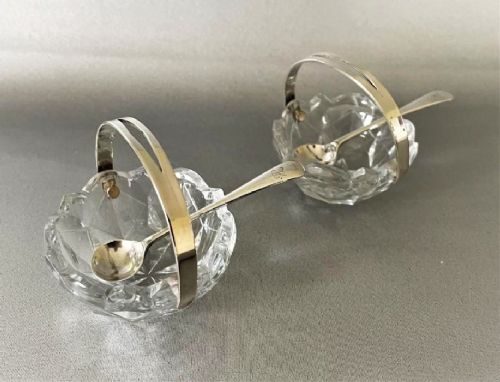
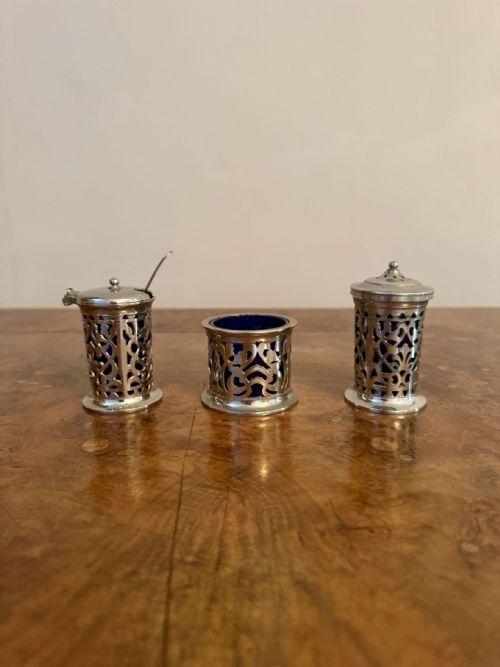
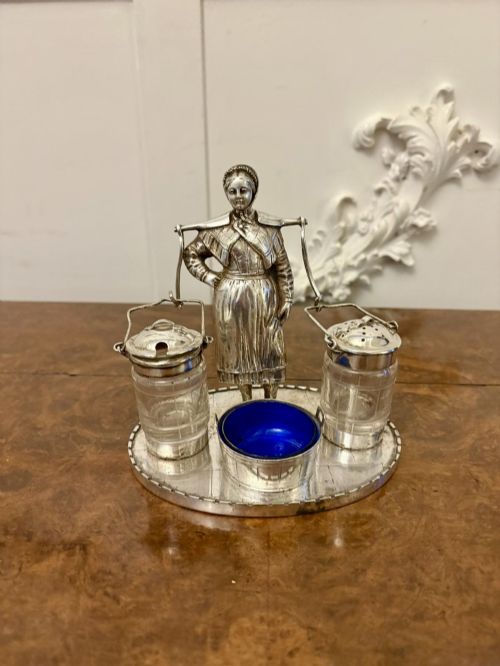
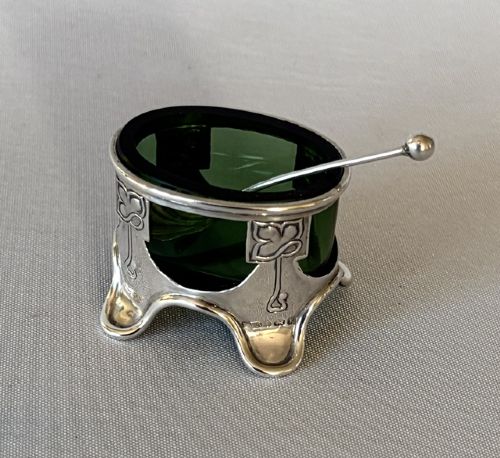
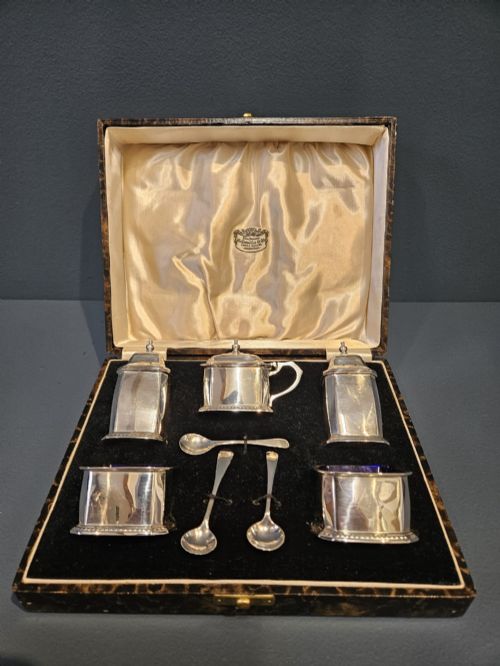
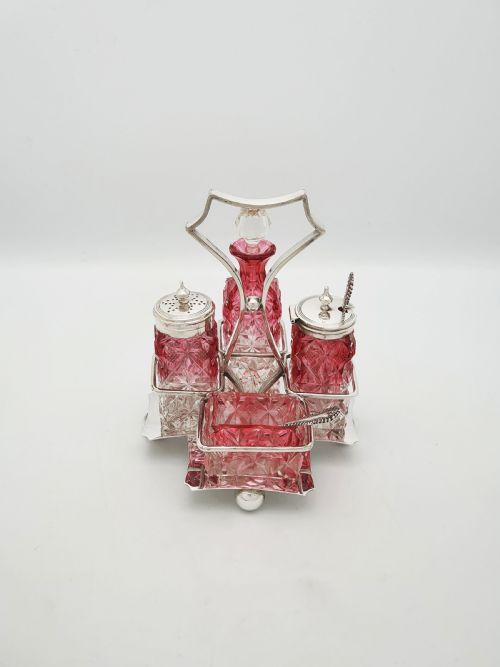
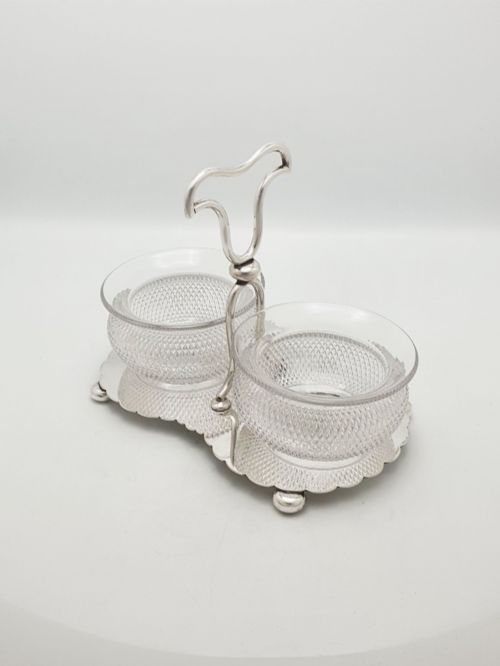
When you search for antique glass cellars, you encounter open salt cellars, cruet sets, and condiment stands designed to hold salt, mustard, and sauces on the dining table. These pieces comprise small glass bowls, tubs, and liners paired with metal frameworks or stands.
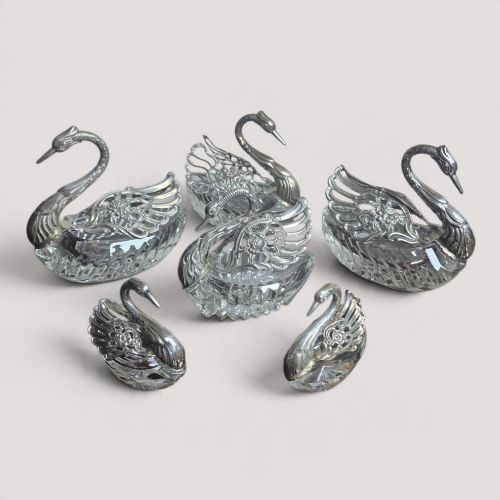
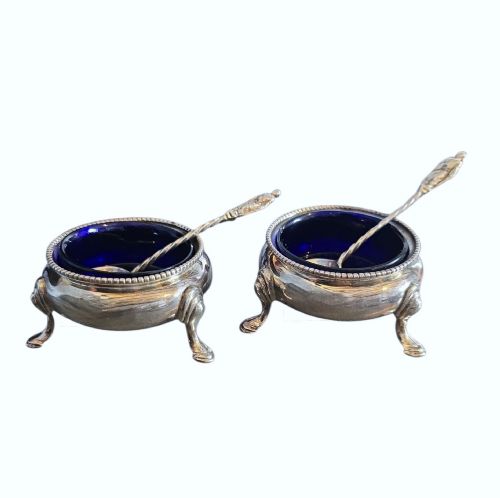
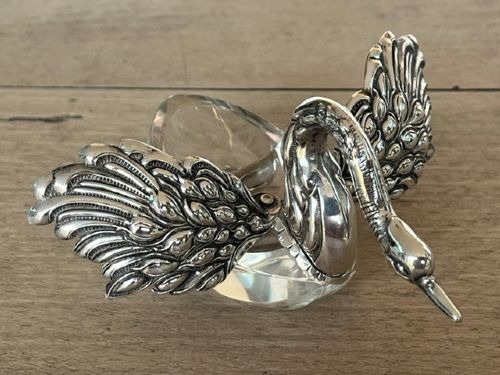
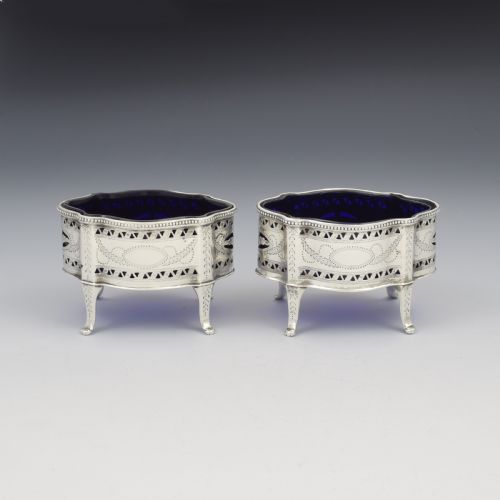
The selections span the Victorian, Edwardian, and Georgian periods, alongside later twentieth-century examples up to the 1960s. You meet open table salts with cobalt or ruby red liners, cased pairs, and novelty forms such as swans or cars.
Origins range across English workshops, Scottish makers, and continental European silversmiths, incorporating cut glass, lead crystal, and coloured glass vessels. The typical form encountered is an open glass bowl held within a sterling silver or silver plated mount, often accompanied by matching spoons.
How they were made
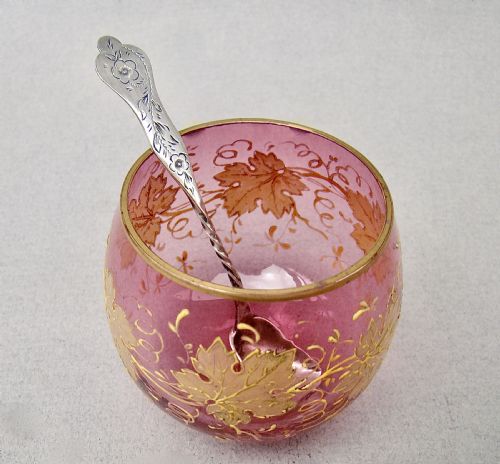
Makers combined glassblowing and cutting techniques to shape heavy lead crystal, cranberry glass, and opaline vessels, frequently blowing glass directly into fitted metal mounts or creating liners to drop into pierced silver frames. Coloured glass varieties relied on mineral oxides added during the melting process to achieve deep cobalt, green, and ruby hues.
Silversmiths shaped mounts through casting, piercing, and wirework, using sterling silver or silver plate to construct boat shapes, serpentine rims, and novelty frames. Components were hand-finished, with glass edges often polished smooth and silver elements marked with hallmarks or electroplate stamps.
Antique Glass Cellars Retail Price Guide 2026
Typical asking prices for glass cellars among the pieces listed under this phrase on Sellingantiques today, from the lower quarter to the upper quarter. They describe what is for sale here now, not the wider market.
Several sets feature tiny movable wings and automotive styling, turning functional salt pots into miniature silver cars and swimming swans.
What varies in quality
Quality rests in the weight and clarity of the glass, where heavy lead crystal and deep hand-cut facets separate finer vessels from plain moulded containers. The richness of coloured glass, such as cranberry or cobalt, and the presence of original matching glass liners define a superior example.
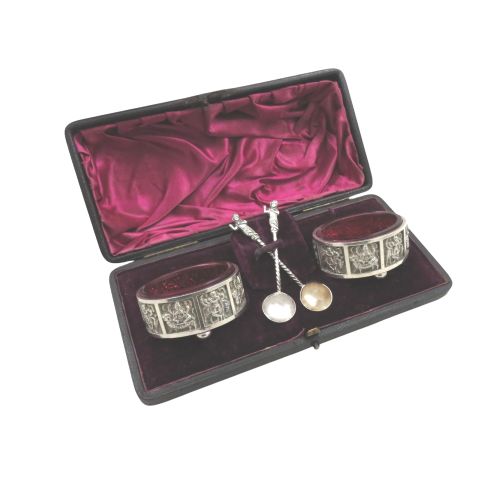
Metalwork craftsmanship distinguishes the range, marked by crisp detail in pierced silver frames, solid sterling construction rather than thin plating, and intact original spoons. Maker attribution and fitted presentation cases further elevate certain sets above standard utility wares.
Beare Falcke·William Neale·Josiah Williams & Co
The Antique Glass Cellars Glossary
- Salt Cellar
- A small open bowl or dish used to hold table salt before the invention of free-flowing salt shakers. These vessels often sit on short feet or rest inside silver frames.
- Cruet Set
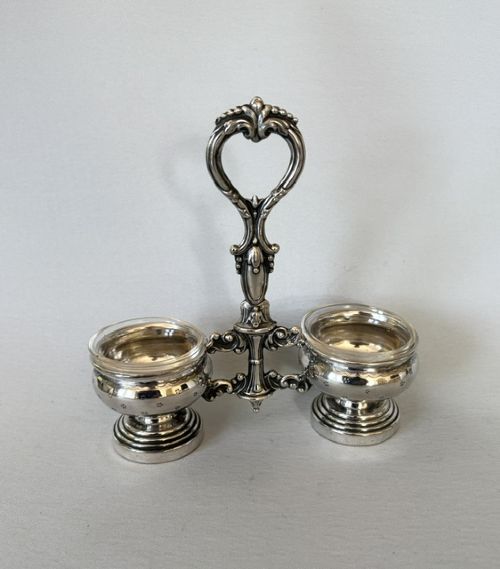
- A matched collection of bottles, jars, or cellars mounted in a frame for condiments like oil, vinegar, salt, and mustard. They often feature a central carrying handle.
- Liner
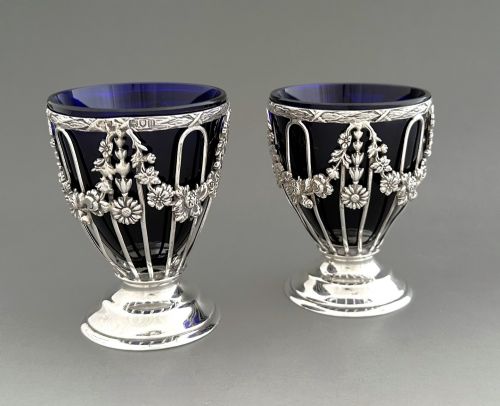
- A removable glass insert fitted inside a metal salt cellar to protect the silver or silver plate from corrosion caused by salt. They appear in deep blue cobalt, ruby red, and clear glass.
- Novelty Salt
- A salt cellar shaped to resemble an animal, vehicle, or figurative object rather than a traditional bowl. Examples include swans, cars, and shell forms.
- Wirework
- A decorative metal technique using thin bars or wires of silver soldered together to form openwork frames and baskets. This style is frequently found in Edwardian condiment pieces.
Antique Glass Cellars: Frequently Asked Questions
What were glass cellars used for?
These small vessels held salt, mustard, or pepper on the dining table for individual guests before shakers became common. Diners used a tiny spoon or pinched the salt directly from the open bowl onto their food.
They also functioned as part of larger cruet sets alongside oil and vinegar bottles. Wealthy households displayed elaborate silver and crystal stands as centrepieces during formal meals.
Are the glass liners usually original?
Many surviving cellars retain their original hand-blown or moulded glass liners, which fit snugly inside the metal frames. Because glass breaks easily over decades of use, replacement liners appear frequently in various shades of blue or clear glass.
Matching the exact size, rim shape, and colour tone of a replacement liner requires careful attention. Original liners often show minor base wear and tiny bubbles consistent with period manufacturing methods.
How can I tell a Victorian salt from a Georgian one?
Georgian salt cellars from the eighteenth and early nineteenth centuries often feature heavy cut glass with deep facets and heavy sterling silver boat shapes. They tend to have simpler, heavier proportions and may lack the elaborate piercing seen later.
Victorian examples embrace a wider variety of revived styles, intricate floral piercing, and colourful glass inserts like cobalt and cranberry. Novelty shapes and cased presentation sets also become much more common during the Victorian and Edwardian decades.