

Antique Girandole Mirror Sconces
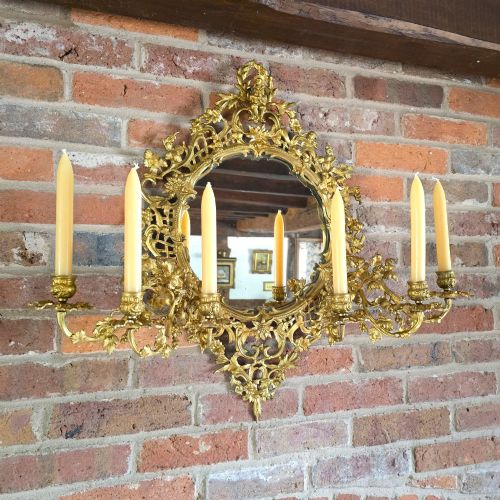
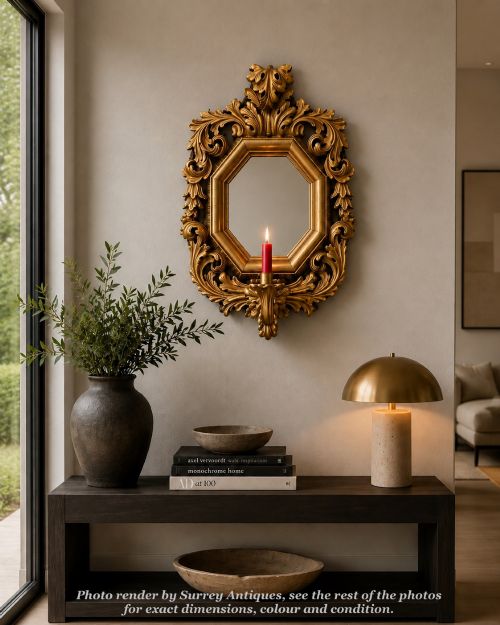
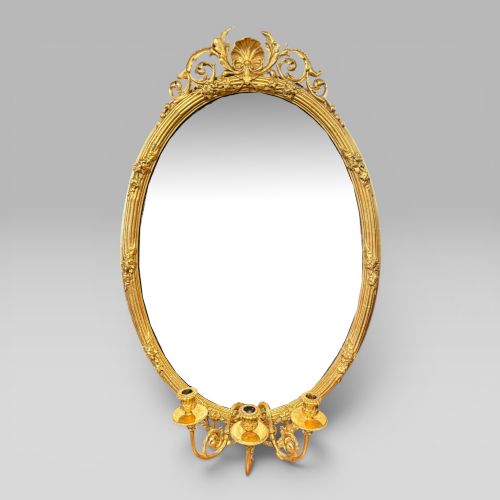
These antique girandole mirror sconces combine reflective glass with integral candle branches to illuminate rooms while expanding visual space.
Antique Girandole Mirror Sconces
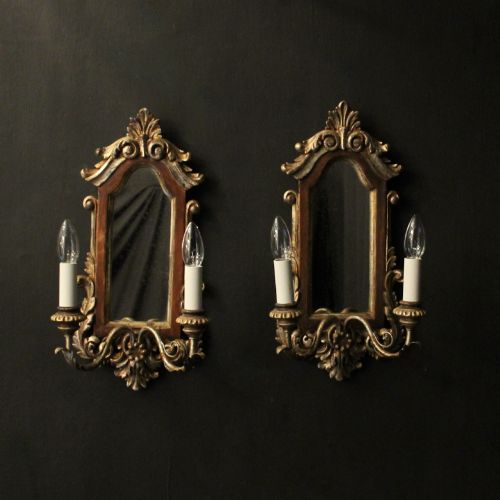
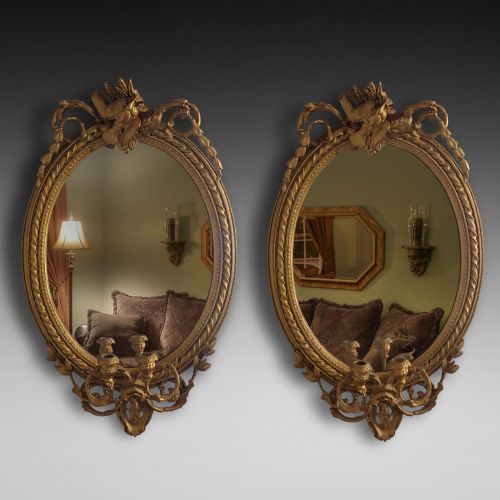
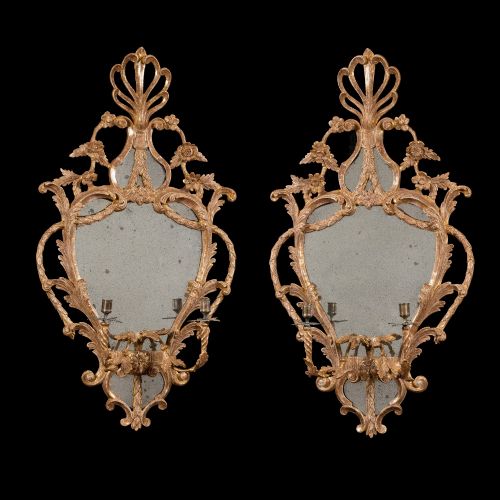
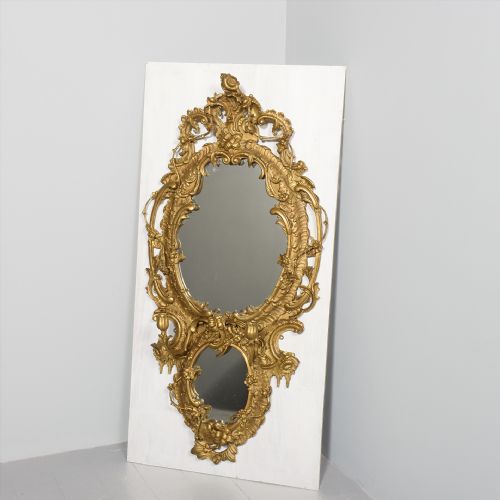
Buyers seeking antique girandole mirror sconces encounter wall-mounted pieces designed to hold candles alongside a central glass plate. The listings span 18th-century forms through to 1930 variants, incorporating styles such as Regency, Rococo Revival and Neoclassical.
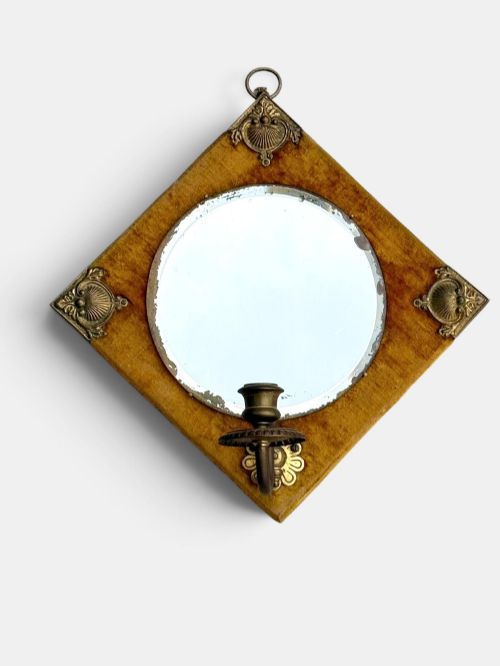
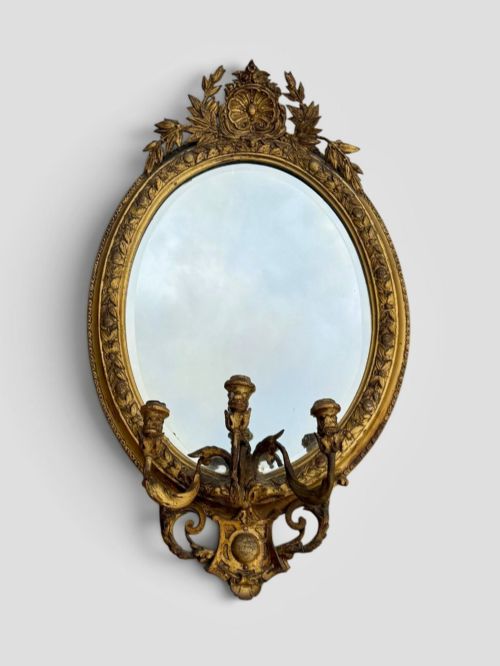
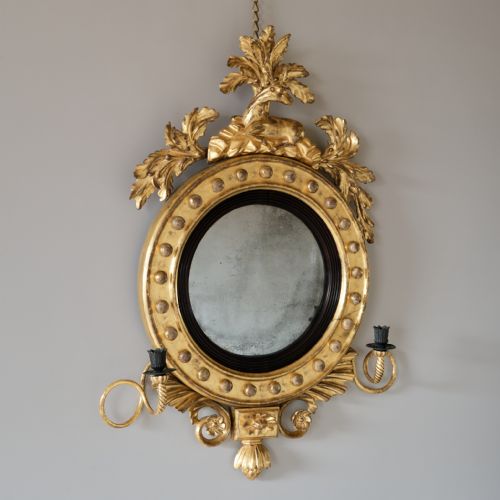
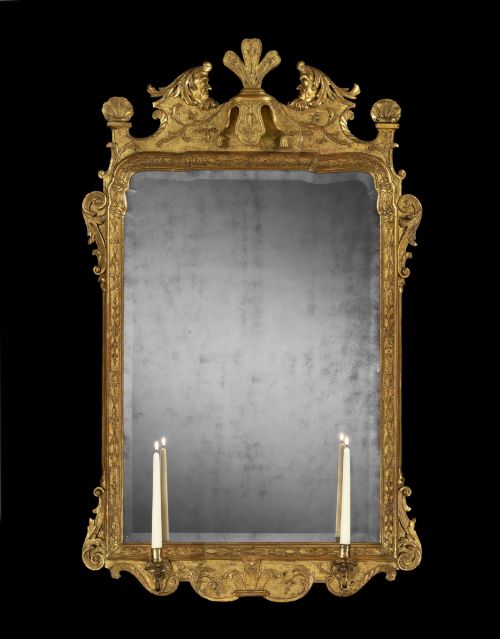
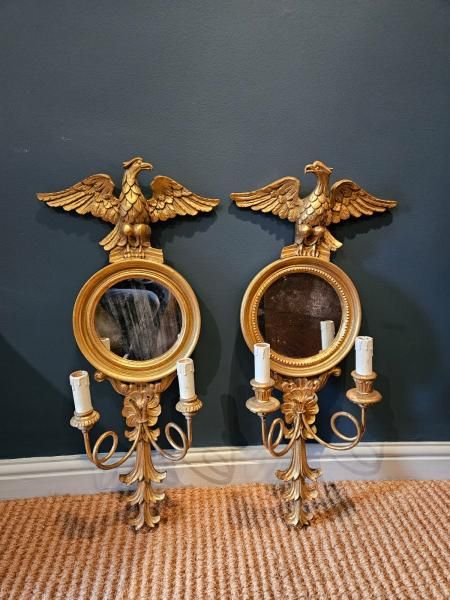
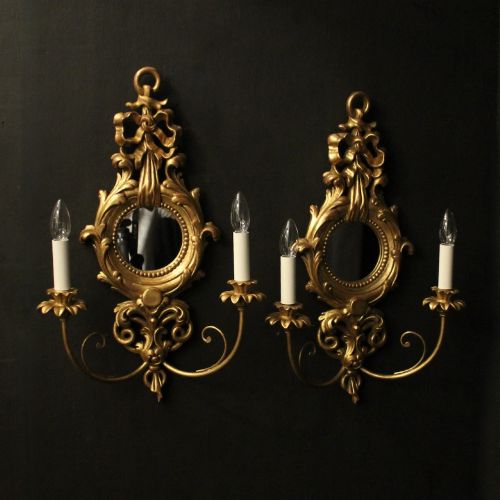
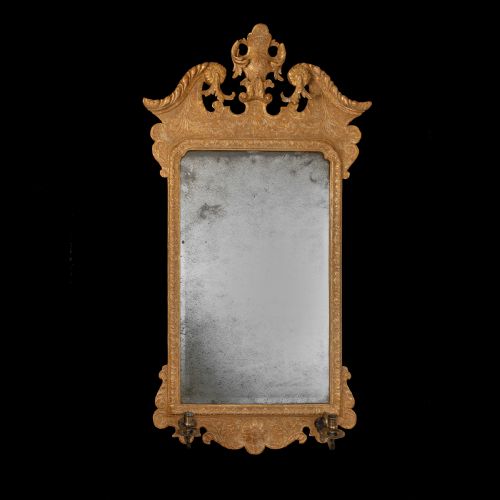
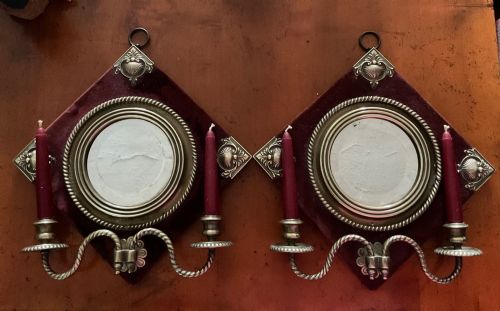
Mirrors take varied shapes, including convex circular plates and large rectangular carved frames. Many items present as pairs, frequently featuring twin arms or multi-branch candelabra configurations intended for wall placement.
Origins represented across the selection include English and French workshops, alongside Italian Florentine pieces. Forms range from simple brass-mounted Edwardian designs to heavily ornamented Victorian interpretations.
Materials and construction
Carved wood provides the structural foundation for many frames, shaped from timber and finished with gesso before application of gilding. Giltwood and gilt gesso dominate the period pieces, creating reflective metallic surfaces.
Metal components appear extensively through brass, bronze, copper and ormolu mounts, particularly on sconce arms and candelabra branches. Mirror glass plates sit within these frames, sometimes paired with velvet or ebonised wood elements.
Listings feature 18th-century George II and George I gesso works alongside 19th-century French ormolu and Edwardian Arts and Crafts brass-mounted designs.
Assessing quality
Distinctions in quality rest upon the crispness of the carved detail within the wood or gesso frame. Depth of relief and fluidity in Rococo scrollwork or Neoclassical motifs separate superior work from simpler production.
The integration of the candle branches relative to the main mirror frame indicates the maker's skill. Robust arm construction and coherent proportion between the reflective surface and the lighting attachments define better examples.
Cottier & Co.·Benjamin Goodison
The Antique Girandole Mirror Sconces Glossary
- Girandole
- A branched wall candlestick equipped with a looking glass. The reflective backing multiplies the candlelight in the room.
- Gesso
- A plaster-like mixture applied to wood frames to create a smooth surface for gilding. Carvers model intricate details directly into this layer.
- Giltwood
- Timber coated with gold leaf or metallic powder. It catches light from both the candles and surrounding windows.
- Convex mirror
- A curved circular glass plate that provides a wide-angle reflection of the interior. These pieces frequently feature decorative frames with candle arms.
- Ormolu
- Gilded bronze mounted onto furniture and mirrors. French makers utilised this technique extensively during the nineteenth century.
Antique Girandole Mirror Sconces: Frequently Asked Questions
How do I hang a heavy antique girandole mirror?
These wall-mounted pieces require secure fixings into structural brickwork or studs due to the combined weight of the timber frame and metal branches.
Professional hanging ensures the weight distributes evenly across the wall brackets rather than placing strain on the decorative arms.
Were these mirrors used for lighting?
The integrated arms held candles to supplement room lighting by bouncing the flame across the glass plate. They functioned as decorative wall light sources in reception rooms.
Today, many owners retain them for aesthetic impact while using candles selectively.
How do I tell Regency convex mirrors apart from Victorian ones?
Regency convex mirrors often display distinct circular frames with ball ornaments and eagle crests dating around 1820. Victorian interpretations tend to incorporate heavier Revival styling and different gesso textures.
Examining the construction methods on the reverse helps clarify the period of manufacture.
Can I polish the giltwood frame?
Giltwood surfaces require gentle dusting with a soft, dry brush to remove particles without disturbing the gold leaf. Liquid cleaners damage the delicate finish.
Professional conservation is necessary if the gesso or gilding shows structural loss.