



Antique Giltwood Figures
These antique giltwood figures bring the rich texture of carved timber and gold leaf into a room, offering centuries of devotional and decorative craft.
Antique Giltwood Figures
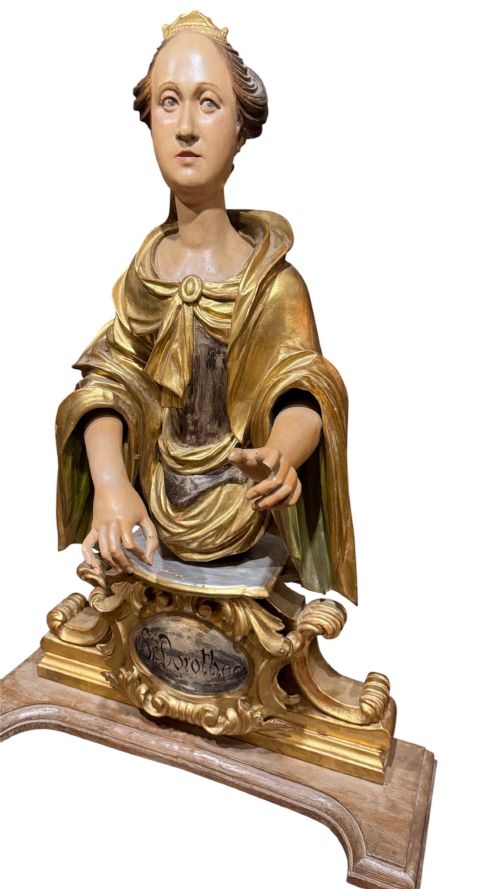
When searching for antique giltwood figures, buyers encounter a diverse selection of sculptural carvings, devotional icons, and painted scenes framed in gilded wood originating from the sixteenth century through to the twentieth century.
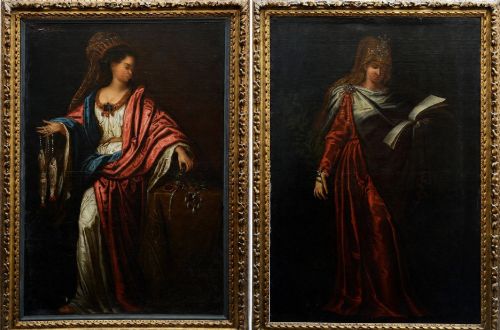
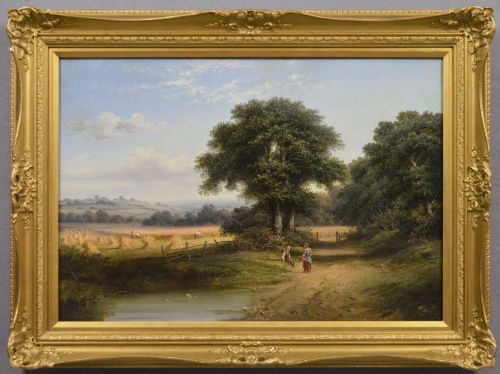
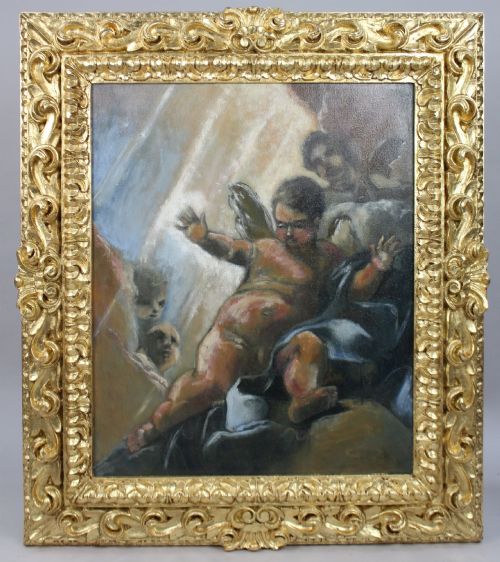
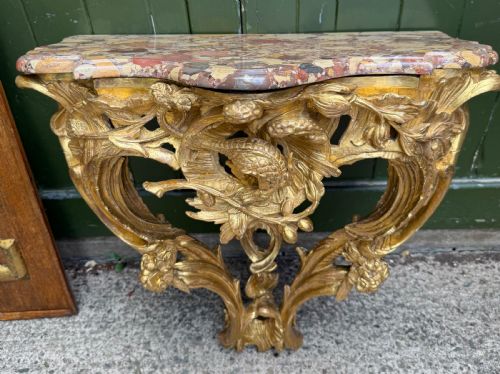
The objects span European traditions, including Italian, French, and German devotional works depicting saints alongside decorative animals, architectural consoles, and oil paintings featuring human subjects set within carved gold-leaf frames.
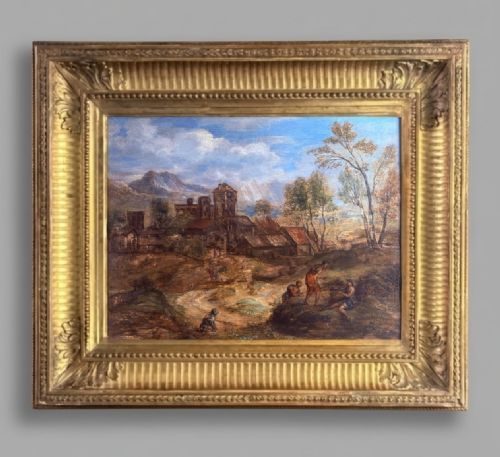
Buyers most frequently meet nineteenth-century interpretations and eighteenth-century devotional pieces, alongside earlier continental carvings and framed landscape or portrait canvases that highlight the metal's reflective quality.
Materials and Techniques
Carved wood forms the structural core of these pieces, often prepared with a layer of gesso before the application of delicate gold leaf to achieve a luminous surface.
Many historical examples incorporate polychrome pigments alongside the gilding, adding painted flesh tones and coloured drapery to wooden sculptures of saints and putti.
Canvas and panel paintings utilise oil paint to depict figures, framed by secondary structures of carved giltwood that unify the visual presentation.
Antique Giltwood Figures Retail Price Guide 2026
Typical asking prices for giltwood figures among the pieces listed under this phrase on Sellingantiques today, from the lower quarter to the upper quarter. They describe what is for sale here now, not the wider market.
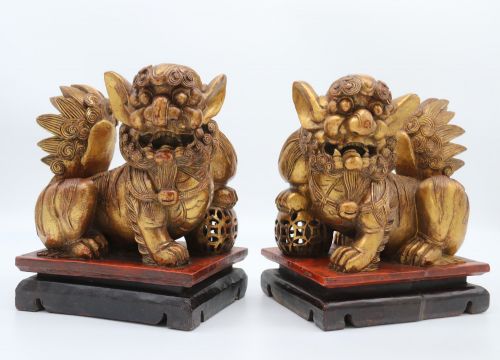
Chinese Buddhist lions sit comfortably alongside European saints and carved swans in the world of antique giltwood.
Assessing Quality and Craft
The integrity of the original gold leaf and gesso layers dictates the visual weight of a piece, where worn surfaces reveal the warm red bole beneath rather than modern metallic paint.
The harmony between the primary wooden figure and its decorative mount, whether an integral console base or an associated frame, reflects the cohesion of the maker's workshop.
Walter Heath Williams·Cornelis Christian Dommersen·Johannes Philippus Galjaard·William Edward Frost·K. Schubert
The Antique Giltwood Figures Glossary
- Giltwood
- Wood that has been coated with gold leaf or powder. This finish provides a reflective surface that catches natural light in domestic interiors.
- Gesso
- A plaster mixture applied to wood surfaces as a smooth base for gilding. It allows carvers to achieve sharp definition before applying gold leaf.
- Polychrome
- The practice of decorating architectural elements, sculpture, or pottery in a variety of colours. It frequently appears alongside gilding on early religious figures.
- Devotional Icon
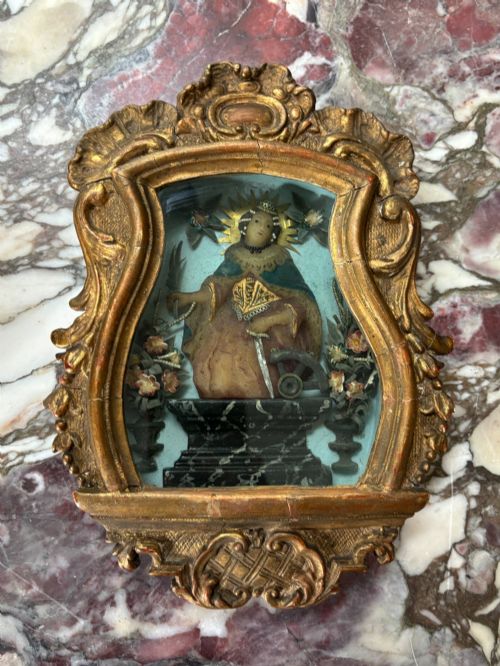
- A small artwork intended for private prayer or worship. Examples include shadow boxes with glass figures and wax reliefs.
- Putto
- A figure of a human infant, usually winged, depicted in classical art. These motifs appear frequently in eighteenth-century and nineteenth-century decorative carvings.
Antique Giltwood Figures: Frequently Asked Questions
What periods do these pieces come from?
The selection spans multiple centuries, starting from sixteenth-century devotional carvings and moving through seventeenth-century Venetian and German works.
Later pieces extend into the eighteenth, nineteenth, and early twentieth centuries, encompassing Victorian and Regency interpretations alongside twentieth-century reproductions.
How were devotional shadow boxes used?
Devotional shadow boxes served as portable or domestic altars for private prayer and contemplation in homes.
Enclosed behind glass to protect delicate materials like wax figures and Nevers glass, they preserved sacred scenes for daily reflection.
Where should I place a giltwood console table?
Console tables featuring carved giltwood and marble tops work well against principal walls in reception rooms or hallways.
Their reflective surfaces and sculptural bases, such as centaur designs or swans, serve as focal points in an interior scheme.
How do I distinguish between wood and gesso?
The underlying timber provides the structural weight and primary form carved by the artisan, while the gesso forms a thin preparation layer on top.
This chalky plaster layer holds the crisp details of the gilding and sits directly beneath the gold leaf.