
Antique Gilt Desk Clock
An antique gilt desk clock brings warmth and precise mechanics to a workspace, drawing on nineteenth-century French and English traditions.
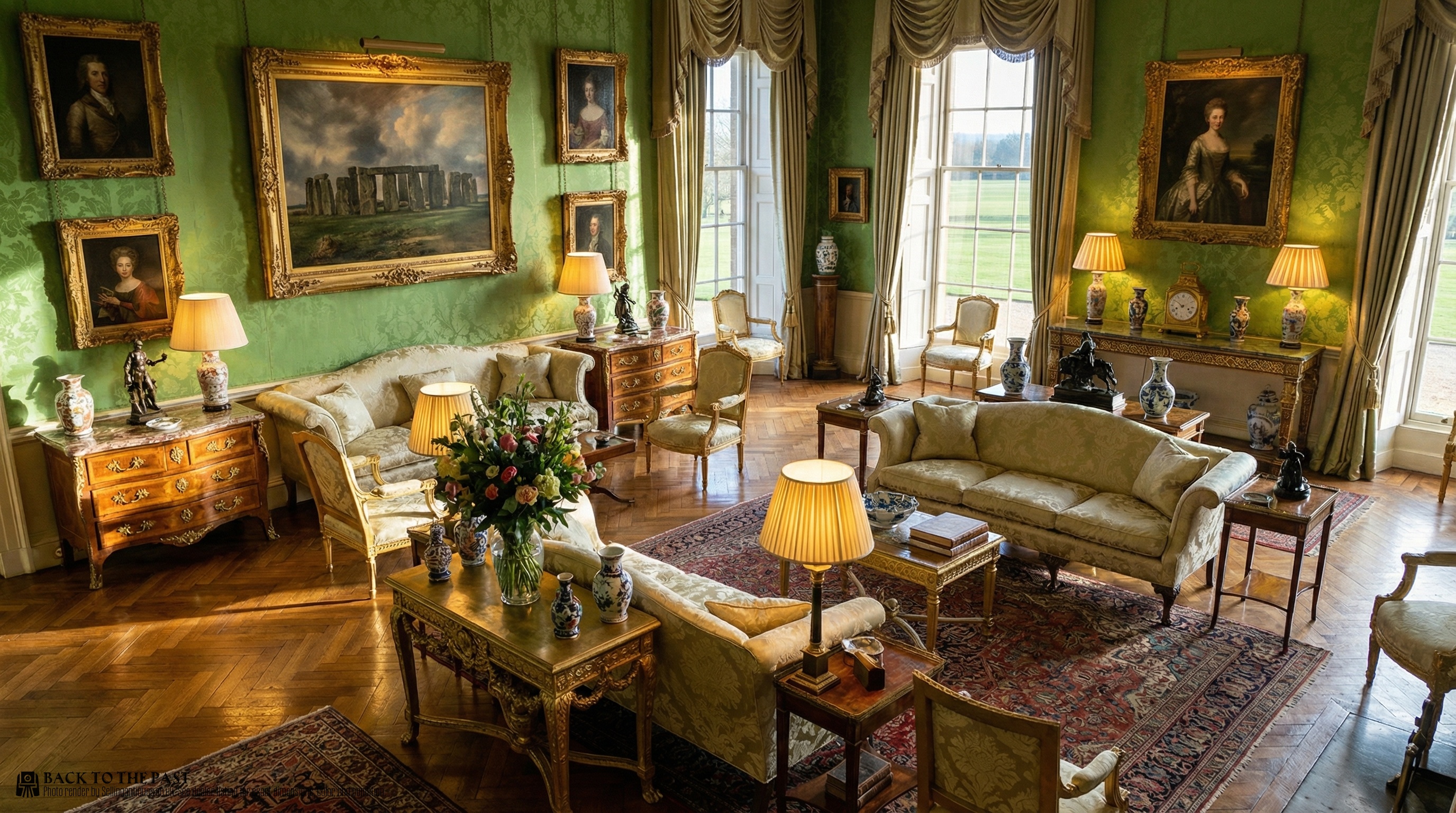
Antique Gilt Desk Clock
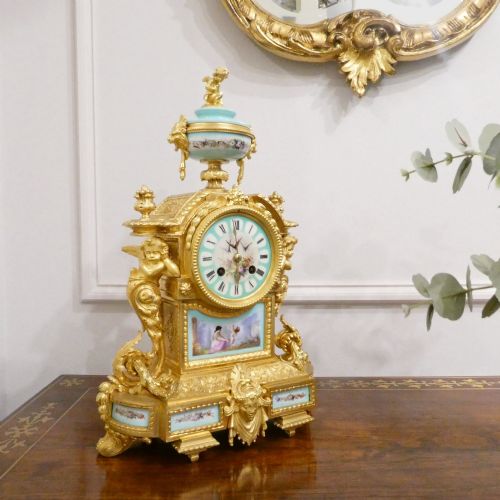
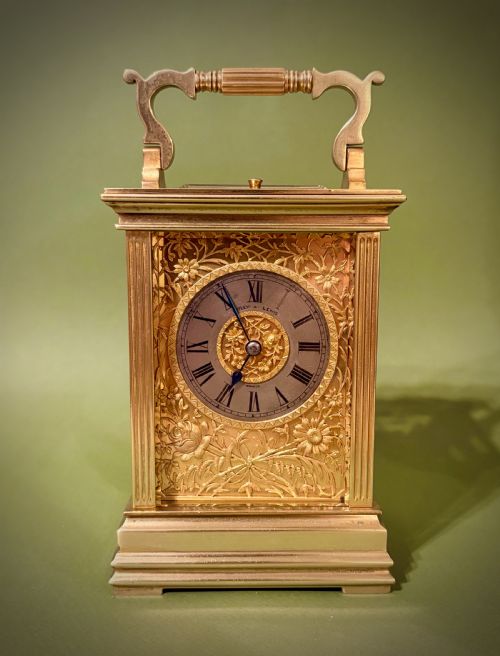
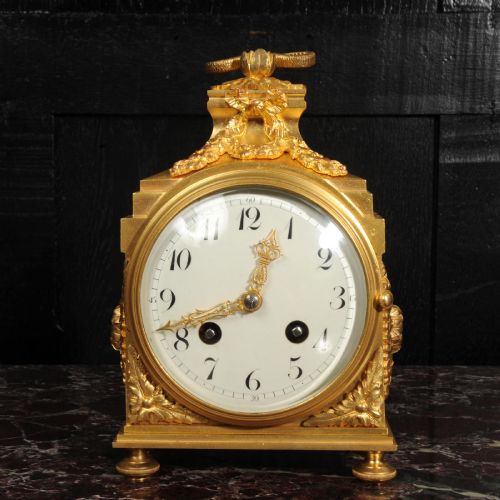
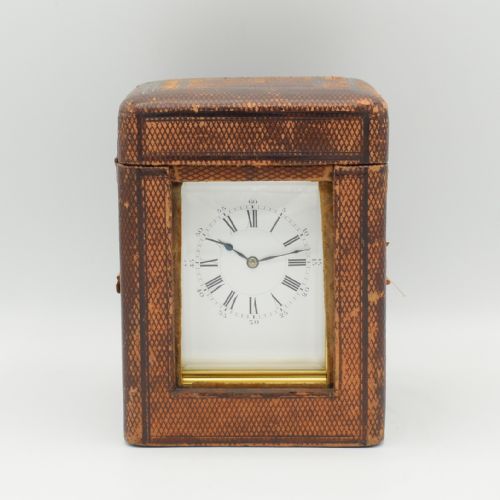
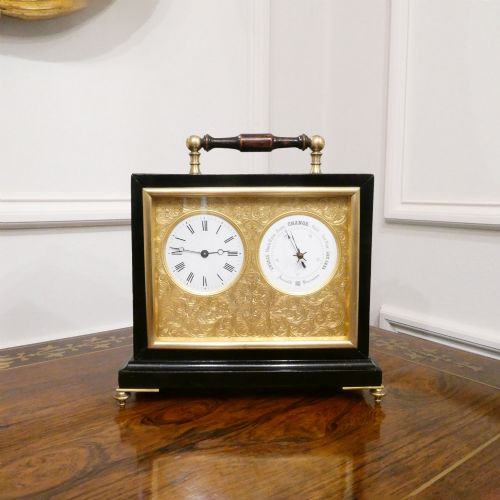
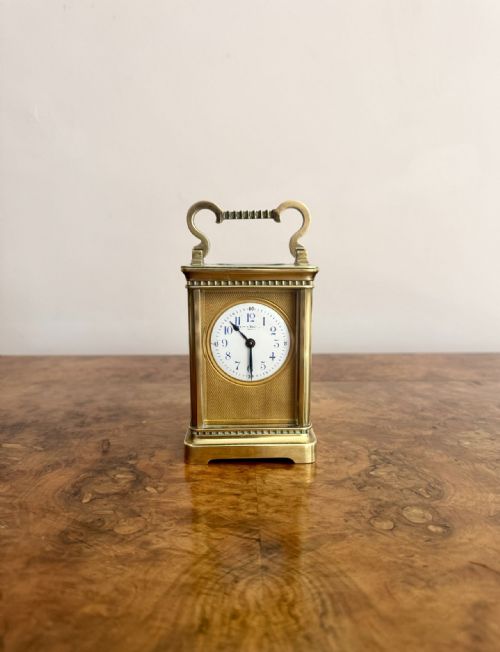
An antique gilt desk clock encompasses several distinct forms from the nineteenth century, including portable carriage clocks, mantel timepieces, and smaller desk models. You will frequently encounter French brass and ormolu designs alongside English carriage and mantel examples produced during the Victorian and Edwardian periods.
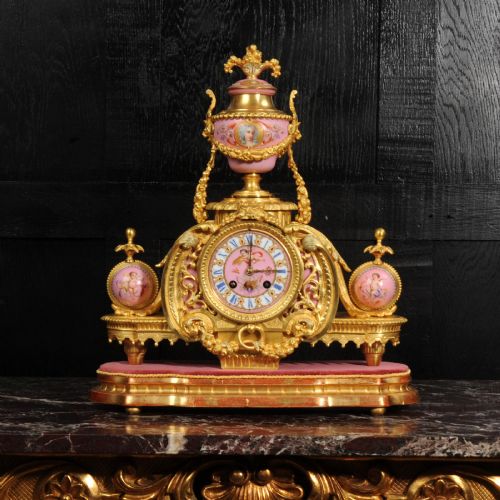
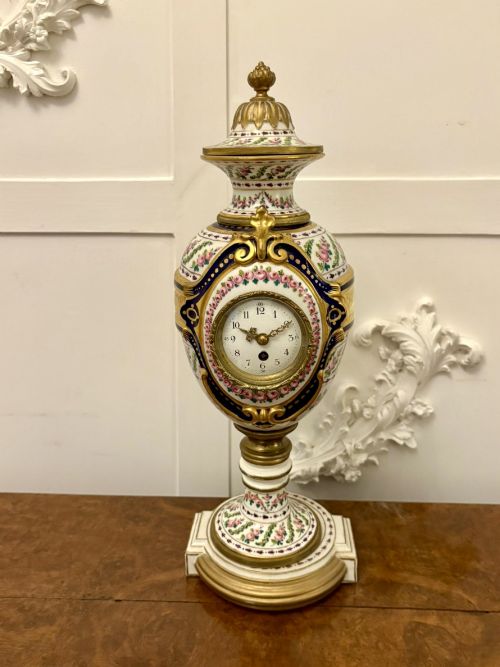
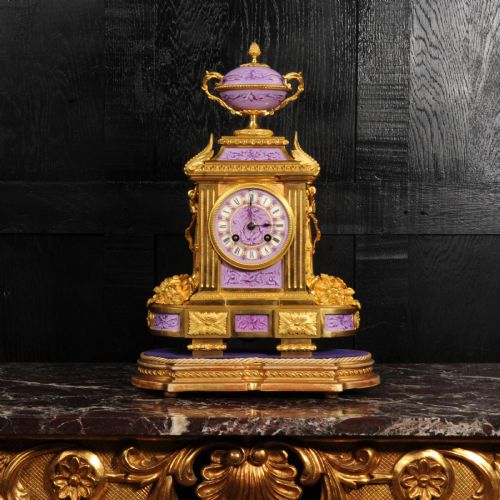
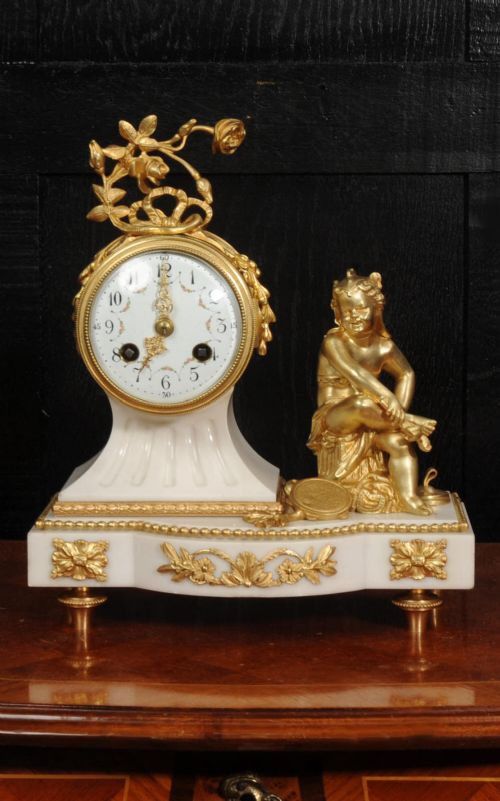
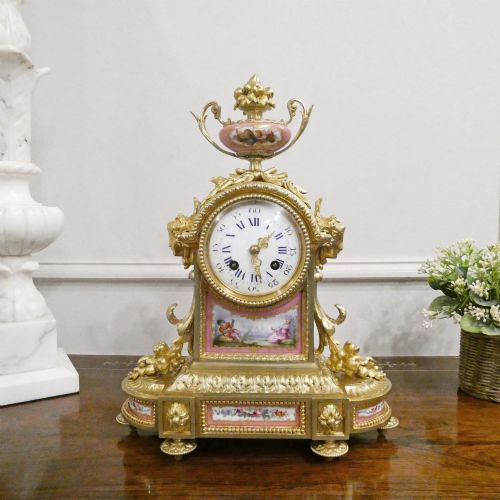
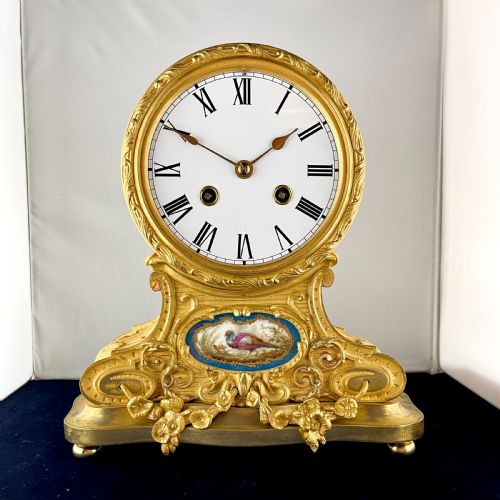
The selection ranges from architectural marble and ormolu cases to delicate gilt brass and champlevé enamel pieces made for travel or domestic desk use. Makers often combined gilded metals with porcelain panels, glass panels, or painted dials to create functional objects suited for a study or drawing room.
How they were made
Craftsmen utilised cast bronze, brass, and ormolu to form the structural cases, applying mercury gilding or electroplating to achieve a durable golden finish. These metal mounts were frequently combined with white enamel dials, bevelled glass panels, and hand-painted Sèvres or similar porcelain inserts.
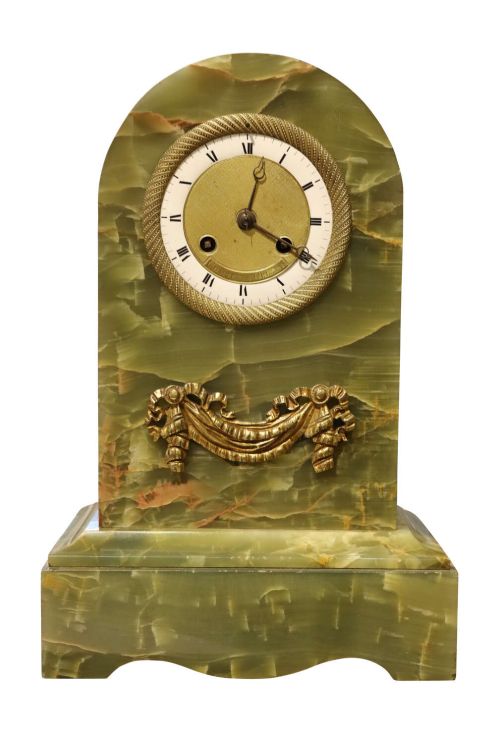
Clockmakers housed mechanical movements driven by springs and escapements within these decorated housings, often incorporating repeating mechanisms or striking trains. The integration of marble, green onyx, and wood veneers provided stable plinths and contrasting textures for the gilt metalwork.
Some nineteenth-century French clockmakers incorporated bronze elephants and cherubs into their timepiece designs, giving domestic desks a distinctly exotic wildlife presence.
What varies in quality
The distinction between standard production and exceptional pieces lies in the crispness of the gilt bronze chasing and the complexity of the movement. Finer examples feature fully engraved brass cases, signed maker movements, and hand-painted porcelain panels rather than simpler mass-produced stampings.
The survival of original travel cases, key winding mechanisms, and specialised complications like repeating or chiming trains elevates the standing of an individual clock. Heavier marble or onyx plinths and robust ormolu casting indicate higher workshop standards during the Victorian era.
Achille Brocot·Henri Jacot·Japy Freres·Paul Sormani·Le Roy Paris
The Antique Gilt Desk Clock Glossary
- Ormolu
- Gilded bronze, where a finely ground gold-mercury amalgam is applied to cast bronze and heated to drive off the mercury. This technique produces a warm, matte golden lustre characteristic of nineteenth-century French pieces.
- Carriage clock
- A small, portable spring-driven timepiece designed for travel, typically fitted with a carrying handle and a glazed brass case that allows the movement to be seen. Many examples include repeating mechanisms to sound the time on demand.
- Champlevé
- An enamelling technique where troughs or cells are hollowed out of a metal surface and filled with vitreous enamel before firing. It frequently appears on nineteenth-century brass clock dials and bezels.
- Sèvres
- A type of soft-paste or hard-paste porcelain associated with the historic French manufactory, often hand-painted with floral or figurative scenes and mounted into clock cases. These porcelain plaques provide vibrant colour contrast against gilt bronze.
- Pendule d'Officier
- A military-style officer's clock from the French Empire period, featuring a portable form with a striking movement and specific dial layouts. They represent an early development in portable timekeeping.
Antique Gilt Desk Clock: Frequently Asked Questions
How do I wind a carriage clock?
Most carriage clocks use a dedicated double-ended key to wind both the time train and the strike train through apertures in the base or backplate. Care should be taken not to overwind the mainspring.
Moving the hands should be done gently in a clockwise direction, avoiding counter-clockwise adjustments that might disrupt the delicate escapement mechanism.
How do I care for gilt metal?
Gilt metal surfaces should be dusted gently with a soft, dry brush to prevent the accumulation of grit in recessed chasing. Avoid using abrasive commercial metal cleaners, which can strip the thin layer of gold.
Keeping the clock away from direct sunlight and damp environments helps preserve both the gilding and the internal brass mechanics.
Are these clocks suitable for daily use?
Antique mechanical clocks can run reliably if they have been professionally serviced and cleaned. They require regular winding and occasional professional oiling to maintain accuracy.
Placing them on a stable, level surface away from vibrations ensures the pendulum or escapement operates without interference.