

Antique Gilt Candelabra
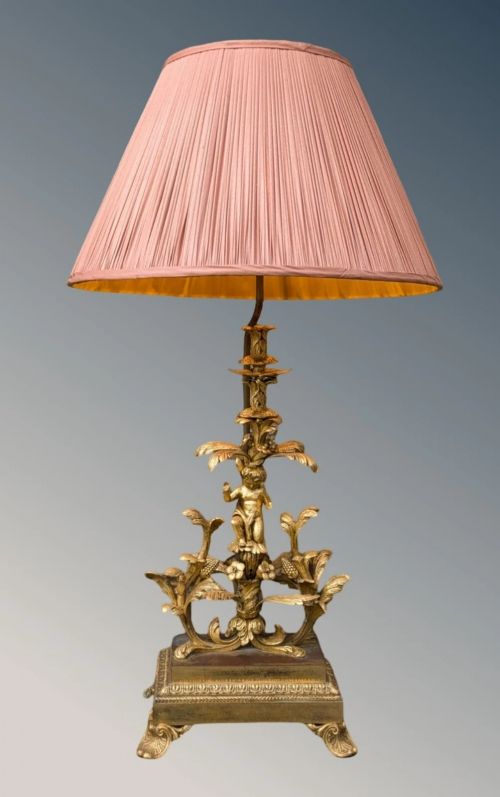
Antique gilt candelabra bring the warm, reflective glow of nineteenth-century drawing rooms into modern interiors through ornate metalwork and candle arms.
Antique Gilt Candelabra
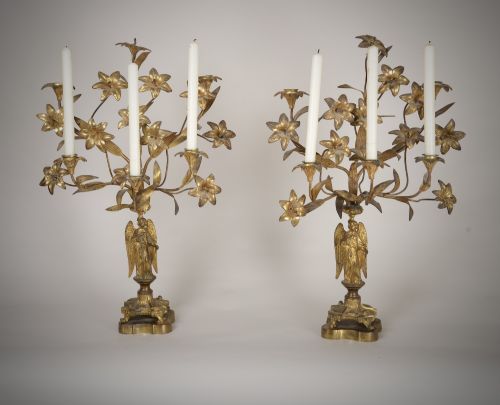
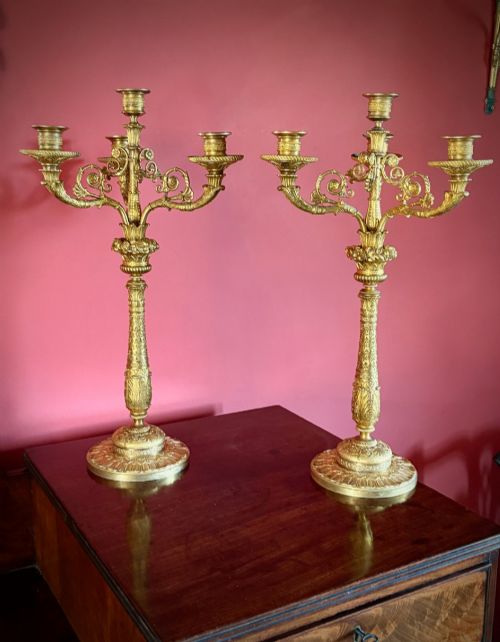
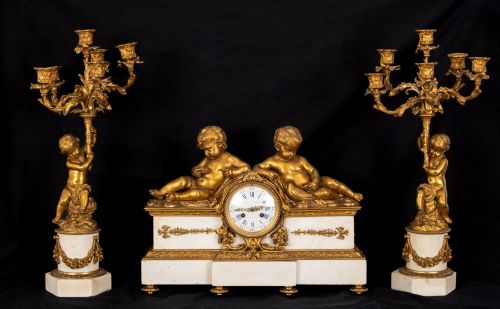
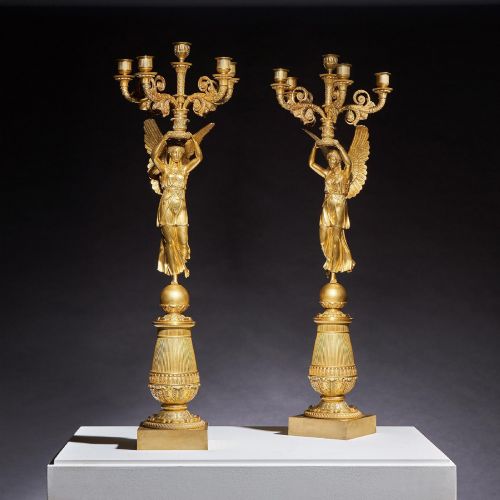
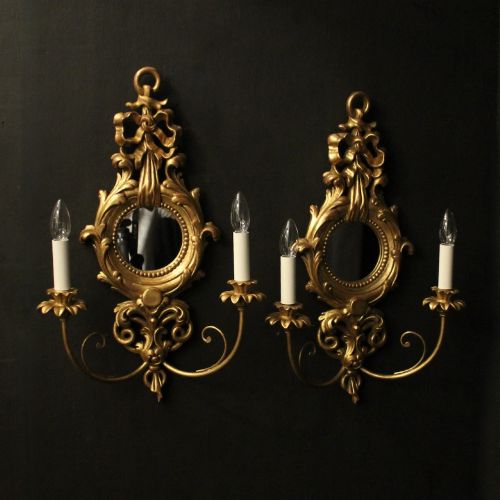
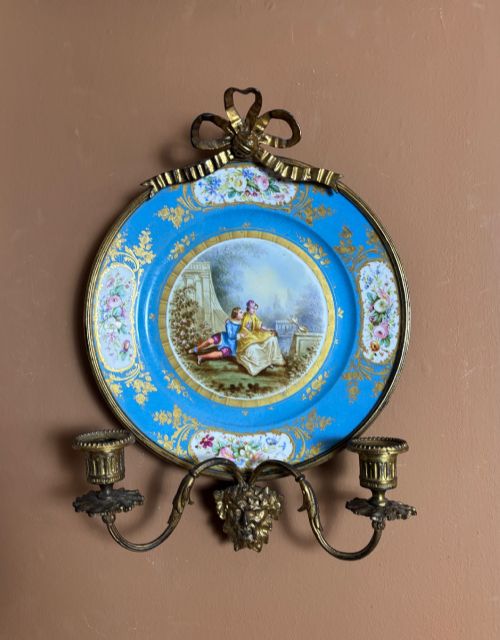
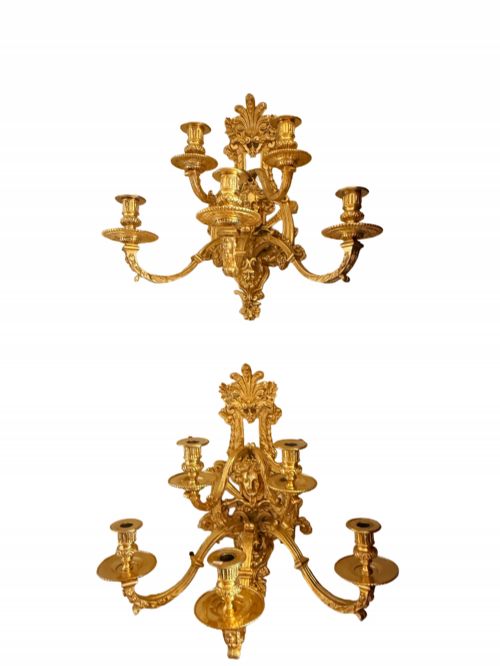
Antique gilt candelabra comprise multi-branched lighting fixtures designed for tables, mantelpieces, and walls, predominantly originating from nineteenth-century French workshops. The selection centres heavily on pairs of matched pieces featuring several candle arms, often accompanied by matching clock garnitures or wall sconces.
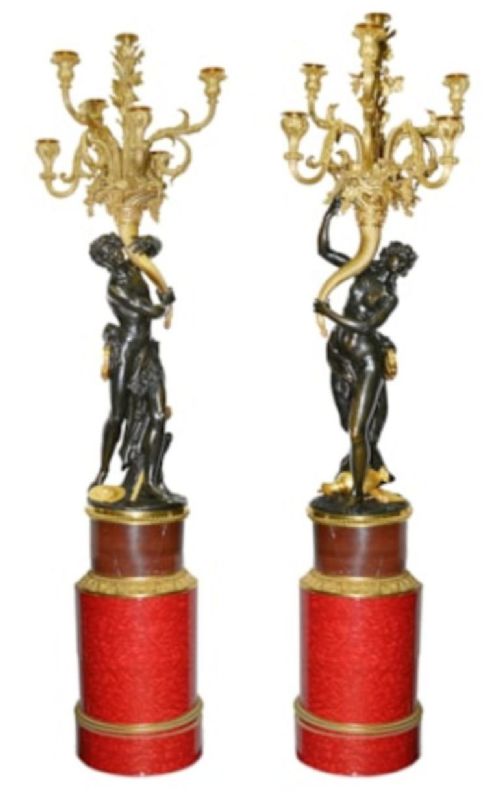
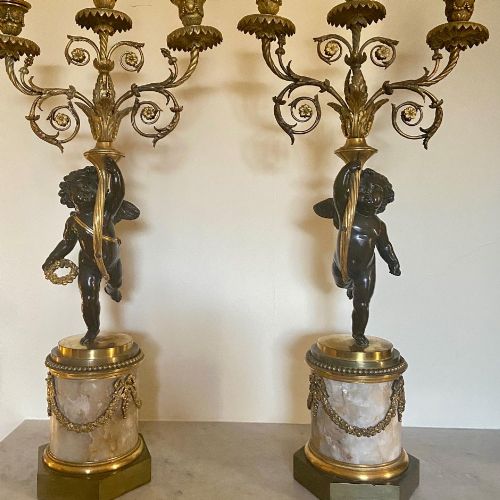
Buyers encounter styles spanning French Empire, Rococo Revival, Louis XVI, and Neoclassical designs. These pieces frequently incorporate figural elements such as putti, cherubs, or mythological figures alongside traditional scrolling foliage.
How They Were Made
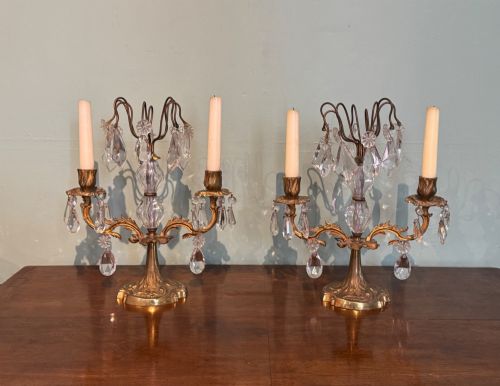
The construction relies heavily on cast bronze or brass, which received a durable mercury gilt or ormolu surface finish to impart a rich golden lustre. Artisans combined these metallic elements with contrasting materials such as white marble bases, cut glass crystals, and occasionally porcelain or malachite sections.
Casting methods utilised lost-wax and sand techniques, allowing intricate detailing on arms and figures before final hand-chasing and gilding by skilled metalworkers.
Stag and doe figures occasionally support candle branches upon their antlers, bringing woodland wildlife straight into the formal drawing room.
What Varies in Quality
Assembled elements fit together with precision, and secondary components such as marble plinths or porcelain inserts show high artistic merit. Lesser items display softer surface details, blurred foliate casting, and thin plating that wears through to base metals.
Barbedienne·Francois Redmond·Pierre Philippe Thomire·Thiebaut Freres·Thomas Hope·Samson·Japy Freres
The Antique Gilt Candelabra Glossary
- Ormolu
- Finely chopped high-karat gold amalgamated with mercury and applied to a bronze base through heat-gilding techniques. This historical process yields a deep, matte golden finish characteristic of eighteenth and nineteenth-century luxury goods.
- Garniture
- A coordinated set of decorative objects, typically comprising a central mantel clock flanked by matching candelabra or vases. These matched suites unified the decorative scheme of a formal nineteenth-century mantelpiece.
- Girandole
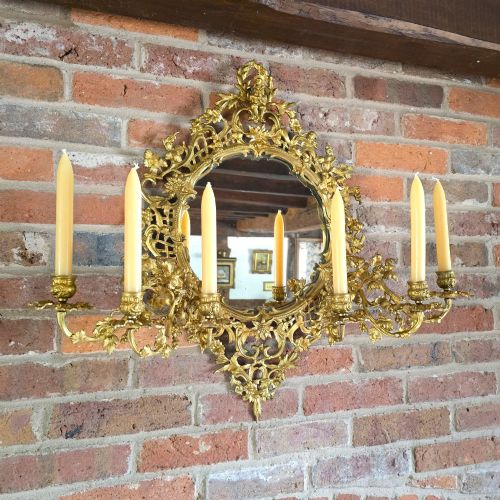
- An ornamental wall-mounted or freestanding candelabra featuring a reflecting mirror backplate. The glass plate serves to amplify the candlelight within dimly lit period rooms.
- Champlevé
- An enamelling technique where troughs are dug into the metal surface and filled with vitreous paste before firing. This colourful decorative method frequently appears on nineteenth-century brass and bronze bases.
- Patinated Bronze
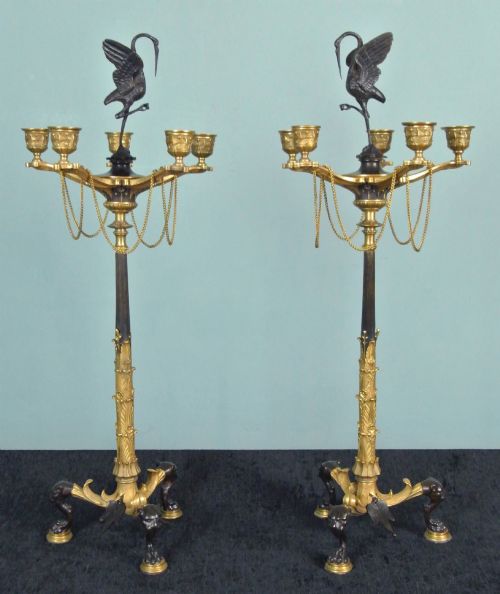
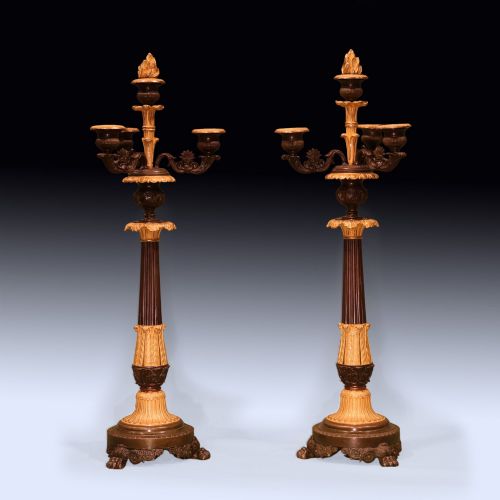
- Darkened or chemically treated metal surfaces contrasting with bright gilt highlights. This technique adds visual depth to figural subjects like knights, fauna, and classical deities.
Antique Gilt Candelabra: Frequently Asked Questions
Were these electrified later?
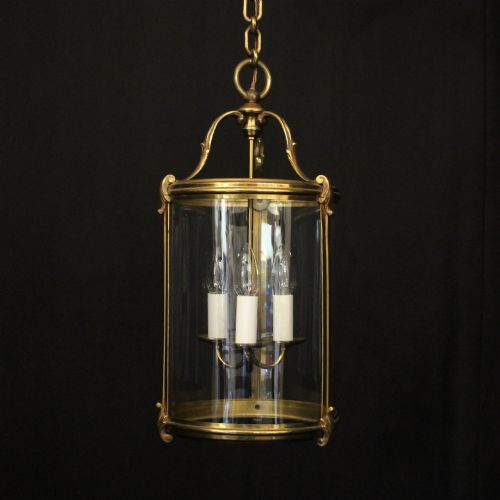
Many surviving examples retain their original solid drip pans and sockets intended strictly for wax tapers. Conversion work happened frequently during the twentieth century to accommodate household wiring.
Inspect the base wiring channels and candle nozzles to determine if internal drilling altered the metal structure. Unconverted pieces retain higher collector interest for formal displays.
How do I spot a marriage set?
Examine the mounting screws, bronze alloy colour, and wear patterns across matching pairs or clock garniture components. Discrepancies in casting quality or slight variations in height indicate assembled components from different origins.
True matched pairs share identical chasing tool marks and uniform gilding oxidation across all constituent parts.
Where should I place them?
Position heavier table models on sturdy mahogany sideboards or marble-topped console tables where their weight finds secure support. Wall-mounted sconces require professional anchoring into solid masonry or stud work due to the substantial mass of cast bronze.
Keep them away from direct heat sources and strong sunlight to protect delicate patination and fragile marble plinths.