
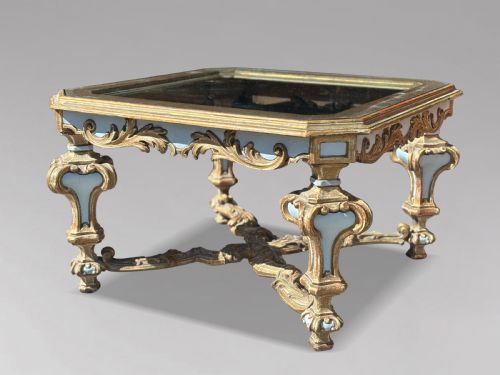


Antique Gilded Center Table
When you want an antique gilded centre table, you are looking for a showpiece designed to stand free in a room, combining rich surface gilding with stone or timber.
Antique Gilded Center Table
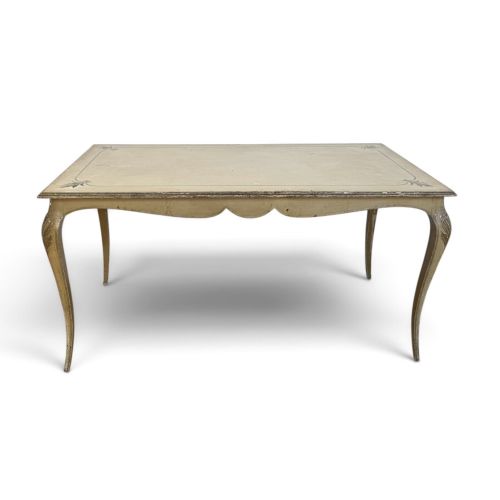
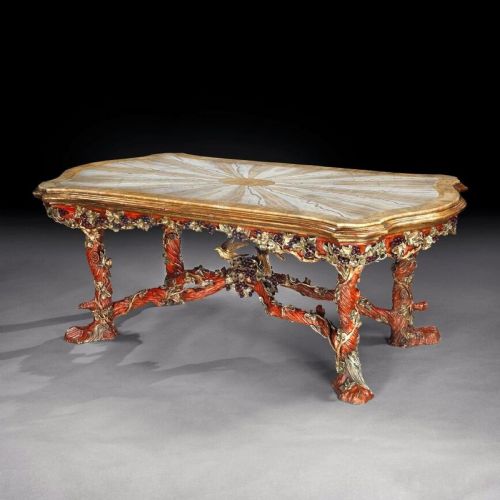
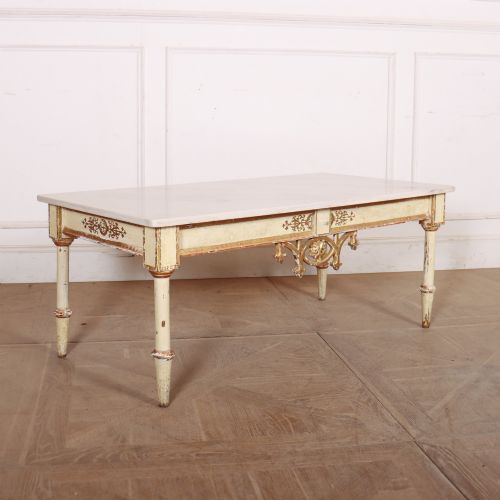
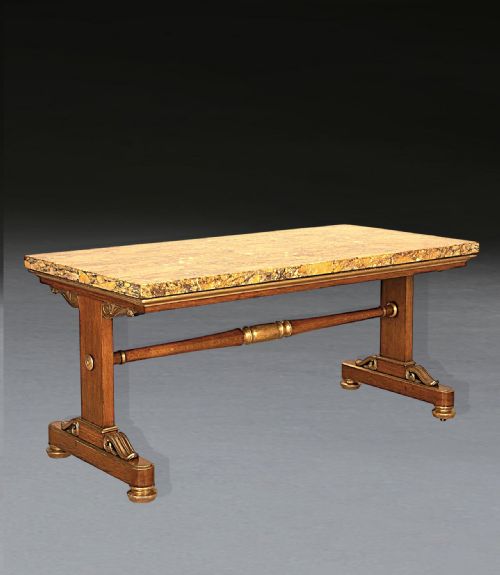
An antique gilded centre table is designed to be viewed from all sides, sitting in the middle of a grand room rather than pushed against a wall. The examples on this page span the nineteenth and early twentieth centuries, drawing heavily on French revivals, Regency tastes, and Italian design.
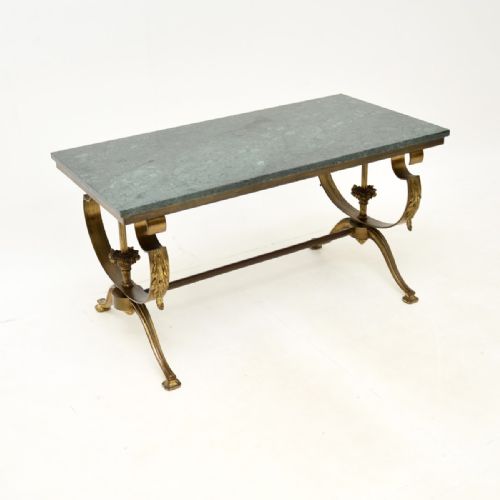
The primary forms found here include traditional centre tables alongside coffee tables, occasional tables, and console tables adapted for central placement. Makers often paired carved wood frames with heavy marble slabs, creating substantial pieces intended for display and formal entertaining.
How they were made
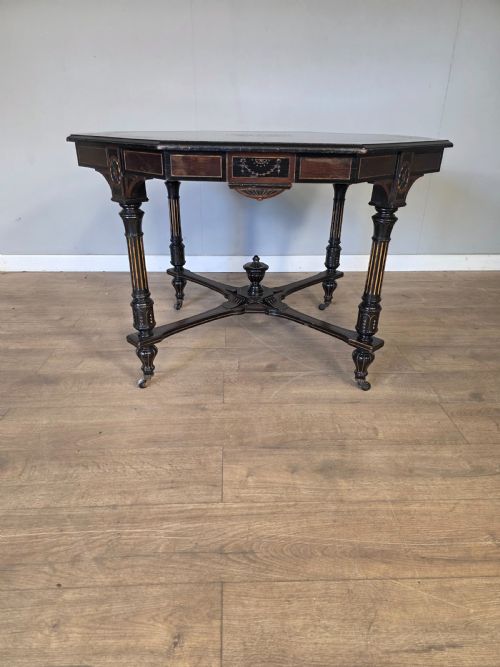
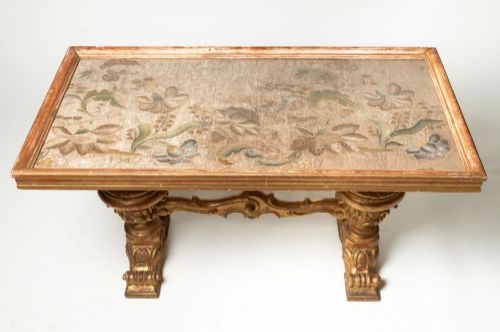
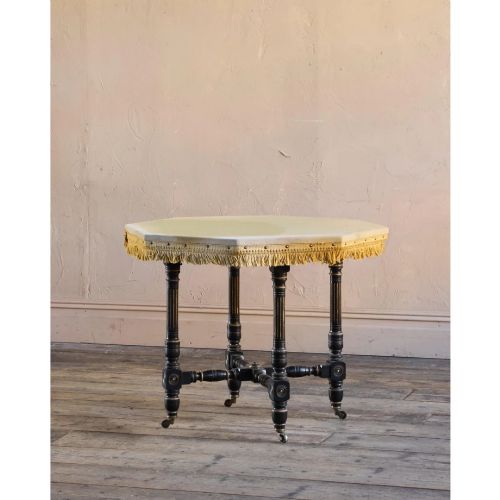
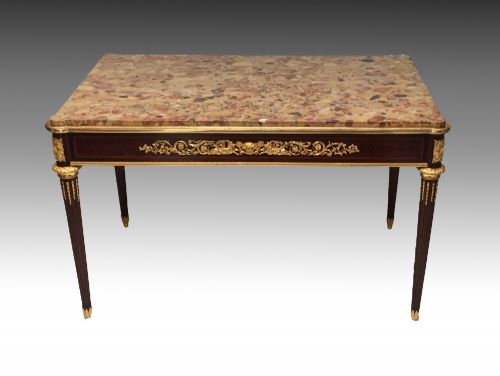
Makers utilised solid timbers like mahogany, oak, and walnut as structural carcases, frequently applying ebonising, japanning, or elaborate parquetry and marquetry inlays. Carved wood elements received layers of gold leaf or parcel-gilding to create brilliant reflective surfaces.
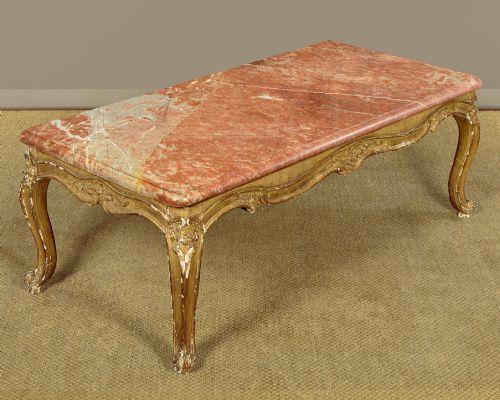
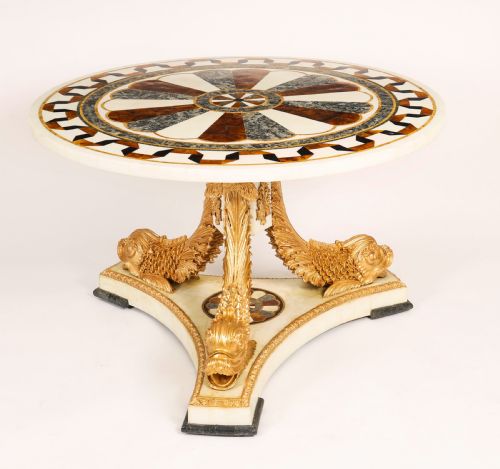
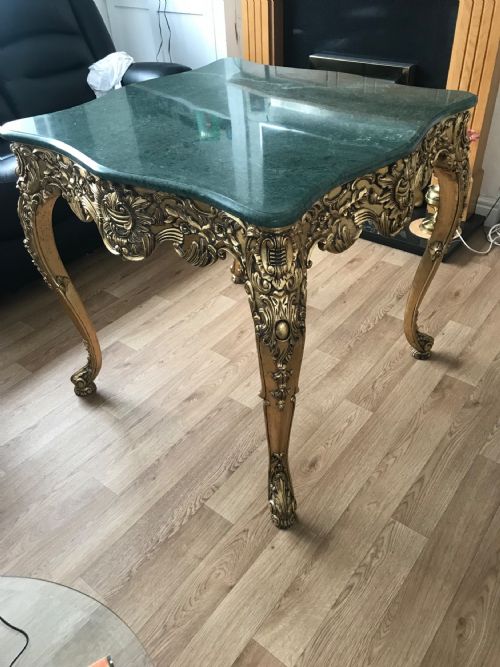
Slab tops of white, green, or Siena marble provide heavy, cool contrasts to the warm gilded frames. Cast bronze ormolu mounts, brass details, and inlaid stone panels such as pietra dura complete the construction of these decorative tables.
Listings feature marble, giltwood, mahogany, and brass across Victorian, Regency, and twentieth-century periods.
What varies in quality
The standard of carving and the crispness of the gilded surface dictate the distinction between ordinary and exceptional tables. Hand-chased ormolu mounts, intricate marquetry, and thick, polished marble tops indicate skilled workshop production from periods like the Victorian era or French revivals.
Structural integrity also separates the grades, particularly the weight and stability of freestanding frames supporting heavy stone. Pieces retaining original gilding, specialist stone work, and documented maker attributions command greater interest from collectors.
Hindley And Sons·Eugene Clauss·Zwiener Jansen Sucesseur
The Antique Gilded Center Table Glossary
- Giltwood
- Wood that has been coated with thin sheets of gold leaf or gold dust over a prepared base. This finish provides the bright, reflective surfaces characteristic of many formal nineteenth-century tables.
- Guéridon
- A small round table supported by one or more central columns or figures. These French forms frequently feature marble tops and gilt-bronze mounts.
- Ormolu
- Gilded bronze mounts and decorative details cast and chased by hand. Makers applied these metallic ornaments to enrich the corners and legs of tables.
- Pietra dura
- An inlay technique using cut and fitted polished coloured stones to create pictorial designs. This painstaking lapidary work appears on fine Italian table tops.
- Marquetry
- The art of applying pieces of veneer to a structure to form decorative patterns or pictures. Craftsmen used various exotic woods to achieve contrasting tones on table tops.
Antique Gilded Center Table: Frequently Asked Questions
Where should a centre table go?
These tables are designed to stand freestanding in the middle of a room rather than pushed against a perimeter wall. Their finished decoration on all sides allows them to act as central visual anchors.
Place them in large entrance halls, drawing rooms, or spacious living areas where people can walk entirely around the piece to view the craftsmanship.
What is a gueridon table?
A guéridon is a small French table supported by a central pillar, tripod base, or figural stand. Originating in earlier centuries, nineteenth-century versions frequently incorporated marble tops and gilt-bronze mounts.
These pieces function well as occasional tables or stands for decorative objects like vases and clocks.
How do I identify French revival styles?
French revival pieces borrow decorative vocabulary from earlier Louis periods, featuring sweeping cabriole legs, carved floral motifs, and generous gilding. Look for symmetry paired with flowing organic curves inspired by Rococo and Neoclassical designs.
Ormolu mounts and marble tops further signal the influence of Parisian cabinet makers working through the nineteenth and early twentieth centuries.