




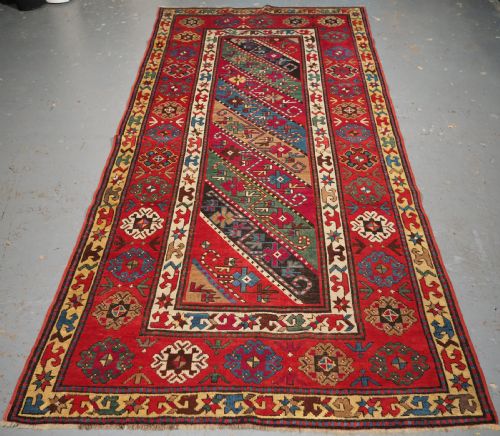


Antique Gendje Runner
An antique gendje runner brings bold Caucasian tribal geometry and rich natural dyes into a hallway or narrow space.
Antique Gendje Runner
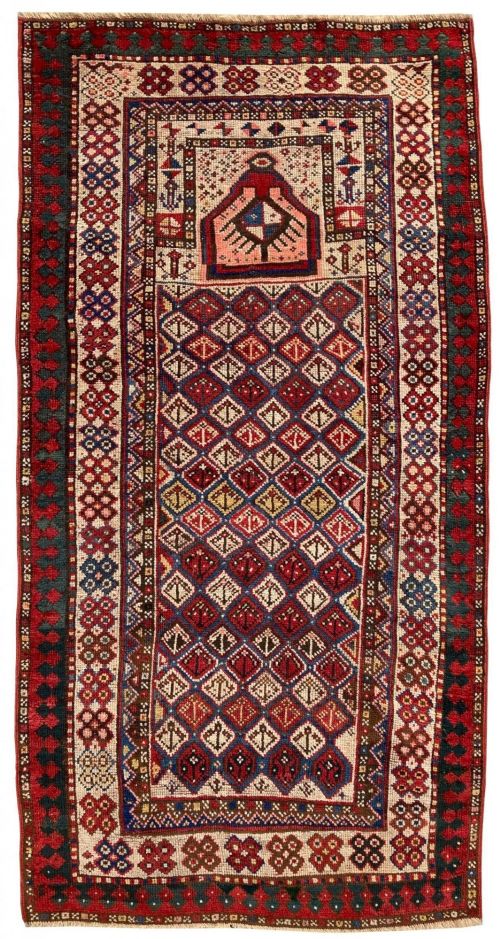
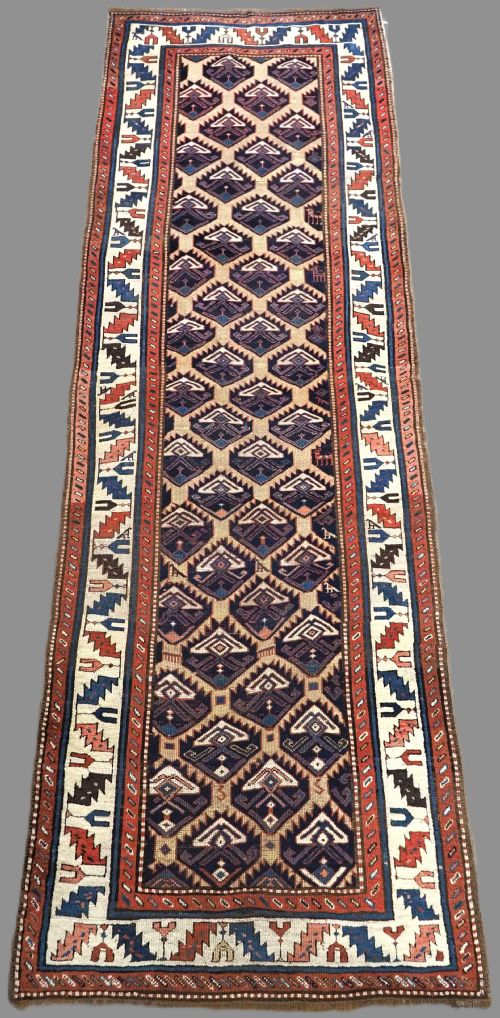
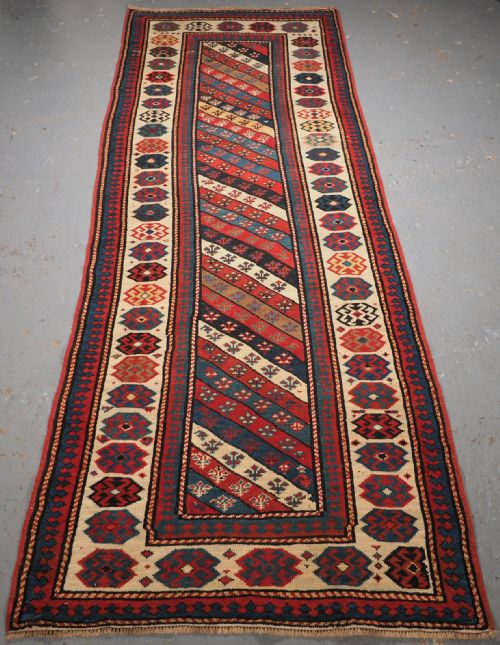
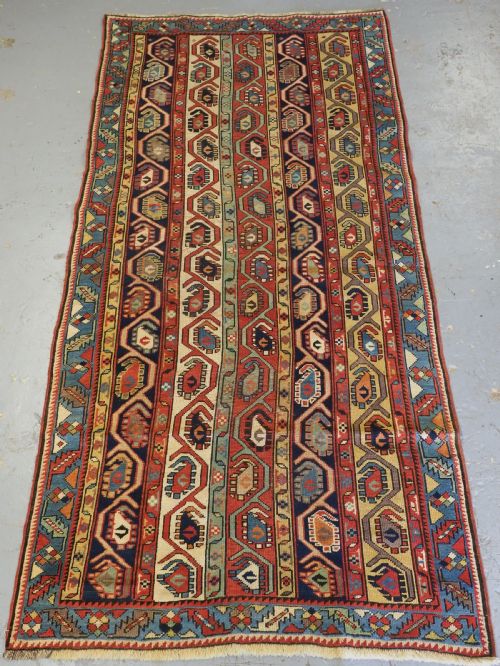
An antique gendje runner is a woven floor covering originating from the Caucasus region during the late nineteenth century, specifically spanning the periods around eighteen eighty, eighteen ninety, and nineteen hundred. These pieces typically take the form of elongated runner rugs, hallway runners, and long rugs designed for narrow spaces. Buyers looking for an antique gendje runner will encounter traditional formats adorned with distinctive motifs such as the boteh design, floral lattices, diagonal stripes, and occasional figurative folk art depicting horses and people.
What varies in quality
The distinction between ordinary and exceptional examples rests upon the clarity of the design and the vibrancy of the palette. Runners featuring scarce elements such as a blue ground or unusual pictorial elements like horses and people tend to represent the more engaging end of the spectrum.
Material preparation also dictates quality, as the finest pieces showcase superior hand-spun wool combined with deeply saturated natural dyes. The precision of the geometric lattice or diagonal stripe layout further separates standard village work from master weaver output.
Antique Gendje Runner Retail Price Guide 2026
Typical asking prices for gendje runner among the pieces listed under this phrase on Sellingantiques today, from the lower quarter to the upper quarter. They describe what is for sale here now, not the wider market.
Village weavers occasionally snuck tiny figures of horses and people into geometric lattice designs, proving even antique floor coverings have a sense of humour.
The Antique Gendje Runner Glossary
- Boteh
- A stylised almond or pear-shaped motif representing a floral or cypress shoot. It appears frequently in various configurations across Caucasian and Persian weaving.
- Natural dyes
- Colourants derived from plant, insect, or mineral sources rather than synthetic chemicals. They age gracefully and develop a desirable patina over decades.
- Prayer rug
- A small textile featuring a mihrab or arch design indicating the direction of prayer. These pieces were often used for personal devotion in domestic settings.
- Hand-spun wool
- Fleece that has been twisted into yarn by hand rather than by industrial machinery. This method preserves natural lanolin and creates varied yarn thickness.
Antique Gendje Runner: Frequently Asked Questions
How old are these runners?
The pieces available date from the late nineteenth century, specifically spanning the decades around eighteen eighty, eighteen ninety, and nineteen hundred.
This places them firmly within the late period of traditional Caucasian village weaving before synthetic materials altered production.
Where were they made?
They originate from the Caucasus region, specifically associated with the Gendje area and related tribal weaving traditions.
Weavers in these mountainous districts produced distinct runner rugs and long carpets for domestic use and trade.
What materials are used?
The construction relies entirely on wool, with weavers frequently utilising hand-spun wool for both the pile and the foundation.
Colour is imparted exclusively through natural dyes, creating the rich and varied palettes characteristic of nineteenth-century village rugs.
How do I style a runner?
These narrow formats suit hallways, corridors, and passageways where their linear geometry can be fully appreciated on the floor.
Ensure you use an appropriate underlay to protect the historic wool pile and prevent slipping on hard surfaces.