


Antique Gaming Board
An antique gaming board brings parlour pastimes into a room, offering tactile surfaces from centuries past.
Antique Gaming Board
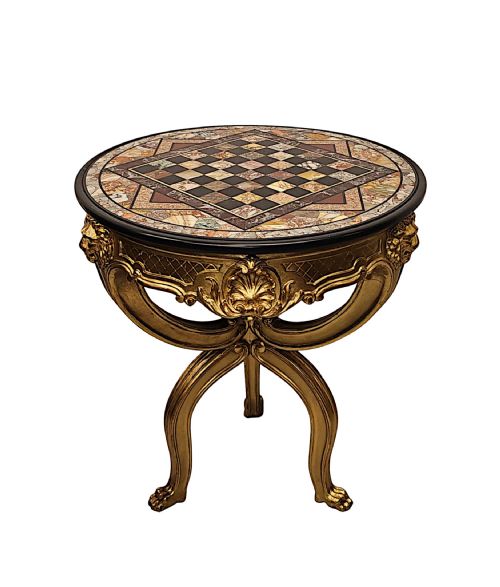
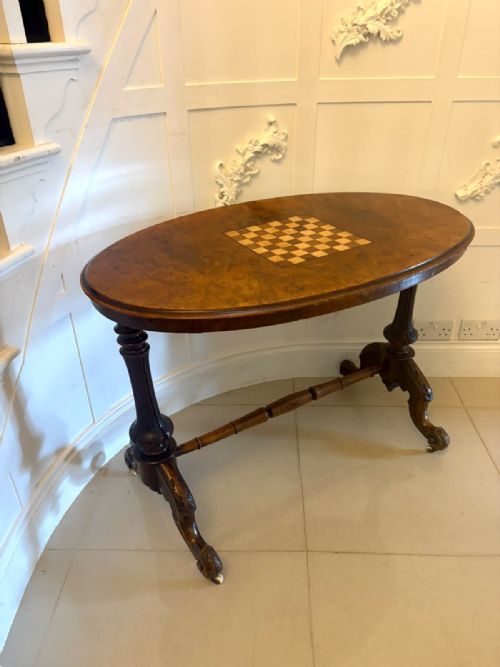
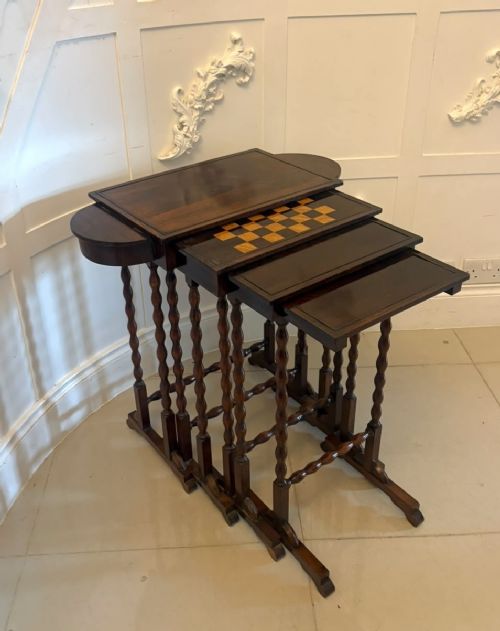
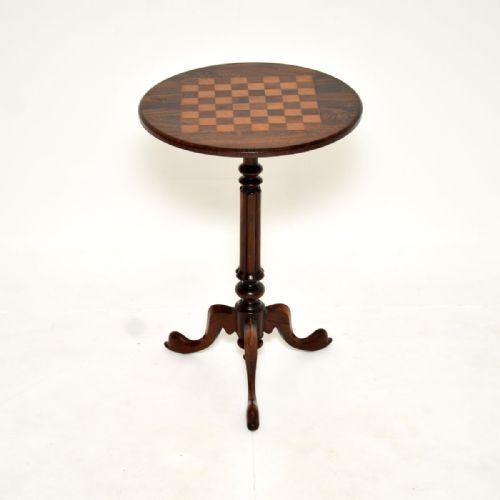
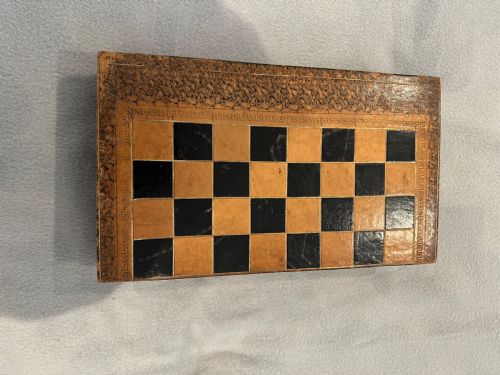
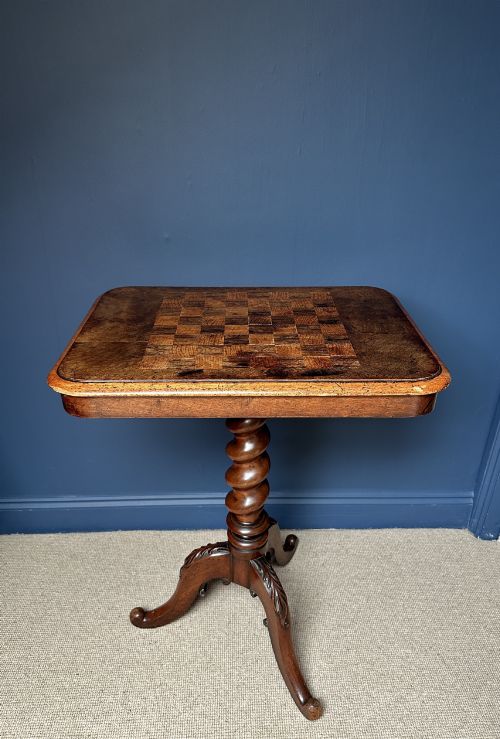
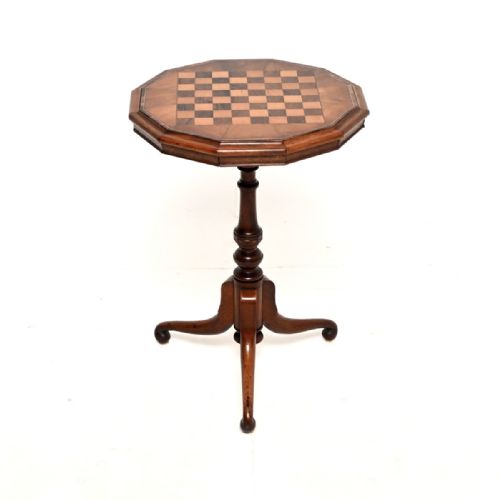
An antique gaming board encompasses folding travel sets, solid occasional tables with inlaid tops, and wall-mounted scoreboards. These pieces serve domestic entertainment and social gathering spaces across several centuries.
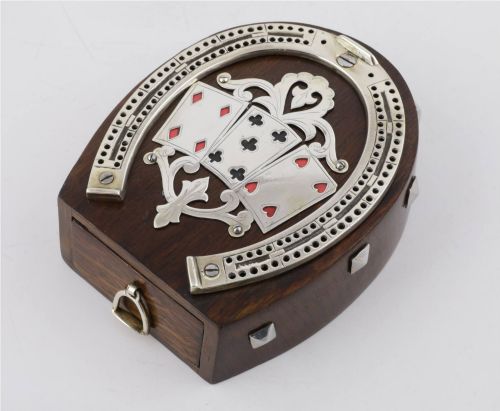
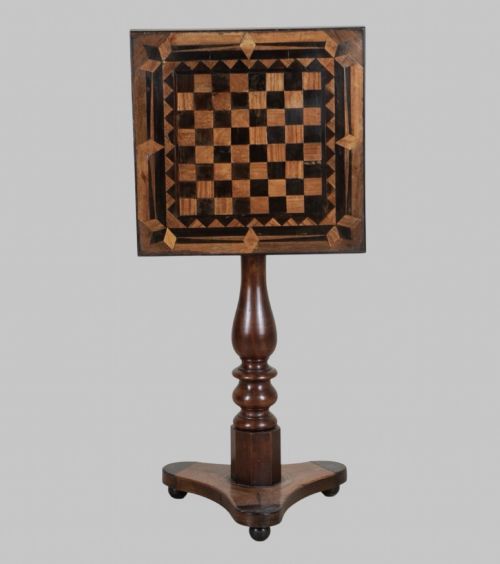
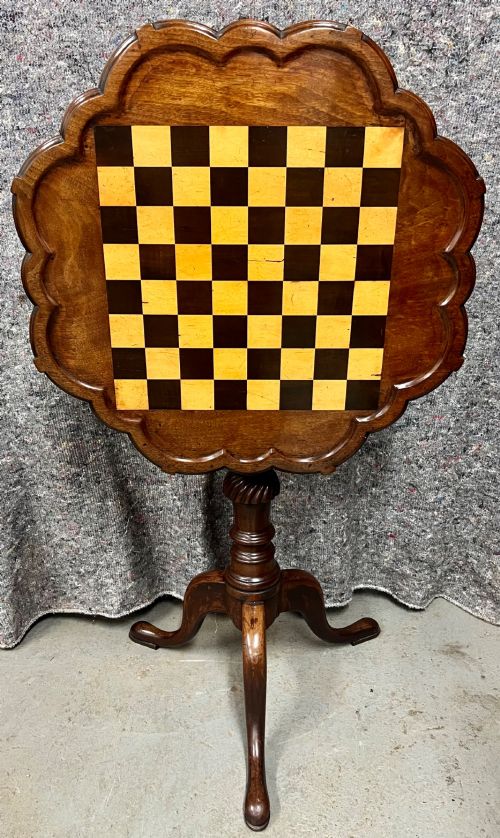
The most frequent examples on this page date from the nineteenth century, including Victorian walnut and rosewood chess tables alongside smaller cribbage boxes in oak and silver.
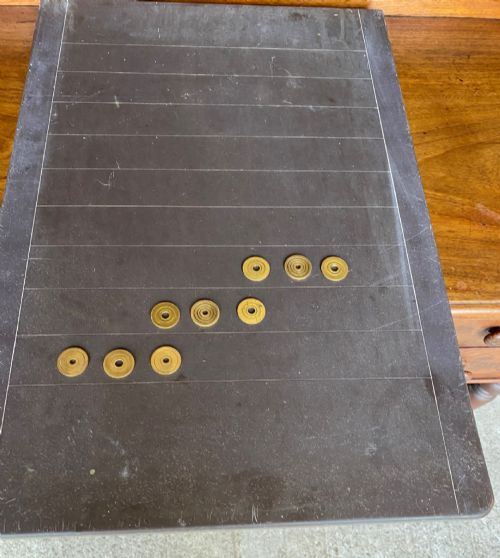
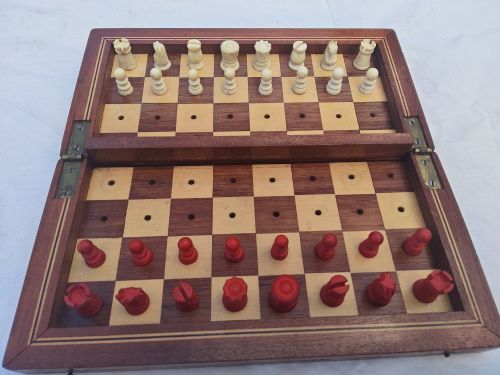
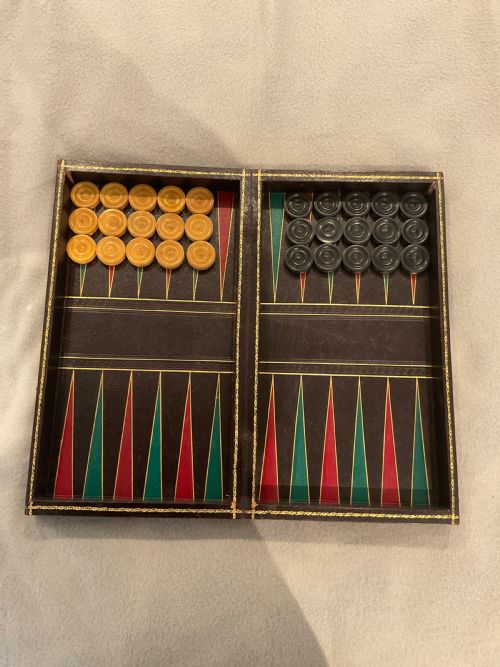
Forms extend from traditional pub games like shove ha'penny and skittles to grand tour marble chess boards and folding leather-bound faux book boards designed for portability.
Materials and construction
Cabinetmakers utilise dense timbers such as mahogany, rosewood, walnut, and oak to construct stable surfaces for frequent play. Contrasting woods like boxwood provide light squares and markers against darker grounds.
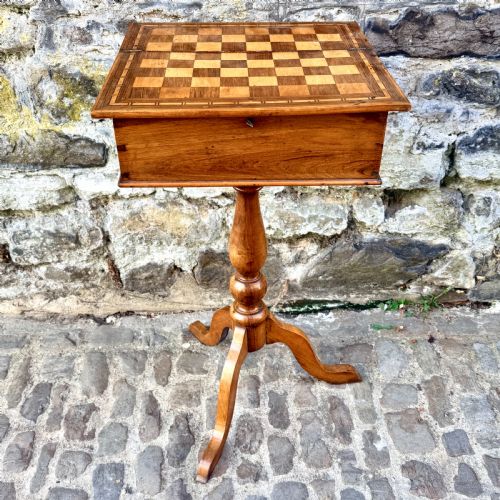
Inlays feature heavily, employing precise wood veneers, bone elements, and occasional specimen marbles. Leather bindings and reverse glass painting appear on specialised folding and wall-hanging boards.
Antique Gaming Board Retail Price Guide 2026
Typical asking prices for gaming board among the pieces listed under this phrase on Sellingantiques today, from the lower quarter to the upper quarter. They describe what is for sale here now, not the wider market.
Materials span native oak and mahogany alongside exotic rosewood, walnut, boxwood, bone, brass, glass, and marble.
Assessing quality and execution
Excellence lies in the precision of the wood inlay and the stability of the timber joints across seasonal temperature shifts. Finer examples retain integrated storage drawers, original brass fixings, and well-matched veneer grains.
The sophistication of auxiliary detailing, such as carved lion paw feet on marble-topped tables or crisp hand-painted scoring numbers, separates standard utilitarian pieces from high-status parlour furnishings.
Orme and Sons Manchester·Whittington Pattern
The Antique Gaming Board Glossary
- Cribbage board
- A narrow wooden board drilled with rows of small holes for pegging scores during card games. They often double as lidded storage boxes for the cards themselves.
- Tantalus
- A locking wooden frame holding decanters with the stopper necks trapped beneath a metal bar. While associated with drinks, they appear alongside games compendiums in nineteenth-century interiors.
- Specimen marble
- Multi-coloured pieces of polished stone assembled to form a decorative mosaic surface. These appear on heavy table tops supported by giltwood or mahogany bases.
- Bagatelle
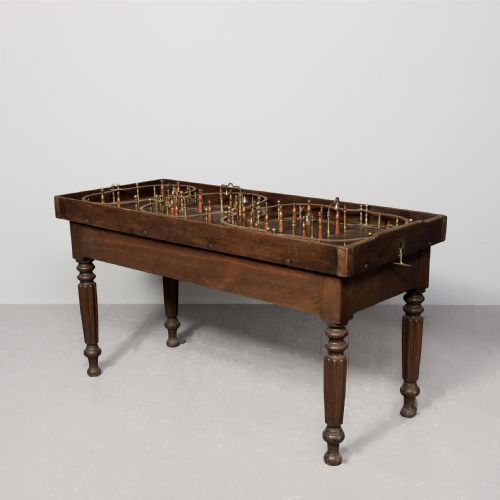
- An indoor table game predating modern billiards, featuring wooden cues, balls, and raised pins or cups. Tables are fitted with folding legs for domestic storage.
- Staunton style
- The standard design of chess pieces introduced in the mid nineteenth century, featuring distinct, easily recognisable forms for each rank. This pattern remains the benchmark for competitive play.
Antique Gaming Board: Frequently Asked Questions
How do I date a wooden chess table?
Examine the secondary timbers used inside drawers and beneath table tops, as deal and pine framing shifts over decades. Tool marks and screw types also offer clues to the workshop period.
Compare the veneer patterns and leg turning styles against known regional cabinetmaking conventions from the Georgian and Victorian eras.
Were these boards meant for travel?
Many nineteenth-century examples specifically cater to journeys, utilising folding book-form designs or internal compartments for pieces. These compact units kept components secure during carriage rides.
Larger pedestal tables remained stationary in drawing rooms, while specialised travelling sets prioritised lightness and locking mechanisms.
How should I clean a rosewood gaming surface?
Dust regularly with a dry, soft lint-free cloth to prevent particulate build-up in inlaid crevices. Avoid modern chemical polishes that can degrade nineteenth-century French polish finishes.
Feed dry timber occasionally with a traditional microcrystalline wax to maintain the natural lustre of the grain without sealing moisture into the wood.
What is a Pope Joan game?
Pope Joan is a traditional multi-player card game utilising a round wooden board with labelled compartments for bets. Players place counters according to the dealt cards and board layout.
These boards often feature hand-painted or gilt decorations indicating the historical betting pools for each round of play.