
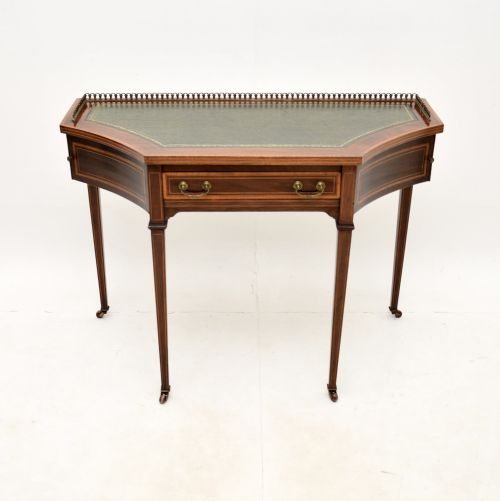

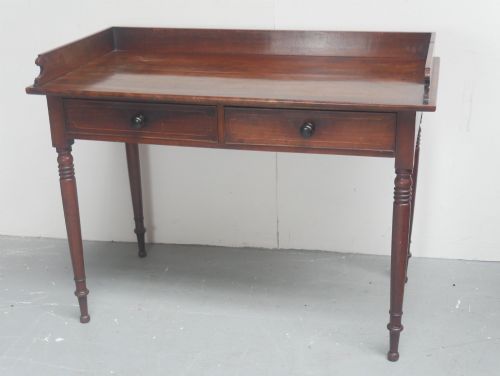
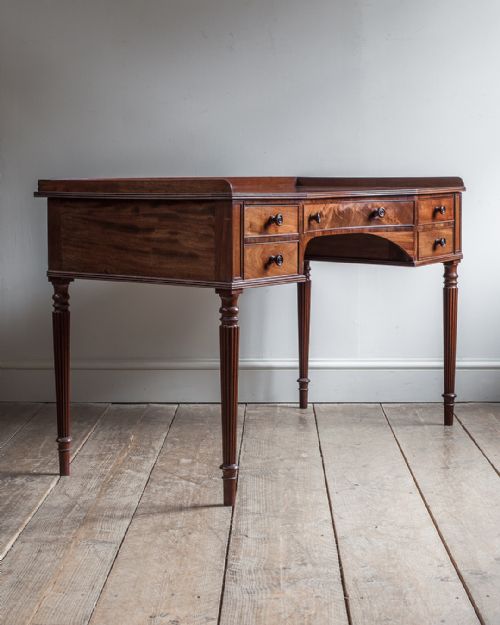
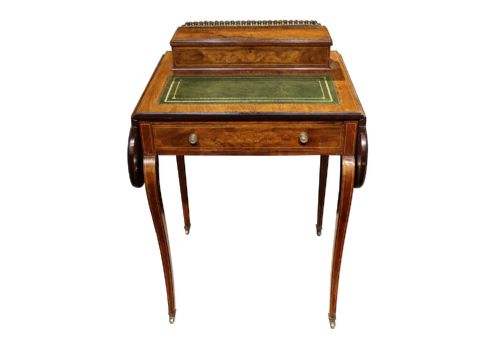
Antique Gallery Desk
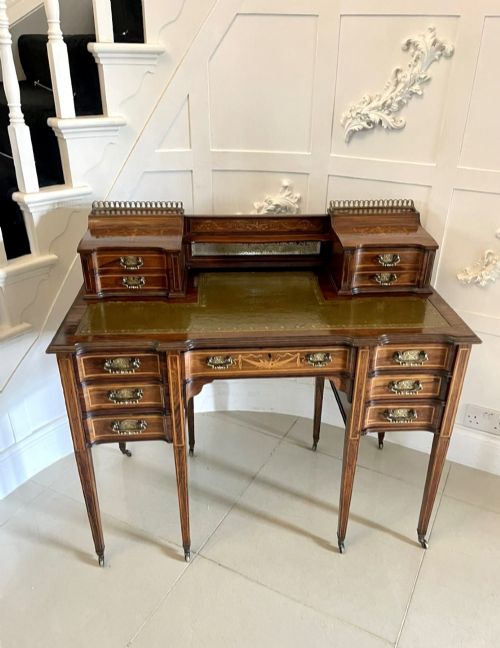
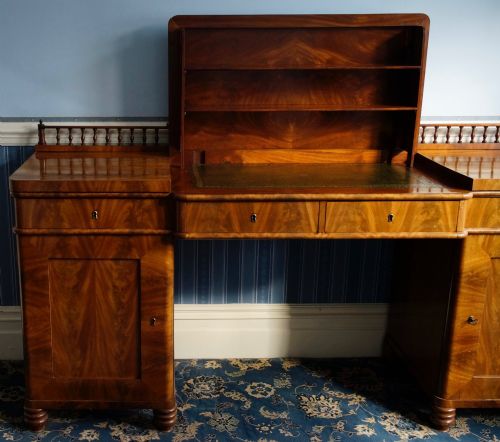
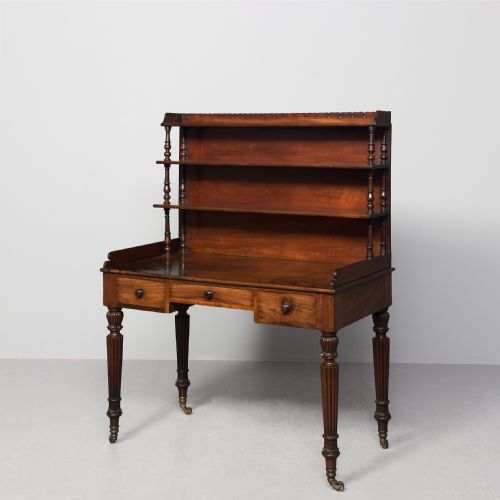
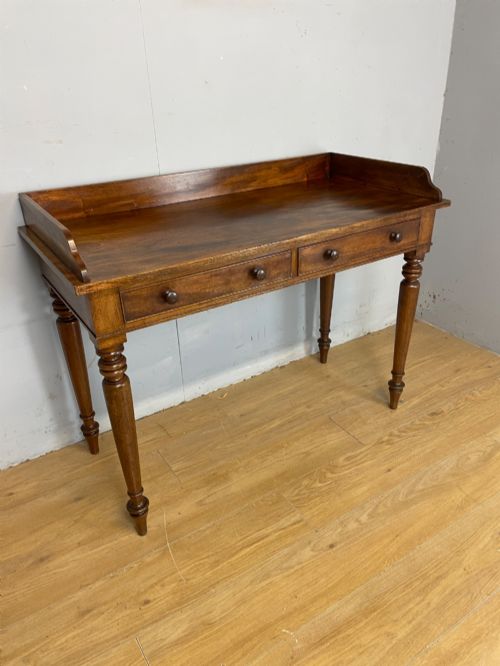
An antique gallery desk offers a dedicated surface for correspondence, drawing together the rich timber grains and fitted interiors characteristic of past writing furniture.
Antique Gallery Desk
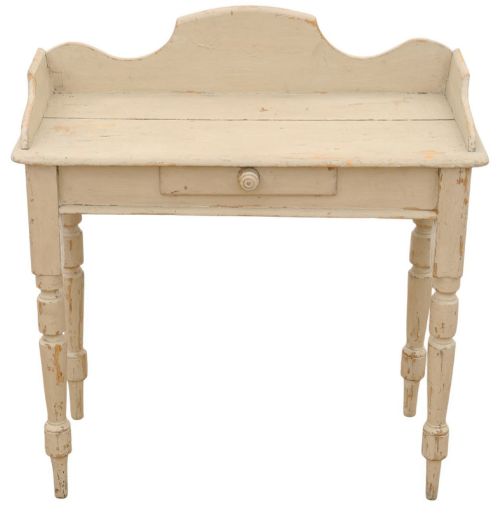
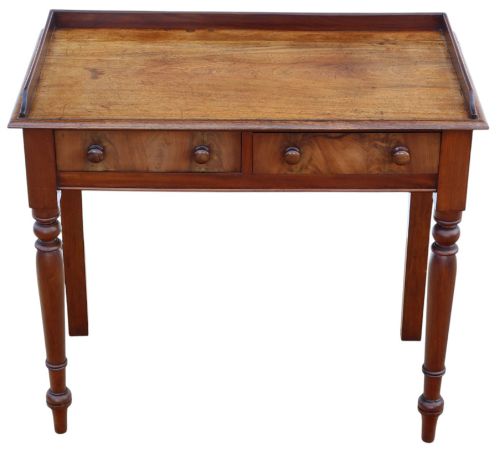
An antique gallery desk encompasses writing tables, davenports, and bureau forms produced across the Georgian, Regency, Victorian, and Edwardian eras.
The pieces appearing most frequently take the form of freestanding mahogany writing tables and inlaid rosewood or satinwood desks designed for domestic studies and boudoirs.
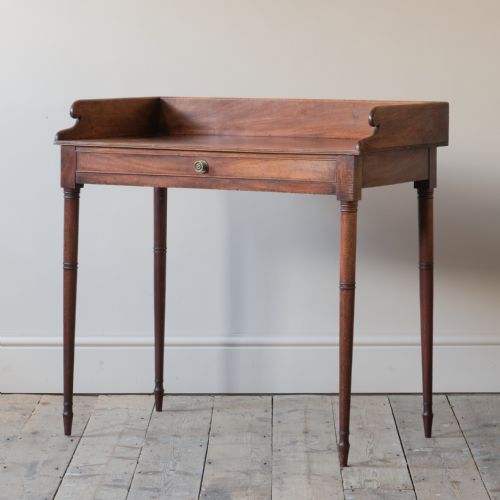
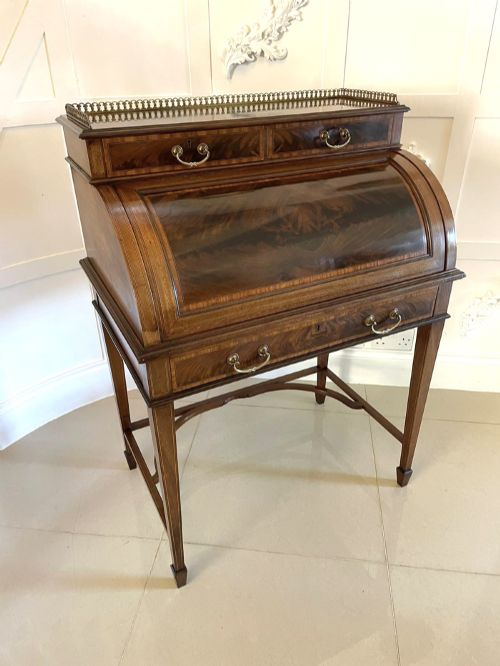
Origins range from English workshops to Scottish and continental makers, spanning simpler side tables adapted for writing alongside elaborate Carlton House desks and cylinder desks.
Materials and construction
Cabinetmakers utilised dense hardwoods such as mahogany, rosewood, and walnut, often enhanced with satinwood veneers, brass mounts, and fine inlaid stringing.
Writing surfaces frequently integrate inset leather panels, while interiors reveal fitted drawers, pigeonholes, and compartments constructed with traditional joinery.
Some nineteenth-century davenports feature secret side-opening compartments designed to keep private letters entirely out of sight.
Distinctions in craftsmanship
Superior examples display balanced proportions, choice flame mahogany or burr veneers, and meticulous marquetry that remains crisp and undisturbed across the timber.
Finer desks incorporate thoughtful internal engineering, such as smoothly operating drawers, original brass hardware, and secondary timbers selected with equal care to the primary surfaces.
Maple & Co.·Gillows·James Mein of Kelso
The Antique Gallery Desk Glossary
- Davenport
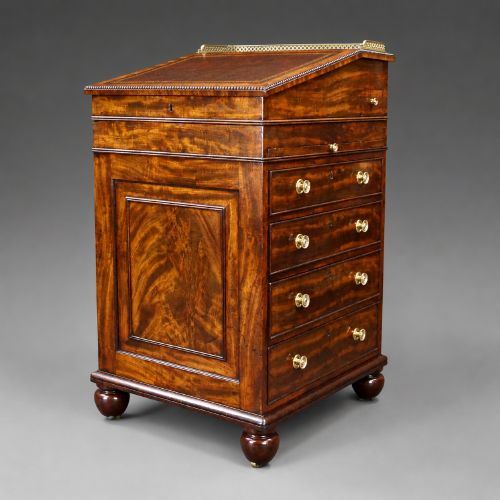
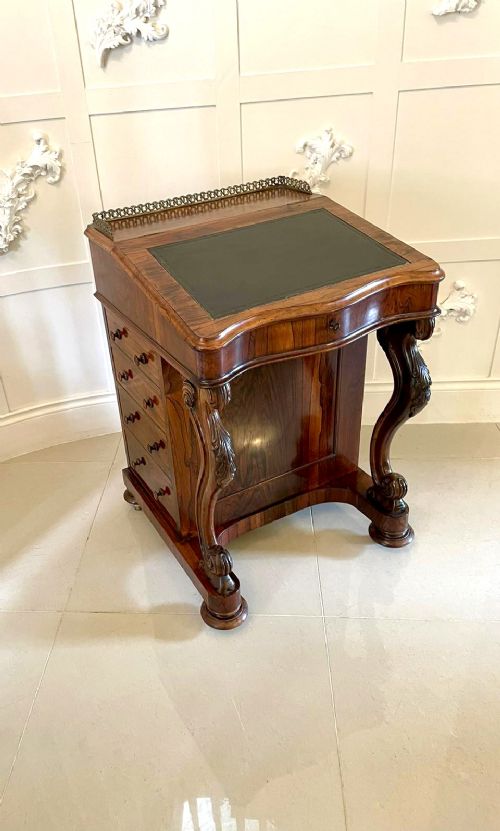
- A compact writing desk featuring a sloping top above a pedestal of side drawers. This form became particularly popular during the Regency and Victorian periods for domestic correspondence.
- Carlton House desk
- A horseshoe-shaped writing desk fitted with a series of small drawers and compartments rising around the back and sides. Originating in the late eighteenth century, these desks continued to be produced in refined Edwardian interpretations.
- Cylinder desk
- A writing desk enclosed by a curved quarter-circle wooden shutter that rolls back to reveal a pull-out writing slide and pigeonholes. It combines secure storage with an elegant cylindrical profile.
- Escritoire
- A tall writing cabinet containing a fall-front flap that drops down to form a writing surface. These pieces often conceal numerous internal compartments for papers and valuables.
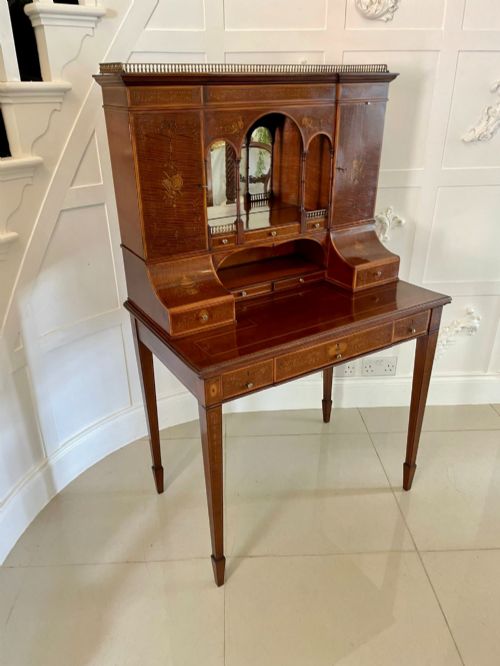
- Bonheur de jour
- A light lady's writing desk featuring a small cabinet or set of drawers superstructures upon the main writing surface. These tables emerged in France and gained favour in nineteenth-century British drawing rooms.
- Inlay
- The technique of embedding contrasting woods, metals, or shell into the surface timber to create decorative patterns. Craftspeople used delicate floral motifs and geometric lines to enrich mahogany and rosewood bodies.
Antique Gallery Desk: Frequently Asked Questions
What is a davenport desk?
A davenport is a compact writing desk featuring a sloping, leather-lined writing surface set above a pedestal of drawers. These pieces provide substantial surface utility while occupying a minimal footprint in smaller rooms.
First appearing in the Regency era, they remained popular through the Victorian period as versatile writing furniture for parlours and bedrooms.
How do I identify a Carlton House desk?
A Carlton House desk is characterised by its distinctive horseshoe-shaped superstructure of small drawers and tiered compartments curving around the back and sides of the writing surface. This layout offered an organised station for correspondence and documents.
They appear in fine satinwood and mahogany versions from the Edwardian period as well as earlier Georgian interpretations.
Were these desks used in offices or homes?
Most surviving writing tables and davenports were made for domestic use in private libraries, bedrooms, and drawing rooms rather than commercial offices. Their decorative timbers and inlaid details suited refined domestic interiors.
Larger freestanding writing tables often stood centrally within a room, finished on all sides to allow placement away from walls.
How do I care for a leather writing surface?
Leather inserts benefit from occasional dusting with a dry, soft cloth and careful treatment with appropriate leather dressings to prevent drying and cracking. Avoiding direct sunlight helps preserve the colour and suppleness of the hide.
Care should be taken with liquids and modern adhesives, as antique leathers absorb moisture readily.