



Antique Fuel Box
An antique fuel box brings hearthside practicality and period design together, offering a decorative storage solution for coal and logs.
Antique Fuel Box
An antique fuel box encompasses fireside storage vessels designed to hold coal or logs beside the fireplace. These pieces appear across several distinct forms, including purdoniums, scuttles, bunkers, and lidded bins.
Buyers will frequently encounter timber boxes with interior metal linings alongside heavy brass and copper buckets. French provincial and Aesthetic period variations also surface within the collection.
Materials and construction
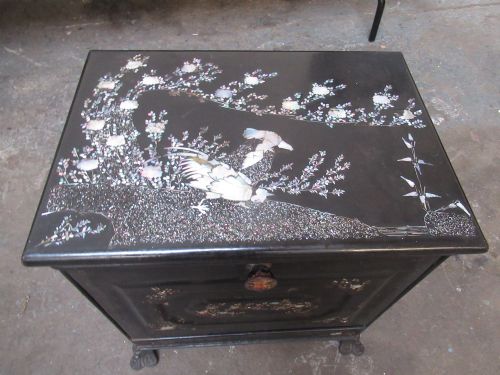
Cabinetmakers utilised dense hardwoods such as oak, mahogany, and walnut, frequently incorporating carved details, marquetry inlay, or applied ormolu mounts. These wooden bodies often house fitted metal liners designed to contain soot and debris.
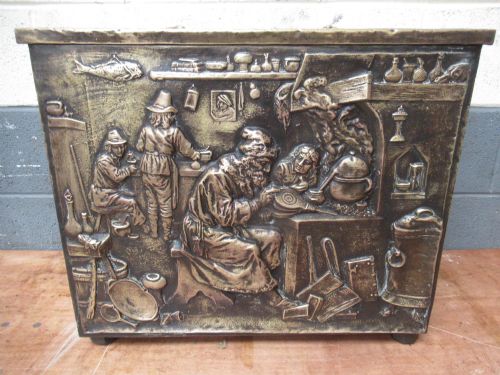
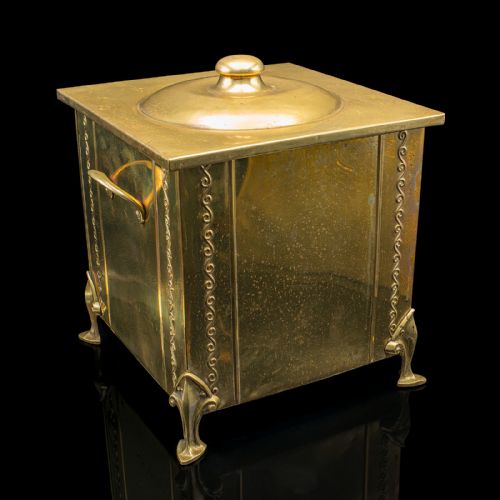
Metalworkers shaped solid brass and copper into scuttles, bins, and purdoniums, sometimes hammering the surfaces with Arts and Crafts ornamentation or embossed galleon motifs. Wrought iron and cast iron provide robust framing for sturdy log bins and purdoniums.
Listings span multiple eras from the eighteenth century through to the 1930s, incorporating oak, mahogany, walnut, brass, copper, and iron.
Assessing craftsmanship and condition
Superior examples display crisp carving, secure dovetail joinery in the timber bodies, and heavy-gauge brass or copper that resists denting. Maker attribution, such as work by Benham and Froud or Liberty of London, elevates a piece through documented provenance and refined finishing.
The integrity of the internal metal liner and the smooth operation of hinged lids or tilt mechanisms dictate everyday utility. Finer pieces maintain original patination on the metal surfaces and intact decorative panels without modern replacement hardware.
Benham & Froud·Liberty London
The Antique Fuel Box Glossary
- Purdonium
- A specialised type of coal box featuring a forward-tilting front door and an internal shovel compartment. This form gained popularity during the Victorian period for domestic hearths.
- Coal scuttle
- A bucket or pail designed specifically for carrying and storing coal, typically fitted with a swing handle and flat base. Brass and copper versions remain common.
- Log bin
- A deep receptacle intended for stacking firewood rather than loose coal. These items appear in timber, iron, and brass iterations.
- Ormolu
- Gilded bronze or brass applied as decorative mountings on fine furniture and fuel containers. It adds an ornamental highlight to mahogany and walnut bodies.
- Aesthetic Movement
- A late nineteenth-century design style focusing on visual beauty rather than narrative or moral function. Pieces from this period often display stylised motifs.
Antique Fuel Box: Frequently Asked Questions
What is a coal purdonium?
A coal purdonium is a specialised fireside cabinet with a hinged, sloping front that drops forward to reveal a metal-lined interior. They usually include a dedicated slot for a coal shovel.
Victorian homes relied on these enclosed boxes to keep coal dust contained while maintaining a tidy appearance in the main reception rooms.
How do I clean brass fuel boxes?
Brass surfaces benefit from gentle dusting and occasional cleaning with a mild, non-abrasive metal polish to remove tarnish. Avoid harsh chemical agents that can strip the historic patination.
Wooden sections require only a soft cloth and occasional wax to nourish the grain without damaging any metal inlays or mounts.
Can these boxes hold real logs?
Many wooden and metal bins serve effectively for storing firewood beside an active hearth. Timber boxes often feature protective metal liners to catch bark and prevent moisture damage to the wood.
Larger iron and copper vessels handle heavier logs comfortably while adding texture to the fireside arrangement.
How do I date an Edwardian coal box?
Edwardian fuel boxes, dating from roughly the start of the twentieth century, frequently exhibit lighter mahogany timbers, delicate string inlay, or distinctive Arts and Crafts copper panels. Machine-cut dovetails and modern brass screws can also point towards this later manufacturing window.
Comparing the decorative motifs against documented Liberty or regional workshop designs helps narrow the production decade.