

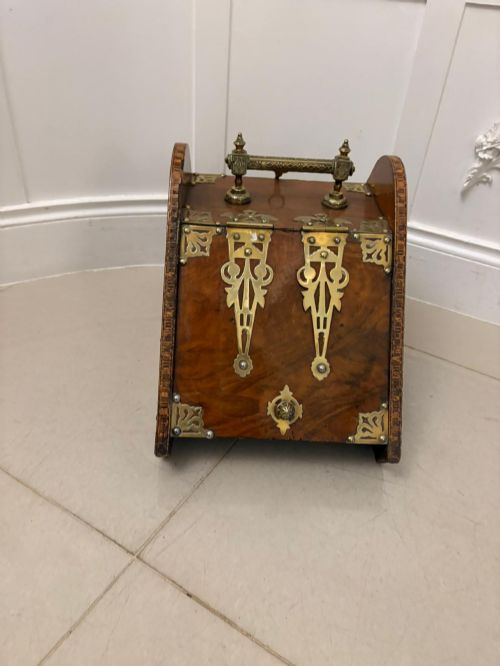
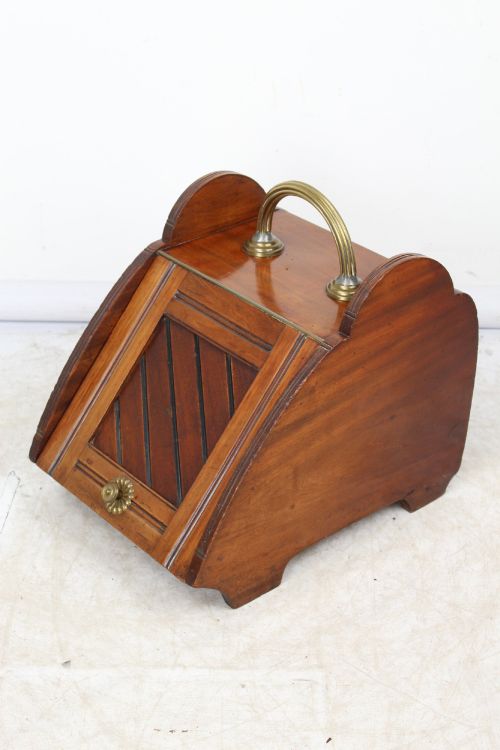


Slanted Wooden Coal Store
A slanted wooden coal store brings practical fireside storage into a room, combining timber construction with metal fittings.
Slanted Wooden Coal Store
When you search for a slanted wooden coal store, you are looking at functional Victorian, Edwardian, and eighteenth-century fireside fuel containers designed to hold coal or logs. These pieces take forms such as coal boxes, purdoniums, and bunkers, which are typically made from timber with hinged lids or slanted fronts for easy access to fuel.
The most common version you will meet on this page is the Victorian coal purdonium or coal box, usually fashioned from oak, walnut, or mahogany. They frequently incorporate brass handles, mounts, and occasionally interior metal liners or matching shovels to handle the fuel cleanly.
How they were made
Cabinetmakers utilised hardwoods like oak, walnut, and mahogany, often pairing the timber bodies with cast or pressed brass handles, hinges, and mounts. Some examples feature decorative carved fronts or delicate marquetry inlay to elevate their appearance in a formal reception room.
Internal metal linings protect the wooden structure from moisture and dirt associated with coal, while drop-front mechanisms or slanted lids allow fuel to be scooped out efficiently. These construction methods ensure that a utilitarian box doubles as a decorative piece of furniture.
Slanted Wooden Coal Store Retail Price Guide 2026
Typical asking prices for slanted wooden coal store among the pieces listed under this phrase on Sellingantiques today, from the lower quarter to the upper quarter. They describe what is for sale here now, not the wider market.
Listings feature pieces spanning from the eighteenth century through the Victorian era to the Edwardian period.
What varies in quality
The choice of primary timber and the selection of figured grain set finer pieces apart from standard utility boxes, with rich walnut and figured mahogany commanding attention. Robust construction, such as dovetailed joints and heavy gauge brass mounts rather than thin pressed metal, marks out superior craftsmanship.
Subtlety of ornament also divides the range, moving from plain functional oak boxes to carved fronts, inlaid marquetry, and complete sets that include a dedicated coal shovel. The integration of the metal liner and the smooth action of the slanted lid reflect the original maker's investment in the piece.
The Slanted Wooden Coal Store Glossary
- Purdonium
- A specialised coal container, typically featuring a slanted drop-front door and a shovel stored in a compartment underneath or at the side.
- Coal Bunker
- A larger storage chest for solid fuel, often dating from the eighteenth century and constructed in heavy oak.
- Marquetry Inlay
- Decorative patterns created by fitting contrasting pieces of wood veneer into the primary timber surface of the box.
- Brass Mount
- Metal hardware fixed to the corners, handles, and hinges to reinforce the wooden structure and provide contrast against the dark timber.
Slanted Wooden Coal Store: Frequently Asked Questions
How do I date a wooden coal box?
Dating relies on observing the timber choice, decorative style, and hardware assembly. Earlier pieces from the eighteenth century are usually heavy oak bunkers.
Victorian and Edwardian examples often utilise walnut or mahogany with brass mounts, carved details, or marquetry inlay.
Are these coal boxes lined inside?
Many period coal boxes feature removable metal liners. These protected the wooden interior from damp fuel and coal dust.
Not all examples retain their original metal liners, though the presence of an internal housing usually indicates where one sat.
Can I use these for logs?
Larger wooden containers and bunkers work well for storing logs beside an active fireplace. Smaller purdoniums suit smaller pieces of fuel.
Care should be taken with damp logs to protect the historic timber and any interior metal linings.