


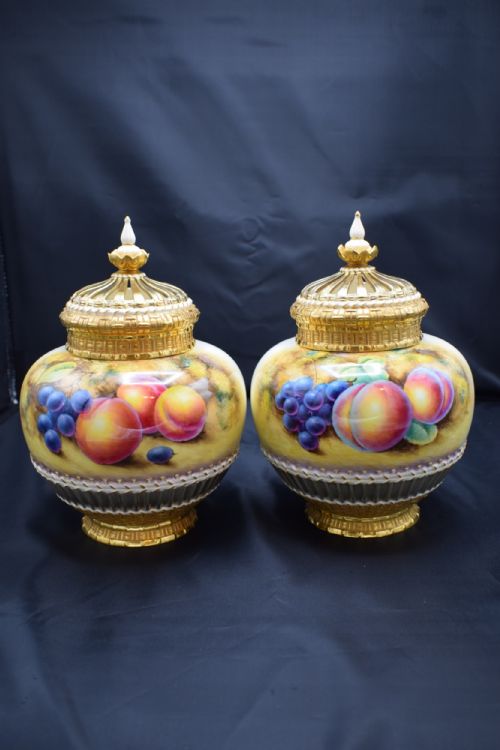

Antique Fruit Painted Vases
These antique fruit painted vases bring vibrant botanical compositions to a room, offering rich porcelain canvases decorated by skilled hands.
Antique Fruit Painted Vases
When you search for antique fruit painted vases, you encounter a distinct genre of ceramic art dominated by the output of English potteries. The most frequent iteration you will meet on this page is the porcelain vessel from the twentieth century, often taking the form of a covered pot pourri vase, a spill vase, or a handled urn.
The periods represented span from Victorian and Edwardian examples through to pieces from the 1920s, 1930s, 1940s, 1950s, and 1960s. Alongside ceramic bodies, the selection occasionally encompasses oil paintings on canvas depicting fruit compositions alongside vases, bridging decorative objects and fine art.
Forms vary from ginger jars and crown top vessels to delicate pairs of decorative ewers and miniature porcelain vases. Traditional English styles sit alongside occasional Art Deco and Baroque influences, reflecting the shifting tastes of the workshops that produced them.
Materials and methods
The physical basis of these items relies on porcelain, bone china, and glazed earthenware shaped into vessels before receiving painted decoration. Artisans applied oil-based pigments to capture the textures and rich colours of natural fruit, often setting the detailed studies against shadowy, neutral backgrounds.
Many of these porcelain and bone china surfaces incorporate heavy gilding, gold leaf, or gilt highlights around the rims, handles, and covers. This metallic embellishment frames the painted fruit panels, accentuating the contours of the pot pourri vases and ewers.
Listings feature works spanning from the eighteenth century to 1960, utilising porcelain, bone china, enamel, oil on canvas, and gold leaf.
Assessing quality in painted ceramics
The distinction between standard and exceptional pieces rests upon the execution of the hand-painted fruit and the prestige of the artist's signature. Master painters executed intricate studies of peaches, grapes, and berries with tactile depth, whereas lesser examples display stiffer, less nuanced brushwork.
The application of gilding and gold leaf also dictates the tier of the piece, with heavier, more burnished gold work marking out finer productions. Additionally, the complexity of the ceramic form - such as pierced covers on pot pourri jars or matched pairs of ewers - separates standard vessels from exceptional studio achievements.
Royal Worcester·Coalport·William Moorcroft
The Antique Fruit Painted Vases Glossary
- Pot Pourri Vase
- A ceramic vessel featuring a pierced cover designed to diffuse scent from dried flowers and plant materials placed inside. These pieces frequently serve as the primary canvas for elaborate fruit compositions.
- Ewer
- A large jug with a wide spout and a looped handle, traditionally used for water but often produced purely for decorative display in porcelain and bone china.
- Gilding
- The application of gold leaf or powdered gold onto the surface of porcelain or earthenware to create metallic decorative accents. This technique frames the central painted panels.
- Spill Vase
- A tall, slender vessel designed to hold spills, which were thin strips of wood used to transfer a flame from a fireplace to a candle or pipe. In later periods, these served primarily as mantelpiece decorations.
- Ginger Jar
- A decorative ceramic container with a rounded body and a fitted lid, adapted in English potteries as a prominent shape for detailed fruit painting.
Antique Fruit Painted Vases: Frequently Asked Questions
How do I identify a signed vase?
Signatures by studio painters typically appear near the base of the painted fruit scene in fine script. Artists such as Ricketts, Blake, Freeman, and Ayrton signed their work directly onto the porcelain surface.
Examining the underside of the vessel often reveals factory backstamps that help corroborate the date and origin of the piece alongside the artist's signature.
What periods do these pieces date from?
The pieces span from the Victorian and Edwardian eras through the mid-twentieth century, including the 1920s, 1930s, 1940s, 1950s, and 1960s. Earlier examples from the eighteenth century appear occasionally in the form of oil paintings.
Twentieth-century ceramic production represents the largest share of the available inventory, particularly pieces originating from the 1950s and 1960s.
Were these vases meant for everyday use?
Most of these painted vessels served primarily as decorative garnitures for mantelpieces, drawing rooms, and display cabinets. Their delicate hand-painted surfaces and gilt highlights made them ornamental centerpieces rather than functional household items.
Pot pourri jars and covered vases held scented botanicals, but their primary role was visual enrichment within polite interiors.
How should I clean my porcelain vase?
Dusting gently with a soft, dry brush is the safest method to remove particulate matter from the surface without disturbing the enamel. Avoid using liquid cleaners, damp cloths, or abrasive materials, as these can damage the delicate hand-painted pigments and wear away the gold leaf.
Keeping the vessel away from direct sunlight also helps preserve the rich colours of the fruit paintings over time.