


Antique Fretwork Pier Mirror
An antique fretwork pier mirror brings intricate fret-cut frames and vertical elegance to a room, offering a distinct Georgian character.
Antique Fretwork Pier Mirror
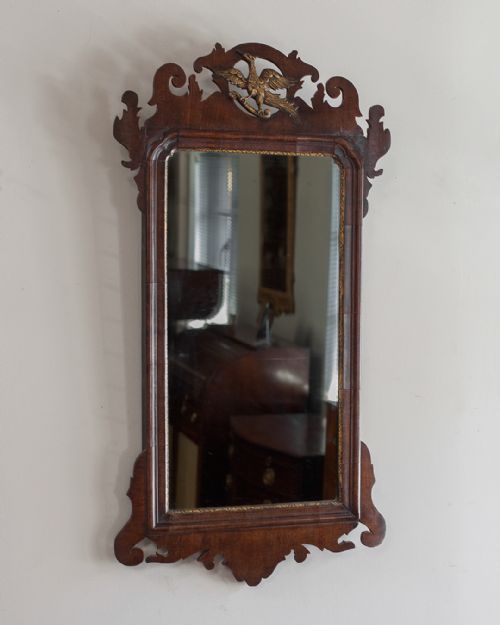
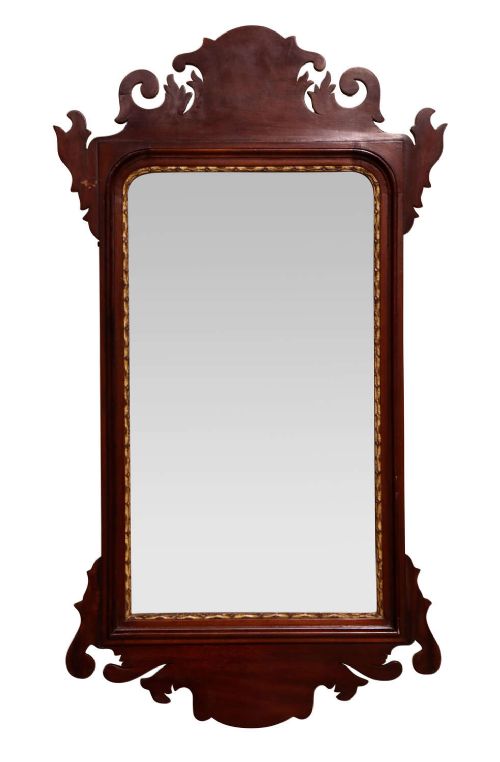
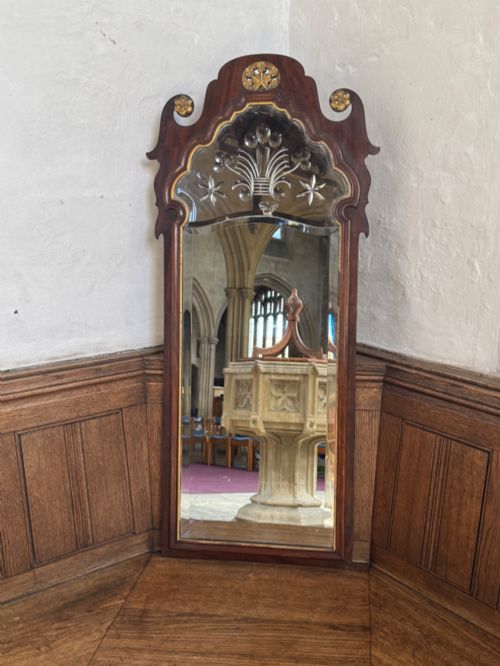
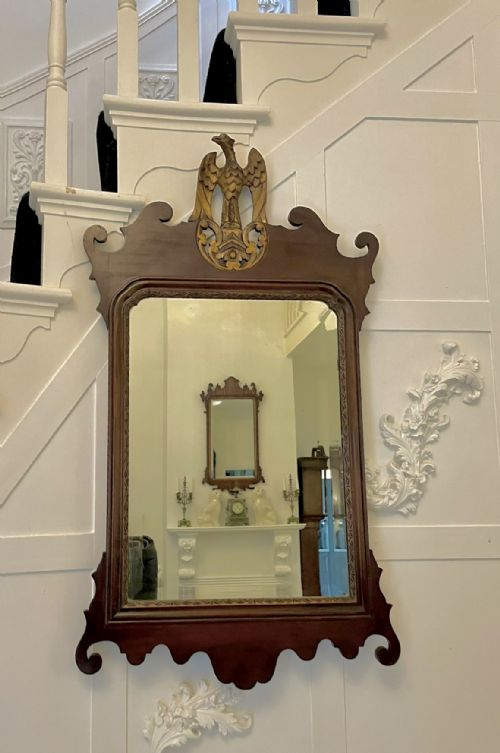
An antique fretwork pier mirror is a tall, vertical wall glass designed to hang safely between windows or above mantelpieces. The form relies on intricate fret-cut wooden frames, often featuring scrolled ears and shaped crests.
Most examples found here date from the eighteenth century through to later revival periods, with mahogany and walnut forming the backbone of the selection. Buyers regularly encounter both authentic period pieces from the Georgian era and later nineteenth-century interpretations.
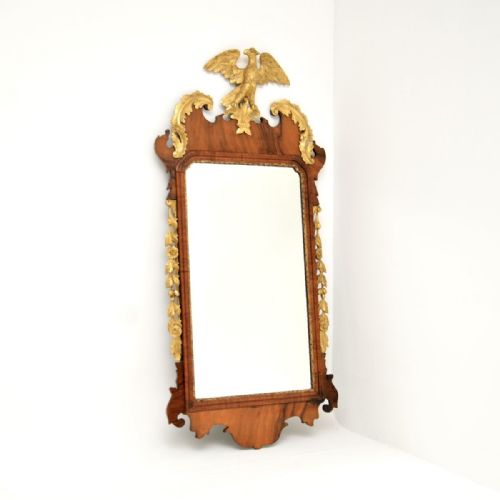
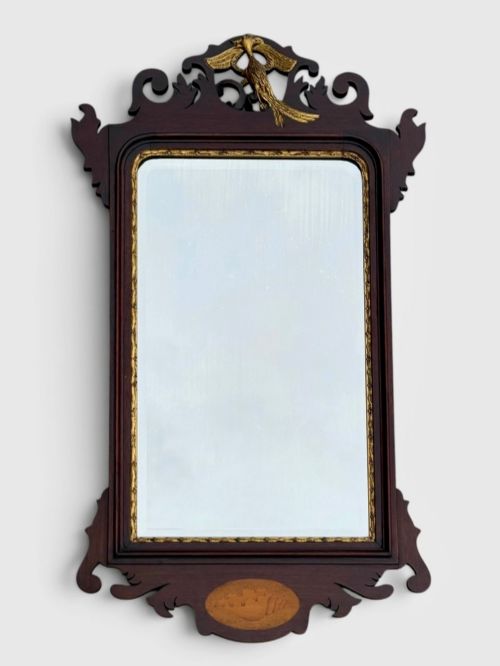
The assortment spans straightforward timber frames to elaborate parcels gilt with gilded details or traditional motifs like the Ho Ho bird. Wall mirrors and overmantel variations both appear, demonstrating the adaptability of the fretwork style across different centuries.
How they were made
Cabinetmakers constructed these frames using dense hardwoods like mahogany and walnut, frequently applying fine veneers or parcel gilding to enhance the visual depth. The fretwork itself was painstakingly pierced and cut by hand using a scroll saw or fretsaw before being joined to the primary frame.
Gesso and gold leaf were often applied to carved mouldings, slip frames, and crest details to catch the light effectively. Mirror glass during the earlier periods was typically bevelled by hand, whilst later pieces incorporated reverse cut plates or original Vauxhall mirror plates.
Look closely for carved Ho Ho birds perched atop the frames, keeping a watchful eye over your hallway.
What varies in quality
Quality rests upon the precision of the fret-cut silhouette and the crispness of the carved details on the crest and ears. Fretwork that retains sharp interior corners and delicate proportions stands far above thick, clumsy cutting.
The survival of original surfaces, such as untouched mahogany patination or genuine gold leaf, dictates the standing of a mirror. Original mirror plates with light, honest foxing command greater respect than later replacements.
The Antique Fretwork Pier Mirror Glossary
- Pier mirror
- A tall wall glass designed to hang on the narrow pier of wall between two windows. It frequently shares space with a console table beneath.
- Fretwork
- Thin wood pierced with decorative scrollwork patterns using a fretsaw. This technique defines the delicate silhouettes characteristic of Chippendale designs.
- Parcel gilt
- Portions of a wooden frame highlighted with gold leaf while the primary timber remains visible. This finish accentuates carved mouldings and gesso details.
- Vauxhall plate
- An early form of mirror glass identifiable by a distinct bevel and slight distortion from hand-silvering. These plates often show age through light oxidation.
- Ho Ho bird
- A stylized Chinese phoenix frequently carved into the crests of mid-eighteenth-century mirrors. The motif reflects the period's fascination with Chinoiserie.
Antique Fretwork Pier Mirror: Frequently Asked Questions
Where should I hang a pier mirror?
These vertical mirrors work best on narrow wall spaces between windows or above principal mantelpieces where their height draws the eye upward.
Ensure the wall fixings match the weight of the hardwood frame and mirror glass to support the piece securely.
How do I spot a Georgian original?
Examine the timber behind the fretwork for signs of age, tool marks, and construction methods consistent with eighteenth-century cabinetmaking.
Original mirrors often feature old pine backing boards, hand-bevelled glass, and dry, oxidized mahogany or walnut surfaces.
What is Chippendale style?
Chippendale style refers to the distinctive furniture designs popularized by Thomas Chippendale in the eighteenth century, featuring Gothic, Rococo, and Chinese influences.
In mirrors, this translates to asymmetrical fret-cut frames, Ho Ho birds, and elaborate scrolled ears.
Are the mirror plates original?
Many surviving mirrors retain their early or original glass, which often exhibits light foxing, minor speckling, and hand-bevelled edges.
Replacements do occur over centuries, so inspect the silvering and how the plate sits within the wooden rebate.